

TL;DR:
- Traceable tea sourcing involves fully documenting the journey of tea from a specific farm to the final product. This transparency protects consumers, workers, and ecosystems by verifying origin, quality, and ethical practices. Consumers should seek brands that provide detailed documentation, audit reports, and scientific verification to ensure genuine traceability.
Traceable tea sourcing is the practice of fully documenting and verifying the journey of tea leaves from a specific farm or cooperative through every stage of processing and distribution to the final product in your cup. This is the industry’s standard for supply chain transparency, and it goes well beyond what a single certification label can tell you. Bodies like the Rainforest Alliance set audit standards, but full chain documentation from farm gate onward is what separates genuine traceability from marketing language. As a conscious consumer, understanding this difference is the first step toward making purchases that truly reflect your values.
What is traceable tea sourcing and how does it work in the supply chain?
Traceability systems document the entirety of a tea leaf’s journey from its original garden or cooperative through all processing and distribution stages to the retail product. The supply chain for tea is surprisingly complex. A single blend can pass through a farm, a processing factory, a regional auction house, an importer, and a packer before it reaches your shelf.
Documentation methods fall into three broad categories:
- Paper-based logs: The oldest and most common method. Harvest records, weight tickets, and transfer documents travel with the tea. These systems are vulnerable to fraud and human error.
- Digital platforms: Cloud-based systems that record and share data at each handoff point. They reduce error but still depend on honest data entry.
- Blockchain records: Blockchain timestamps and immutably stores supply chain data, making it nearly impossible to alter records after the fact. The catch is that false data entered at the origin point is just as permanent as accurate data.
Two concepts define how thorough a system actually is. Mass balance traceability confirms that the volume of certified tea entering a supply chain matches the volume sold as certified. It does not track individual batches. Full traceability follows a specific lot of tea leaves from a named farm through every step. Full traceability is rarer and more meaningful for consumers who want verified origin.
Regulatory pressure is pushing the industry toward stricter standards. Since mid-2026, the EU Deforestation Regulation requires detailed traceability for tea imports to improve supply chain transparency and risk management. Certified supply chains must report traceability activities quarterly within six weeks to prevent fraud like double-selling.
Pro Tip: When a brand claims full traceability, ask whether they use mass balance or lot-level tracking. The answer tells you exactly how much you can trust the origin story on the label.
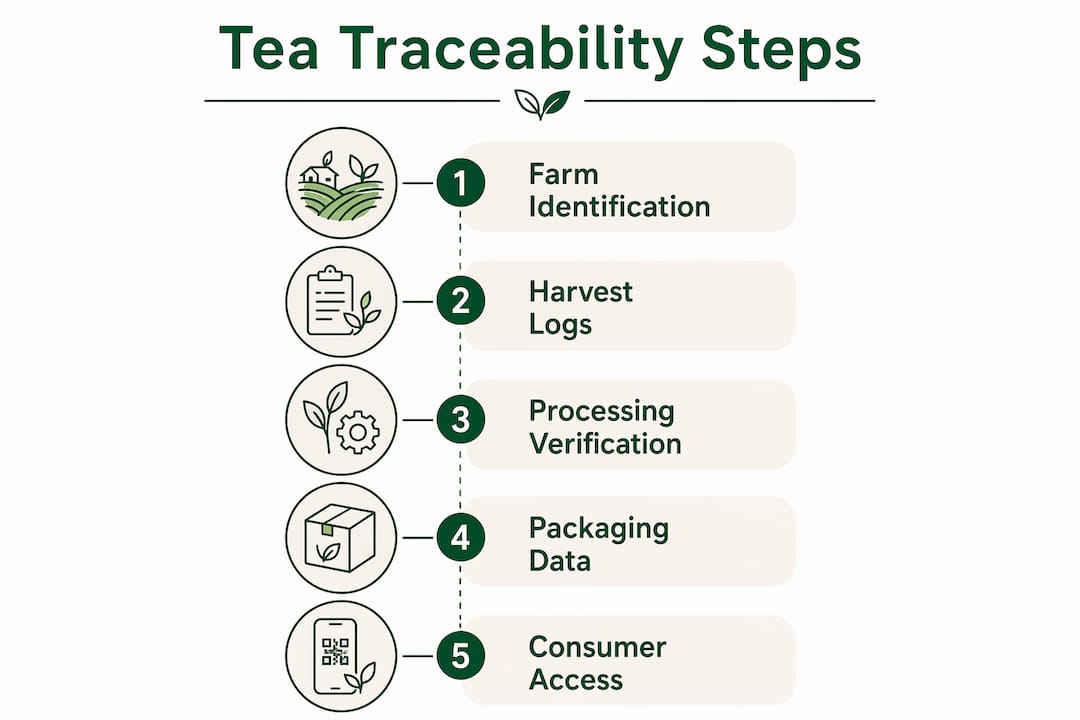
Why does traceability matter for consumers and the environment?
Traceability is not just a technical process. It is a tool that protects you, the workers who grow your tea, and the ecosystems where it is grown. Here is why it matters in concrete terms:
- Product authenticity and freshness. A transparent supplier provides harvest logs, farm certificates, lab-tested quality reports, and detailed origin data to verify tea authenticity and freshness. Without this documentation, you have no way to confirm that the “single-origin Darjeeling” in your tin is actually from Darjeeling.
- Ethical labor enforcement. Traceability systems confirm fair labor practices and environmental sustainability claims for responsible consumption. When a brand can name the farm and show audit records, it is much harder to hide wage theft or unsafe working conditions.
- Contamination and fraud prevention. Documented supply chains make it faster to identify and recall contaminated batches. Without traceability, a single bad actor can compromise an entire product line before anyone notices.
- Greenwashing protection. Traceability combats greenwashing and enhances consumer confidence by requiring documented evidence rather than self-reported claims. A brand that cannot show its supply chain data is relying on your trust, not on proof.
- Consumer empowerment. Supply chain transparency gives you verified origin and production data so you can choose teas that genuinely align with your values. That is a meaningful shift from passive purchasing to informed decision-making.
How can you evaluate and verify traceability claims on tea products?
Most traceability claims live on packaging, and packaging is easy to print. Knowing what to look for beyond the label is what separates a well-informed buyer from one who is simply trusting a marketing team.
Start with documentation. A credible supplier should be willing to share harvest logs, farm certificates, and lab reports on request. If a brand’s website has no sourcing page, no named farms, and no third-party audit results, that is a red flag. Certifications from bodies like the Rainforest Alliance or Fair Trade are useful reference points, but remember that labels audit compliance points and do not guarantee full traceability.
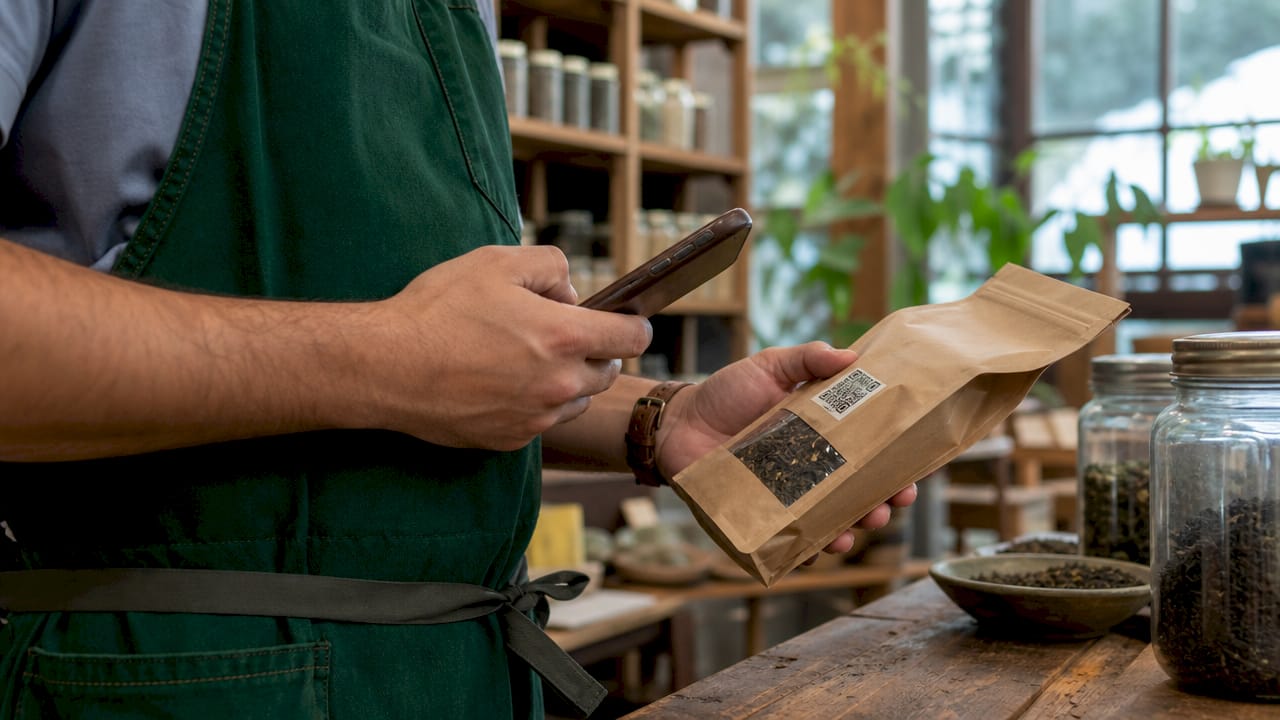
QR codes that link to supply chain data are becoming more common. Scan them and check whether the data is specific. A QR code that shows a country of origin and a certification logo is not the same as one that shows a named estate, a harvest date, and a processing record.
Scientific verification methods go even further. Isotope ratio analysis and mineral fingerprinting can independently confirm geographical origin beyond what any label states. These methods are not available to most consumers directly, but independent testing labs and some academic institutions offer them. For everyday purchases, use certifications as a starting point, not a final answer.
Watch for these red flags:
- Vague origin language like “sourced from Asia” or “blended from multiple origins”
- No named farms, estates, or cooperatives on the brand’s website
- Certifications listed without links to audit reports
- QR codes that lead only to a brand’s homepage
Pro Tip: Use the sustainable tea checklist from Ecoviberoast to cross-reference a brand’s claims against verified sourcing criteria before you buy.
What challenges and technologies are shaping traceable tea sourcing?
Traceability sounds straightforward in theory. In practice, several real obstacles make it difficult to get right.
- Documentation fraud: Paper-based systems remain the norm in many tea-growing regions. Records can be altered, duplicated, or fabricated at any point in the chain.
- Blockchain’s “garbage in, garbage out” problem: Blockchain adds immutability but depends on accurate data input at origin. A blockchain record of a false harvest date is just as permanent as an accurate one.
- Tea type complexity: Lightly processed teas retain chemical markers that make origin verification relatively straightforward. Heavily fermented teas like pu-erh require more complex scientific methods because processing alters the chemical fingerprint.
- Data-sharing reluctance: Farms, processors, and brands often guard supply chain data as a competitive asset. This limits the collaborative data sharing that makes traceability systems most effective.
- Regulatory catch-up: The EU Deforestation Regulation is a significant step, but global standards are still inconsistent. Brands selling in markets with weaker regulations face less pressure to invest in full traceability.
The most promising development is the combination of digital platforms with scientific verification. Digital tracking handles the documentation layer. Isotope analysis and chemical fingerprinting handle the verification layer. Together, they close the gap that either method leaves open on its own. Brands that invest in both are setting the standard for what ethical tea sourcing will look like in the years ahead.
How does traceable tea sourcing support sustainable and ethical consumption?
Traceability is the backbone of any credible sustainability claim in the tea industry. Without it, words like “eco-friendly” and “ethically sourced” are just words.
When a brand can trace tea to a named estate, it can also verify that the estate uses shade-grown cultivation, pays fair wages, and protects biodiversity on its land. Single-estate teas offer the clearest example of this. The shorter and more documented the supply chain, the easier it is to confirm that environmental and labor standards are actually being met, not just claimed.
“Transparency via traceable tea sourcing empowers buyers to choose sustainably and ethically sourced teas by providing verified origin and production data. Supply chain transparency fosters consumer empowerment and market differentiation for responsibly sourced products.”
Your purchasing decisions carry real weight. Brands that invest in traceability do so partly because consumers demand it. When you choose a traceable tea over an opaque one, you send a market signal that transparency has value. That signal shapes what brands prioritize in their sourcing. Traceability also creates a premium market where farmers who meet high standards earn better prices, which reinforces the cycle of responsible production. Learning how to source tea responsibly is one of the most direct ways to put your values into practice as a consumer.
Key Takeaways
Traceable tea sourcing is the most reliable way to verify that your tea is authentic, ethically produced, and genuinely sustainable, because it requires documented evidence at every step of the supply chain.
| Point | Details |
|---|---|
| Definition of traceability | Full traceability tracks a specific tea lot from a named farm through every processing step to retail. |
| Certifications are not enough | Labels audit compliance points but do not guarantee full chain documentation from farm gate onward. |
| Verification tools exist | Isotope analysis and mineral fingerprinting can confirm geographical origin beyond what labels state. |
| Technology has real limits | Blockchain is immutable but only as accurate as the data entered at origin; combine it with scientific methods. |
| Consumer demand drives change | Choosing traceable teas sends a market signal that rewards brands investing in genuine supply chain transparency. |
Why I think most consumers underestimate what traceability actually requires
I have spent years watching the tea industry talk about transparency while quietly relying on mass balance systems that tell you almost nothing about a specific cup. The honest truth is that most “traceable” teas on the market are traceable only in the loosest sense. A certification badge means an auditor visited a farm at some point. It does not mean the tea in your tin came from that farm.
What changed my thinking was learning about isotope ratio analysis. The idea that a lab can look at the mineral composition of a dried tea leaf and tell you within a narrow geographic range where it grew is genuinely remarkable. It also reveals how easy it is to mislabel origin without that kind of verification. Consumers who rely solely on QR codes and certification logos are trusting a system that has well-documented gaps.
The shift I want to see is brands treating traceability as a quality signal, not a compliance checkbox. The brands doing this well are the ones naming their farms, publishing their audit reports, and investing in scientific verification. They are also the ones building real loyalty with consumers who have learned to ask better questions. If you want to make your tea purchases count, start by asking one simple question: “Can you show me where this came from?” The answer will tell you everything.
— LaSaundra
Ecoviberoast’s approach to traceable tea sourcing
Ecoviberoast builds its tea selection around the principle that you deserve to know exactly where your tea comes from and how it was grown.

Every tea in the Ecoviberoast collection is sourced with supply chain transparency as a non-negotiable standard. The Hibiscus Berry Tea is a certified organic herbal blend with traceable origins that reflect both quality and environmental care. The Jasmine Tea brings together fine loose-leaf green tea and jasmine blossoms from responsibly managed sources. With every purchase, Ecoviberoast also plants mangrove trees and removes ocean-bound plastics, so your cup of tea does a little good beyond your morning routine.
FAQ
What is traceable tea sourcing in simple terms?
Traceable tea sourcing is the process of documenting a tea leaf’s journey from a specific farm through every stage of processing and distribution to the final retail product. It gives consumers verified proof of origin and production conditions.
How is traceability different from organic or Fair Trade certification?
Certifications audit compliance at specific points in the supply chain but do not guarantee full documentation from farm to shelf. True traceability requires recorded tracking at every step, which certifications alone do not provide.
Can blockchain fully solve tea traceability problems?
Blockchain makes supply chain records immutable, but it cannot fix false data entered at the origin point. Combining blockchain with scientific methods like isotope analysis is the most reliable approach to verified traceability.
Why does the type of tea affect traceability?
Lightly processed teas retain natural chemical markers that make origin verification straightforward. Heavily fermented teas like pu-erh undergo processing that alters those markers, requiring more complex scientific techniques to confirm origin.
How can I tell if a brand’s traceability claims are genuine?
Look for named farms or estates, published audit reports, and specific harvest data rather than vague origin language. A brand that can show lab reports and third-party certification documents is far more credible than one that lists only a country of origin.


