

TL;DR:
- Coffee drinks are defined by brewing method, ingredient ratios, and milk texture, which shape their flavor and feel. Understanding these core differences helps simplify ordering, whether choosing an espresso shot, a latte, or a filtered brew. The origins of each drink reveal how cultural preferences influence ratios and textures, leading to diverse coffee experiences worldwide.
Coffee drinks are defined by three variables: brewing method, ingredient ratios, and milk texture. Understanding the difference between coffee drinks is simpler than most café menus suggest. An espresso uses 9 bars of pressure to extract a concentrated 30ml shot, while a drip coffee relies on gravity and produces a much larger, lighter cup. The milk you add, and how it is steamed, then determines whether that espresso becomes a latte, a cappuccino, or a flat white. Once you see the pattern, every drink on the menu makes sense.
What is the difference between coffee drinks at their core?
Coffee beverages split into two main families: espresso-based and brewed. Espresso-based drinks use a concentrated shot as their foundation, then build flavor with milk, foam, or water. Brewed drinks, including drip, pour-over, and French press, extract coffee through gravity or immersion with no pressure involved.

The brewing method shapes everything. Pressure extraction pulls oils and compounds from the bean quickly, creating a thick, syrupy texture. Gravity brewing takes longer and produces a thinner, cleaner cup. These two approaches create drinks that taste and feel completely different, even when made from the same beans.
Ingredient ratios then define the individual drink. A latte and a cappuccino both start with espresso, but their milk-to-foam proportions make them taste like two separate beverages. Knowing those ratios gives you a reliable map of the entire coffee menu, from the boldest macchiato to the mildest café au lait.
What distinguishes espresso from drip coffee and why does it matter?
Espresso and drip coffee represent opposite ends of the brewing spectrum. Espresso uses 9-bar pressure with finely ground beans to produce a 30ml shot containing roughly 63mg of caffeine. Drip coffee uses gravity, coarser grounds, and produces a 240ml cup with about 95mg of caffeine. That means drip coffee delivers more total caffeine per serving, even though espresso is far more concentrated per milliliter.
This distinction matters because it shapes flavor intensity and body. Espresso carries a thick crema on top, a layer of emulsified oils that gives the drink its signature richness. Drip coffee lacks that crema and tastes cleaner, brighter, and more acidic. For a deeper look at how brewing method affects flavor, the Ecoviberoast brew guide breaks down extraction variables in practical detail.
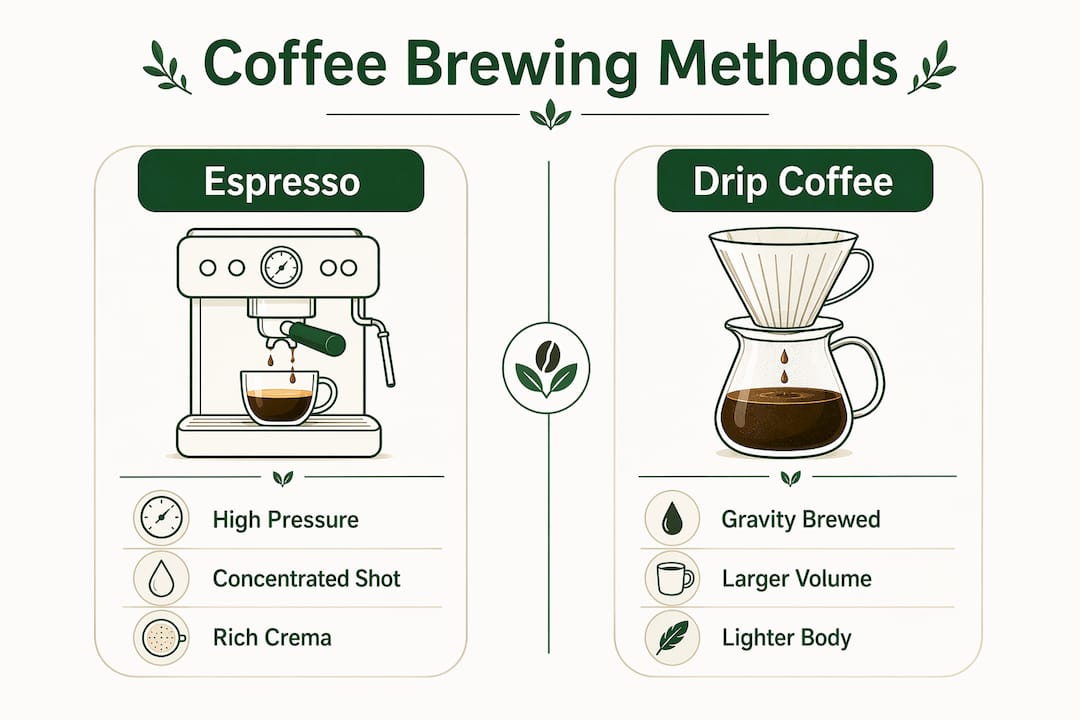
Here is a quick side-by-side comparison:
| Feature | Espresso | Drip coffee |
|---|---|---|
| Brewing method | 9-bar pressure | Gravity |
| Serving size | 30ml (1 oz) | 240ml (8 oz) |
| Caffeine per serving | ~63mg | ~95mg |
| Flavor profile | Intense, syrupy, rich | Clean, bright, mild |
| Texture | Thick with crema | Thin and smooth |
Key differences that affect your daily cup:
- Grind size: Espresso requires a fine grind; drip needs a medium grind.
- Brew time: Espresso extracts in 25–30 seconds; drip takes 4–6 minutes.
- Equipment: Espresso needs a dedicated machine; drip works with a simple filter setup.
- Versatility: Espresso serves as the base for dozens of milk drinks; drip is typically served as-is.
Pro Tip: If you want the boldest flavor in the smallest cup, choose espresso. If you want a larger, lighter drink you can sip slowly, drip coffee is your best option.
How do milk and foam ratios define lattes, cappuccinos, and flat whites?
The latte, cappuccino, and flat white all start with the same espresso shot. What separates them is the amount of steamed milk and the texture of the foam layered on top. A latte uses a 1:4 espresso-to-milk ratio with a thin layer of microfoam, producing a smooth, mild drink served in an 8–16 oz cup. The high milk volume softens the espresso’s intensity, making the latte the most approachable option for new coffee drinkers.
A cappuccino divides its cup into equal thirds: one part espresso, one part steamed milk, and one part thick foam. The result is a layered, textured drink served in a 6 oz cup with a bold coffee presence. The foam acts as an insulator, keeping the drink hot longer and creating a distinct mouthfeel that a latte cannot replicate.
The flat white sits between the two. It uses a higher espresso ratio than a latte but features velvety microfoam rather than thick froth. The drink originated as a pushback against the foam-heavy cappuccino, and its tighter ratio means the coffee flavor stays front and center. Milk steaming temperature between 149°F and 158°F preserves the milk’s natural sweetness and creates the silky texture that defines a well-made flat white.
| Drink | Espresso ratio | Milk texture | Typical size |
|---|---|---|---|
| Latte | 1:4 | Thin microfoam | 8–16 oz |
| Cappuccino | 1:1:1 | Thick foam | 6 oz |
| Flat white | ~1:2.5 | Velvety microfoam | 5–6 oz |
- Latte: Best for readers who want a creamy, mild coffee experience.
- Cappuccino: Best for readers who enjoy bold espresso with a foamy, layered texture.
- Flat white: Best for readers who want strong coffee flavor with smooth, silky milk.
Pro Tip: Ask your barista for “wet” or “dry” when ordering a cappuccino. “Wet” means more steamed milk and less foam; “dry” means more foam and less milk. It is a simple way to customize without switching drinks entirely.
What are the differences between cortado, macchiato, and americano?
These three drinks are smaller and less milk-heavy than a latte or cappuccino, but each one delivers a distinct experience. The macchiato is espresso “stained” with just a dollop of foam, served in a 2–3 oz demitasse. The foam softens the espresso’s edge slightly, but the drink remains intensely coffee-forward. Think of it as espresso with a whisper of dairy.
The cortado balances espresso and steamed milk at a 1:1 ratio, served in a 4–5 oz glass. There is very little foam involved. The equal parts create a smooth, creamy drink that is less intense than a macchiato but far bolder than a latte. Espresso flavor intensity varies with milk amount and texture, and the cortado sits at the sweet spot for readers who want balance without dilution.
The americano takes a different approach entirely. It dilutes a double espresso shot with hot water, producing a longer drink that resembles drip coffee in volume but retains the espresso’s depth of flavor. The result is lighter than straight espresso but more complex than standard drip. Paired with a good coffee mug, it is a satisfying slow sipper.
- Macchiato: 2–3 oz, mostly espresso, tiny foam dollop, intense flavor.
- Cortado: 4–5 oz, equal espresso and milk, minimal foam, smooth and balanced.
- Americano: 6–8 oz, espresso plus hot water, no milk, clean and full-bodied.
How do origins shape the character of popular coffee drinks?
Every major coffee drink carries its history in its recipe. The latte and cappuccino both trace their roots to Italian café culture, where espresso was the cornerstone of the morning ritual. The latte evolved as an Italian breakfast drink, designed to be mild enough to drink alongside food. The cappuccino, named after the Capuchin friars whose robes matched the drink’s color, was built for a bolder, shorter experience.
The flat white tells a different story. It emerged in Australia and New Zealand during the 1980s as a direct reaction against the foam-heavy cappuccino. Drinkers there wanted the espresso flavor without the froth, and baristas responded with a tighter, silkier preparation. That cultural preference for restraint is baked into the drink’s DNA, which is why a flat white always tastes more coffee-forward than a cappuccino of the same size.
These origins explain why drinks with similar ingredients taste so different. The history behind milk-based drinks shows that their ratios and textures were not invented arbitrarily. They reflect the food cultures, morning habits, and aesthetic preferences of the people who created them. Understanding that context helps you appreciate why a traditional cappuccino is never served in a 16 oz cup.
Pro Tip: When you travel, order the local version of a coffee drink rather than asking for your usual. A cappuccino in Rome and a flat white in Melbourne are both excellent, but they are genuinely different experiences rooted in different traditions.
Key Takeaways
The most important thing to understand about coffee drinks is that every variation comes down to brewing method, milk ratio, and foam texture. Master those three variables and no menu will confuse you again.
| Point | Details |
|---|---|
| Brewing method defines the base | Espresso uses 9-bar pressure; drip uses gravity, producing different flavors and textures. |
| Milk ratio shapes the drink | Latte (1:4), cappuccino (1:1:1), and flat white (~1:2.5) differ mainly in milk and foam proportions. |
| Smaller drinks, bigger intensity | Macchiato, cortado, and americano each limit milk to keep espresso flavor prominent. |
| Origins explain the recipe | Italian and Antipodean café cultures shaped the ratios and textures we consider standard today. |
| Milk temperature matters | Steaming milk between 149°F and 158°F preserves sweetness and creates the right texture for each drink. |
What I have learned from years of ordering the wrong thing
By LaSaundra
Choosing coffee by flavor profile rather than menu name is the single best shift you can make as a coffee drinker. I spent years ordering lattes when what I actually wanted was a flat white. The latte felt familiar, but it was always slightly too mild. Once I understood that the flat white delivers the same espresso punch with less dilution, I stopped second-guessing myself at the counter.
The other thing most people miss is milk texture. A perfectly steamed cappuccino and a poorly made one use the same ingredients, but they taste like different drinks. The foam in a good cappuccino is dense and creamy, not airy and bubbly. That texture difference is not cosmetic. It changes how the drink coats your palate and how long the flavor lingers.
My honest advice: choose your drink based on espresso intensity first. Do you want the coffee to be the star, or do you want milk to soften it? Answer that question and you will land on the right drink every time, whether you are at a café or brewing at home.
— LaSaundra
Ecoviberoast makes it easy to explore every coffee style
Ready to try these drinks at home? Ecoviberoast’s single-serve coffee pods give you a consistent, flavorful espresso base for lattes, americanos, flat whites, and more, without the guesswork of grinding and dosing.

Every pod is sustainably sourced, and each purchase supports mangrove tree planting and ocean-bound plastic removal. If you want to experiment with a mocha-style brew or branch out into aromatic herbal options, Ecoviberoast’s collection has you covered. Browse the single-serve collection and find the roast that matches your favorite coffee style.
FAQ
What is the main difference between espresso and drip coffee?
Espresso uses 9-bar pressure to extract a concentrated 30ml shot with about 63mg of caffeine, while drip coffee uses gravity to brew a 240ml cup with about 95mg of caffeine. The brewing method creates a thicker, more intense flavor in espresso versus a cleaner, lighter taste in drip.
What makes a latte different from a cappuccino?
A latte uses a 1:4 espresso-to-milk ratio with thin microfoam, producing a mild, creamy drink in an 8–16 oz cup. A cappuccino uses equal thirds of espresso, steamed milk, and thick foam in a 6 oz cup, delivering a bolder, more layered experience.
What is a cortado and how does it differ from a macchiato?
A cortado balances espresso and steamed milk at a 1:1 ratio in a 4–5 oz glass, creating a smooth, creamy drink with minimal foam. A macchiato is mostly espresso with just a dollop of foam in a 2–3 oz demitasse, making it significantly more intense.
Why does milk temperature matter in coffee drinks?
Steaming milk above 158°F breaks down its proteins and destroys its natural sweetness, ruining the texture needed for drinks like cappuccinos and lattes. The ideal steaming range is 149°F to 158°F, which produces silky microfoam and preserves the milk’s flavor.
Why do I keep ordering the wrong coffee drink?
Ordering errors happen because most people choose drinks by name rather than by espresso intensity or milk preference. Deciding first whether you want a bold or mild coffee experience, and how much milk you prefer, points you to the right drink before you reach the counter.


