

TL;DR:
- Biodegradable coffee accessories decompose fully in industrial composting facilities, reducing environmental harm. They include items made from bamboo, FSC-certified wood, PLA bioplastic, and molded fiber, verified by third-party certifications. Reusable options from recycled or upcycled materials outperform disposables by eliminating waste and supporting sustainability.
Biodegradable coffee accessories are eco-friendly alternatives to conventional plastic and foam products, designed to decompose fully in industrial composting facilities and reduce the harm your morning ritual does to the planet. These accessories replace items that take over 100 years to break down in landfills, swapping them for materials like bamboo, FSC-certified wood, PLA bioplastic, and molded fiber. Certifications like BPI, TÜV Austria, ASTM D6400, and EN 13432 verify that a product truly composts safely without leaving harmful residues. This biodegradable coffee accessories list covers every category you need, from stirrers to reusable cups, so you can make confident, planet-friendly choices.
1. What are the main types of biodegradable coffee stirrers?
Biodegradable coffee stirrers come in four main materials: wood, bamboo, PLA bioplastic, and edible pasta. Each has a different environmental profile and composting requirement, so knowing the difference helps you pick the right one.
- Wood stirrers are made from FSC-certified birch and are the most widely available option. They are sturdy, splinter-resistant, and compost easily in both industrial and home settings.
- Bamboo stirrers are denser than birch and hold up well in hot drinks. Bamboo grows without pesticides and regenerates quickly, making it one of the most renewable materials available.
- PLA stirrers are made from corn or sugarcane starch. They look and feel like plastic but require industrial composting to break down. Home compost piles lack the heat and microbial activity to biodegrade PLA effectively.
- Pasta or edible stirrers are the most zero-waste option on this list. Made from durum wheat, they dissolve in hot liquid over time and leave nothing behind.
Cost matters here too. Wood and bamboo stirrers are the most affordable at scale, while PLA and pasta stirrers carry a small premium. For home use, bamboo or wood is the practical choice. For a café committed to industrial composting, PLA works well.
Pro Tip: Always check for BPI or TÜV Austria certification on the packaging before buying PLA stirrers. Without certification, a product labeled “biodegradable” may not meet any verified standard.
2. How do biodegradable coffee lids and sleeves compare?
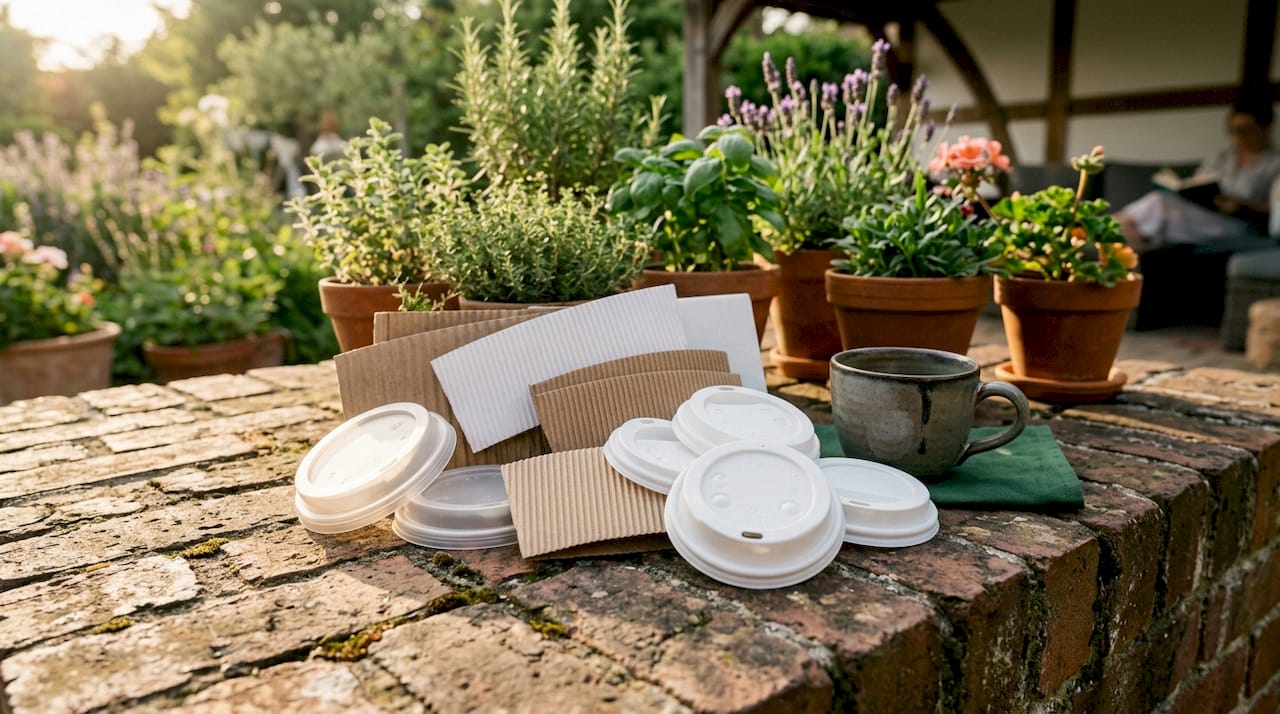
Biodegradable lids and sleeves are where material science gets interesting. The three main lid materials are PLA, CPLA, and molded fiber, and they each perform differently under heat.
| Material | Compostability | Max Temp | Durability | Cost vs. Plastic |
|---|---|---|---|---|
| PLA lid | Industrial only | ~105°F | Moderate | +15–25% |
| CPLA lid | Industrial only | ~185°F | High | +20–30% |
| Molded fiber lid | Industrial + some home | ~160°F | Moderate | +10–20% |
| Corrugated paper sleeve | Industrial + home | N/A | High | +5–15% |
| Molded fiber sleeve | Industrial + home | N/A | High | +10–20% |
CPLA (crystallized PLA) is the better choice for hot drinks because it handles higher temperatures without warping. Standard PLA lids can soften on a steaming latte. Fiber-based lids made from recycled or molded paper fiber are compostable and provide natural insulation, though they are slightly less rigid than CPLA.
Corrugated paper sleeves are the most accessible sustainable option. They use recycled fibers, insulate your hand from heat, and compost easily. Molded fiber sleeves offer a cleaner look and are popular with specialty cafés. Transitioning a café serving 300 drinks per day to sustainable accessories costs an additional $0.12–$0.18 per beverage but diverts 85–95% of waste from landfills. That math makes a strong case for switching.
Pro Tip: If your café uses industrial composting, CPLA lids paired with corrugated paper sleeves give you the best combination of heat performance and verified compostability.
3. Eco-friendly coffee napkins, straws, and sugar packets
These three accessories are easy to overlook, but they add up fast in a busy café or even a home kitchen. The good news is that paper straws, bamboo stirrers, and compostable sugar packets fully biodegrade in industrial composting and replace plastic versions without sacrificing function.
Napkins:
- Recycled paper napkins use post-consumer fiber and are compostable in most home and industrial systems. Look for FSC or SFI certification on the packaging.
- Bamboo fiber napkins are softer and more absorbent than standard recycled paper. They biodegrade quickly and are a good choice for food service settings.
Straws:
- Paper straws are the most common biodegradable option. They work well for cold brew and iced coffee but can soften over 30–40 minutes. Choose a wax-coated paper straw for longer drinks.
- PLA straws hold their shape longer than paper but require industrial composting. They are a better fit for cafés with composting programs than for home use.
- Reusable stainless steel or glass straws are not biodegradable but eliminate single-use waste entirely. For home use, a reusable straw is the most sustainable choice overall.
Sugar and condiment packets:
- Compostable sugar packets use plant-based films or unbleached paper instead of conventional plastic. They biodegrade in industrial composting alongside your cup and lid.
- Portion control packets made from compostable paper reduce both packaging waste and over-portioning.
For personal use at home, reusable stainless steel straws and bamboo napkins are the most practical and lowest-waste combination. For food service, certified paper straws and recycled napkins keep costs manageable while supporting zero-waste goals.
4. Reusable coffee accessories made from recycled or upcycled materials
Reusable accessories made from recycled or upcycled materials sit at the top of the sustainability ladder. They reduce raw material demand and eliminate the need for industrial composting altogether.
- Origami Rework Dripper is made with 20% recycled porcelain content, reducing the energy and raw materials needed for production. It performs identically to a standard ceramic dripper and is built to last for years.
- Kaffeeform cups are made from upcycled coffee grounds combined with natural plant fibers. Repurposing agricultural waste like coffee grounds into cups reduces raw material demand and diverts waste from landfills, enhancing lifecycle sustainability.
- Huskee cups are made from coffee husks, the outer shell of the coffee cherry that is typically discarded during processing. They are durable, heat-resistant, and made entirely from a byproduct that would otherwise go to waste.
“Sustainable does not have to mean inferior. Recycled and repurposed materials in coffee gear can meet or exceed conventional product standards.”
Reusable accessories do require washing, which uses water and energy. The environmental payoff still favors reusables over single-use items after just a handful of uses. For home brewers, the Origami Rework Dripper or a Kaffeeform cup is a satisfying upgrade that feels good every morning. For cafés, a reusable cup program with a small deposit system encourages customers to return cups and reduces disposable waste significantly.
5. What certifications validate biodegradable coffee accessories?
Certifications are the only reliable way to tell a genuinely compostable product from a greenwashed one. Third-party certifications like BPI, TÜV Austria, ASTM D6400, and EN 13432 scientifically validate compostability claims and confirm that products biodegrade safely without harmful residues.
Here is what each certification means in practice:
- BPI (Biodegradable Products Institute): A North American certification confirming industrial compostability under ASTM D6400 standards. Look for the BPI logo on cups, lids, and straws.
- TÜV Austria OK Compost INDUSTRIAL: A European standard confirming industrial compostability under EN 13432. Widely recognized by commercial composting facilities.
- TÜV Austria OK Compost HOME: A stricter certification confirming the product breaks down in home compost conditions, which are cooler and less controlled than industrial facilities.
- ASTM D6400: The American technical standard that defines what qualifies as compostable plastic. BPI certification is based on this standard.
- EN 13432: The European equivalent of ASTM D6400, required for products sold in the EU as compostable.
The difference between home and industrial compostable matters a lot. Most PLA products carry industrial certification only. If you do not have access to a municipal composting program, a home-compostable certified product is the better choice. You can verify certifications through resources like Ossa Organic’s certification guide or by checking the brand’s product documentation directly.
Pro Tip: Scan the product label for a certification logo before buying. A vague claim like “eco-friendly” or “plant-based” with no third-party logo is a red flag for greenwashing.
Key takeaways
Certified compostable coffee accessories are the most reliable way to reduce the environmental footprint of your daily coffee ritual, provided you have access to industrial composting.
| Point | Details |
|---|---|
| Biodegradability requires conditions | Most PLA accessories need industrial composting; home compost piles cannot break them down. |
| Certifications are non-negotiable | Look for BPI, TÜV Austria, ASTM D6400, or EN 13432 logos to verify real compostability. |
| Reusables outperform disposables | Upcycled cups from Kaffeeform or Huskee eliminate composting dependency entirely. |
| Cost premium is small | Switching a café to eco accessories adds roughly $0.12–$0.18 per drink while diverting up to 95% of waste. |
| Material choice drives performance | CPLA handles hot drinks better than standard PLA; bamboo and wood stirrers work in any compost setting. |
My honest take on switching to eco coffee accessories
I have spent years testing sustainable coffee gear, and the single biggest mistake I see is buying “biodegradable” products without checking for a certification logo. Brands use the word loosely, and without BPI or TÜV Austria backing, you have no guarantee the product will actually break down in a reasonable timeframe.
The second thing I have learned is that composting access changes everything. If you live somewhere without a municipal composting program, PLA lids and straws are not doing you much good. In that case, I always recommend going straight to home-compostable certified products or skipping disposables altogether in favor of reusables like the Origami Rework Dripper or a Huskee cup.
The cost conversation is also worth having honestly. The $0.12–$0.18 per drink premium for a fully sustainable café setup sounds small, but it adds up. The brands doing this well, like those offering eco-friendly packaging for conscious consumers, tend to be transparent about their supply chains and certifications. That transparency is what I look for first.
My practical advice: start with one category. Swap your stirrers to bamboo this week. Add certified paper sleeves next month. Build from there. Incremental changes stick better than overhauling everything at once, and each swap genuinely reduces the waste your coffee habit creates.
— LaSaundra
Ecoviberoast’s sustainable teas and environmental mission
Ecoviberoast pairs beautifully with a sustainable coffee accessories setup because the brand’s commitment to eco-friendly sourcing goes beyond the cup.

Every purchase at Ecoviberoast supports mangrove tree planting and ocean-bound plastic removal, making your daily ritual a small act of environmental stewardship. The Hibiscus Berry Tea is a vibrant, organic herbal option that arrives in sustainable packaging and tastes like summer in a mug. If you prefer something floral and aromatic, the Jasmine Tea delivers a rich green tea experience with real jasmine blossoms. Ecoviberoast also publishes a full breakdown of its environmental impact initiatives, including tree planting milestones and plastic reduction metrics, so you can see exactly where your purchase goes.
FAQ
What does “biodegradable” mean for coffee accessories?
Biodegradable coffee accessories break down naturally through microbial activity, typically within 60–180 days under industrial composting conditions. This is far faster than conventional plastic, which takes over 100 years to decompose.
Can I compost PLA coffee accessories at home?
No. PLA requires the high heat and controlled microbial environment of an industrial composting facility. Home compost piles do not reach the temperatures needed to break down PLA effectively.
What certifications should I look for on eco coffee accessories?
Look for BPI, TÜV Austria OK Compost, ASTM D6400, or EN 13432 logos. These third-party certifications confirm that a product composts safely without leaving harmful residues.
Are reusable coffee accessories more sustainable than biodegradable ones?
Reusable accessories made from upcycled materials, like Kaffeeform cups or Huskee cups, have a lower overall environmental footprint because they eliminate the need for composting infrastructure and reduce raw material demand over time.
How much more do sustainable coffee accessories cost?
For cafés, switching to certified biodegradable accessories adds approximately $0.12–$0.18 per beverage. For home users, the premium is minimal and often offset by the longer lifespan of reusable options.


