

TL;DR:
- Choosing certified, shade-grown, and transparent sourcing practices ensures your coffee supports environmental and social sustainability. Proper waste management, energy-efficient brewing, and intentional habits reduce your ecological footprint and maximize positive impact. Small, consistent changes like composting grounds and using reusable filters collectively contribute to a greener coffee routine.
Your morning cup can do more than wake you up. It can be a warm hug for both you and Mother Earth — if you know what to look for. The checklist for home coffee sustainability (think of it as your personal “green brewing framework”) covers everything from sourcing and certifications to equipment choices, composting, and daily habits. Most eco-conscious coffee lovers want to do the right thing but feel overwhelmed by greenwashing labels and conflicting advice. This guide cuts through the noise and gives you a practical, step-by-step path forward that you can actually use.
Table of Contents
- Key Takeaways
- 1. Understanding the checklist for home coffee sustainability
- 2. How to choose sustainably sourced coffee beans
- 3. Managing waste sustainably: composting and packaging
- 4. Selecting eco-friendly brewing equipment
- 5. Brewing and consumption habits that reduce your footprint
- 6. Understanding coffee grounds as a garden resource
- 7. Watching out for greenwashing in coffee marketing
- My take on building a sustainable coffee habit
- Brew better with Ecoviberoast
- FAQ
Key Takeaways
| Point | Details |
|---|---|
| Certifications matter, but context does too | Use multiple labels together as a decision framework, not a single stamp of approval. |
| Composting grounds is a quick win | Coffee grounds add nitrogen to soil, but balance them with carbon-rich material to avoid odor. |
| Manual brewing saves energy and waste | French press and pour-over skip electricity and disposable filters entirely. |
| Small habits compound over time | Brewing only what you drink and storing beans properly prevents spoilage and reduces waste. |
| Reusable swaps are the fastest path forward | Switching to reusable filters, cups, and capsules cuts disposables without sacrificing your morning ritual. |
1. Understanding the checklist for home coffee sustainability
Before you start checking boxes, it helps to understand what “sustainable coffee at home” actually means. The phrase covers three connected areas: how your coffee is grown and sourced, how you brew it, and what happens to the waste afterward. Most guides pick one of those three and call it a day. A real sustainable coffee checklist holds all three together.
The good news? You don’t have to overhaul your kitchen overnight. Each item in this framework is a standalone improvement, and every step you take adds up. Think of it like a mosaic. Each tile looks small on its own, but together they create something beautiful and meaningful.
2. How to choose sustainably sourced coffee beans
Sourcing is where your sustainability story begins. The beans in your bag carry an entire history: the farm, the workers, the soil, and the ecosystem around them. Coffee certifications like Organic, Fair Trade, Rainforest Alliance, and Bird Friendly all represent different sustainability priorities, including environmental, social, and economic pillars.
Here’s a quick comparison to help you decode the labels:
| Certification | Primary Focus | Key Benefit |
|---|---|---|
| USDA Organic | No synthetic pesticides or fertilizers | Protects soil and water health |
| Fair Trade | Fair wages and community investment | Supports farmers economically |
| Rainforest Alliance | Ecosystem and biodiversity protection | Balances farming and forest health |
| Bird Friendly | Strict shade-grown standards | Preserves migratory bird habitats |
| Direct Trade | Relationship between roaster and farm | Often exceeds certification minimums |
Shade-grown Bird Friendly coffee is among the strictest standards available, supporting biodiversity, soil health, and carbon sequestration. Regenerative agriculture goes a step further by actively restoring farmland rather than just maintaining it.
The tricky part is greenwashing. Some bags use terms like “eco-friendly” or “responsibly sourced” with no third-party verification behind them. Your defense? Look for logos from recognized certification bodies, not vague marketing language.
Pro Tip: Treat certifications as a combined decision framework rather than relying on a single label. A bag that carries both Fair Trade and Organic offers broader sustainability assurance than one with just one stamp.
Supporting local and small-batch roasters who publish their sourcing information is another powerful move. Transparency is the hallmark of genuine sustainable coffee practices.
3. Managing waste sustainably: composting and packaging
Once you’ve brewed your morning cup, the real test begins. Coffee waste touches three categories: the grounds, the filters, and the packaging. Each one deserves attention.
Composting your grounds is one of the fastest, most impactful changes you can make. Grounds are nitrogen-rich and add valuable nutrients to garden soil. The catch is that grounds are also “wet” material, which means you need to balance them with carbon-rich “browns” like dry leaves or cardboard to prevent a slimy, smelly pile.
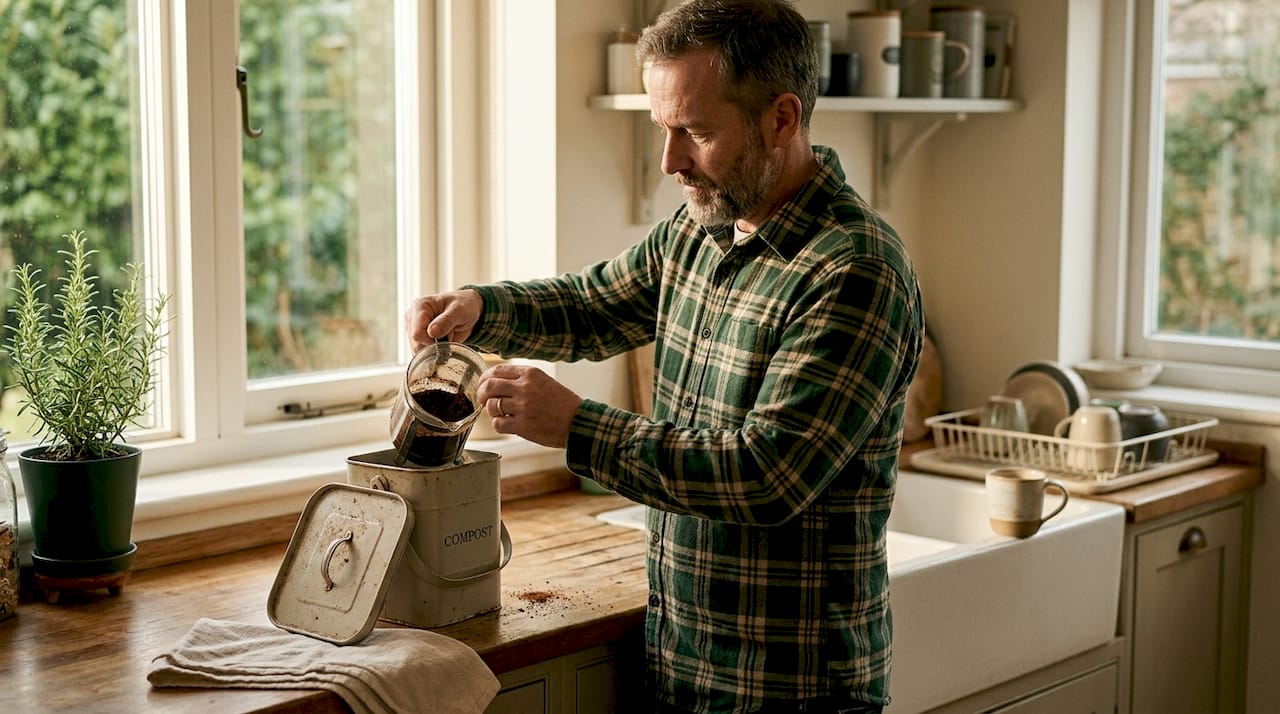
Pro Tip: Keep a small lidded container near your coffee station to collect used grounds daily. Spread them thinly in your compost bin rather than dumping a thick clump, which reduces mold risk and speeds up breakdown.
For filters, the shift to reusable cloth or metal options is straightforward and satisfying. Here’s a quick breakdown of your choices:
- Stainless steel mesh filters work with pour-over and French press setups, last for years, and produce zero paper waste.
- Reusable cloth filters give you a clean, smooth cup and are washable after each use.
- Reusable stainless steel capsules are a practical option if you use a pod machine. They’re compatible with Nespresso and Keurig machines, letting you fill your own grounds and cut single-use plastic entirely.
- Compostable paper filters are a middle-ground option, though you should verify your local compost program accepts them.
On packaging: many “compostable” coffee bags actually require commercial composting facilities to break down properly, not your backyard bin. Before tossing that bag in with your yard waste, check with your local waste management program. For a deeper look at what different packaging types actually mean, Ecoviberoast’s guide on eco-friendly coffee packaging breaks down the options clearly.
4. Selecting eco-friendly brewing equipment
Your brewer is a big piece of the puzzle, and the differences between options are more significant than most people realize.
Manual brewing methods (French press, AeroPress, pour-over) require only boiling water and produce no ongoing electricity consumption once you heat your kettle. They also eliminate the need for disposable filters when paired with reusable mesh. That’s a double win for home brewing sustainability.
Electric drip machines and pod machines are convenient, but they draw power continuously when left on standby and generate more waste through pods and paper filters. If you prefer electric brewing, look for these features:
- Auto shut-off to prevent phantom energy draw
- Thermal carafe instead of a heated plate, which keeps coffee warm without using electricity
- Energy Star certification, which signals about 35% less energy use compared to conventional models and can save roughly 120 kWh annually
- Durable construction because a machine that lasts 10 years beats one that ends up in a landfill after two
Pro Tip: If you love the convenience of a pod machine but want to reduce your footprint, start with reusable stainless steel capsules. It’s a practical first step toward plastic-free brewing that doesn’t require replacing your machine.
The bottom line on equipment: manual brewers win on sustainability, but any brewer paired with smart habits and reusable components is a meaningful improvement.
5. Brewing and consumption habits that reduce your footprint
Even the most sustainably sourced beans and the cleanest brewer won’t mean much if your daily habits are wasteful. This is where eco-friendly coffee tips get personal.
Here are the habits that make the biggest difference:
- Brew only what you’ll drink. Leftover coffee can be repurposed as an iced coffee base, added to smoothies, or used in baking, so nothing has to go down the drain.
- Use a reusable cup. Stainless steel and glass mugs maintain temperature beautifully while eliminating disposable cup waste. Many coffee shops even offer a discount when you bring your own, which is a small bonus for doing the right thing. Reusable cups are one of the highest-impact individual swaps you can make.
- Store beans properly. An airtight container away from light and heat preserves freshness and prevents spoilage, which means less waste over time.
- Boil only the water you need. This one sounds tiny, but it adds up across hundreds of brew sessions.
- Unplug your machine when not in use. Electric brewers on standby draw power quietly in the background.
Small, consistent behaviors are what move the needle on coffee waste reduction at home. You don’t need to be perfect. You just need to be intentional.
6. Understanding coffee grounds as a garden resource
This one deserves its own spotlight because most people think composting is the only option for used grounds. It isn’t. Used coffee grounds have a life beyond the compost bin.
You can work them directly into garden soil around acid-loving plants like blueberries, roses, and hydrangeas. Grounds also act as a mild pest deterrent when sprinkled around plant bases. For a detailed walkthrough on maximizing this resource, the Ecoviberoast guide on composting coffee grounds gives you a practical, step-by-step approach.
The key rule, whether you’re composting or applying directly, is to spread grounds thinly. A thick layer compacts and creates a barrier that water can’t penetrate. Thin and distributed is always better.
7. Watching out for greenwashing in coffee marketing
Greenwashing is real, and the coffee industry is not immune. A bag that says “sustainably grown” with a scenic farm photo but no certification logo is likely marketing, not accountability.
The signals to look for include third-party certification logos from recognized bodies, clear sourcing information (the farm name, the region, the processing method), and roasters who talk openly about their supply chain relationships. Direct trade relationships, where the roaster works directly with the farm and pays above-market prices, often exceed what any certification requires. A roaster who can tell you the farmer’s name is a roaster worth trusting.
Check the brand’s website for sourcing details and impact reports. Genuine sustainability communicators share the hard numbers, not just the feel-good language.
My take on building a sustainable coffee habit
I’ll be honest with you. When I first started trying to apply a sustainable coffee checklist to my own routine, I felt like I needed to change everything at once. New beans, new brewer, new composting system, new filters. It was exhausting, and I stalled before I even started.
What actually worked was picking one thing. I switched to a reusable metal filter first. That single change took 30 seconds and cost less than $15. Once that felt natural, I moved to sourcing certified beans. Then I set up a little grounds container on the counter. Each step made the next one feel smaller.
The honest insight I’ve earned is this: sustainability isn’t a destination you arrive at. It’s a direction you keep moving in. I’ve seen too many people abandon the effort because they couldn’t do it perfectly. The checklist isn’t a test you pass or fail. It’s a menu you order from gradually.
The coffee industry is genuinely evolving, and consumer demand is part of what drives that. Every purchase you make sends a signal. And every small change in your kitchen connects to something much bigger out in the world.
— LaSaundra
Brew better with Ecoviberoast
If you’ve made it through this checklist and you’re ready to start with the sourcing step (which is honestly the highest-leverage place to begin), Ecoviberoast has you covered.

Ecoviberoast offers certified sustainable coffee pods and loose beans that align with everything covered in this guide, from responsible sourcing to eco-conscious packaging. Their Mexico single-origin coffee pods are a great starting point if you want flavor and ethics in the same cup. With every purchase, Ecoviberoast plants mangrove trees and removes ocean-bound plastics, so your morning ritual genuinely contributes to something larger. Explore the full range and find the beans that match your values and your taste buds.
FAQ
What is a checklist for home coffee sustainability?
A home coffee sustainability checklist is a structured set of practices covering sourcing, brewing, waste reduction, and equipment choices to minimize the environmental impact of your daily coffee routine.
Which coffee certification is the most sustainable?
No single certification covers everything. Bird Friendly is the strictest shade-grown standard, while Fair Trade focuses on social equity and Organic on chemical-free farming. Using multiple certifications together gives you the most complete picture.
Can I compost coffee grounds at home?
Yes. Coffee grounds are nitrogen-rich and compost well when balanced with carbon-rich materials like dry leaves. Spread them thin in your bin to prevent mold, and use a lidded container to collect them daily without odor.
Are compostable coffee pods actually compostable at home?
Many compostable pods and bag liners require commercial composting facilities and won’t break down in a home bin. Always verify with your local waste management program before composting packaging at home.
What is the most eco-friendly way to brew coffee?
Manual methods like French press and pour-over are the most sustainable options since they require no ongoing electricity and work beautifully with reusable metal filters, producing almost zero waste per brew.


