

TL;DR:
- Reusable coffee filters made from stainless steel eliminate disposable paper waste and deliver richer flavor.
- Choosing certified ethical sourcing like Fair Trade and Rainforest Alliance ensures the coffee supports both people and the environment.
Coffee gifts for conscious buyers are sustainable presents designed to reduce waste, support fair trade, and promote eco-friendly coffee enjoyment. The best options combine reusable materials, ethical sourcing, and certifications like Fair Trade, Rainforest Alliance, and B Corp to ensure every cup supports both people and the planet. Whether you are shopping for a devoted coffee lover or a casual morning sipper, the right gift can spark a daily ritual that feels like a warm hug for both the recipient and Mother Earth. This guide gives you 12 concrete, values-driven picks plus the criteria to choose wisely.
1. What are the top coffee gifts for conscious buyers?
Reusable stainless steel coffee filters top the list for good reason. They eliminate disposable paper waste while allowing natural coffee oils to pass through, producing a richer, fuller flavor. They are dishwasher safe and compatible with most pour-over setups, making them practical for everyday use.
2. Organic fair-trade coffee bean subscriptions
An organic, fair-trade coffee subscription is one of the most thoughtful ethical coffee presents you can give. Shade-grown, ethically sourced beans ensure farmers receive fair compensation while protecting forest canopy and biodiversity. The recipient gets fresh, aromatic coffee delivered regularly, and the farmers get a livable income. That is a gift that keeps giving on both ends.
Pro Tip: Look for subscriptions that list the farm name and country of origin. Traceability is the clearest sign of genuine direct trade.
3. Hand-thrown ceramic travel mugs
Ceramic travel mugs made by artisan potters are unique coffee gift ideas that outlast mass-produced alternatives by years. Each piece is slightly different, which makes the gift feel personal. Ceramic retains heat well and contains no plastic liners, so the coffee tastes exactly as it should. Pair one with a silicone lid to keep the whole package plastic-free.
4. Compostable coffee pods
Compostable pods are a smart upgrade for friends who rely on single-serve machines. The key detail: pods certified for industrial composting break down without plastic contamination, unlike unregulated “biodegradable” pods that may leave microplastic residue. Always check the packaging for a recognized composting certification before buying. Ecoviberoast offers guidance on reducing pod waste for anyone navigating this category.
5. Manual burr coffee grinders
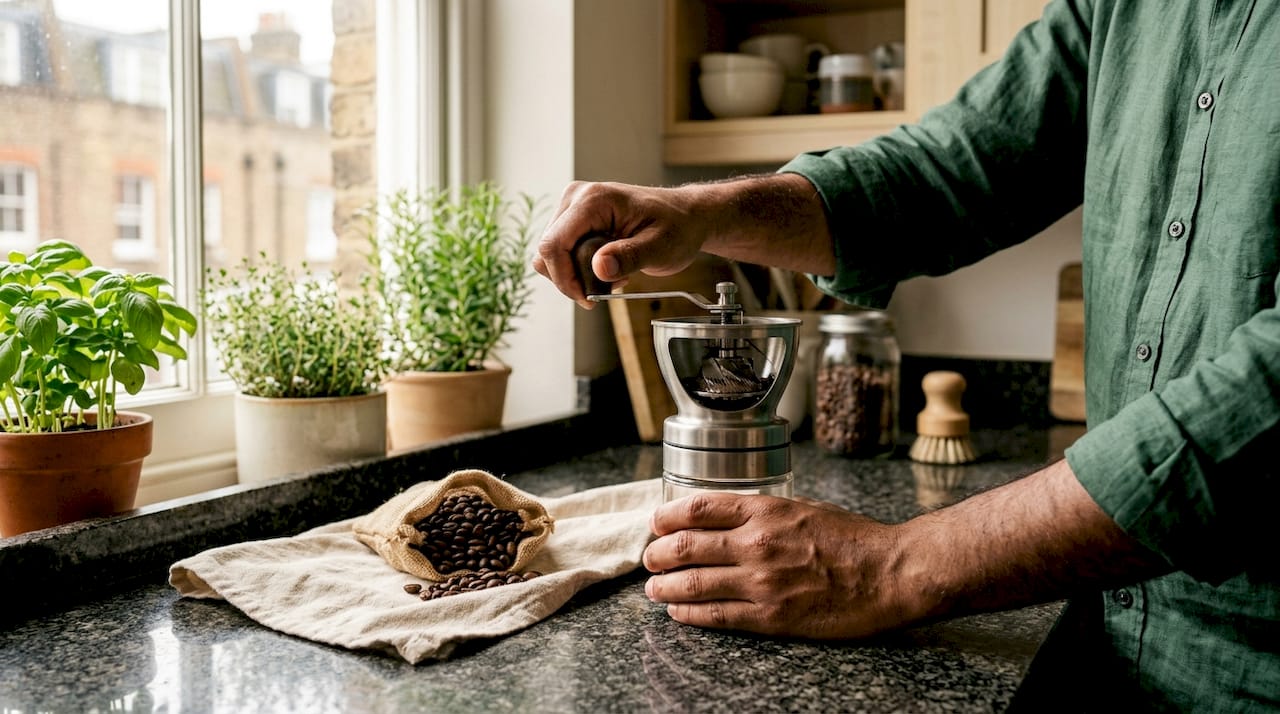
A manual burr grinder is one of the most genuinely sustainable coffee gifts you can give. Manual grinders consume zero electricity and feature durable, repairable construction that can last a decade or more. They also produce a more consistent grind than many entry-level electric models, which means better-tasting coffee. The lack of a motor means fewer parts to break and nothing to plug in.
6. Bamboo coffee stirrers and measuring scoops
Bamboo accessories are a small but meaningful swap. Bamboo stirrers and measuring scoops are made from a rapidly renewable material, are heat resistant, lightweight, and biodegradable at end of life. They replace plastic equivalents that typically end up in landfills. Bundle a set with a bag of fair trade coffee for an affordable, complete artisan coffee gift set.
7. Reusable glass or stainless steel carafes
A quality insulated carafe keeps coffee hot for hours without a warming plate, which saves energy and prevents the bitter taste that comes from prolonged heat exposure. Stainless steel and borosilicate glass are both durable, non-reactive materials that do not leach chemicals into your brew. Gift givers can find carafes in a wide range of sizes to suit solo drinkers or households. This is a premium coffee gift that pays for itself in avoided disposable cup purchases within months.
8. Reusable coffee bags with airtight seals
Reusable coffee storage bags made from food-grade silicone or stainless steel keep beans fresh longer than single-use packaging. Freshness matters because stale beans produce flat, lifeless coffee. Pairing a reusable bag with a bag of freshly roasted, organic coffee for gifting creates a complete and practical present. Ecoviberoast covers the topic of reusable coffee packaging in depth for readers who want to go further.
9. Eco-friendly gift packaging
The wrapping matters as much as the gift itself for conscious buyers. Recycled kraft paper, seed paper tags, and natural twine replace plastic wrap and synthetic ribbons without sacrificing presentation. Some brands now offer packaging made from agricultural waste, which composts fully after use. Ecoviberoast’s guide to eco-friendly packaging examples shows how thoughtful presentation reinforces the gift’s values.
10. Curated sustainable coffee gift sets
A curated gift set that combines several sustainable components, such as a ceramic mug, a bag of fair trade beans, and a bamboo scoop, tells a complete story. The recipient gets everything they need to start a low-waste coffee ritual immediately. Sets also solve the common gifting problem of not knowing what the person already owns. Choose sets where every component meets at least one sustainability standard: reusable, compostable, or certified ethical.
Pro Tip: Use the sustainable coffee gift checklist from Ecoviberoast to verify each item in a set before purchasing.
11. Zero-waste coffee brewing kits
A zero-waste brewing kit typically includes a reusable filter, a manual dripper, and a small bag of organic coffee. The entire setup produces no disposable waste beyond the used grounds, which are themselves compostable. Used coffee grounds add nitrogen to soil, making them a valuable addition to any compost pile or garden bed. This gift works especially well for eco-conscious recipients who also garden.
12. Insulated stainless steel tumblers
A high-quality insulated tumbler replaces hundreds of disposable cups per year. The math is simple: one tumbler used daily for three years eliminates over 1,000 single-use cups. Look for tumblers made without BPA, with a leak-proof lid and a wide mouth for easy cleaning. This is the kind of durable, reusable gift that reduces disposables permanently rather than just once.
How to evaluate coffee gifts for sustainability and ethical sourcing
Choosing the right gift means knowing what to look for beyond the marketing language. Three certifications carry real weight:
- Fair Trade covers fair wages and safe working conditions for farmers.
- Rainforest Alliance focuses on environmental stewardship and biodiversity protection.
- B Corp signals that the company as a whole meets verified social and environmental standards.
Beyond certifications, prioritize material longevity. Stainless steel, bamboo, and borosilicate glass outlast plastic alternatives by years and reduce the frequency of replacement. Fair Trade, Rainforest Alliance, and B Corp certifications together cover fair wages, environmental stewardship, and social responsibility, so looking for all three gives you the most complete picture.
Pro Tip: When evaluating compostable pods, look for explicit industrial composting certification on the label. “Biodegradable” without certification is a marketing claim, not a guarantee.
Packaging sustainability is also worth checking. Recyclable or compostable outer packaging signals that the brand thinks about the full product lifecycle, not just the contents inside.
Budget-friendly versus premium sustainable coffee gift options
Sustainable gifting works at every price point. Here is how to think about it by budget:
- Entry level (under $20): Bamboo accessories, reusable stainless steel filters, and a small bag of organic fair-trade coffee combine into a charming, low-cost set. Each item is practical and immediately useful.
- Mid-range ($20–$60): A quality ceramic mug, a manual burr grinder, or a fair-trade coffee subscription fits this range. These gifts last years and improve the recipient’s daily routine in a tangible way.
- Premium ($60 and above): Artisan-made ceramic drippers, high-end insulated tumblers, and elaborate curated gift sets land here. The investment is justified by longevity and the craftsmanship behind each piece.
Combining items across categories creates a thoughtful curated package without necessarily hitting the premium price point. A mid-range grinder paired with a bag of single-origin beans and a bamboo scoop feels generous and complete. Personalization, such as choosing beans from a region the recipient has visited or mentioned, adds meaning without adding cost.
How do sustainable coffee gifts reduce environmental impact in everyday use?
Every reusable brewing tool replaces a stream of disposable waste. A single reusable filter used daily prevents hundreds of paper filters from reaching landfills each year. Manual grinders save electricity with every use, and insulated tumblers eliminate the need for disposable cups on the go.
Durable mugs, tumblers, and carafes permanently reduce disposables beyond a single coffee consumption event. The environmental benefit compounds every day the gift is used, making longevity the single most important factor in sustainable gifting.
Composting closes the loop further. Used grounds from sustainably sourced coffee add nitrogen to soil, supporting home gardens and reducing food waste. Compostable pods certified for industrial facilities break down cleanly, unlike unregulated alternatives that leave plastic residue behind.
| Gift type | Primary environmental benefit | Lifespan |
|---|---|---|
| Stainless steel filter | Eliminates paper filter waste | 5+ years |
| Manual burr grinder | Zero electricity consumption | 10+ years |
| Insulated tumbler | Replaces disposable cups daily | 3–5 years |
| Compostable pods | No plastic contamination in compost | Single use, certified |
| Bamboo accessories | Renewable material, biodegradable | 1–3 years |
Ethical sourcing certifications reduce the carbon footprint of the supply chain itself. Shade-grown coffee preserves forest cover, which sequesters carbon and protects biodiversity. When you give a gift tied to certified ethical sourcing, the environmental benefit extends all the way back to the farm.
Key takeaways
The most effective coffee gifts for conscious buyers combine certified ethical sourcing, durable reusable materials, and zero-waste design to deliver lasting environmental benefit with every use.
| Point | Details |
|---|---|
| Certifications matter | Look for Fair Trade, Rainforest Alliance, or B Corp labels to confirm ethical sourcing. |
| Prioritize longevity | Stainless steel, ceramic, and bamboo gifts outlast plastic and reduce replacement waste. |
| Compostable pods need certification | Only pods with industrial composting certification break down without plastic residue. |
| Budget does not limit sustainability | Thoughtful eco-friendly gifts exist at every price point from under $20 to premium sets. |
| Reusable tools compound impact | A single reusable filter or tumbler eliminates hundreds of disposables over its lifespan. |
Why longevity beats luxury in sustainable coffee gifting
I have spent years thinking about what makes a gift genuinely meaningful for someone who cares about the planet. The honest answer is not the price tag or the packaging. It is whether the gift changes a daily habit for the better.
A beautiful ceramic mug used every morning for five years does more environmental good than a fancy disposable gift set that gets used once and forgotten. The same logic applies to a manual grinder sitting on a counter versus a trendy gadget that breaks in six months and ends up in a drawer.
Transparent ethical sourcing is the other piece most gift guides skip over. Knowing that the beans inside the bag came from a farm paying fair wages, growing coffee under forest canopy, and operating without synthetic pesticides makes the morning cup taste different. Not chemically different, but meaningfully different. That story is part of the gift.
My practical advice: choose one durable brewing tool and pair it with a bag of certified fair-trade, shade-grown coffee. That combination gives the recipient both the ritual and the values behind it. It is the kind of gift that inspires a sustainable coffee routine rather than just adding to a collection of stuff. The step-by-step eco-friendly gifting guide from Ecoviberoast is a great place to start if you want a structured approach.
— LaSaundra
Ecoviberoast: where conscious coffee gifting starts
Ecoviberoast brings together ethically sourced coffee, eco-friendly accessories, and a genuine commitment to environmental impact in one place. Every purchase supports mangrove tree planting and ocean-bound plastic removal, so the gift does good before it even reaches the recipient’s hands.

Gift givers can browse sustainable coffee gift sets and single-origin bean collections designed to reduce waste and support farmers directly. The range covers every budget, from simple bamboo accessory bundles to premium curated sets built around certified fair-trade beans and reusable brewing tools. If you want to give something that reflects real values, Ecoviberoast is the place to find it.
FAQ
What makes a coffee gift sustainable?
A sustainable coffee gift uses reusable, compostable, or biodegradable materials and sources beans through certified ethical supply chains. Look for Fair Trade, Rainforest Alliance, or B Corp labels as confirmation.
Are compostable coffee pods actually eco-friendly?
Compostable pods are eco-friendly only when they carry explicit industrial composting certification. Without that certification, “biodegradable” pods may leave plastic residue in compost.
What is the best budget-friendly sustainable coffee gift?
A reusable stainless steel coffee filter paired with a small bag of organic fair-trade coffee makes an excellent gift under $20. Both items are practical, durable, and immediately reduce waste.
How do manual burr grinders support sustainability?
Manual burr grinders consume zero electricity and feature repairable construction that can last a decade or more. That combination of energy efficiency and longevity makes them one of the most genuinely eco-friendly brewing tools available.
Can used coffee grounds be composted?
Yes. Used coffee grounds from sustainably sourced coffee add nitrogen to soil and work well in home compost piles or garden beds, completing a zero-waste coffee cycle.


