

TL;DR:
- Packaging has a greater environmental impact than most realize, with single-serve capsules producing five times more CO2e per cup than flexible bags. Reusable containers, when used consistently, significantly reduce greenhouse gas emissions, waste, and long-term costs, making them a better sustainable choice. Partial adoption and community influence are effective strategies for maximizing environmental benefits in everyday coffee routines.
You might assume the biggest environmental cost in your morning cup comes from how the coffee was grown or shipped. Surprisingly, the packaging itself carries a much heavier burden than most people realize. Single-serve capsule formats generate roughly 41 g CO2e per cup compared to just 8.2 g for multilayer bags. That’s a five-times difference hiding inside your coffee drawer. This guide breaks down the real evidence behind reusable coffee packaging, showing you exactly what the science says and how to put it into practice without turning your routine upside down.
Table of Contents
- How coffee packaging impacts the environment
- Reusable vs single-use: The life cycle difference
- Practical benefits of choosing reusable coffee packaging
- How to maximize the benefits of reusable packaging
- Why reusability isn’t all or nothing: A pragmatic perspective for coffee lovers
- Ready to make your coffee routine lower impact?
- Frequently asked questions
Key Takeaways
| Point | Details |
|---|---|
| Single-serve waste impact | Pods and capsule systems cause much greater environmental burden than reusables or traditional packaging. |
| Reuse rate is crucial | The more often you use your reusable coffee packaging, the better the sustainability outcome. |
| Practical advantages | Reusable coffee containers reduce landfill waste and often save money over time. |
| Cleaning matters | Efficient cleaning routines for reusables are essential to maximizing their eco-benefits. |
| Collective impact | Consistent small changes in your coffee packaging choices make a significant difference. |
How coffee packaging impacts the environment
With the stage set, let’s examine exactly how coffee packaging choices ripple through the environment.
Most of us focus on organic certifications or fair-trade labels when we shop for coffee. Those things genuinely matter! But packaging is often the overlooked piece of the puzzle, quietly contributing emissions and waste at every stage of its life.
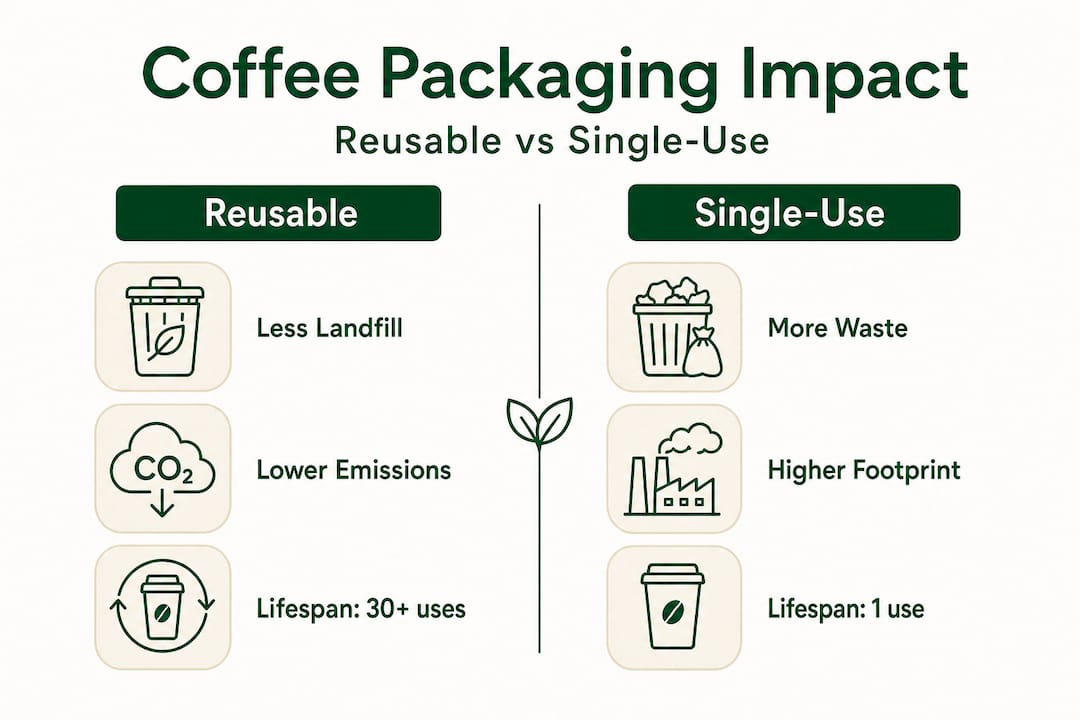
Life Cycle Assessment, or LCA, is the scientific method researchers use to measure the total environmental footprint of a product from raw material extraction all the way through disposal. When LCA researchers study coffee packaging, the results are consistently eye-opening. Packaging impacts are much higher for single-serve pod solutions compared to larger, traditional packages. That’s not a minor difference. It’s the kind of gap that should change how you shop.
Here’s a quick look at how common coffee packaging types stack up across key environmental categories:
| Packaging type | CO2e per cup (approx.) | Recyclability | Waste volume |
|---|---|---|---|
| Single-serve pod/capsule | ~41 g | Low to difficult | Very high |
| Multilayer flexible bag | ~8.2 g | Moderate | Medium |
| Reusable container (refillable) | ~2 to 5 g (amortized) | N/A (reused) | Very low |
| Bulk/whole bean bag | ~6 to 9 g | Moderate | Low |
When you look at that table, the case for rethinking single-serve becomes hard to ignore. The major environmental impacts show up in three key areas:
- Manufacturing: Creating pods requires energy-intensive plastic or aluminum production, often combining multiple materials that are nearly impossible to separate at recycling facilities.
- Waste generation: Single-serve formats produce an enormous volume of small, mixed-material waste items. Even “recyclable” pods often end up in landfills because many municipal programs can’t process them.
- Greenhouse gas emissions: Producing, transporting, and disposing of packaging contributes meaningfully to your coffee’s total carbon footprint, not just the farming side.
You can explore more eco-friendly packaging examples to see what lower-impact alternatives actually look like in practice. The broader picture of sustainability in food packaging also reveals just how much progress is still needed across the food and beverage industry.
The takeaway: Your packaging choice is not a small detail. It’s one of the most impactful decisions you make every single time you restock your coffee shelf.
Reusable vs single-use: The life cycle difference
Now that you see the environmental impact, let’s put reusables and single-use options head to head.
The comparison between reusable and single-use packaging really comes alive when you look at the full lifecycle rather than just the moment of purchase. A reusable container costs more energy upfront to produce because it needs to be durable and long-lasting. But that initial investment pays off quickly once you actually use it consistently.
Research on reusable cup systems shows that reusables reduce greenhouse gas impacts by roughly 20% at just 25% adoption across a beverage system, but the true benefits depend heavily on actual reuse rates and cleaning processes. In other words, a reusable option sitting in your cupboard doesn’t help anyone. It’s the act of using it repeatedly that generates the environmental return.
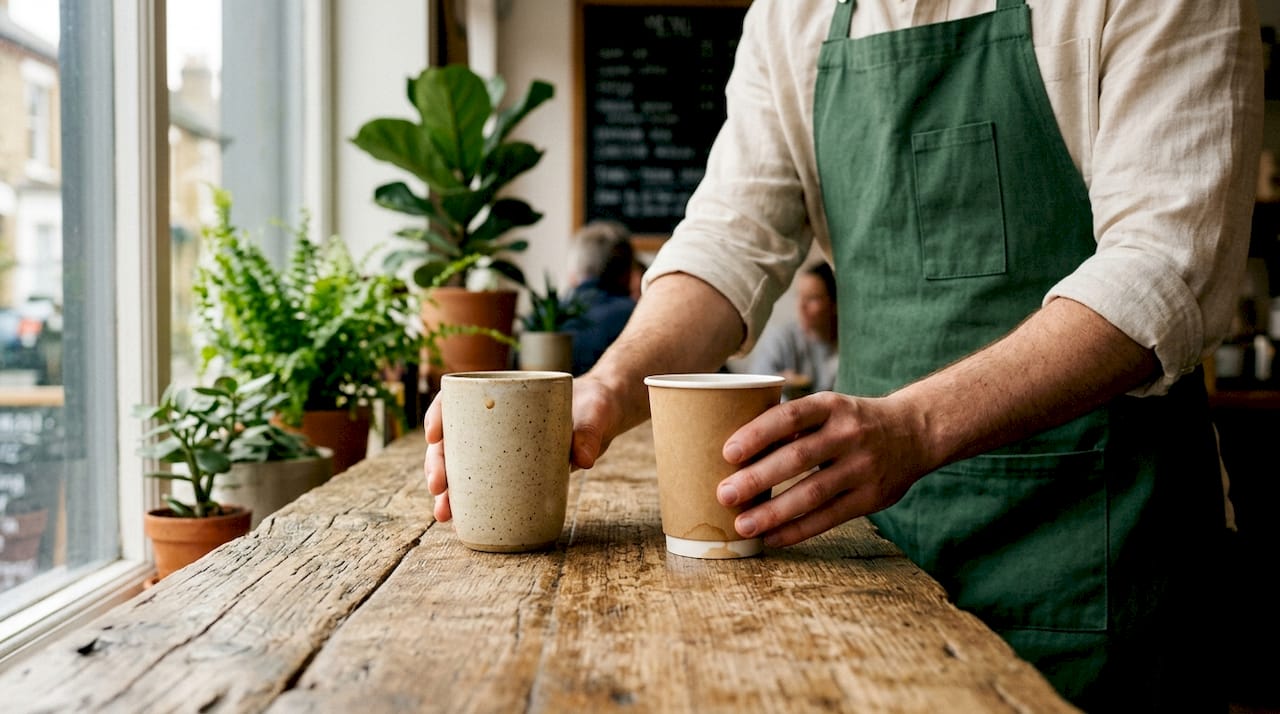
Here’s how the two options compare across the most important sustainability dimensions:
| Factor | Reusable packaging | Single-use packaging |
|---|---|---|
| Climate impact (GHG) | Low over many uses | High per item |
| Waste to landfill | Minimal | Very high |
| Recyclability | Not needed (reused) | Often poor |
| Long-term cost | Lower | Higher cumulative |
| Resource efficiency | High with frequent use | Low |
Want to take real action? Here are the most important things to understand about this lifecycle comparison:
- The breakeven point is real but achievable. Most reusable packaging formats offset their production footprint within 20 to 50 uses. If you drink coffee daily, you hit that mark in weeks, not years.
- Cleaning does add some impact. Using hot water and energy to wash reusable coffee equipment adds modest emissions, but research consistently shows the net result still strongly favors reusables over single-use disposables.
- Single-use pods are especially problematic. Their small size, mixed material construction, and massive production volume make them one of the hardest packaging formats to recycle effectively.
- Collective adoption amplifies individual gains. The more people in your community switch to reusables, the larger the systemic reduction in packaging waste and emissions becomes.
You can go deeper on reducing waste with coffee pods for specific strategies, and our eco-conscious packaging guide walks you through the full landscape of beverage packaging choices in 2026. For creative sustainable packaging ideas, there’s a broader resource worth browsing too.
Pro Tip: When comparing two reusable options, always look for one made from a single material like stainless steel or glass. Single-material products are far easier to recycle at the end of their very long life, and they tend to be more durable too.
Practical benefits of choosing reusable coffee packaging
Head-to-head numbers matter, but what does choosing reusable coffee packaging look like in your daily life?
The environmental case is strong, but the everyday benefits of switching to reusable coffee packaging are just as compelling. This isn’t about sacrifice. It’s about a small shift that quietly improves your routine, your wallet, and your peace of mind.
Here’s what you actually gain when you make the switch:
- Less landfill guilt. Every time you skip a single-use pod or disposable bag, you’re diverting real physical waste from the landfill. Over a year of daily coffee drinking, that adds up to hundreds of items.
- Cleaner recycling streams. Reusable options not only reduce landfill burden but avoid problems with mixed-material and contaminated waste streams that plague single-use packaging recycling programs.
- Real money savings. Single-serve pods typically cost two to three times more per cup than buying coffee in bulk or larger bags. Switching to a reusable system and buying quality coffee in larger formats can save a regular coffee drinker $200 to $400 annually.
- Alignment with your values. If you’re already choosing planet-friendly coffee beans, pairing them with reusable packaging means your entire coffee ritual reflects the ethical sourcing values you care about.
- Simpler waste sorting. No more trying to figure out if a pod is recyclable in your city. Reusable systems sidestep that confusion entirely.
- A ritual that feels good. There’s something genuinely satisfying about a coffee routine that’s thoughtfully put together. Knowing your morning brew is also a warm hug for Mother Earth adds an extra layer of enjoyment.
You’ll find even more motivation and ideas in our eco-conscious coffee tips collection. Small changes, consistently applied, really do compound into something meaningful.
Pro Tip: Start by replacing just one single-use product in your routine, whether that’s your coffee pod, your disposable cup, or your packaging. One swap builds the habit, and the habit builds momentum.
How to maximize the benefits of reusable packaging
Understanding reusables is powerful, but action multiplies your impact. Here’s how to get started and truly make a difference.
Owning a reusable coffee container is the first step. Using it effectively and consistently is where the real environmental and financial gains come from. Consumer behavior, specifically frequency of reuse and cleaning methods, strongly influences the benefit of reusables. Here’s how to make sure you’re getting the full value out of every reusable choice you make.
Four steps to maximize your reusable packaging impact:
- Use it consistently, not occasionally. The environmental math only works in your favor when reusables are your default, not your backup. Keep your reusable coffee gear front and center so it’s easier to reach for than the disposable option. Make it the path of least resistance.
- Clean efficiently. You don’t need to run your dishwasher half-empty after every cup. Rinse reusables promptly after use and batch your dishwasher loads. Cold rinses work fine for light cleaning, which keeps your water and energy use low. Our coffee waste reduction guide has even more practical routines.
- Spread the habit. Individual action matters, but community action multiplies it. Share what you’ve learned with your household, your coworkers, or your social circle. Gifting a quality reusable coffee product is one of the most effective ways to bring someone else into the sustainable coffee community. You can also check out our sustainable coffee waste workflow for a structured approach.
- Choose quality over novelty. The best reusable is one you’ll actually want to use for years. Look for durable materials, easy-to-clean designs, and products from brands that are transparent about their environmental commitments.
What to avoid:
- Don’t buy reusables you won’t use regularly. An unused reusable still had an environmental cost to produce.
- Avoid products with complex multi-material construction that makes them hard to clean or eventually recycle.
- Don’t let perfect be the enemy of good. Even using a reusable 60% of the time is a significant improvement over never.
The reducing packaging waste guide offers a helpful broader framework if you want to extend these habits beyond coffee.
Pro Tip: Label your reusable container with a small piece of tape and tick off every use. When you hit 30 uses, you’ve already outpaced the environmental cost of making it. That’s a satisfying milestone worth celebrating!
Why reusability isn’t all or nothing: A pragmatic perspective for coffee lovers
You have clear steps, but it’s time for a real-world perspective on what most guides gloss over.
Here’s something the sustainability conversation often gets wrong: it frames eco-conscious choices as binary. Either you’re perfectly zero-waste or you’re failing. That framing isn’t just inaccurate, it’s actively discouraging for people who are genuinely trying.
The truth is that reusability works on a spectrum, and partial adoption still produces meaningful environmental benefits. Using a reusable coffee container four out of seven mornings is not a failure. It’s a substantial positive shift from zero. The data on collective greenhouse gas reductions already shows significant impact at just 25% adoption rates. You don’t have to be perfect. You just have to be consistent enough.
We see this in the broader coffee sustainability trends shaping the industry right now. Brands, cafes, and packaging innovators are all building systems that make partial adoption easier because they understand that human behavior is messy and realistic frameworks outperform idealistic ones every time.
There’s also a community dimension worth embracing. When you normalize reusable packaging in your social circle, at your workplace, or even just by leaving your reusable gear visible on the counter, you’re participating in cultural change. That’s arguably more powerful than personal perfection. One person who uses reusables 80% of the time and influences five others to start is generating more collective impact than one person achieving 100% alone.
So if you had a week where you grabbed a disposable cup at the airport, or used a single-serve pod because you were running late, please don’t let that be the moment you abandon the whole effort. Slip-ups are part of the process. What matters is the long game, the accumulation of choices over months and years that quietly reshape your footprint and contribute to a culture shift in how we all think about packaging.
Ready to make your coffee routine lower impact?
Switching to more sustainable coffee packaging doesn’t have to feel overwhelming. The evidence is clear, the habits are achievable, and the impact is real. Now it’s about finding products that actually support the routine you want to build.

At EcoVibe Roast, we’ve built our entire product line around making the sustainable choice the easy choice. Whether you’re exploring our reusable single-serve collection or stocking up with our convenient 60-pack single-serve pods designed with minimal-waste packaging in mind, every purchase also supports mangrove tree planting and ocean-bound plastic removal. Want to see exactly how your purchase gives back? Take a look at our environmental impact page to see the numbers behind our mission. Your next cup of coffee can taste great and do good at the same time.
Frequently asked questions
How many times must I reuse my coffee packaging for it to be more sustainable?
Most studies show that reusing a package at least 20 to 30 times yields lower environmental impacts than single-use alternatives, though the reuse rate significantly influences the overall sustainability outcome for any given product.
Can washing reusable coffee containers cancel out their benefits?
Energy and water from cleaning add some environmental impact, but reusables still reduce overall greenhouse gas warming potential even when regular cleaning is factored into the lifecycle calculation.
Why are single-serve coffee pods so problematic for the environment?
Single-serve pods carry much higher emissions and are extremely difficult to recycle effectively because capsule systems generate roughly five times more CO2e per cup than multilayer flexible bags.
Does reusable packaging actually reduce landfill waste?
Yes. Reusable cups score better than single-use for both landfill diversion and climate outcomes, while also avoiding the mixed-material contamination problems that make single-use packaging hard to recycle.
How can I convince others to switch to reusable coffee packaging?
Share the real-world impact numbers, especially the emissions difference between pods and reusables, because concrete data tends to resonate more than general environmental appeals and helps others see exactly why the switch genuinely matters.


