

For the deepest flavor and the least waste, loose leaf wins. For speed and a grab-and-go morning routine, tea bags win. Both can be genuinely great cups of tea, but loose leaf tea generally offers superior flavor breadth and depth because whole leaves have room to unfurl, while some tea bags carry a hidden cost: microplastics that can leach into your hot water.
TL;DR:
- Loose leaf tea provides richer flavor and greater re-steeping potential compared to tea bags, especially with high-quality whole leaves.
- Tea bags made from nylon or polypropylene may release microplastic particles when steeped in hot water, raising health concerns.
- For delicate teas like green and oolong, loose leaf offers more complex aromatics, while bagged black teas brew stronger and more consistent.
- Re-steeping loose leaf can significantly lower the cost per cup and extend tea supplies, making it more economical for daily drinkers.
- Using plastic-free, compostable packaging, cold brewing, and a reusable infuser can reduce plastic exposure and environmental impact.
Table of Contents
- Loose Leaf vs Tea Bags: What’s Actually in Your Cup
- When Will You Actually Taste the Difference?
- How to Brew Each Format Without Wrecking the Cup
- What Does a Cup Actually Cost You?
- Do Tea Bags Contain Plastic, and Should You Worry?
- Ecoviberoast’s Sustainable Brewing and Buying Guide
- Storage and Shelf Life Differences
- How to Choose for Your Actual Routine
- Try a Plastic-Free Loose-Leaf Sampler
- Sources
Loose Leaf vs Tea Bags: What’s Actually in Your Cup
The real difference between loose leaf and tea bags starts before the water ever hits the leaves. It comes down to leaf size and how the tea was processed.
Whole leaf tea is exactly what it sounds like: leaves that stay largely intact through drying, rolling, and oxidation. Broken leaf is whole leaf that’s been chopped down a size or two. Fannings are smaller still, and dust is the fine, gritty leftover from processing, the stuff that ends up in the cheapest bagged teas. Orthodox processing preserves leaf structure and essential oils. CTC processing (crush, tear, curl) shreds leaves into uniform pellets built for fast, strong extraction, which is why most mass-market bags use it.
Here’s why that matters for your cup:
- Smaller particles extract faster. More surface area means caffeine and tannins hit the water quickly, often producing a stronger, blunter flavor.
- Smaller particles oxidize faster too. Dust and fannings lose aromatic complexity sooner, which shortens shelf life compared to whole leaf.
- Packaging varies more than you’d think. You’ll find paper sachets, pyramid mesh bags, nylon mesh, and polypropylene heat-seal bags, each with different implications for what leaches into your tea.
None of this means bags are inferior across the board. It means the format and the packaging material both shape what you’re actually drinking.
When Will You Actually Taste the Difference?
You’ll notice the format gap most with delicate teas. Green, oolong, and single-origin specialty teas rely on subtle, layered aromatics that need room to develop as leaves expand and release oil gradually. Cram that same leaf into a crushed, bagged format and you flatten most of that nuance.
Black tea tells a different story. Fannings and dust brew fast and strong, which is exactly what you want if you’re adding milk and sugar. A punchier, simpler cup actually holds up better against dairy than a delicate, layered one would.
- Loose leaf green and oolong: noticeably more floral, vegetal, or fruity complexity.
- Bagged black tea (fannings/dust): faster, bolder, and more consistent cup after cup.
- Premium pyramid bags with whole or broken leaf: close the gap significantly, since some bagged teas are blended for consistency while premium pyramid bags may contain genuine whole leaf.
Pro Tip: If you’re tea-curious but skeptical of the difference, do a side-by-side taste test with the same tea type in loose leaf and a premium pyramid bag. The gap is far more obvious with green tea than with a hearty English breakfast blend.
How to Brew Each Format Without Wrecking the Cup
Getting a good cup out of either format comes down to three variables: how much leaf you use, how hot the water is, and how long you let it steep.
For conversion, a typical tea bag holds roughly 1.5 to 3 grams of leaf, which lines up closely with about one teaspoon, or 2 to 3 grams, of loose leaf per cup. That’s your baseline for swapping formats without guessing.
- Green tea: water around 175°F, steep 2 to 3 minutes. Both formats oversteep easily, but bags with dust go bitter faster since there’s less leaf mass to buffer the tannins.
- Black tea: water at a full boil, steep 3 to 5 minutes for loose leaf, closer to 3 minutes for bags since fannings extract quicker.
- Oolong: water around 195°F, steep 3 minutes, and consider a second steep. Oolong often improves on re-steep as tighter-rolled leaves keep unfurling.
- Herbal blends: near-boiling water, 5 to 7 minutes, since most herbal ingredients need longer to release flavor regardless of format.
Loose leaf’s real advantage shows up on re-steeps. High-quality whole leaf can yield one to four additional cups as the leaf continues to open, something dust and fannings in most bags simply can’t do since they’ve already released most of their flavor on the first pour. If your cup tastes weak, you probably used too little leaf or water that wasn’t hot enough. If it’s bitter and flat, you oversteeped, plain and simple.
What Does a Cup Actually Cost You?
Sticker price tells you almost nothing useful here. What matters is cost per cup, and that math shifts hard once you factor in re-steeping.
A standard supermarket box of 50 tea bags typically runs somewhere in the $4 to $6 range, working out to roughly $0.10 per cup, one steep and done. A 50-gram pouch of quality loose leaf might cost $10 to $15, but at 2 to 3 grams per cup with two or three usable re-steeps common for oolongs and better black teas, you can stretch that pouch across 40 to 60 cups.
| Factor | Tea Bags | Loose Leaf |
|---|---|---|
| Upfront cost per box/pouch | Lower | Higher |
| Re-steeps typically possible | Rarely more than one | 1 to 4 additional steeps |
| Equipment needed | None | Infuser or teapot (one-time cost) |
| Best value scenario | Occasional or single cups | Daily drinkers, specialty teas |
If you drink tea occasionally, bags are genuinely the cheaper call. If you’re a daily drinker who reaches for the pot more than once, loose leaf usually pays for itself within a few weeks.
Do Tea Bags Contain Plastic, and Should You Worry?
Yes, some do, and the research on this has gotten more specific in recent years. A systematic review of microplastics in tea and tea-based beverages found that bags made from nylon or polypropylene can shed micro- and nano-plastic particles when steeped in near-boiling water. A more recent imaging study using optical coherence tomography detected substantial microplastic counts released from nylon tea bags during hot brewing, which is a strong signal that material, not format alone, drives the risk.
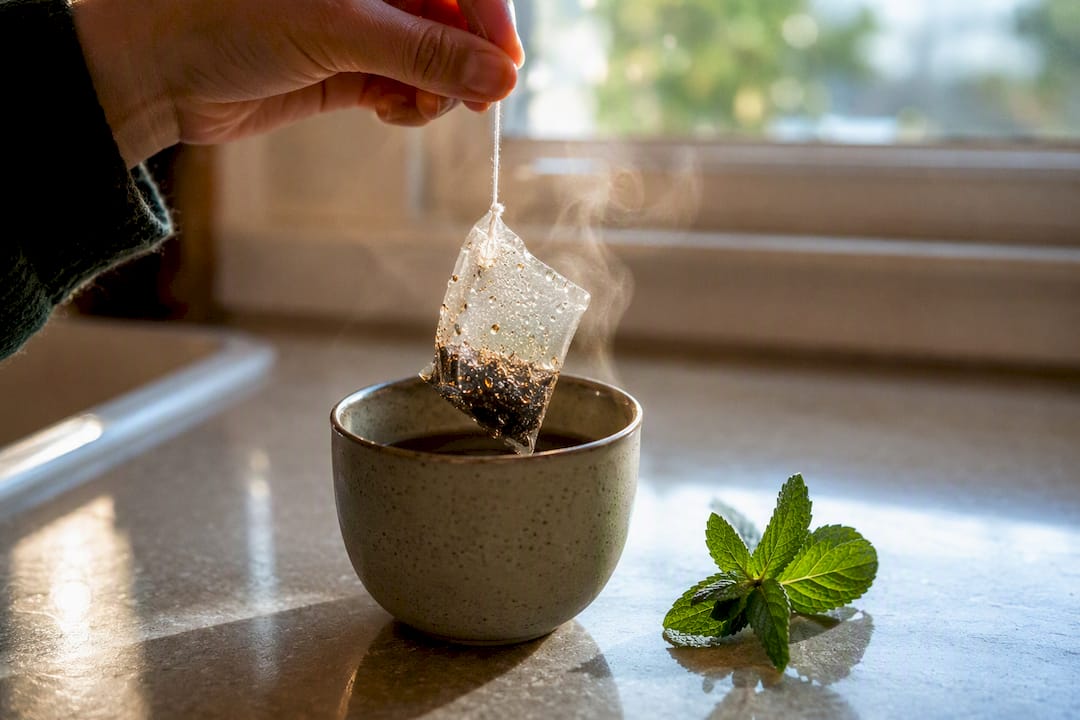
Loose leaf sidesteps the bag-derived plastic problem entirely, since there’s no mesh or heat-sealed sachet involved. That said, loose leaf isn’t automatically plastic-free from farm to cup. Packaging still matters, and some pouches use plastic-lined bags or plastic zip seals.
Here’s what actually helps:
- Check the bag material. Paper and unbleached cotton are safer bets than nylon or “silky” pyramid mesh, which is often plastic.
- Look for “plastic-free” or “compostable” claims on the box, not just “biodegradable,” which is a vaguer, less enforceable term.
- Favor loose leaf in paper, tin, or compostable pouches over plastic-lined bags.
- If you’re brewing iced tea, cold brewing reduces the risk of heat-triggered particle release from any plastic components.
None of this means you need to panic over your afternoon cup. It means reading the packaging with the same scrutiny you’d give a food label.
Ecoviberoast’s Sustainable Brewing and Buying Guide
A few habits go a long way toward a cleaner cup and a lighter footprint. When you’re shopping, look for plastic-free packaging, no staples or glue, and materials that are actually compostable, not just labeled “natural.”
- Skip bags with a visible mesh sheen. That’s usually nylon or a plastic blend, even when the box doesn’t say so plainly.
- Re-steep your loose leaf whenever the tea allows it. Oolongs and better black teas often taste even better on the second pour.
- Try cold brewing for iced tea. It’s gentler on delicate leaves and lowers the risk of heat-triggered plastic leaching.
- Use a reusable stainless steel infuser instead of single-use bags to cut packaging waste altogether.
Pro Tip: Keep a small reusable infuser in your bag or desk drawer. It turns loose leaf into something just as portable as a tea bag, minus the packaging waste.
Ecoviberoast’s own comparison guide on loose leaf versus tea bags and its eco-friendly brewing guide walk through these habits in more depth, alongside the brand’s broader commitment to sourcing that avoids ocean-bound plastics wherever possible.
Storage and Shelf Life Differences
Tea, in any format, is basically a sponge for moisture, light, and odors. But how it’s packaged changes how fast it goes stale.
Bagged tea in individually wrapped sachets holds up reasonably well against moisture, since each bag is sealed on its own. The tradeoff is that fannings and dust, with their higher surface area, oxidize faster than whole leaf even inside a sealed wrapper. Most bagged black tea starts losing noticeable flavor within 12 to 18 months, and green tea bags fade even quicker.
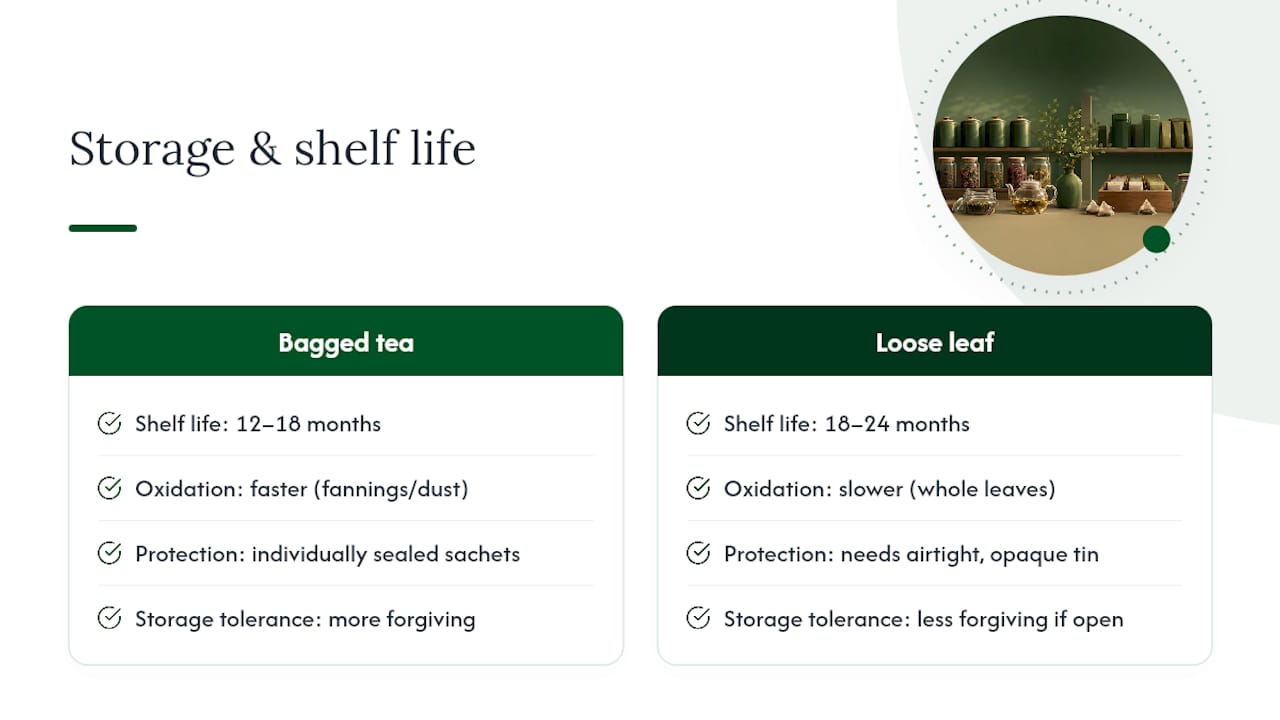
Loose leaf, stored properly, tends to last longer in terms of flavor retention, largely because whole leaves have less exposed surface area for oxygen to attack. An airtight tin or opaque resealable pouch kept away from direct sunlight and heat can keep loose leaf tasting good for 18 to 24 months, sometimes longer for well-processed oolongs and pu-erh, which are meant to age.
The catch is that loose leaf is less forgiving of poor storage. Leave a bag of loose leaf open on a sunny counter and it’ll go flat faster than a sealed tea bag would, simply because there’s nothing standing between the leaf and the air. Bags at least offer built-in, if imperfect, protection.
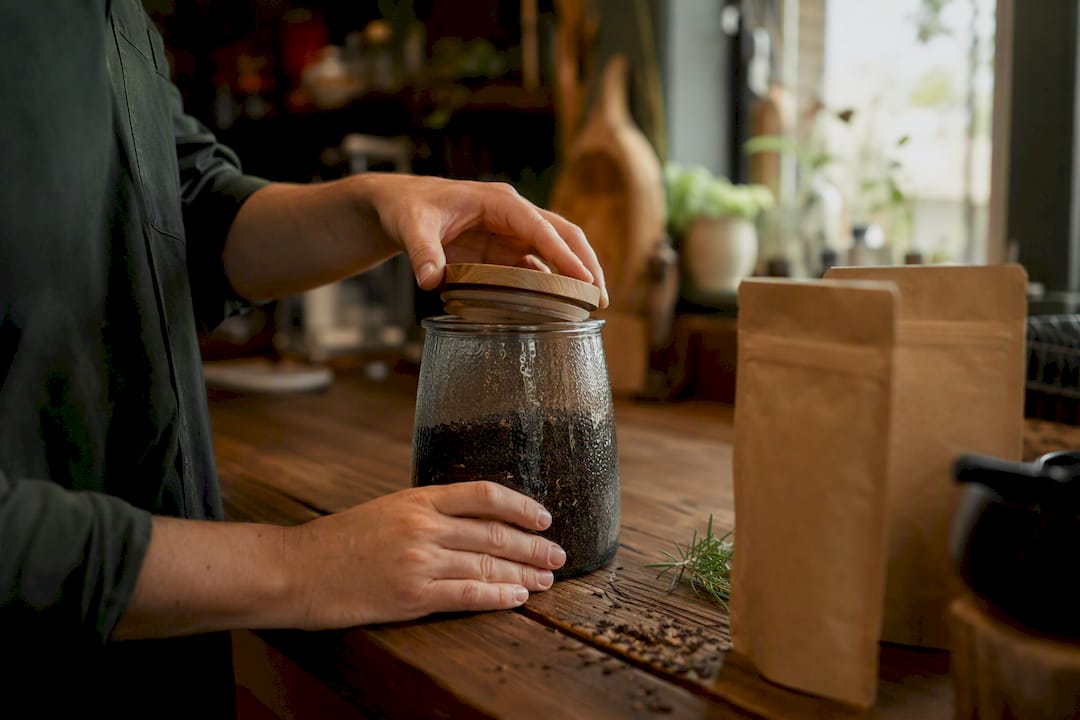
The takeaway: buy loose leaf in quantities you’ll actually use within six months to a year, and always transfer it to an airtight container the moment you open the pouch. Tea bags are more forgiving if you tend to let a box sit in the pantry.
How to Choose for Your Actual Routine
Commuters and office workers usually do best with plastic-free tea bags for speed. Ritual home brewers and anyone chasing flavor complexity should lean loose leaf. Iced tea drinkers get the best of both by cold brewing loose leaf in bulk. Not sure where you land? Grab a small sampler, brew the same tea both ways over a few days, and let your own cup tell you.
— LaSaundra
Try a Plastic-Free Loose-Leaf Sampler
If the flavor case for loose leaf has you curious but you’re not ready to overhaul your entire tea drawer, a sampler is the lowest-risk way to find out for yourself. Ecoviberoast’s loose-leaf teas ship in compostable, plastic-free packaging, no nylon mesh, no plastic seals, just responsibly sourced leaf and materials that break down instead of sitting in a landfill for decades.

Every purchase also supports mangrove planting and ocean-bound plastic removal, so your afternoon cup does a little good beyond your own kitchen. If you’ve been drinking bagged tea out of habit rather than preference, this is the moment to test that assumption. Browse the loose-leaf tea selection at Ecoviberoast and pick a sampler pack to brew side-by-side with whatever’s currently in your pantry. Your taste buds, and the planet, will notice the difference.
Sources
- Is Loose Tea Better Than Bagged? - Consumer Reports
- Microplastics in tea and tea-based beverages: a critical review - PMC
- Optical coherence tomography study detecting MPs from nylon tea bags - RSC (2026)
- Loose Leaf Versus Tea Bags: Which Brews Better? - RealSimple


