

Vote with your wallet and your voice: buy less, buy better, and publicly reward brands that show their work. Three moves matter most right now:
- Speak up for free — share, review, and ask brands hard questions online.
- Spend with intention — choose full-price purchases from certified, transparent companies.
- Vet before you buy — check for B Corp, Fair Trade, or GOTS labels before assuming a brand is honest.
Key Takeaways
Supporting ethical brands works best when free advocacy and paid purchases reinforce each other, backed by a habit of vetting claims instead of trusting labels blindly.
| Point | Details |
|---|---|
| Buy less, buy better | Prioritize durable, certified items over frequent cheap purchases to cut demand-driven harm. |
| Advocate for free | Tag, review, and publicly ask brands about sourcing to pressure transparency at no cost. |
| Vet before buying | Check for named suppliers, modern slavery statements, and measurable impact reports. |
| Extend product life | Repair, resell, rent, or swap instead of replacing to lower your cost-per-use. |
| Support Ecoviberoast | Choose Ecoviberoast’s certified coffee and tea, where every order funds mangrove planting and ocean-plastic removal. |
Table of Contents
- Why Ethical Brands Are Struggling Right Now
- Free Ways to Support Ethical Brands Today
- Paid Ways to Support Ethical Brands With Your Money
- Buy Less, Buy Better: Habits That Multiply Your Impact
- How to Vet a Brand Before You Buy: A Step-By-Step Checklist
- Where to Find Ethical Brands and Vetting Tools
- Applying the Checklist to Coffee and Tea Brands
- Why Small, Repeated Choices Change the Market
- One Easy Way to Put This Into Practice Today
- Frequently Asked Questions
- Sources
Why Ethical Brands Are Struggling Right Now
Running an ethical business costs more, plain and simple. Fair wages, organic materials, and audited factories eat into margins that fast fashion giants never worry about, since they’re racing to the bottom on price instead of quality. Add a market where shoppers are conditioned to buy cheap and buy often, and small ethical brands find themselves squeezed on both ends: higher costs, lower volume. Greenwashing makes it worse, flooding the market with brands that look sustainable without doing the work, which drowns out the ones actually earning it. That’s exactly why your free advocacy and your paid purchases work as a team. One builds visibility; the other builds revenue. Ethical brands need both to survive long enough to scale.
Free Ways to Support Ethical Brands Today
You don’t need a bigger budget to make noise for the brands doing things right. Tag them on social media, share their product pages, and leave honest reviews that specifically mention labor practices or sourcing, not just “cute packaging!” Reviews that reference fair wages or traceable ethical sourcing carry real weight because they signal to other shoppers, and to search algorithms, that ethics matter to buyers.
Bring these brands up in local Facebook groups, community swaps, or family group chats. Use rating tools like Good On You to check a brand before recommending it, and follow Fashion Revolution’s #WhoMadeMyClothes campaign to see which companies actually respond.
Advocacy counts too. Email a brand and ask who made your product. Report vague “eco-friendly” claims to consumer protection agencies when they cross into false advertising. Public pressure for transparency genuinely moves brands to publish more data over time.
Pro Tip: When you post a review or tag a brand, mention a specific certification or supply-chain detail, “Loved that this is GOTS-certified and lists its factory,” rather than a generic compliment. Specific posts get noticed by the brand’s team and by other shoppers doing their own research.
Paid Ways to Support Ethical Brands With Your Money
Buying full-price from a small ethical brand does more for them than discounted purchases often reduce the revenue that small ethical brands rely on to survive; thin margins mean every full-price sale matters. Subscribing to a brand’s coffee, tea, or clothing box creates predictable revenue that lets them plan ahead instead of scrambling season to season.
Here’s where your money makes the biggest dent:
- Buy full-price or pre-order limited runs so brands can gauge demand without overproducing.
- Subscribe to recurring boxes or memberships that fund steady operations.
- Use branded repair services instead of tossing and replacing.
- Donate or crowdfund directly to a brand’s factory upgrade or worker education program when they offer one.
- Buy secondhand from resellers who specialize in ethical labels.
If you’re weighing cost against impact, think of it this way: one $150 investment in a well-made, GOTS-certified piece you’ll wear for years beats fast fashion’s cost-per-wear math every time. Regular small purchases, like a monthly coffee subscription, build steadier support than one big splurge.
Buy Less, Buy Better: Habits That Multiply Your Impact
The single most effective habit in this whole guide? Buying less. Prioritizing fewer, better-made items reduces demand and pushes back directly against the overproduction that fuels fast fashion.
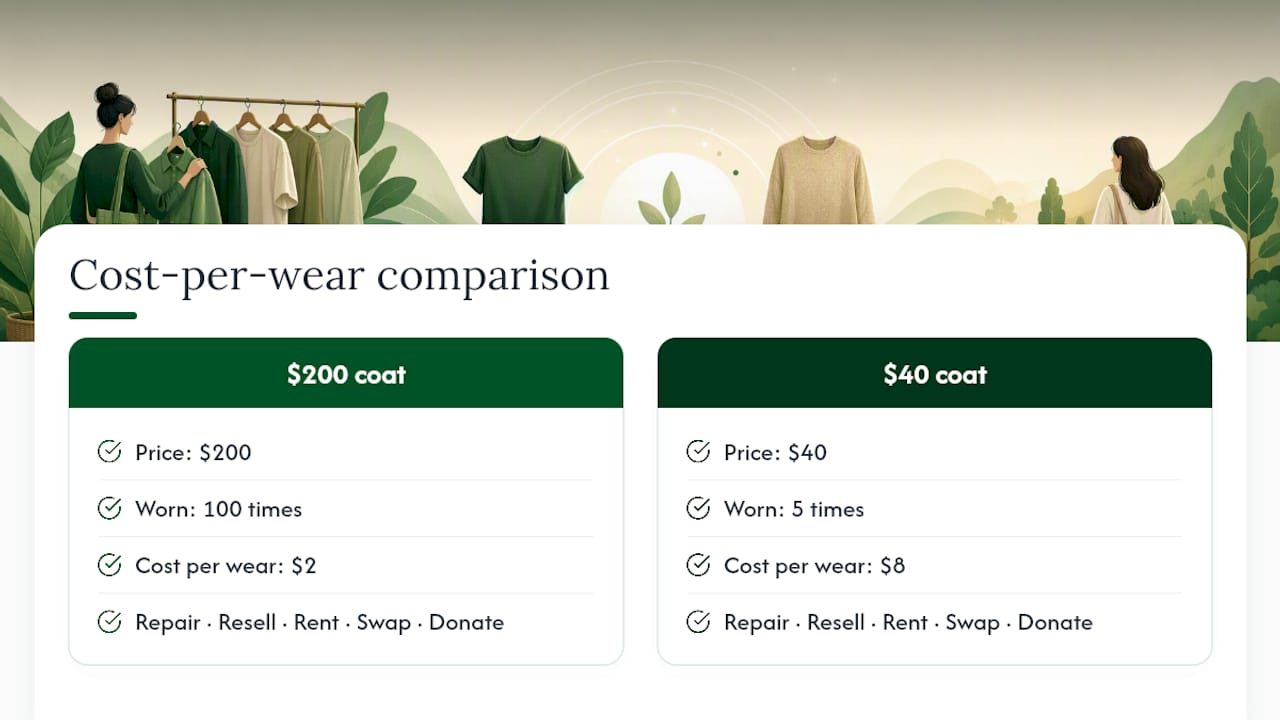
Repair what you own before replacing it. Resell items you’ve outgrown to someone who’ll actually use them. Rent for one-off occasions instead of buying something you’ll wear once. Swap with friends for a free wardrobe refresh, and donate what’s still in good shape to community organizations rather than the landfill.
Try calculating cost-per-wear or cost-per-year on bigger purchases: a $200 coat worn 100 times costs $2 per wear, while a $40 coat that falls apart after five wears costs $8 per wear. Suddenly that higher price tag looks like the smarter deal. Basic care, proper storage, gentle washing, timely mending, stretches a product’s life dramatically, and when something truly can’t be saved, look for textile recycling programs before the trash.
How to Vet a Brand Before You Buy: A Step-By-Step Checklist
Run any brand through these steps before you trust its “sustainable” label:
- Scan for red flags first. No sustainability page, vague phrases like “eco-friendly materials” with zero specifics, or a total absence of certifications are all warning signs.
- Check product-level transparency. Look for material percentages, recycled content claims, and labels like GOTS or USDA Organic on the specific item, not just the brand’s homepage.
- Look for supply-chain proof. Traceability down to named suppliers or factories is one of the strongest signs a brand takes sourcing seriously. Search for a modern slavery statement too. Its presence suggests the company has actually assessed forced-labor risk in its supply chain, per guidance from Sedex.
- Read the impact report, if one exists. A report with measurable goals and year-over-year data beats a glossy page of feel-good language every time. Bonus points if the brand admits where it’s falling short.
- Verify certifications independently. Don’t just trust the badge; look up B Corp, Fair Trade, or GOTS status directly on the certifying body’s own site.
Pro Tip: Ask your question publicly, comment on the brand’s Instagram post instead of DMing. “Which factory made this?” asked in public view creates gentle accountability that a private message never will.
Where to Find Ethical Brands and Vetting Tools
Skip the guesswork and start with tools built for exactly this. Good On You rates fashion brands on labor, environment, and animal welfare. The B Corp directory lets you search certified companies by category. DoneGood curates ethical shopping across categories beyond fashion, and Fashion Revolution publishes its annual Fashion Transparency Index, ranking major brands on supply-chain disclosure.
These directories speed up discovery, but they’re a first filter, not a final answer. Cross-check whatever a directory tells you against the brand’s own supplier lists and impact reports before you check out.
Applying the Checklist to Coffee and Tea Brands
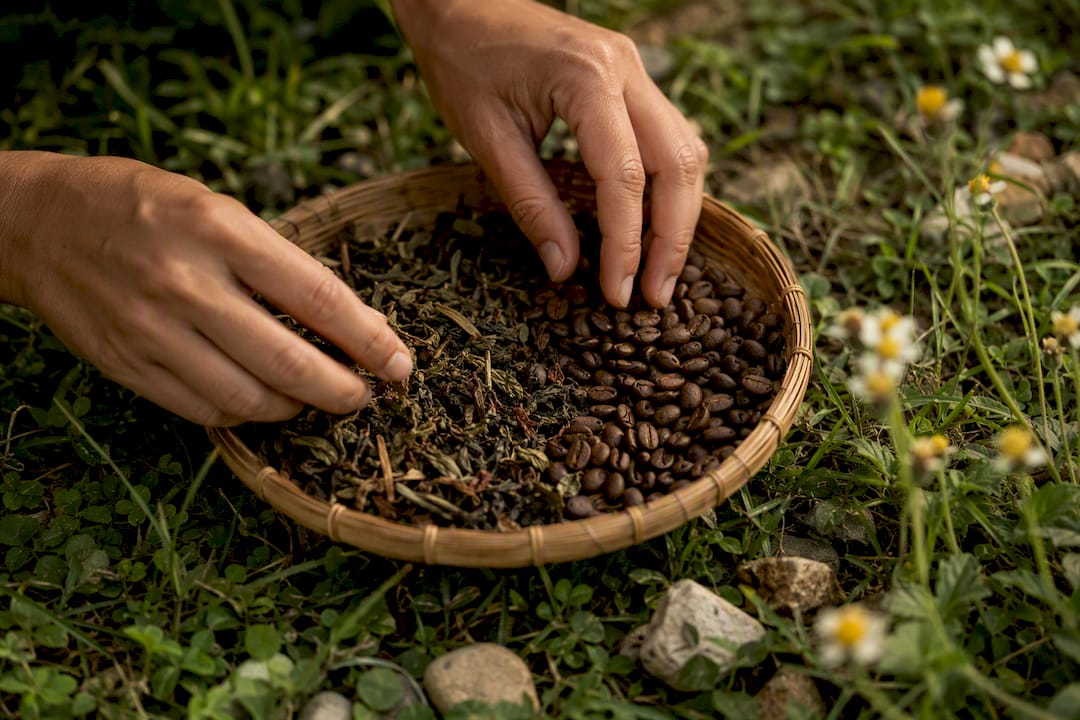
Shopping for coffee or tea? Run the same checks. Does the product page name the origin farm or cooperative, not just “South America”? Is there a certification like Fair Trade USA visible on the bag? Can you find an impact report showing what your purchase actually funds? Ask directly: “Which farm grew this, and how are donations tracked?” A brand that answers specifically, not vaguely, is doing the ethical sourcing work right.
Why Small, Repeated Choices Change the Market
Individual purchases feel small, but multiplied across thousands of shoppers, they shift what brands find profitable to produce. Every time you choose transparency over convenience, you’re voting for a supply chain that treats farmers, factory workers, and ecosystems as worth protecting, not an afterthought.
One Easy Way to Put This Into Practice Today
Reading about ethical sourcing is one thing; tasting the difference is another. Ecoviberoast sells coffee and tea sourced with the same transparency standards this whole guide just walked you through, responsibly grown ingredients, sustainable packaging, and a mangrove tree planted with every order.

We’re not shy about it: yes, this is our shop, and yes, we’d love for you to try it. If you want a low-commitment starting point, the 12-pack single serve coffee pods let you test the flavor without a big upfront buy. Prefer tea? The hibiscus berry tea is a bright, caffeine-free option sourced the same way. Either purchase directly funds our ocean-plastic removal and mangrove-planting programs, a small, repeatable action that fits right into the checklist you just learned.
Frequently Asked Questions
What’s the single most effective way to support ethical brands? Buying less and choosing durable, certified items when you do buy is the action cited most consistently as high-impact, since it directly reduces demand tied to overproduction.
How do I know if a certification is legitimate? Look it up on the certifying body’s own website, B Corp, Fair Trade USA, or GOTS all maintain public directories, rather than trusting a logo alone on packaging.
Are free actions like reviews and social posts actually effective? Yes. Public reviews and tagged posts that mention specific sourcing or labor details create visible pressure that pushes brands toward more transparency.
What if a brand has no impact report at all? Treat that as a caution flag, not an automatic disqualifier. Ask the brand directly what data they track, and weigh their answer alongside any certifications they do hold.
How do I find ethical brands in categories beyond fashion? DoneGood and Good On You both cover categories outside apparel, and checking a brand’s own supplier or sourcing page remains the best next step regardless of category.
Sources
For more on spotting genuine transparency, Scientific American’s guide to sustainable fashion explains why buying less matters most. HRF’s brand-vetting guide walks through impact-report red flags. MakersRow’s transparency tips cover supply-chain disclosure standards, and The Ethicalist’s shopping guide breaks down packaging and end-of-life claims worth questioning.
- Don’t be fooled: how to vet ethical brands | HRF
- A Beginner’s Guide to Ethical and Sustainable Fashion | Scientific American
- What is a modern slavery statement? | Sedex blog


