

TL;DR:
- Choosing plastic-free packaging significantly lowers environmental pollution by reducing ocean plastics and microplastics. It also eliminates harmful chemical exposure and supports circular economy practices, while regulatory pressures encourage brand adoption. Advances in biodegradable and mono-material packaging enable effective, sustainable alternatives without sacrificing performance.
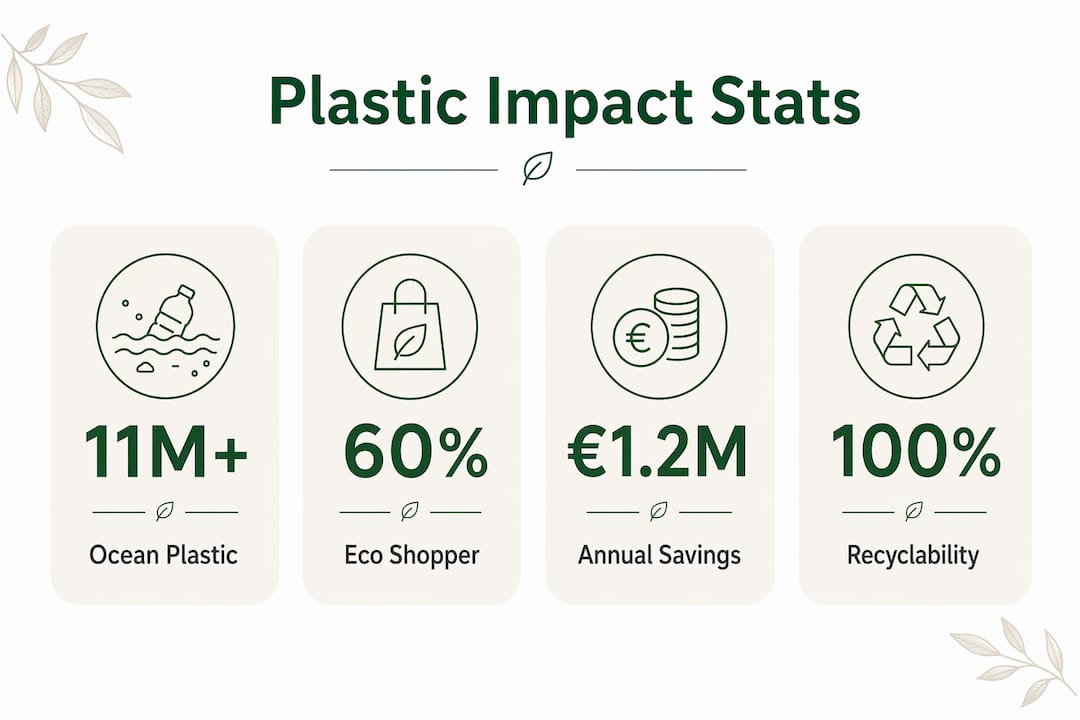
Plastic-free packaging is defined as any product wrapping or container that eliminates conventional petroleum-based plastics from the supply chain. Choosing it is one of the most direct ways you can reduce your personal environmental footprint. Global plastic production exceeds 400 million tonnes every year, and 11 million tonnes of that waste reaches the ocean annually. That number is not a distant statistic. It shows up in the seafood on your plate, the water in your glass, and increasingly, in human blood. Understanding why choose plastic-free packaging starts with knowing what plastic actually costs us, and then recognizing how much better the alternatives have become.
What are the environmental benefits of choosing plastic-free packaging?
Plastic pollution is one of the most measurable forms of environmental damage on the planet. Eleven million tonnes of plastic enter the world’s oceans every year, smothering coral reefs, entangling marine wildlife, and breaking down into microplastics that infiltrate every layer of the food chain. Choosing plastic-free alternatives directly reduces the volume of material that ends up in landfills and waterways.
Biodegradable and paper-based materials decompose naturally, which means they do not accumulate in ecosystems the way conventional plastic does. This matters for biodiversity. When packaging breaks down cleanly, it stops acting as a long-term hazard for birds, fish, and land animals that mistake plastic fragments for food. The shift to eco-friendly packaging options also supports circular economy principles, where materials cycle back into production rather than ending up in a landfill.
The environmental case for going plastic-free is strongest when you look at the full lifecycle of a package:
- Reduced landfill volume: Paper, cardboard, and compostable materials break down far faster than plastics, which can persist for hundreds of years.
- Lower microplastic contamination: Eliminating plastic packaging removes a primary source of microplastic particles that enter soil and water systems.
- Wildlife protection: Seabirds, sea turtles, and marine mammals face dramatically lower ingestion and entanglement risks when plastic is removed from the waste stream.
- Carbon footprint reduction: Many plant-based packaging materials require less energy to produce and recycle than virgin plastic.
Sustainable packaging also drives real operational improvements. Sustainable packaging design lowers transportation emissions and freight costs by reducing weight and volume. That is a benefit to the planet and to the bottom line at the same time.
How does plastic-free packaging support consumer health and safety?
The health case for going plastic-free is compelling and growing. Microplastics have been detected in drinking water, food, and human blood, carrying chemical additives like phthalates and bisphenols that disrupt the endocrine system. These are not trace amounts in extreme industrial settings. They are present in everyday consumer products.
Chemical additives in conventional plastic packaging migrate into food and beverages over time, especially when exposed to heat or acidity. Bisphenol A (BPA) and its substitutes interfere with hormone signaling, and phthalates are linked to developmental and reproductive concerns. Choosing packaging made from paper, glass, or certified compostable materials eliminates this migration pathway entirely.
Here is what plastic-free packaging removes from your daily exposure:
- Bisphenols (BPA and BPS): Endocrine disruptors found in polycarbonate plastics and epoxy linings.
- Phthalates: Plasticizers used to make packaging flexible, linked to hormonal disruption.
- Styrene: A compound in polystyrene packaging with potential carcinogenic properties.
- PFAS coatings: “Forever chemicals” sometimes used to make paper packaging grease-resistant, which responsible plastic-free brands now avoid.
Transparency is a key part of the health benefit. When a brand uses paper, cardboard, or glass, the material composition is obvious and verifiable. You do not need a chemistry degree to know what is touching your food.
Pro Tip: Look for packaging labeled “PFAS-free” alongside “plastic-free.” Some paper-based packages use chemical coatings that reintroduce the same health risks you are trying to avoid.
What economic and regulatory factors drive the shift to plastic-free packaging?
Consumer preference is now a financial force. Over 60% of shoppers are influenced by eco-friendly packaging when making purchasing decisions, and 39% have switched brands specifically because of sustainable packaging. That is not a niche market signal. It is a mainstream shift that affects revenue directly.
The cost savings from plastic-free packaging are real and documented. IKEA saved €1.2 million annually by optimizing and switching to eco-friendly packaging. The savings came from using less material, reducing shipping weight, and cutting waste disposal costs. Packaging that fits the product correctly also matters. Average packaging boxes are 40% larger than necessary, which inflates both material costs and shipping fees.
Regulatory pressure is accelerating the shift. Here is how the compliance landscape looks right now:
- Extended Producer Responsibility (EPR): EPR schemes require producers to fund the collection and recycling of their packaging waste. EPR schemes shift packaging waste costs to producers, increasing reporting and compliance requirements across the European Union, the United Kingdom, and several US states.
- Plastic Packaging Taxes: The UK’s Plastic Packaging Tax charges manufacturers and importers for packaging that contains less than 30% recycled content. Similar taxes are expanding globally.
- Single-use plastic bans: The EU’s Single-Use Plastics Directive bans items like plastic cutlery, straws, and certain food containers outright.
- Mandatory recyclability targets: Several jurisdictions now require that a defined percentage of packaging be recyclable or compostable by set deadlines.
Transitioning to plastic-free packaging is no longer optional for brands that want to stay competitive. Regulatory frameworks are tightening, consumer expectations are rising, and the cost of non-compliance, including fines and lost market share, now outweighs the cost of switching.
The brands that act now build supply chain knowledge and supplier relationships that late movers will have to pay a premium to access.
What materials and design innovations enable effective plastic-free packaging?
The biggest misconception about plastic-free packaging is that it means weaker packaging. Biodegradable plastics now offer advanced barrier properties against oxygen, water, and microbes, rivaling the performance of conventional plastics in many applications. The material science has caught up with the ambition.

Paper-based packaging requires a different engineering approach than plastic. Structural redesign replaces plastic’s flexibility with engineered folds, overlaps, and load distribution paths. A well-designed paper box can handle significant stacking weight when the geometry is right. Moisture is the main challenge. Humidity weakens paper-based packaging during shipping and storage, so designers must account for moisture barriers and airflow in the structural plan.
The sustainability in food services sector has pushed packaging innovation hard, because food products demand both protection and presentation. The result is a generation of materials that perform well without relying on plastic.
| Material type | Key strength | Main limitation |
|---|---|---|
| Kraft paper and cardboard | Widely recyclable, low cost, strong when dry | Weakens with moisture exposure |
| Compostable bioplastics | Barrier properties close to conventional plastic | Requires industrial composting infrastructure |
| Glass | Fully inert, infinitely recyclable | Heavy, higher shipping emissions |
| Mono-material paper | Single-stream recyclable, simple for consumers | Limited flexibility for complex shapes |
| Mushroom-based packaging | Fully compostable, good cushioning | Higher production cost, limited scalability |
Mono-material packaging made of 100% paper is the gold standard for recyclability in 2026. It allows single-stream disposal, which means consumers do not need to separate components before recycling. That simplicity drives higher actual recycling rates.
Pro Tip: When evaluating plastic-free packaging for beverages or food, ask suppliers specifically about moisture vapor transmission rate (MVTR). A low MVTR means the packaging resists humidity and keeps your product fresh without a plastic liner.
The beverage packaging guide from Ecoviberoast covers how these material choices play out specifically for coffee and tea products, where freshness and barrier performance are non-negotiable.
How can consumers and businesses practically adopt plastic-free packaging?
Adopting plastic-free packaging does not require a complete overhaul overnight. Small, consistent choices add up to meaningful change, both for individual consumers and for businesses managing supply chains.
For consumers, the most effective starting points are:
- Check for certifications: Look for labels like FSC (Forest Stewardship Council) for paper, BPI Certified Compostable for bioplastics, and the Mobius loop recycling symbol with a material code.
- Support transparent brands: Choose brands that clearly state what their packaging is made of and how to dispose of it. Vague “eco-friendly” claims without specifics are a red flag.
- Adjust disposal habits: Plastic-free packaging only delivers its environmental benefit when disposed of correctly. Compostable packaging belongs in a compost bin, not a recycling bin.
- Ask questions: Contact brands directly about their packaging choices. Consumer demand expressed directly to companies accelerates supply chain change faster than passive purchasing alone.
For businesses, the shift starts with a packaging audit. Map every material in your current packaging, identify the highest-volume plastic components, and prioritize replacing those first. Switching to plastic-free tea packaging and similar beverage products is a strong entry point because the packaging volumes are high and the material alternatives are mature.
Consumer misconceptions are worth addressing directly. Plastic-free does not mean zero environmental impact. It means removing plastic where possible while maintaining function and being honest about trade-offs. A brand that communicates this clearly builds more trust than one that overpromises.
Key Takeaways
Plastic-free packaging reduces environmental harm, protects consumer health, and positions brands ahead of tightening regulations, making it the most practical choice for both people and businesses in 2026.
| Point | Details |
|---|---|
| Ocean plastic is measurable and urgent | 11 million tonnes of plastic enter oceans yearly; plastic-free packaging directly reduces this volume. |
| Health risks are real and avoidable | Microplastics and additives like bisphenols migrate into food; plastic-free materials eliminate this exposure. |
| Consumer demand drives revenue | Over 60% of shoppers factor eco-friendly packaging into purchases, and 39% have switched brands for it. |
| Material innovation closes the performance gap | Biodegradable plastics and mono-material paper now match conventional plastic in barrier performance. |
| Regulation is tightening fast | EPR schemes and Plastic Packaging Taxes make non-compliance increasingly costly across major markets. |
Why I think plastic-free packaging is the clearest sustainability win available right now
I have spent years watching brands wrestle with sustainability commitments that feel abstract or expensive. Plastic-free packaging is neither. It is one of the few areas where the environmental benefit, the health benefit, and the business case all point in the same direction at the same time.
The design challenges are real. Paper packaging that fails in a humid warehouse is not a win for anyone. But the engineering solutions exist, and brands that invest in getting the material science right now will not be scrambling to catch up when regulations tighten further. Early movers build supplier relationships and internal expertise that late adopters will pay a premium to access.
What I find most encouraging is the shift in consumer mindset. People are not just passively preferring sustainable packaging. They are switching brands, asking questions, and holding companies accountable. That is a fundamentally different kind of market pressure than we saw five years ago. Plastic-free packaging is no longer a niche differentiator. It is becoming the baseline expectation, and the brands that treat it as such will earn lasting loyalty.
— LaSaundra
Ecoviberoast’s approach to plastic-free, planet-first packaging
Ecoviberoast builds its entire product philosophy around the idea that what wraps your beverage matters as much as what is inside it.

Every order from Ecoviberoast ships in packaging designed to leave as little trace as possible. The brand removes ocean-bound plastics and plants mangrove trees with each purchase, turning your morning cup into something that gives back. If you want to experience what genuinely eco-conscious packaging feels like, the Hibiscus Berry Tea is a beautiful place to start. For something floral and grounding, the Jasmine Tea delivers the same commitment to quality and sustainability in every leaf. Choosing Ecoviberoast means your values show up in your daily ritual, not just your recycling bin.
FAQ
What is plastic-free packaging exactly?
Plastic-free packaging uses materials like paper, cardboard, glass, or certified compostable bioplastics instead of conventional petroleum-based plastics. The goal is to eliminate plastic from the product’s full packaging lifecycle.
Are biodegradable plastics truly plastic-free?
Certified compostable bioplastics are considered plastic-free alternatives because they break down biologically rather than persisting as microplastics. They still require proper industrial composting infrastructure to decompose correctly.
How does plastic-free packaging protect my health?
Conventional plastics contain chemical additives like bisphenols and phthalates that migrate into food and beverages. Plastic-free materials like paper and glass do not carry these additives, removing a direct exposure pathway.
Is plastic-free packaging more expensive?
Initial material costs can be higher, but brands like IKEA have demonstrated annual savings of €1.2 million through packaging optimization. Right-sized, plastic-free packaging often reduces shipping and waste disposal costs enough to offset the material difference.
How do I know if packaging is genuinely plastic-free?
Look for certifications like FSC for paper products and BPI Certified Compostable for bioplastics. Brands with genuine plastic-free commitments list their materials clearly and provide disposal instructions on the packaging itself.


