

TL;DR:
- Rainforest Alliance certified coffee supports ecosystem health, fair wages, and climate resilience for farmers. It also enhances biodiversity, sequesters carbon, and promotes sustainable practices that benefit communities and the environment. Consumer demand for certified coffee drives investments toward regenerative farming and global conservation efforts.
Every cup of Rainforest Alliance certified coffee delivers more than a rich, aromatic morning ritual. It actively protects tropical forests, supports fair wages for farming families, and produces beans with genuinely better flavor profiles. Here’s what makes these eco-friendly coffee options stand apart:
- Ecosystem protection: Shade-grown farms act as living forests, sheltering migratory birds, native insects, and hundreds of plant species
- Farmer welfare: Certification standards require safe working conditions, fair wages, and access to education and healthcare
- Climate resilience: Shade trees buffer temperature extremes and sequester carbon at rates comparable to managed forests
- Superior cup quality: Slower bean ripening under shade canopy produces larger, denser beans with more complex flavor
Impact in numbers: Transitioning to regenerative coffee farming can increase smallholder farmer incomes by 62%, boost coffee exports by 30%, and reduce greenhouse gas emissions by 3.5 million tons of CO₂e annually.
1. How Rainforest Alliance certification protects coffee farmers’ rights
Rainforest Alliance certification sets binding standards on labor rights, not just environmental ones. Farms must pay fair wages, prohibit child labor, provide safe working conditions, and offer access to medical services and training. These aren’t aspirational guidelines; they’re audited requirements tied to the certification itself.
The social improvements documented on certified farms are striking. A survey of 57 farmers belonging to a Rainforest Alliance certified cooperative in Nicaragua’s San Juan del Río Coco municipality found that:
- 87% said their farms and homes were better organized after certification
- 85% gained greater access to education, capacity building, and technical assistance
- 55% reported that their families and employees now have better health
- 71% pointed to the return of seasonal workers as a sign of improved working conditions
- 74% said they feel recognized and respected as producers
What’s especially meaningful is that these gains compound over time. Certified farms in Brazil showed workers had greater knowledge of agrochemical safety, better storage conditions, and improved access to clean drinking water compared to non-certified neighbors. Certification also tends to increase women’s involvement in farm management, building more equitable community structures alongside the environmental work.
2. What shade-grown coffee does for the climate and environment
Shade-grown coffee is one of the most practical nature-based climate solutions available to the agricultural sector right now. When coffee grows beneath a diverse canopy of trees, those trees pull carbon from the atmosphere, stabilize soil, regulate water cycles, and create microclimates that protect crops from heat stress and frost.
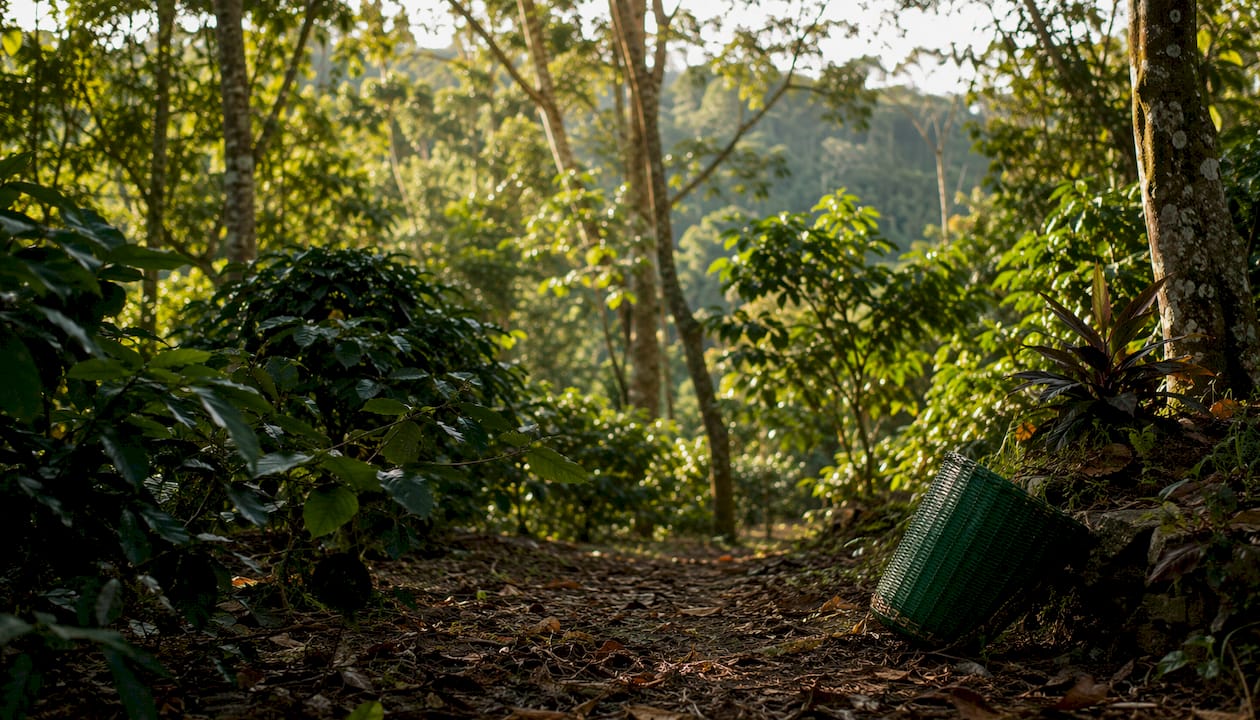
The numbers from field research are compelling. A shade-grown coffee system in Costa Rica was calculated to sequester 99 tons of carbon per hectare, outperforming a pine-oak stand at 70 tons per hectare. Shade trees also buffer daytime temperatures by as much as 4–5°C compared to full-sun systems, which matters enormously as growing regions face increasing heat events.
| Environmental Benefit | What Happens on Certified Farms |
|---|---|
| Carbon sequestration | Shade trees lock carbon in wood and soil organic matter |
| Soil protection | Open-sun coffee loses significantly more soil than shade-grown farms on the same hillsides |
| Water conservation | Certified farms use water-saving depulping techniques at nearly double the rate of non-certified farms |
| Biodiversity | Increased bird species, beneficial insects, and native plant diversity |
| Reduced chemical inputs | Shade-grown systems require fewer synthetic fertilizers and pesticides |
Rainforest Alliance certified farms show higher rates of water-saving practices and soil protection than non-certified farms. In Colombia, certified farms displayed healthier riparian zones and higher soil arthropod species richness. The certification program has also been shown to decrease deforestation probability by 1.7 percentage points on forests surrounding coffee farms.
One often-overlooked benefit: shade trees reduce weed pressure naturally, cutting the need for herbicides and lowering overall production costs for farmers.
3. How certification lifts farmer incomes and strengthens communities
The economic case for Rainforest Alliance certification is grounded in real farm data, not just premium pricing. Studies of certified farms in Ethiopia found that certified farms obtained prices 15–20% higher than conventional farms in 2007. But the more consistent driver of income growth turns out to be yield improvement, not price premiums alone.
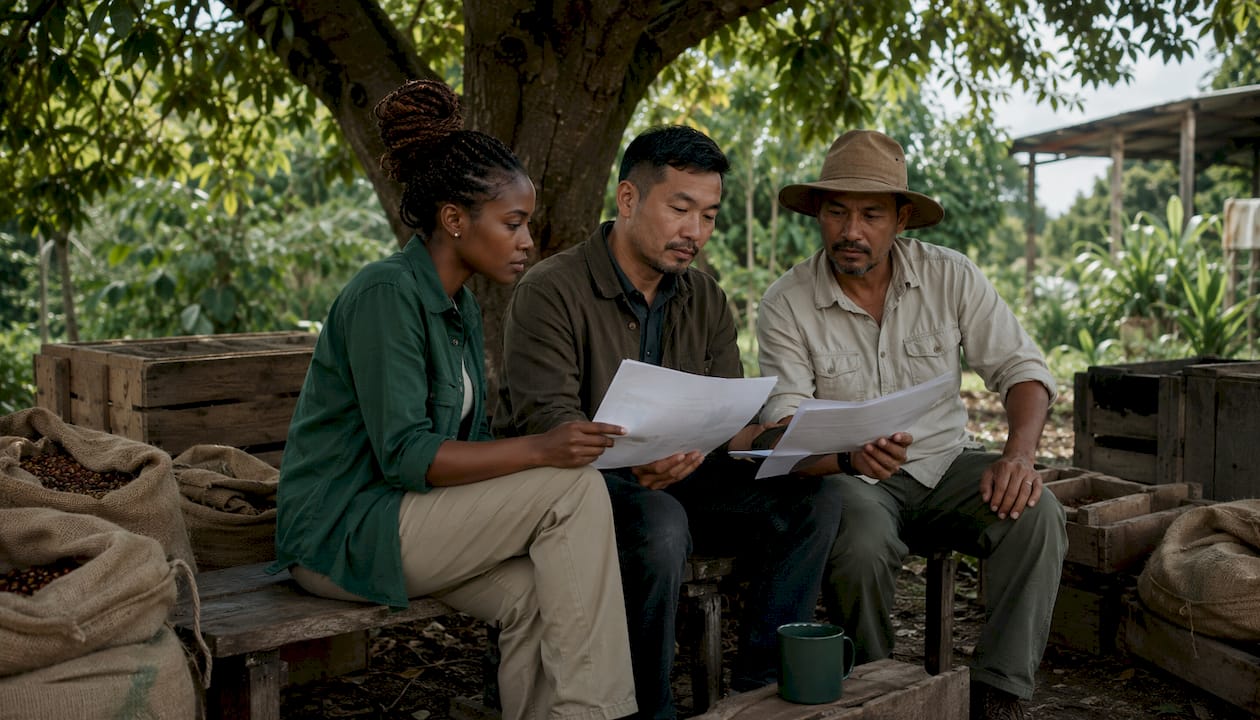
Certification acts as a form of economic insurance. When farms adopt better soil management, water conservation, and agroforestry practices, they become less vulnerable to climate shocks and market volatility. Research confirms that sustainable certification reduces risks from both climate change and price swings, supporting long-term farming viability in ways that a single premium payment never could.
The economic benefits ripple outward from individual farms into whole communities:
- Access to better markets and export channels
- Reduced production costs through lower chemical inputs
- Improved household infrastructure (kitchens, bathrooms, storage facilities)
- Greater community cohesion and collective bargaining power
- Increased participation of women in farm decision-making
Regenerative potential: A global study by TechnoServe found that regenerative coffee farming could generate $2.6 billion in additional coffee exports and $2.1 billion in farmer income each year, with a 62% average income increase for smallholder farmers.
4. How Rainforest Alliance standards conserve forests and biodiversity
Rainforest Alliance certification doesn’t just protect the coffee plant. It protects the entire living system around it. Certified farms are required to maintain forest fragments, native tree cover, and wildlife corridors, turning working farms into genuine conservation zones.
The Smithsonian’s National Zoo reviewed more than 60 studies on shade-grown coffee farms across Central and South America and Indonesia and concluded that shade-grown coffee production is the next best thing to a natural forest. In study after study, shade farms outperformed sun-grown systems in bird species richness, soil health, carbon storage, and pollinator diversity.
A survey of certified farmers in Brazil, Colombia, Guatemala, El Salvador, and Peru found that 77% reported more trees on their farms after certification, and 72% said animals had returned. These aren’t just feel-good observations. Biodiversity creates ecological stability, and that stability directly supports crop health.
- Native bees pollinate coffee flowers, boosting yields naturally
- Predatory birds and insects control coffee pests without chemical intervention
- Shade trees support seed-dispersing animals that maintain native tree reproduction
- Forest fragments on certified farms reduce the probability of surrounding deforestation
You can explore more about how biodiversity in coffee farming directly supports crop resilience and long-term quality.
5. What the latest research says about regenerative coffee and your buying power
The most thorough recent analysis of sustainable coffee farming comes from a 2025 TechnoServe study covering nine of the world’s leading coffee-producing countries. The findings are striking. Transitioning to regenerative agriculture practices could increase smallholder farmer incomes by an average of 62%, boost coffee exports by 30%, and reduce greenhouse gas emissions by 3.5 million tons of CO₂e annually. Realizing this potential across those nine countries would require an average of $560 million per year in investment over seven years, generating $2.6 billion in exports and $2.1 billion in farmer income each year.
What does this mean for you as a conscious coffee consumer in the US? Your purchasing decisions are part of that investment equation. When you consistently choose certified sustainable coffee, you signal demand that justifies the premiums and market access that make regenerative transitions financially viable for smallholder farmers. The coffee certification landscape has expanded, and not all certifications carry equal weight, so knowing what to look for matters.
Pro Tip: When evaluating a coffee brand’s sustainability claims, look for third-party certifications like Rainforest Alliance or Bird Friendly rather than self-declared labels. Third-party auditing is the only reliable way to verify that labor rights, ecosystem standards, and farming practices meet a defined benchmark, and it’s your best defense against greenwashing.
Organic and shade-grown coffee also tends to have a lower carbon footprint than sun-grown or chemically intensive alternatives, since the forests and soil around shade-grown farms sequester carbon rather than releasing it through deforestation. For consumers who want to go a step further, pairing your coffee choice with organic whole bean options from certified farms compounds those environmental benefits.
Key Takeaways
Rainforest Alliance certified coffee delivers measurable benefits for farmers, ecosystems, and the climate, making it the most well-documented sustainable coffee choice available to conscious consumers today.
| Point | Details |
|---|---|
| Farmer income growth | Regenerative coffee farming can increase smallholder incomes by 62% and boost exports by 30%. |
| Climate and carbon impact | Shade-grown farms sequester carbon, reduce soil erosion, and buffer temperature extremes better than sun-grown systems. |
| Social and labor rights | Certified farms show higher rates of worker safety, healthcare access, and community wellbeing than non-certified peers. |
| Biodiversity conservation | Shade farms support more bird species, native pollinators, and wildlife than sun-grown monocultures. |
| Consumer purchasing power | Choosing certified coffee drives market demand that funds the $560 million annual investment needed for global regenerative transition. |
Why conscious coffee choices carry more weight than you might think
There’s a version of the sustainable coffee conversation that stays politely surface-level: buy certified, feel good, move on. But the evidence points to something more interesting and more demanding.
The Rainforest Alliance certification model works not just because it sets standards on enrolled farms, but because those farms influence their neighbors. Certified farms in Colombia and Nicaragua showed spillover effects where adjacent, non-certified farms began adopting water conservation and soil protection practices after observing what certification produced. The sustainability impact extends well beyond the supply chain that any single certification program can directly touch.
What I find genuinely underappreciated in most coverage of this topic is the quality connection. Shade-grown coffee isn’t just better for the planet. The slower ripening under canopy produces larger, denser beans with more complex lipid profiles, which translates directly to better mouthfeel and body in the cup. Ecological health and cup quality aren’t in tension. They reinforce each other, and that’s a story worth telling loudly.
The harder truth is that certification alone isn’t enough if consumer demand stays fragmented. The TechnoServe research makes clear that the regenerative transition requires sustained investment at scale, and that investment follows market signals. Every purchase of certified coffee is a small but real vote for the kind of supply chain that can actually survive climate change, and that can pay a farmer in Kenya or Ethiopia a living wage. That’s not a metaphor. It’s how commodity markets work.
Bring sustainability into your daily ritual with Ecoviberoast

Ecoviberoast sources coffee with the same values this article is built around: responsible farming, real environmental impact, and a cup worth savoring. With every purchase, Ecoviberoast plants mangrove trees and removes ocean-bound plastics, so your morning coffee does something good before you even finish it.
Ready to make the switch? Explore Ecoviberoast’s single-serve coffee pods for a convenient, sustainably sourced option that fits any routine. Or browse the full single-serve collection to find your perfect match. Want to see the full picture of Ecoviberoast’s environmental commitments? Visit the environmental impact page to learn exactly where your purchase goes.


