

Cool the pod, peel back the foil lid, and tip the grounds into your compost bin or municipal organics bin. Rinse the shell, then check if your curbside program takes the material. If it doesn’t, save whole pods for a mail-back box instead of tossing them in the recycling bin and hoping for the best.
- Peel, empty, and rinse before you recycle anything
- No curbside program for your pod? Use a brand mail-back or TerraCycle box
- Always compost or bin the grounds, even if the shell isn’t recyclable
- Consider a reusable pod so this routine becomes optional
Key Takeaways
Coffee pods recycling succeeds when you prep pods correctly, compost the grounds, and use mail-back programs for whatever curbside can’t handle.
| Point | Details |
|---|---|
| Prep before recycling | Cool, peel the lid, empty grounds, and rinse the shell before it touches your recycling bin. |
| Check the material | Plastic #5 and aluminum have different recycling odds; confirm local acceptance before assuming either works. |
| Compostable needs industrial heat | Backyard piles rarely hit the 140°F most certified compostable pods require to break down. |
| Use mail-back when curbside fails | Programs like K-Cycle and TerraCycle accept pods most MRFs reject. |
| Reusable pods cut waste entirely | Ecoviberoast’s single-serve collection offers a sustainably minded option with clear disposal guidance. |
Where to check local rules and programs
Search your zip code on Earth911 or RecycleNation for local options, review Consumer Reports’ recycling guidance, and read Ecoviberoast’s guide to compostable pods for more detail on certification labels.
Table of Contents
- How Coffee Pods Recycling Actually Works, Material by Material
- How Do You Prepare Coffee Pods for Recycling at Home?
- When Should You Use a Mail-Back or Takeback Program?
- What’s the Highest-Impact Way to Cut Pod Waste?
- How Should You Compost or Reuse Recovered Coffee Grounds?
- Common Coffee Pod Recycling Mistakes to Avoid
- Sources
How Coffee Pods Recycling Actually Works, Material by Material
Flip your used pod over and look for a tiny triangle stamped into the plastic, or check whether it’s a shiny metal capsule instead. That number, usually a #5, tells you whether your local materials recovery facility (MRF) has any chance of processing it. Since 2020, Keurig’s K-Cups have been made from polypropylene, or #5 plastic, which is technically recyclable but far from universally accepted. Some MRFs sort #5 plastics with ease. Others don’t have the equipment and send them straight to landfill, regardless of what your blue bin says on the lid.
Aluminum pods play a different game entirely, as multi-material construction can complicate recycling; discover recyclable materials for eco-friendly candle packaging to understand how packaging construction affects recyclability here. Aluminum is one of the most recyclable materials on the planet, and its recovery market is stronger than plastic’s. Even so, tiny capsule size and multi-material construction can trip up curbside sorting, so a brand takeback program often works better than tossing loose capsules in your bin.
Then there are compostable pods, and this is where good intentions run into physics. Certified compostable packaging typically needs sustained heat above 140°F to break down, conditions your backyard pile almost never reaches.
- Plastic #5: technically recyclable, acceptance varies by community
- Aluminum: strong recycling infrastructure, small size complicates curbside sorting
- Compostable: usually needs industrial composting, not your backyard bin
How Do You Prepare Coffee Pods for Recycling at Home?
Recycling processors reject dirty, wet, or food-contaminated items on sight, so prep is everything. The steps aren’t complicated, but skipping even one turns a good-faith recycling effort into contamination that gets an entire batch tossed.
- Let it cool. A hot pod straight off the brewer is awkward and unsafe to handle, so give it a minute.
- Peel the foil lid. Most lids are foil or a foil composite that doesn’t belong with the plastic or aluminum shell. Peel it off and set it aside; it usually goes in the trash unless your program specifies otherwise.
- Empty the grounds. Tip them into your compost bin, your municipal organics collection, or even a potted plant. This step alone diverts the heaviest part of the pod from the trash.
- Rinse the shell. A quick rinse under the tap removes residue that would otherwise contaminate a recycling load.
- Recycle or bag it. If your curbside program accepts the material, drop it in. If not, set it aside for a mail-back program.
Earth911’s own breakdown of this process notes that this labor is exactly why pod recycling rates stay low. It works, but it takes effort, which is precisely why so many pods end up in landfills instead.
A few small tools make the routine faster. A little spatula or scoop clears grounds in seconds. Gadgets like the Recycle-A-Cup cutter pop lids and separate grounds in one motion. If you’re mailing pods back, a sealed gallon bag keeps a week’s worth ready to go without stinking up your kitchen.
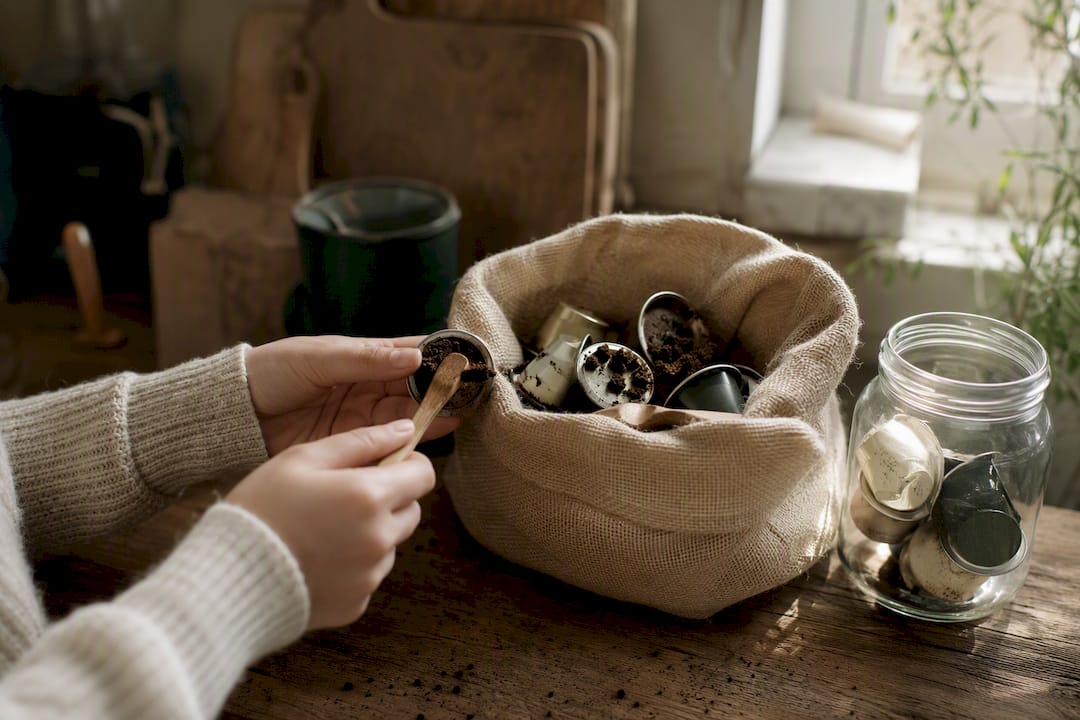
Pro Tip: Keep a small jar by your coffee maker just for empty shells. Once it’s full, you’ll have a built-in reminder to either recycle the batch or seal it up for mail-back, instead of shells piling up loose in the trash.
When Should You Use a Mail-Back or Takeback Program?
If your curbside program doesn’t take pods, or you’re not sure it does, mail-back is your most reliable option. Recyclers like Recycle Right point out that single-use pods frequently don’t belong in curbside bins at all, since MRFs are built to sort bottles and cans, not something the size of a bottle cap.
Mail-back programs solve that problem by design. Keurig’s K-Cycle at-home bags and TerraCycle’s Zero Waste Boxes accept whole pods, sometimes without requiring you to rinse or empty them first, and guarantee the material actually gets processed rather than gambled on at a sorting facility.
- Brand takebacks sometimes offer free prepaid shipping; others charge a fee
- Some retailers offer in-store drop-off as a partner location
- Mail-back costs more time and occasionally money, but it removes the guesswork entirely
Check your pod brand’s own site for current program details before you commit, since terms shift year to year.
What’s the Highest-Impact Way to Cut Pod Waste?
Prep-and-recycle helps, but it’s not the ceiling. Earth911 and Consumer Reports both point to reusable pods and alternative brew methods as the single most effective way to reduce your coffee footprint, because they eliminate the waste stream rather than managing it.
A stainless steel or mesh reusable pod fits most single-serve machines. You scoop in your own grounds, brew, then empty and rinse the filter for the next round. The upfront cost is usually under $15, and it pays for itself within a few months if you drink coffee daily. Our guide to reducing waste with coffee pods walks through the swap in more detail.
- Reusable pods eliminate single-use packaging waste entirely
- Aluminum capsules recycle well but still need separation or takeback
- Switching to drip, pour-over, or French press cuts pod dependency altogether
Pro Tip: If you’re not ready to give up single-serve convenience, pair a reusable pod with your favorite whole-bean coffee. You get the same morning ritual with none of the packaging guilt.
How Should You Compost or Reuse Recovered Coffee Grounds?
Grounds are the heaviest part of any pod, and they’re genuinely useful once separated. High in nitrogen, they balance out the carbon-heavy “browns” like dry leaves or cardboard in a compost pile, and Consumer Reports lists diverting grounds to compost as one of the most effective waste-reduction steps available to pod drinkers.
Before buying compostable pods specifically for this reason, confirm your municipal composter actually accepts BPI-certified compostable packaging. Not all do, and a compostable shell in the wrong bin is just contamination with a friendlier label.
- Add grounds directly to backyard compost or a municipal organics bin
- Use spent grounds as a mild garden amendment or mulch layer
- Try grounds as a fridge or shoe odor absorber in small amounts
Keep grounds in moderation around acid-sensitive plants, since they lower soil pH over time. Our guide to composting coffee grounds covers ratios and plant compatibility if you want to go deeper.
Common Coffee Pod Recycling Mistakes to Avoid
The biggest mistake is tossing a whole, dirty pod straight into curbside recycling. MRFs routinely reject small items like pods because sorting equipment isn’t built to catch anything that small, and a rejected batch can contaminate everything around it. The second mistake is assuming “compostable” means your backyard pile can handle it. Most can’t.
Here’s the one-minute routine to make automatic:
- Cool the pod
- Peel the foil lid
- Empty the grounds into compost
- Rinse the shell
- Recycle it curbside, or bag it for mail-back
A coffee-and-sustainability perspective worth trusting
Sustainability work in the beverage space means constantly separating what sounds green from what actually reduces waste, and pod recycling is full of that gap. Compostable labels sell fast and disappoint slow, once a shopper learns their city has no industrial composter nearby. Ecoviberoast built its environmental impact commitments around that same standard: plant mangrove trees and pull ocean-bound plastic with every purchase, not just print a feel-good label on a bag. Real impact means giving people routines they’ll actually keep, not just materials that sound better in a headline.
— LaSaundra
A lower-waste single-serve option worth considering
If prepping and mailing back pods sounds like more effort than your Tuesday morning has room for, there’s a simpler fix: choose a pod built with recyclability and composting in mind from the start. Ecoviberoast’s single-serve collection is designed around sustainable packaging and clear end-of-life instructions, so you’re not left guessing whether your city’s MRF will take it.
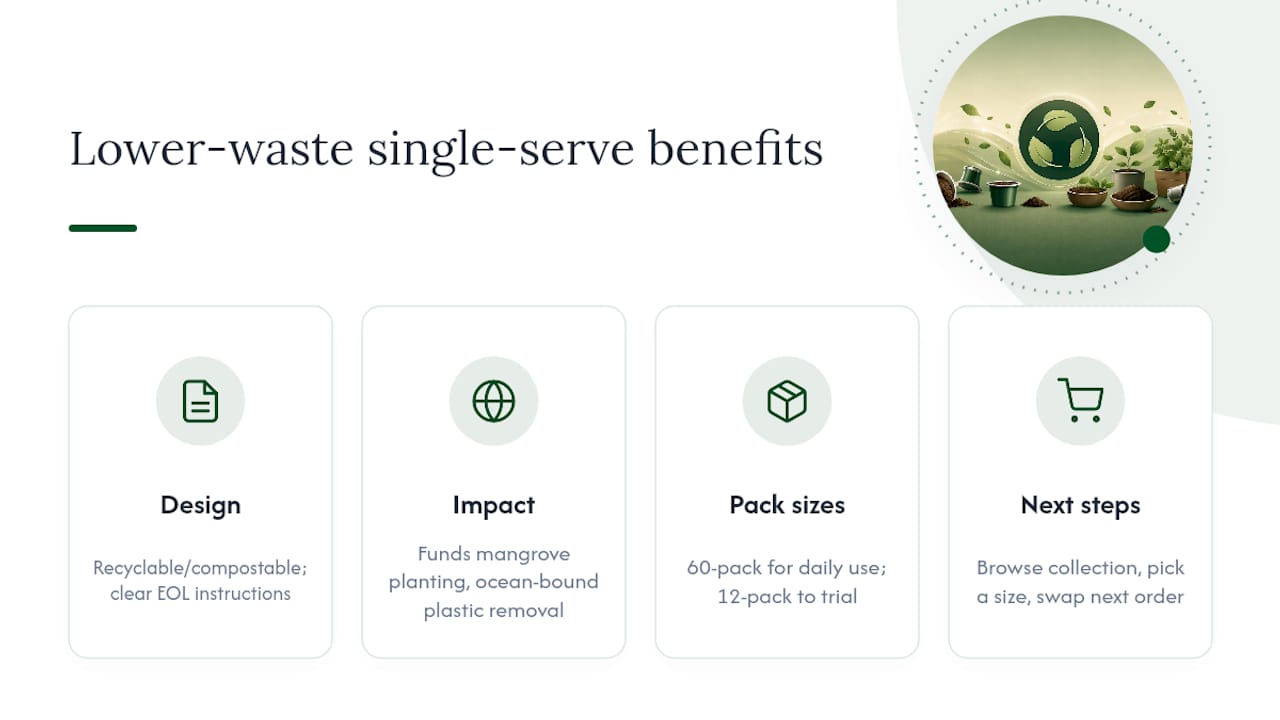
Every purchase also supports mangrove tree planting and ocean-bound plastic removal, detailed on Ecoviberoast’s Environmental Impact page. The 60-pack Original Roast is the practical starting point if you’re brewing daily, while the 12-pack works well for testing the switch before committing. Browse the collection, pick a pack size, and swap your next order for pods designed to leave less behind.
Sources
- How to Recycle K-Cups, Nespresso Capsules & Coffee Pods - Consumer Reports
- Recycling Mystery: K-Cups - Earth911
- Coffee pods - Recycle Right


