

TL;DR:
- Recognizing authentic fair trade tea involves checking for official logos like the black FAIRTRADE Mark or Fairtrade USA’s seal, indicating certified and traceable ingredients. Understanding differences between mass balance and physical segregation helps consumers choose between mixed or fully certified teas. Knowing the farm origin, certification details, and verifying online ensures genuinely ethical purchasing.
Fair trade tea is defined as tea sourced under certification standards that guarantee minimum price floors, Fairtrade Premiums, and ethical labor conditions for farmers and workers. Knowing how to identify fair trade tea starts with recognizing the official certification marks on packaging, because not every tea that claims to be ethical carries verified proof. Fairtrade International and Fair Trade USA are the two primary certification bodies whose logos signal genuine accountability. Once you know what to look for, choosing tea that supports real people and real communities becomes as natural as brewing your morning cup.
How to identify fair trade tea certification marks and labels
The most reliable way to spot authentic fair trade tea is to find one of two official logos on the packaging. The black FAIRTRADE Mark, issued by Fairtrade International, means all certified ingredients are fully traceable from farm to shelf. That level of traceability is significant because it rules out blending with uncertified tea at any point in the supply chain.
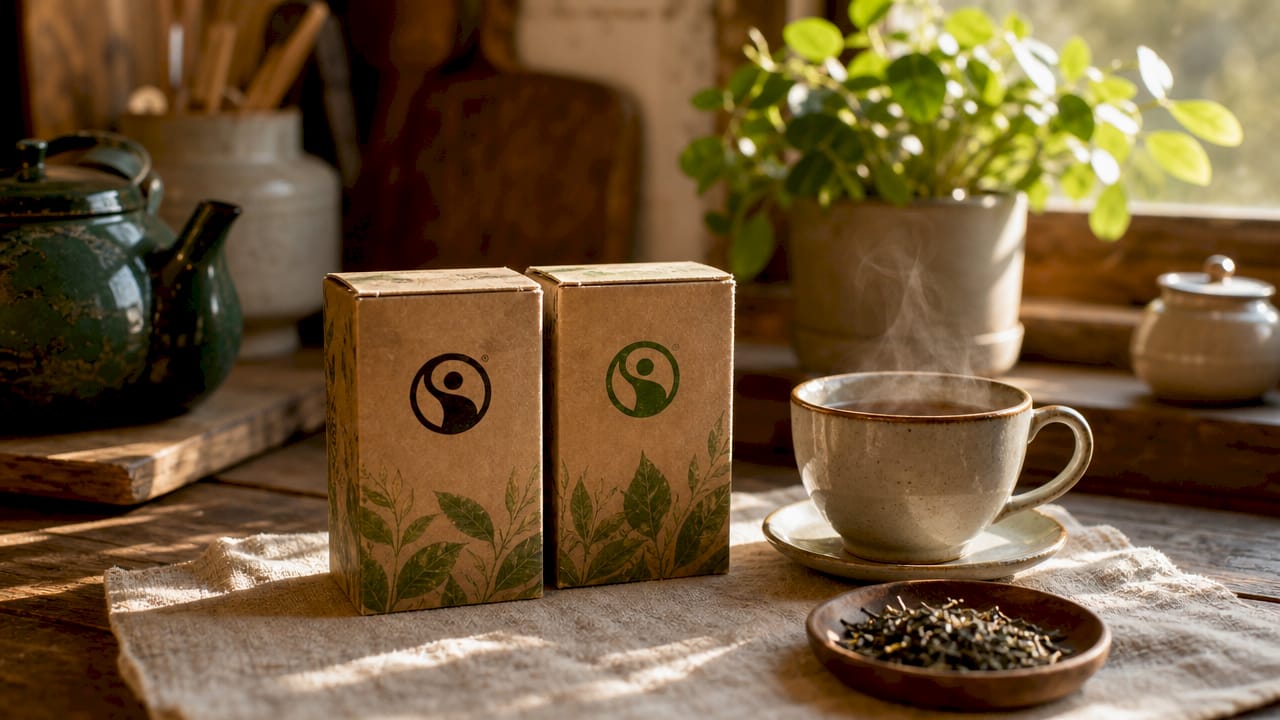
The second logo is the Fairtrade Ingredient Mark, which appears on products where tea is one of several ingredients. This mark requires a minimum of 20% Fairtrade content across the composite product. A blended herbal tea with some Fairtrade-certified leaves alongside non-certified botanicals would carry this mark rather than the full black FAIRTRADE Mark.
Fair Trade USA uses a different but equally recognized logo, a green circle with a person and waves. Both marks are legitimate, but they operate under slightly different standards, so it is worth knowing which body certified your tea.
Here is what to look for on any tea package:
- Black FAIRTRADE Mark: Full certification and traceability of all available Fairtrade ingredients
- Fairtrade Ingredient Mark: At least 20% of the product’s total content is Fairtrade certified
- Fair Trade USA Certified seal: Certification under Fair Trade USA’s standards, common on American market products
- Arrows or tabs on packaging: Small arrows next to the logo point to text explaining the sourcing method used
Pro Tip: Flip the package over before you buy. The front may display the Fairtrade logo, but the back often contains the sourcing disclosure that tells you whether the tea is fully segregated or mass balanced.
What does mass balance vs. physical segregation mean?
This is where fair trade tea labeling gets genuinely interesting, and where most shoppers stop reading. Understanding these two terms changes how you interpret every Fairtrade logo you see.
Physical segregation means the certified tea leaves are kept separate from conventional tea throughout the entire supply chain, from the farm through processing, shipping, and packaging. When you buy a physically segregated product, every leaf in your cup came from a certified farm. This is the gold standard.
Mass balance certification works differently. Certified and non-certified tea may be mixed during processing, but the overall volume of certified tea purchased matches the volume sold as Fairtrade. Think of it like a carbon offset: the credit exists, but the actual atoms in your cup may not be certified. Mass balance is an industry-accepted approach that helps Fairtrade ingredients enter mainstream supply chains and still delivers premiums to producers, but some consumers prefer the assurance of full physical segregation.
Here is how to tell which method your tea uses:
- Look for a small arrow printed next to the Fairtrade logo. Packaging arrows indicate that additional sourcing information appears elsewhere on the pack.
- Turn the package over and find the sourcing disclosure. It will state whether the product uses mass balance or full segregation.
- Read the ingredient list. If the tea is a blend with multiple components, check whether each Fairtrade-certified ingredient is individually named.
- Look for phrases like “sourced from Fairtrade certified farms” versus “contains Fairtrade certified tea.” The first is stronger language.
“Mass balance is a flexible tool that brings more producers into the Fairtrade system, but it is not the same as a cup made entirely from certified leaves. Both are legitimate. Knowing the difference lets you choose what aligns with your values.”
How do smallholder cooperatives and plantation models differ?
Not all Fairtrade-certified tea comes from the same type of farm, and the structure of the farm affects how much benefit workers actually receive. This is one of the most overlooked details in ethical tea sourcing.
Smallholder cooperatives are groups of independent farmers who collectively own and manage their tea gardens. In this model, farmers have direct democratic control over how Fairtrade Premiums are spent. They vote on community projects, infrastructure improvements, and training programs. Kenya is a strong example of this model, where smallholder cooperatives produce a significant share of the country’s exported tea.
The plantation model, common in regions like Assam in India and parts of Sri Lanka, involves large estates with hired workers rather than owner-farmers. Here, the Fairtrade Premium is managed by a joint body of workers and management. Workers still benefit, but the decision-making structure is less direct than in a cooperative. It is worth noting that fair trade certification sets minimum price floors and premiums but does not guarantee wages above ILO minimum standards, which means plantation workers may still earn less than a living wage in some regions.
| Certification model | Who controls premiums | Common regions | Worker benefit level |
|---|---|---|---|
| Smallholder cooperative | Farmers directly | Kenya, parts of East Africa | High direct control |
| Plantation (hired labor) | Joint worker-management body | Assam, Sri Lanka | Structured but less direct |
Fairtrade Premiums fund democratically controlled community projects in both models, from school buildings to healthcare clinics. The degree of benefit varies, but both models represent a meaningful step above uncertified sourcing.
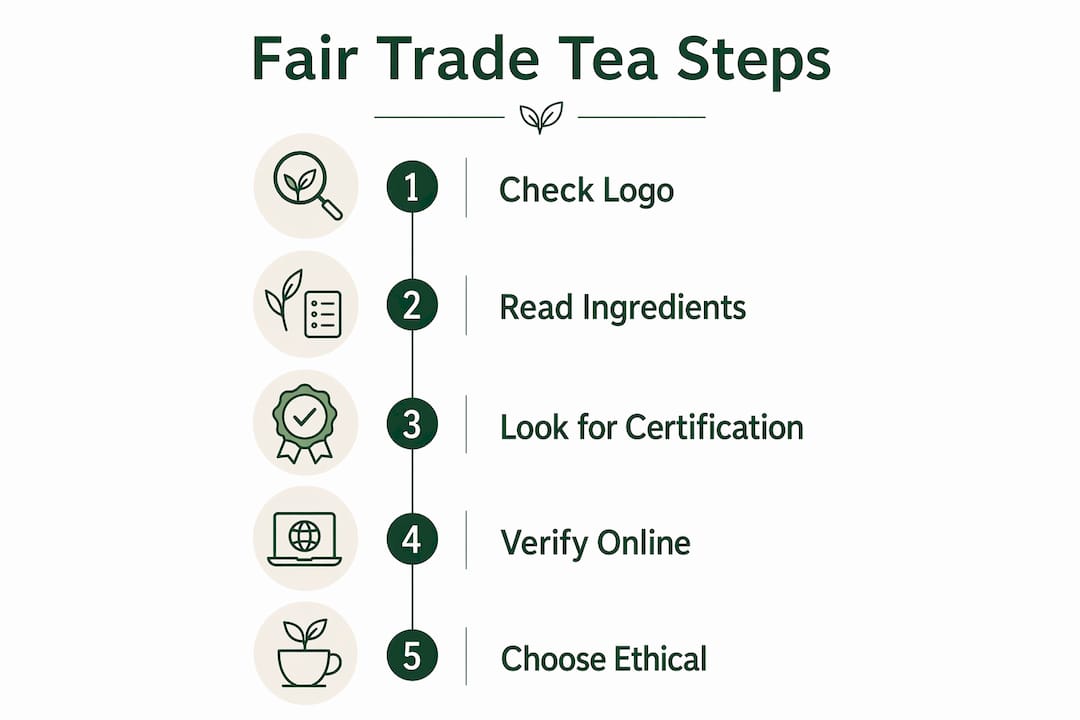
What practical steps help you buy authentic fair trade tea?
Shopping for ethical tea does not require a degree in supply chain management. A few focused habits at the shelf or online make the process quick and satisfying.
Read the label front and back. The front of the pack carries the logo, but the back carries the story. Look for the Fairtrade certification number, the sourcing disclosure, and the name of the certifying body. Brands like Clipper, Co-op’s Irresistible Assam, and Rington’s decaffeinated teas all carry verified Fairtrade certification and are widely available examples of what genuine labeling looks like.
Check the ingredient list for sourcing specifics. A tea labeled “contains Fairtrade certified tea” is more credible than one that says “ethically sourced” with no certification mark. Phrases like “ethically sourced,” “responsibly grown,” or “sustainably harvested” without a third-party logo are marketing language, not verified claims.
Use online certification lookup tools. Fairtrade International maintains a product database where you can verify whether a specific brand or product holds current certification. Some brands also include QR codes on packaging that link directly to their certification status.
Here is a quick comparison of label claims to help you shop confidently:
| Label claim | What it means | Trust level |
|---|---|---|
| Black FAIRTRADE Mark | Full certification, all available ingredients traceable | Highest |
| Fairtrade Ingredient Mark | At least 20% Fairtrade content | High |
| Fair Trade USA Certified | Certified under Fair Trade USA standards | High |
| “Ethically sourced” (no logo) | Marketing claim, no third-party verification | Low |
| “Sustainably grown” (no logo) | Marketing claim, no third-party verification | Low |
Watch for these red flags when buying fair trade tea:
- Vague sustainability language with no certification logo
- A logo that looks similar to the FAIRTRADE Mark but uses different colors or fonts
- No certification number or certifying body named on the packaging
- Claims of “supporting farmers” without specifying how or through which program
Pro Tip: When shopping online, search the brand name alongside “Fairtrade certified” on the Fairtrade International website before purchasing. Certification status can lapse, and a quick search takes under a minute.
For a broader look at sustainable tea practices, Ecoviberoast has put together a checklist that walks you through the full range of things to consider beyond just the certification mark.
Key takeaways
Identifying fair trade tea requires reading past the front-of-pack logo to understand the certification type, sourcing method, and farm model behind every cup.
| Point | Details |
|---|---|
| Know the two main marks | The black FAIRTRADE Mark signals full traceability; the Ingredient Mark requires at least 20% certified content. |
| Understand mass balance | Mass balance mixes certified and conventional tea but maintains volume credit; physical segregation keeps certified leaves separate throughout. |
| Check the farm model | Smallholder cooperatives give farmers direct premium control; plantation models use a joint worker-management body. |
| Spot red flags | Vague claims like “ethically sourced” without a third-party logo carry no verified accountability. |
| Use verification tools | Fairtrade International’s online database and QR codes on packaging confirm current certification status. |
Why getting this right matters more than most people realize
I have spent years reading tea labels, and the single most common mistake I see eco-conscious shoppers make is trusting the front of the pack. A warm green color palette and the word “sustainable” feel like enough. They are not.
What genuinely changed my perspective was learning about the difference between mass balance and physical segregation. I had assumed that any Fairtrade logo meant the tea in my cup came entirely from certified farms. It does not always. That is not a scandal, but it is information worth having. If full segregation matters to you, you need to flip the pack and read the disclosure. Most people never do.
I also think the cooperative versus plantation distinction deserves more attention from consumers. When certified farmers invest premiums in community projects, the impact is tangible and locally controlled. That is a different kind of ethical impact than a plantation model where management shares decision-making power. Neither is fraudulent, but they are not identical either.
My honest recommendation: start with brands that carry the full black FAIRTRADE Mark and disclose physical segregation. Clipper and Co-op are good starting points. Then explore the best fair trade teas that go beyond the logo and tell you exactly where your leaves came from. That transparency is what separates a genuinely ethical cup from a well-designed package.
— LaSaundra
Sip with purpose: explore Ecoviberoast’s ethical teas

Ecoviberoast sources teas with the same scrutiny this article describes, looking past the label to the farm, the certification model, and the community behind every leaf. Every purchase through Ecoviberoast supports tree planting and plastic reduction initiatives, so your cup does double duty for the planet. If you want to start with something aromatic and certified, the Mango Treat loose leaf tea is a fair trade and organic certified option that delivers rich, fruity flavor alongside genuine ethical sourcing. Choosing tea this way is not just a purchase. It is a warm hug for both you and Mother Earth.
FAQ
What is fair trade tea, exactly?
Fair trade tea is tea produced under certification standards set by bodies like Fairtrade International or Fair Trade USA, guaranteeing minimum price floors, Fairtrade Premiums, and ethical labor conditions for farmers and workers.
How do I spot a genuine Fairtrade logo on tea packaging?
Look for the black FAIRTRADE Mark from Fairtrade International or the green circle seal from Fair Trade USA. Both include a certification number and are backed by third-party auditing.
What does the Fairtrade Ingredient Mark mean on tea?
The Fairtrade Ingredient Mark means the product contains at least 20% Fairtrade certified content, used when tea is one component in a multi-ingredient blend.
Is mass balance fair trade tea less ethical than physically segregated tea?
Mass balance is a legitimate certification method that still delivers premiums to certified producers, but it allows certified and conventional tea to mix during processing. Physical segregation guarantees every leaf in your cup came from a certified farm, which some consumers prefer.
Can I verify a tea brand’s Fairtrade certification online?
Yes. Fairtrade International maintains a searchable product database at fairtrade.net where you can confirm whether a specific brand holds current certification before you buy.


