

A moka pot makes a bold, concentrated brew that acts like espresso, but a true espresso machine is the only device that hits the pressure needed to make real espresso. If you want a strong, budget-friendly base for milk drinks, get a moka pot. If you want authentic crema and full control over extraction, invest in an espresso machine. The gap comes down to pressure: moka pots run around 1 to 2 bars, while espresso machines push past 9 bars, per the Specialty Coffee Association’s testing standards.
Here’s the quick match for your kitchen:
- Pick the moka pot if you’re on a budget, love milk-based drinks, or want a simple stovetop ritual.
- Pick the espresso machine if you want café-style crema, precise dial-in control, and don’t mind the higher price and learning curve.
We’ll walk through the flavor, grind, workflow, and cost differences below, plus which beans from Ecoviberoast work best with each method.
Key Takeaways
A moka pot delivers a bold, budget-friendly espresso-style brew, while only a pump-driven espresso machine reaches the pressure needed for true espresso and crema.
| Point | Details |
|---|---|
| Pressure defines espresso | True espresso needs roughly 9+ bars; moka pots run about 1 to 2 bars, so they make a strong alternative, not espresso. |
| Crema isn’t optional | Espresso machines emulsify oils into real crema; moka pot foam is mostly steam and thins out fast. |
| Grind and dose matter | Espresso needs a fine, precise grind and dose; moka pot grind is medium-fine and more forgiving. |
| Cost scales with control | Moka pots run $20 to $100; espresso setups often exceed $300 to $1,000 with accessories. |
| Match beans to method | Ecoviberoast recommends medium-dark roasts for moka pots and medium-light roasts for dialing in espresso sweetness. |
Table of Contents
- Moka Pot Vs Espresso: The Core Comparison
- Why A Moka Pot Isn’t True Espresso
- How The Flavors And Crema Actually Differ
- Grind Size And Dose: Getting The Ratios Right
- What Brewing Day-To-Day Actually Looks Like
- Cleaning, Upkeep, And How Long These Devices Last
- What You’ll Actually Spend On Each Method
- Small Changes That Make Either Method Better
- Which Beans And Roasts Work Best For Each Method
- A Practical Take On Picking Between Them
- Pick Beans That Match Your Brew Method
- Frequently Asked Questions
- Sources
Moka Pot Vs Espresso: The Core Comparison
Here’s the side-by-side breakdown of what actually separates these two brewing methods.
| Dimension | Moka Pot | Espresso Machine |
|---|---|---|
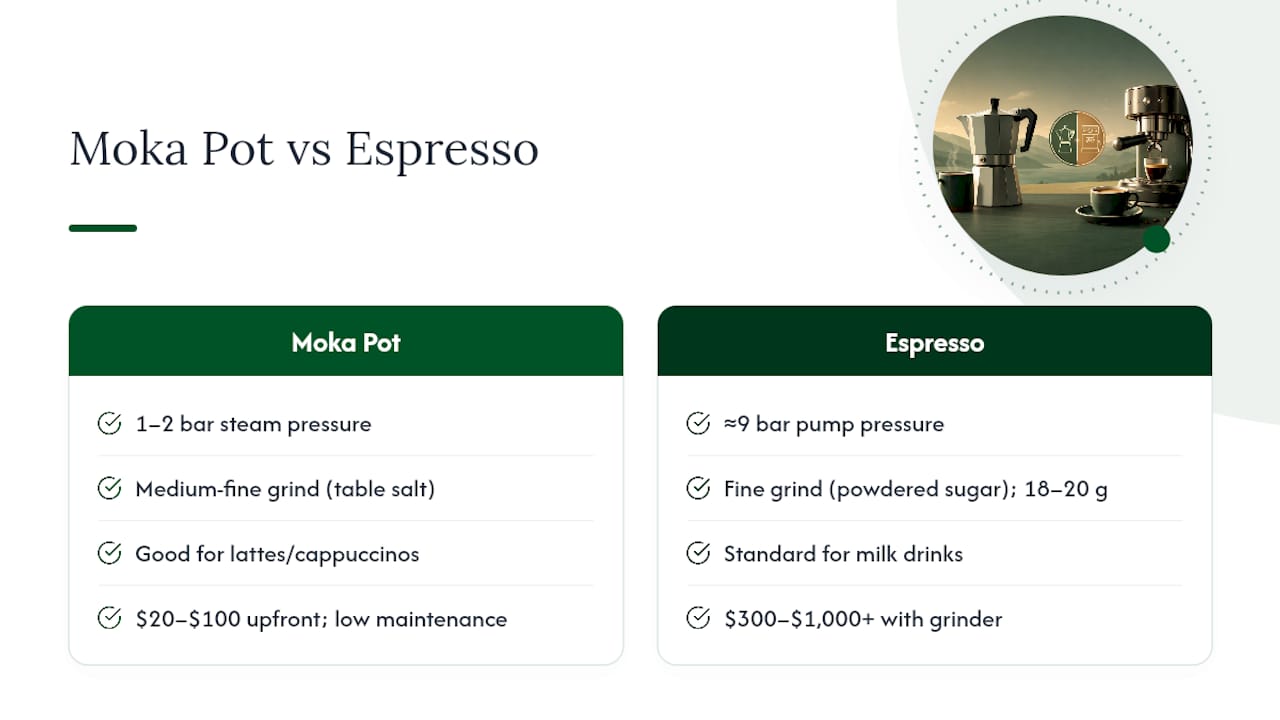
| Pressure | ~1–2 bars (steam-driven) | ~9+ bars (pump-driven) |
| Crema / mouthfeel | Thin foam, not true crema | Thick, persistent crema |
| Flavor profile | Bold, roasty, heavier body | Syrupy, sweet, complex |
| Grind & dose | Medium-fine, forgiving | Fine, precise, dose-sensitive |
| Brew time & workflow | 4–8 minutes, hands-on stovetop | Under 1 minute pull, plus warm-up |
| Ease & maintenance | Simple, rinse and occasional gasket swap | Regular backflushing, part upkeep |
| Cost band | $20–$100 | $300–$1,000+ |
| Milk drinks | Great bold base | Excellent, with steam wand |
| Capacity | Fixed by pot size | Flexible, one shot at a time |
The trade-off is simple: the moka pot wins on cost and simplicity, the espresso machine wins on crema and control, and neither is “better” so much as built for a different morning.
Why A Moka Pot Isn’t True Espresso
The word “espresso” has a technical definition, and pressure is the deciding factor. Industry benchmarks put true espresso at roughly 9 bars of pressure, extracted in 20 to 30 seconds for a 25 to 35 mL shot. A moka pot tops out around 1 to 2 bars, generated by steam pushing water up through a funnel, not by a pump forcing it through a compact puck of grounds.
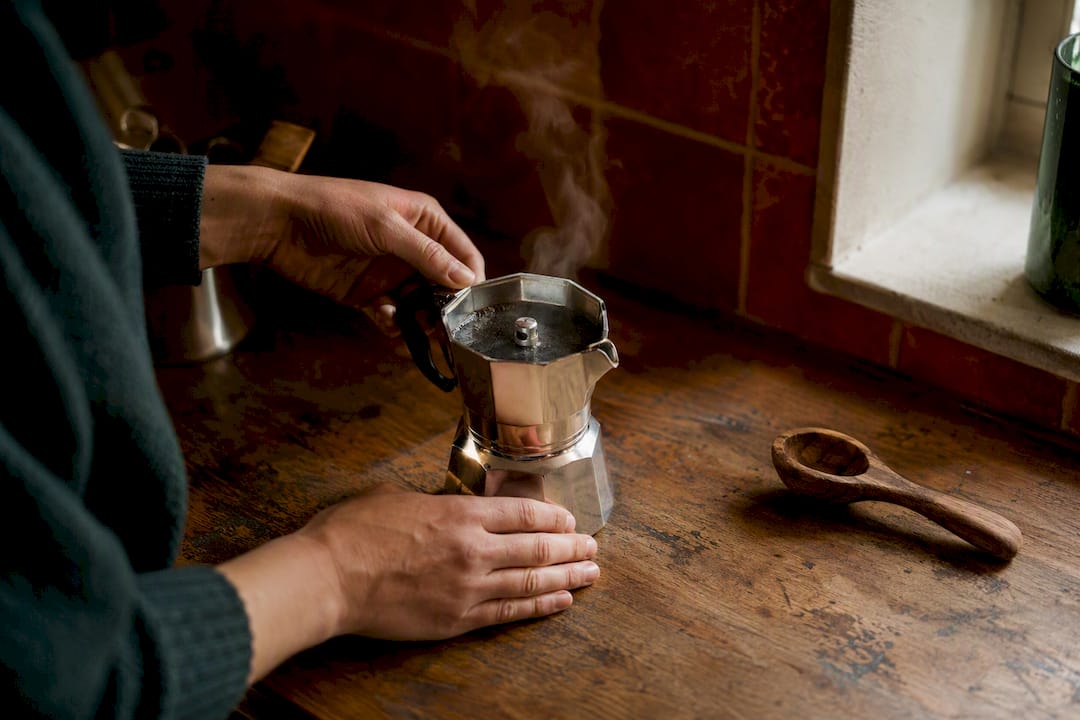
That mechanical difference cascades into temperature control, too. Espresso machines use PID controllers or heat exchangers to hold water at 90 to 96°C, the sweet spot for balanced extraction. Stovetop brewers can’t actively cool pressurized water, so they frequently run at or above boiling, which pulls more bitterness into the cup.
How The Flavors And Crema Actually Differ
Taste them side by side and the difference is obvious. Moka pot coffee comes across bold, roasty, and heavy in the mouth, sometimes tipping into bitterness if you push the heat too hard. Espresso, by contrast, tends toward syrupy sweetness with more complexity and that signature crema on top.
That crema matters more than looks. On a real espresso machine, high pressure emulsifies CO2 and coffee oils into a stable, thick foam that traps aroma and sweetness. The foam on a moka pot’s surface is mostly steam and fine sediment, not that emulsion, so it thins out fast and doesn’t carry the same flavor payload.
- Moka pot: bold, roasty, heavier body, occasional bitterness
- Espresso: sweet, syrupy, layered, backed by real crema
- Bean freshness and roast level swing both cups dramatically, so stale beans flatten either method equally
Grind Size And Dose: Getting The Ratios Right
Your grinder settings make or break both methods, and the tolerances aren’t the same.
- Moka pot: medium-fine grind, texture like table salt or fine sand, with a dose that fills the filter basket without heavy tamping.
- Espresso: fine grind, closer to powdered sugar, dosed to 18 to 20 grams for a double shot, yielding roughly 30 to 40 mL of liquid.
- Tolerance: espresso machines demand tight particle consistency since pump pressure exposes every inconsistency; moka pots are more forgiving but punish grinds that are too fine.
Check out this grinder’s guide to coffee textures if you want a visual reference for dialing in either method.
Pro Tip: If your moka pot sputters and tastes burnt, your grind is too fine or your heat is too high. Back off both before you blame the beans.
What Brewing Day-To-Day Actually Looks Like
The moka pot asks for patience, the espresso machine asks for precision. A moka pot takes about 4 to 8 minutes from cold start to finished pour, most of it unattended stovetop time. An espresso machine pulls a shot in under a minute, but only after several minutes of warming up the boiler or heat exchanger.
- Moka pot: fill, twist, wait, listen for the hiss, pour. No tamping required.
- Espresso machine: grind, dose, tamp, lock in, pull, then steam milk if you’re making a latte or cappuccino.
- Multiple cups: moka pots scale by pot size in one batch; espresso machines pull one shot at a time, so a house full of coffee drinkers means more waiting.
Cleaning, Upkeep, And How Long These Devices Last
Simplicity is the moka pot’s quiet superpower. It’s three parts, a gasket, and a filter, and cleanup is a quick rinse.
- Espresso machines need routine backflushing, grouphead cleaning, and steam wand care to prevent clogs and stale oil buildup.
- Moka pots need occasional gasket replacement, usually once a year with regular use, and a rinse after every brew.
- Pumps, boilers, and solenoid valves are the common failure points on machines; a cracked gasket or worn filter is about the worst a moka pot throws at you.
Pro Tip: Never wash your moka pot with soap. It strips the seasoning that builds a smoother flavor over time. A hot water rinse is all it needs.
What You’ll Actually Spend On Each Method
Budget shapes this decision more than almost anything else. A solid moka pot runs $20 to $100, full stop, with no accessories required. Entry-level espresso machines start around $300 and climb past $1,000 once you add a quality burr grinder, tamper, and milk pitcher.
- Moka pot: low upfront cost, near-zero ongoing cost, no accessories needed.
- Espresso machine: higher upfront cost, plus grinder and accessory spending that often matches or exceeds the machine itself.
- Extra dollars buy tighter pressure control, steadier brew temperature, and better steam wand performance, not just a nicer badge on the box.
Small Changes That Make Either Method Better
You don’t need new gear to get a noticeably better cup. Technique closes most of the gap between a mediocre brew and a great one.
- Start your moka pot with hot water instead of cold to shorten time on the heat and reduce bitterness.
- Keep the burner on low to medium heat so the brew never rushes into a violent boil.
- Pull the pot off the heat the moment you hear sputtering, before the last few drops turn bitter.
- Dial in your espresso grind and dose until the shot runs 20 to 30 seconds; adjust finer for a faster shot, coarser for a slow one.
- Invest in a quality burr grinder before you invest in a fancier machine. Grind consistency matters more than horsepower.
- Match your roast to your method: darker roasts hold up better under moka pot heat and milk, while lighter roasts show more nuance in espresso.
Pro Tip: Filtered water changes both cups more than people expect. Minerals and chlorine flatten sweetness, especially in concentrated brews.
Which Beans And Roasts Work Best For Each Method
Roast level does real work here, not just flavor preference. For moka pots, medium-dark to dark roasts hold their chocolatey, stable character even after the stovetop’s higher heat, and they cut through milk beautifully in a latte or cortado. A mocha-flavored blend is a natural fit if you’re building milk drinks around a moka base.
For espresso, medium or lighter roasts let more acidity and sweetness survive the shorter, pressurized extraction, which is where Ecoviberoast’s espresso bean recommendations come in handy if you’re dialing in flavor rather than just strength. Curious how origin shapes those notes? This origin flavor guide breaks it down.
- Moka pot: medium-dark to dark, chocolate-forward blends
- Espresso: medium to light roasts for sweetness and acidity
- Both methods concentrate flavor, so stale beans show their age fast
Pro Tip: Store beans in an airtight container away from light and heat, and buy only what you’ll drink in two to three weeks. Concentrated brewing exposes stale coffee ruthlessly.
A Practical Take On Picking Between Them
If your mornings are about ritual and budget, the moka pot earns its keep. If you’re chasing café-quality crema and control, the espresso machine is worth the investment, and the difference between coffee drink styles explains why that crema matters so much.
Pick Beans That Match Your Brew Method
Whichever device you land on, Ecoviberoast’s roasts are built to perform under pressure, literally. If mornings mean grabbing something fast and consistent, the single serve coffee pods give you a reliable, concentrated cup without babysitting a stovetop or dialing in a grinder.

Every bag and pod ties back to Ecoviberoast’s sustainability commitments, including mangrove tree planting and ocean-bound plastic removal with every order, so your daily cup does a little good beyond your own mug. If you’re ready to match your beans to your brewer, browse the single-serve collection and pick a roast built for the way you actually make coffee.
Frequently Asked Questions
Is a moka pot the same as espresso? No. A moka pot brews at roughly 1 to 2 bars of steam pressure, while true espresso requires around 9 bars from a pump-driven machine. The moka pot makes a strong, espresso-style concentrate, not espresso itself.
Can I use moka pot coffee for lattes and cappuccinos? Yes. Its bold, concentrated body holds up well against steamed milk, making it a popular budget alternative for home milk drinks.
What grind size should I use for a moka pot vs espresso? Use a medium-fine grind, similar to table salt, for a moka pot. Espresso needs a finer grind, closer to powdered sugar, dosed precisely for an 18 to 20 gram shot.
Which is cheaper long term, moka pot or espresso machine? The moka pot wins by a wide margin. It costs $20 to $100 upfront with almost no maintenance costs, while espresso setups often run $300 to $1,000 or more once you add a grinder and accessories.
Does a moka pot make real crema? Not true crema. The foam on top comes from steam and fine sediment rather than the pressurized oil emulsion that pump machines create, so it’s thinner and less flavorful.
Sources
- Bambino $499 vs AeroPress $40 vs Moka $30 — 2026 Tested
- Stove-top coffee makers: do they make true espresso? — The Ninth Bar
- Moka pot vs espresso machine (Which makes better coffee?)


