

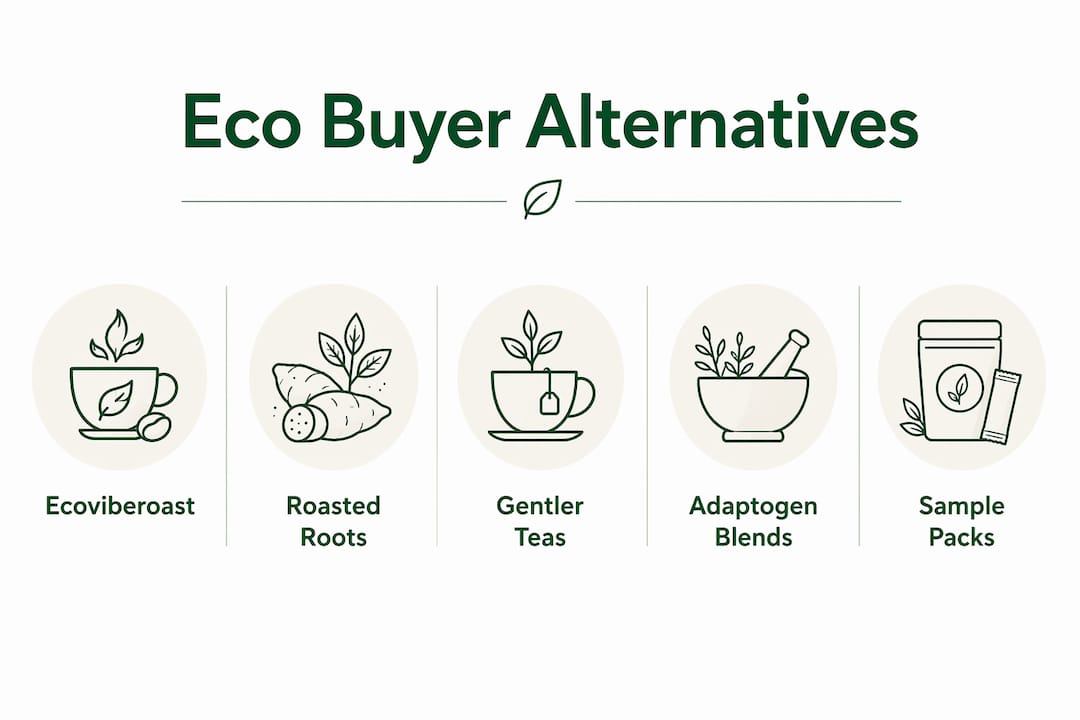
If you want a US-accessible, eco-first replacement for vibrantvibescoffee.com, Ecoviberoast is the leading sustainable option, alongside three category alternatives worth exploring:
- Ecoviberoast — sustainably sourced beans, pods, loose-leaf teas, and sample packs with verified tree planting and ocean plastic removal; ships across the US with subscription options available.
- Roasted-root substitutes (chicory, dandelion, barley) — caffeine-free, coffee-like body and bitterness; ideal for ritual retention without stimulants.
- Gentler-caffeine teas (matcha, yerba mate, green/black tea) — lower caffeine than coffee, with matcha’s L-theanine promoting calm focus rather than a spike-and-crash.
- Adaptogen/mushroom latte blends (lion’s mane, chaga, reishi) — functional support with low-to-zero caffeine; widely available as subscriptions and sample packs in the US.
All four categories ship domestically, and most offer trial or sample options so you can test before committing.
Table of Contents
- What are the best sustainable alternatives to vibrantvibescoffee.com?
- What does each sustainable alternative actually offer?
- How do you choose the right sustainable alternative for your routine?
- Practical brewing tips for recreating your coffee ritual
- Why these picks are worth trusting
- Key Takeaways
- The ritual matters as much as the ingredient
- Ecoviberoast is a natural next step for eco-conscious buyers
- Useful sources and further reading
What are the best sustainable alternatives to vibrantvibescoffee.com?
| Option | What they sell | Sustainability & impact | Packaging | Price & subscription | Best for | US availability |
|---|---|---|---|---|---|---|
| Ecoviberoast | Beans, pods, loose-leaf teas, sample packs | Tree planting, ocean plastic removal, responsible sourcing | Eco-conscious; recyclable/compostable focus | One-time or monthly subscription | Eco-first full replacement | Ships nationwide; subscription available |
| Roasted-root substitutes | Chicory, dandelion, barley blends | Often USDA Organic; some Fair Trade | Bulk bags, compostable pouches common | Affordable; subscription options vary | Coffee-like ritual, zero caffeine | Widely available online |
| Gentler-caffeine teas | Matcha, yerba mate, green/black loose-leaf | USDA Organic and Fair Trade common; origin transparency varies | Loose-leaf tins, compostable sachets | Mid-range; subscription common | Steady focus, caffeine reduction | Widely available online |
| Adaptogen/mushroom blends | Lion’s mane, chaga, reishi latte powders | Organic sourcing common; impact reporting varies | Pouches, some compostable | Mid-to-premium; sample packs available | Functional support, low caffeine | Ships nationwide; subscriptions common |
Trust signals to verify before you buy: USDA Organic certification, Fair Trade or Direct Trade statements, a sourcing/transparency page showing origin and farmer relationships, verified customer reviews with rating counts, and documented impact reporting (trees planted, plastics removed). Brands that can’t show at least two of these are worth approaching with caution.
What does each sustainable alternative actually offer?
Ecoviberoast
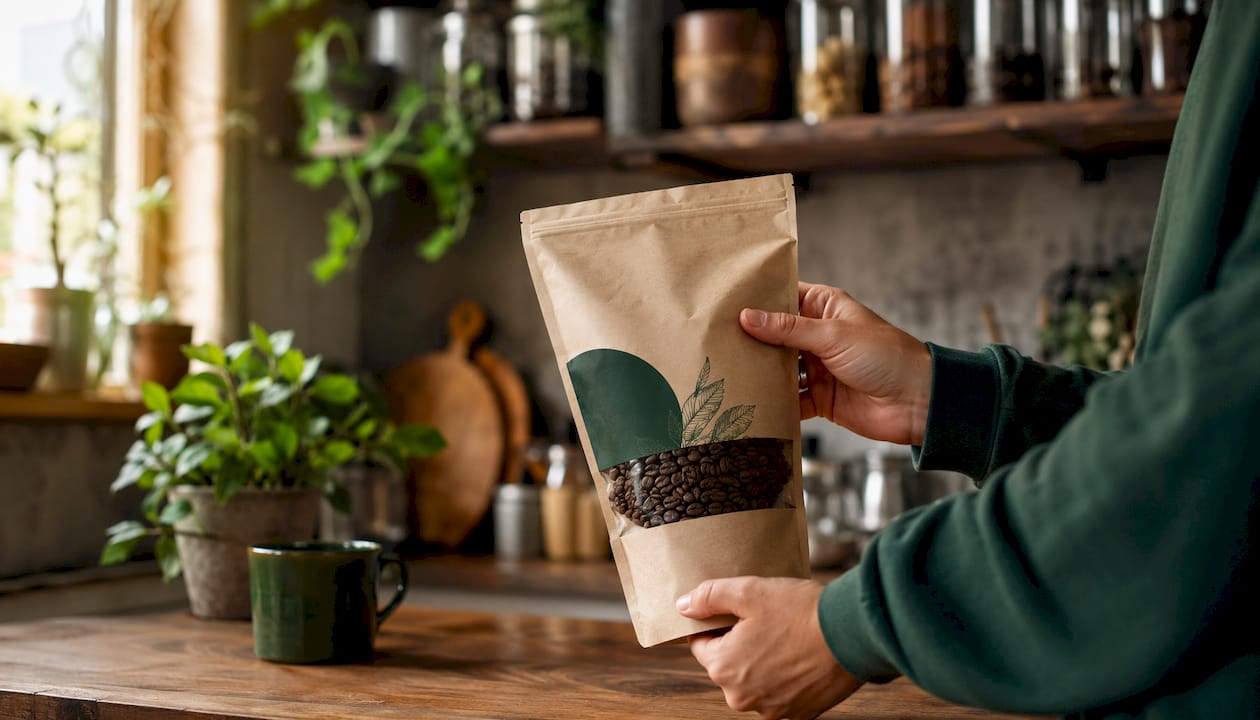
Ecoviberoast sells sustainably sourced coffee beans, single-serve pods, loose-leaf teas, and sample packs, all built around a direct-to-consumer model with one-time purchases and recurring subscriptions. Every order contributes to planting mangrove trees and removing ocean-bound plastics, giving you a measurable environmental footprint with each cup. The product range covers multiple roast profiles and tea varieties, so you’re not locked into one flavor experience. Transparency pages detail sourcing practices and impact milestones, which is exactly the kind of documentation eco-conscious buyers should demand.
Roasted-root substitutes
Chicory, roasted dandelion, and barley blends replicate coffee’s roasted bitterness and viscosity far better than plain herbal teas, much like the calming coffee alternative found in Bottomless: After Hours Decaf. They contain essentially zero caffeine, making them a warm, grounding option for evenings or for anyone stepping away from stimulants entirely. Many brands sell them in bulk bags or compostable pouches, and USDA Organic options are easy to find. Think of them less as a compromise and more as a functional beverage: chicory and dandelion root carry prebiotic benefits that plain coffee simply doesn’t.
Gentler-caffeine teas
Matcha, yerba mate, and quality green or black teas give you a caffeine lift without the spike-and-crash pattern many coffee drinkers know too well. Matcha’s L-theanine content is the key differentiator: it smooths out alertness so you stay focused without the jittery edge. Preparation can mirror your coffee ritual closely — a matcha latte whisked with oat milk, or yerba mate brewed in a French press, feels ceremonial in the same satisfying way. Look for loose-leaf options with USDA Organic and Fair Trade labels, and check whether the brand publishes origin information.
Adaptogen/mushroom blends
Mushroom and adaptogen latte blends featuring lion’s mane, chaga, and reishi are positioned as functional alternatives for sustained focus with lower direct caffeine. Caffeine content ranges from zero to low depending on the blend, so they suit both caffeine-sensitive drinkers and those who want a gentler morning. Ecoviberoast’s own mushroom coffee medium roast infuses lion’s mane and reishi into a familiar roasted base, giving you functional benefits without abandoning the coffee ritual entirely. Sample packs are common across this category, which makes trial easy.
Pro Tip: Before committing to a subscription, order a sample pack from any category. Check whether the brand offers a pause or cancel option with no penalty — that flexibility is a green flag for customer confidence.
How do you choose the right sustainable alternative for your routine?
Start with your actual goal, because caffeine level, taste profile, and preparation versatility are the three dimensions that determine whether a swap sticks.
Match your goal to a category:
- Full caffeine replacement with eco credentials → Ecoviberoast beans, pods, or teas
- Ritual retention, zero caffeine → Roasted-root substitutes (chicory, dandelion, barley)
- Steady focus, reduced caffeine → Matcha or yerba mate
- Functional support, low-to-zero caffeine → Adaptogen/mushroom blends
Decision checklist before you buy:
- Measured caffeine per serving (virtually none for roasted roots; moderate amounts for matcha; varies for mushroom blends)
- Ingredient transparency: can you see the origin and farmer relationship?
- Certifications: USDA Organic, Fair Trade or Direct Trade statements
- Packaging: compostable or recyclable materials, no unnecessary single-use plastic
- Subscription flexibility: can you pause, skip, or cancel without friction?
- US shipping time and cost clearly stated
Questions worth asking any seller:
- “Do you have a sourcing or transparency page?”
- “What’s your packaging made from, and is it compostable or recyclable?”
- “Do you offer sample packs or a trial period?”
- “What are your verified review counts and average rating?”
Red flags: vague sourcing language (“ethically sourced” with no detail), no sample or return option, single-use plastic with no recycling program, and zero impact reporting.
Pro Tip: Cross-reference a brand’s sustainability claims against third-party certifications. A USDA Organic seal or Fair Trade mark is independently verified; a self-written “eco-friendly” badge is not.
Practical brewing tips for recreating your coffee ritual
Roasted roots and grain substitutes do the best job of replicating coffee’s body and mouthfeel. Gentler-caffeine teas, especially matcha, deliver calm, steady focus thanks to L-theanine. The trick is keeping your familiar tools and proportions so the sensory experience stays satisfying.
Four simple recipes to start with:
- Chicory café au lait: Brew 2 tsp roasted chicory in a French press with 8 oz hot water for 4 minutes. Add steamed oat milk and a pinch of cinnamon.
- Dandelion latte: Simmer 1 tbsp roasted dandelion root in 10 oz water for 5 minutes, strain, and froth with your preferred milk.
- Matcha latte: Whisk 1 tsp ceremonial-grade matcha with 2 oz hot (not boiling) water until smooth, then add 6 oz steamed milk. The L-theanine keeps the lift even and calm.
- Mushroom adaptogen latte: Blend 1 tsp lion’s mane or reishi powder with 8 oz hot water and a splash of oat milk. Pair with Ecoviberoast’s dark roast mushroom coffee for a fuller body.
Rotating between categories across the week prevents palate fatigue and keeps your routine interesting. Try roasted roots Monday through Wednesday, matcha Thursday and Friday, and a mushroom blend on weekends.
Pro Tip: Replace one cup at a time over 1–2 weeks rather than switching all at once. Practitioners recommend this gradual swap approach to reduce withdrawal headaches and give your palate time to adjust.
Why these picks are worth trusting
The categories and brands featured here were chosen based on three criteria: documented sustainability credentials (organic, Fair Trade, or Direct Trade), transparent sourcing pages showing origin and farmer relationships, and measurable impact programs like tree planting or plastic removal. Product range matters too — a good alternative needs to fit your ritual, not just your values.
Choosing a sustainable beverage brand isn’t just about what’s in your cup. It’s about whether the company can show you, clearly and specifically, what happens at the farm, in the packaging facility, and in the world because of your purchase. Certifications like USDA Organic and Fair Trade exist precisely because “eco-friendly” language alone is easy to print on a bag.
Ecoviberoast’s environmental impact page documents tree planting and ocean plastic removal tied directly to purchases, which is the kind of verifiable impact reporting that separates genuine sustainability from marketing copy. Categories were compared rather than individual vendors ranked against each other, keeping the focus on what actually serves your goals.
Key Takeaways
The most effective approach to finding vibrantvibescoffee.com alternatives is matching your caffeine goal and ritual needs to a verified, eco-credentialed category, then sampling before subscribing.
| Point | Details |
|---|---|
| Match goal to category | Roasted roots for zero caffeine; matcha for steady focus; mushroom blends for functional support. |
| Verify trust signals | Look for USDA Organic, Fair Trade, sourcing pages, and documented impact before buying. |
| Sample before subscribing | Trial packs and flexible subscriptions reduce risk; always check pause and cancel policies. |
| Track your trial | Monitor sleep, alertness, and enjoyment over 1–2 weeks to evaluate each alternative fairly. |
| Start with Ecoviberoast | Ecoviberoast offers beans, pods, teas, and sample packs with verified tree planting and plastic removal. |
The ritual matters as much as the ingredient
Switching beverages is rarely just about caffeine. The warmth of the mug, the smell of something roasting or steeping, the quiet moment before the day starts — that ritual carries real comfort. What I find most compelling about sustainable alternatives is that the best ones don’t ask you to give that up. They ask you to redirect it toward something that’s also good for the planet.
Start small. Order a sample pack from one category that matches your goal. Brew it in the same vessel, with the same milk, at the same time of morning. Give it a week. You might be surprised how little you miss the original when the ritual stays intact.
Ecoviberoast is a natural next step for eco-conscious buyers
Every purchase at Ecoviberoast plants mangrove trees and removes ocean-bound plastics, so your morning cup does something beyond tasting good. The product range covers organic herbal teas, sustainably sourced beans, single-serve pods, and sample packs, all available with one-time or recurring subscription options that ship across the US.

Check the environmental impact page to see exactly what each purchase supports, then pick a sample pack that fits your ritual. Whether you’re after a bold morning roast, a calming herbal blend, or a functional mushroom coffee, there’s a starting point waiting for you at Ecoviberoast.
Useful sources and further reading
- Coffee Alternative: 6 Better Swaps for Caffeine, Focus, and Comfort — Covers matcha, nootropic drinks, roasted substitutes, and herbal teas with a practical how-to-choose framework.
- 10 Best Coffee Alternatives (Editor Review 2026) — The Good Trade — Editor-reviewed roundup with sustainability and certification guidance; useful for verifying trust signals.
- Coffee Alternatives To Replace Coffee Explained — Detailed guide on gradual swap strategies, palate adaptation, rotation tactics, and tracking alertness during a trial.
- Best Coffee Alternative Drinks — Taste-focused breakdown of roasted-root substitutes and their mouthfeel compared to coffee.
- Eco-Friendly Coffee Alternatives — Ecoviberoast — Ecoviberoast’s own roundup of sustainable alternatives for conscious drinkers, with product and sampling context.


