

TL;DR:
- Climate-positive teas remove more CO2 from the atmosphere than their supply chains emit, surpassing carbon-neutral goals. Verifiable claims require transparent reports, third-party certification, and impact data, including scope 1–3 emissions and carbon removal certificates. Ecoviberoast offers teas with measurable environmental impacts, such as mangrove planting and ocean plastic removal, supported by thorough impact documentation.
Climate-positive teas go beyond carbon-neutral. They remove greenhouse gases from the atmosphere in quantities exceeding those emitted by their entire supply chain, from the farm to your cup. The clearest examples you’ll find today include estate-certified regenerative plantations publishing full scope 1–3 reports, smallholder cooperative projects tied to verified reforestation, specialty rooibos suppliers achieving carbon net-negative status through measured soil carbon sequestration, and brands that pair each purchase with verified carbon removal credits retired in recognized registries. Ecoviberoast carries teas with verifiable environmental impact, including mangrove planting and ocean-plastic removal tied to every order.
Quick examples to scan:
- Estate-certified regenerative tea farms with on-farm renewables and published scope 1–3 accounts
- Smallholder cooperative projects with direct-trade transparency and reforestation verification
- Regenerative rooibos suppliers reporting carbon net-negative status via soil carbon measurement
- Verified carbon-neutral oolong programs backed by government and industry certification
- Brands pairing purchases with third-party verified carbon removal and retirement receipts
- Ecoviberoast herbal teas linked to mangrove planting and ocean-plastic removal programs
Table of Contents
- What does “climate-positive” actually mean for tea?
- What are the best real-world examples of climate-positive tea?
- How can U.S. consumers verify a climate-positive tea claim?
- How to find and buy climate-positive tea in the United States
- Why transparency and direct trade make climate claims more credible
- Key Takeaways
- Why Ecoviberoast prioritizes climate-positive sourcing
- Ecoviberoast’s climate-forward teas are worth your next cup
- Useful sources for verifying climate-positive tea claims
What does “climate-positive” actually mean for tea?
Climate-positive is not the same as carbon-neutral, and the difference matters when you’re deciding where to spend your money. A carbon-neutral tea offsets its emissions, often by purchasing credits tied to avoided deforestation or renewable energy projects elsewhere. A climate-positive tea goes further: it removes more CO2e from the atmosphere than the entire supply chain produces, including scope 1 (direct farm emissions), scope 2 (purchased energy), and scope 3 (shipping, packaging, and end-of-life).
Concrete criteria to look for include no-till farming, cover crops, and agroforestry that build soil carbon; on-farm solar or hydro energy; plastic-free or genuinely compostable packaging; and carbon-neutral shipping. Genuine climate-positive claims require end-to-end transparency, including direct trade relationships, not just a label. The trust signals that separate real claims from marketing are a published impact report, a named third-party verifier or registry, quantified CO2e removed with retirement receipts, and a supplier list with origin details.
| Verification Area | What to Check | Key Figure or Signal |
|---|---|---|
| Scope 1–3 accounting | Full emissions report covering farm, processing, and shipping | All three scopes named explicitly |
| Carbon removal proof | Retirement receipts from a recognized registry | Registry ID and retirement date |
| Packaging claims | Real compostability, not just “paper” bags | Tea bags can shed 10–50 microparticles per cup brewed at 85–90°C; many ‘paper’ tea bags contain 20–30% plastic fibers. |
| Soil carbon gains | Baseline measurement + multi-year monitoring data | Reported CO2e per hectare per year |
| On-farm energy | Renewable energy source named and quantified | % of energy from solar, hydro, or biomass |
Pro Tip: Check the carbon removal retirement date in the registry, not just the certificate. Credits retired years before the product was sold may not reflect current operations. A registry entry with a recent retirement date tied to the current harvest season is the gold standard.
What are the best real-world examples of climate-positive tea?
Here’s where it gets exciting. A handful of producers and producer types have already crossed the threshold from “sustainable” to genuinely climate-positive, and each one shows a different path to get there.
- Estate-certified regenerative plantations: Bogawantalawa Tea Estates in Sri Lanka achieved certified uncompensated climate-positive status, meaning no purchased offsets, just real removals exceeding emissions across the full estate. Their published reports cover scope 1–3 and include on-farm renewable energy and biodiversity programs. This is the benchmark for what a large estate’s proof package should look like.
- Smallholder cooperative projects: Cooperatives that publish maker names, farm locations, and reforestation program details offer the strongest traceability. Sourcing from smallholder cooperatives and publishing those details is a recognized trust signal among ethical sourcing guides. The Nepal Tea Revival Project is one model, connecting farmers directly to global buyers while supporting organic farming and fair wages.
- Regenerative rooibos suppliers: Klipopmekaar, a South African rooibos farm, reports carbon net-negative status through long-term soil carbon sequestration and regenerative farming practices, supplying net-zero or net-negative rooibos to clients who want verified claims. Soil carbon measurement over multiple seasons is what makes this credible.
- Verified carbon-neutral oolong programs: A farmer group in Taitung, Taiwan, produced a verified carbon-neutral oolong backed by government and industry certification, demonstrating that localized programs with third-party oversight can produce a verifiable zero-footprint product. Carbon-neutral is the floor; climate-positive builds from there.
- Specialty small-batch retailers: Specialty retailers offering small batches under roughly 50 kg with named makers and controlled sourcing enable better traceability than supermarket blends, making measurable climate outcomes far easier to confirm.
- Ecoviberoast: Ecoviberoast sells herbal teas and specialty beverages tied to mangrove planting and ocean-plastic removal with every purchase, with educational content and impact pages available on the brand site for buyers who want to dig into the details.
How can U.S. consumers verify a climate-positive tea claim?
Most “eco-friendly” tea marketing stops at the label. Here’s how to push past it.

Start with the product page. A credible brand names its verifier, links to its impact report, and lists its suppliers. If none of those appear, that’s your first red flag. Vague language like “we offset our carbon” or “we support reforestation” without named projects, registry IDs, or quantified CO2e is a signal to keep looking.
Red flags to watch for:
- “Carbon offset” claims with no removal proof or registry link
- Unnamed reforestation projects or one-time donations with no follow-up reporting
- Impact reports that cover only scope 1 emissions and skip shipping and packaging
- Certifications that expired more than 12 months ago
On timelines: achieving and maintaining climate-positive status typically takes multiple years. Producers need baseline soil carbon measurements, at least one full growing season of data, third-party audits, and ongoing monitoring cycles, often annual or biennial. A brand claiming climate-positive status after a single season should raise questions. Look for multi-year monitoring data and a named verifier who conducts periodic re-audits.
How to find and buy climate-positive tea in the United States
Shopping for eco-friendly teas in the U.S. takes a few deliberate steps, but it’s genuinely satisfying once you know what to look for.
- Search direct-to-consumer brand websites first. Specialty and mission-driven brands publish more detail than retail aggregators. Look for a dedicated sustainability or impact page, not just a paragraph in the “About” section.
- Download the impact report. A real impact report names the verifier, states the scope 1–3 emissions figure, and shows CO2e removed with a registry ID. If it’s a PDF with no numbers, treat it as a brochure.
- Ask customer service three questions: Which third-party verifier certified your climate-positive claim? What is the registry ID for your carbon removal retirement? Does your scope 3 accounting include shipping to U.S. customers?
- Check packaging claims independently. Many “paper” tea bags contain plastic fibers, so plastic-free packaging claims deserve a second look. Ask whether bags are certified home-compostable by a named standard.
- Factor in the price premium. Climate-positive sourcing, verified removals, and sustainable packaging do add cost. Shoppers in the U.S. can generally expect to pay a modest premium over conventional teas, reflecting the real cost of third-party audits, regenerative farming inputs, and verified carbon removal.
Pro Tip: Specialty online retailers and direct-to-consumer brands tend to offer sourcing transparency that supermarket blends simply can’t match. If a brand can’t tell you the farm name and country of origin, the climate claim is almost certainly unverifiable.
Why transparency and direct trade make climate claims more credible
There’s a meaningful gap between brands that publish supplier lists and those that don’t. Brands publishing full supplier lists and impact reports tend to deliver stronger, more verifiable outcomes than large aggregators sourcing from dozens of farms with no named origin. The reason is simple: you can’t measure what you can’t trace.
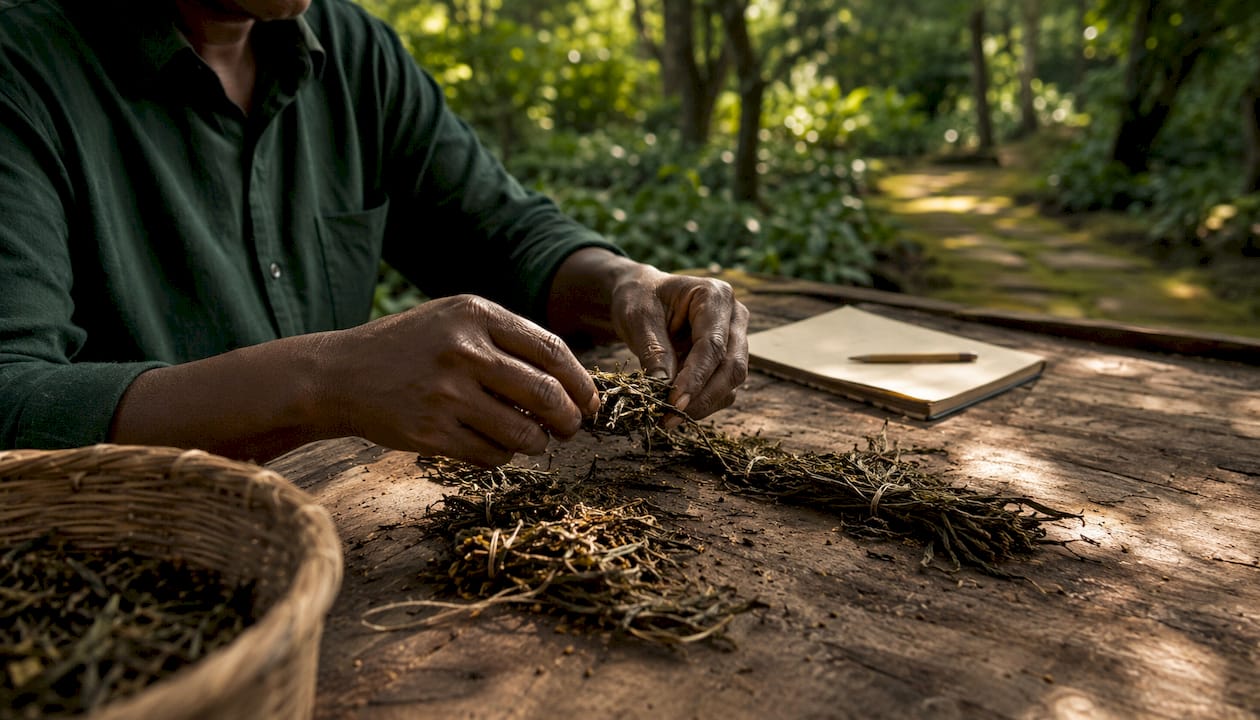
Direct trade and small-batch sourcing make soil-carbon and biodiversity gains measurable because the producer relationship is stable enough to support multi-year monitoring. A brand buying from the same cooperative for five years can track baseline soil carbon, document regenerative practice adoption, and publish year-over-year comparisons. A brand rotating suppliers seasonally cannot.
Ecoviberoast’s approach reflects this. The brand publishes educational content on eco-friendly tea sourcing and ties impact programs, including mangrove planting and ocean-plastic removal, to individual purchases. That purchase-level linkage is exactly the kind of granular accountability that separates meaningful impact from vague commitments. For a deeper look at how similar verification logic applies across beverages, the brand’s climate-positive coffee analysis is worth reading alongside this guide.
Pro Tip: When reading an impact report, look for three things: a baseline measurement date, a named measurement methodology (such as the Verified Carbon Standard or Gold Standard), and a registry ID you can search independently. A report missing any one of these three is incomplete.
Key Takeaways
Climate-positive tea is verifiable when producers publish scope 1–3 reports, named verifiers, and carbon removal retirement receipts tied to a recognized registry.
| Point | Details |
|---|---|
| Verified removals, not just offsets | Look for CO2e removed with a registry ID and retirement date, not just offset certificates. |
| Scope 1–3 coverage matters | A credible report covers farm, processing, and shipping emissions, not just on-site operations. |
| Supplier transparency is a trust signal | Brands that publish cooperative names and origin details are more likely to back up climate claims. |
| Expect a modest price premium | Verified climate-positive sourcing adds real cost; a small premium over conventional tea is normal and expected. |
| Ecoviberoast offers verifiable impact | Ecoviberoast links mangrove planting and ocean-plastic removal to purchases, with impact pages available for buyers to review. |
Why Ecoviberoast prioritizes climate-positive sourcing
At Ecoviberoast, we believe a cup of tea should feel good in every sense. That means sourcing teas tied to real, verifiable environmental impact, not just a feel-good label. We prioritize brands and suppliers who publish their impact data, name their verifiers, and connect purchases to specific outcomes like mangrove restoration and ocean-plastic removal. Transparency isn’t a bonus feature for us. It’s the baseline. We invite you to explore our impact pages and ask us the hard questions about where our teas come from and what proof we can show you.
Ecoviberoast’s climate-forward teas are worth your next cup
Choosing a verified, climate-friendly tea doesn’t have to mean sacrificing flavor or spending hours researching. Ecoviberoast makes it easier by pairing genuinely aromatic, high-quality teas with transparent impact programs you can actually check.

Our Hibiscus Berry Tea is a refreshing, organically sourced herbal blend tied to real environmental impact with every bag. If you prefer something floral and delicate, our Jasmine Tea brings together fine loose-leaf green tea and jasmine blossoms with the same commitment to responsible sourcing. Both products come in sustainable packaging, and Ecoviberoast’s impact pages detail the mangrove planting and ocean-plastic removal programs your purchase supports. Shoppers can expect a modest premium that reflects verified sourcing, not just marketing. Browse our eco-conscious tea selection and request sourcing details directly from our team before you buy.
Useful sources for verifying climate-positive tea claims
When you’re ready to dig deeper, these registries, verifier organizations, and guides are the most reliable places to start:
- Verra / Verified Carbon Standard (VCS): One of the most widely used carbon credit registries; search retirement records by project ID at verra.org.
- Gold Standard: A recognized verifier for carbon removal and sustainable development projects; registry searchable at goldstandard.org.
- American Carbon Registry (ACR): A U.S.-based registry for verified carbon offsets and removals; useful for checking domestically sourced credits.
- Ethical Consumer Tea Shopping Guide: Ethical Consumer’s tea guide rates brands on supplier transparency, labor standards, and environmental claims.
- Tea and Herbal Association of Canada Sustainability Initiatives: Covers regenerative farming and clean energy models across tea estates, useful for understanding what certified estate programs look like.
- Ecoviberoast impact and sourcing pages: Visit ecoviberoast.com for the brand’s current impact documentation and to request sourcing details for specific products.


