

Climate positive gifting is the practice of giving gifts that remove more greenhouse gases from the atmosphere than they generate, creating a net environmental benefit rather than simply reducing harm. It goes further than carbon neutral gifting, which aims to balance emissions at zero, and beyond carbon negative gifting, which reduces net emissions below zero. Climate positive gifting actively restores the environment through measurable actions like reforestation, direct air carbon capture, or ocean plastic removal tied directly to each gift.
Here is what sets it apart in plain terms:
- Carbon neutral: emissions produced equal emissions offset. Net result: zero.
- Carbon negative: emissions offset exceed emissions produced. Net result: below zero.
- Climate positive: the gift funds or triggers active environmental restoration. Net result: the planet is genuinely better off.
Tracking that impact is what gives climate positive gifting its credibility. Vague “eco-friendly” labels do not qualify. Gifts need measurable outcomes, whether that is a verified number of trees planted, kilograms of CO₂ removed from the atmosphere, or pounds of ocean plastic recovered. Brands like Climeworks, which offers carbon removal subscriptions as gifts, Greenr Gifts, which connects givers to tree planting programs, and Ecoviberoast, which ties every coffee and tea purchase to mangrove planting and ocean plastic removal, represent this approach in practice.
What does climate positive gifting actually look like?
The clearest way to understand eco-conscious gifting is through concrete examples, because the category is wider than most people expect.

| Gift Type | Climate Action | Example |
|---|---|---|
| Carbon removal subscription | Permanent CO₂ removed from atmosphere | Climeworks gift subscription |
| Tree planting gift | Carbon sequestration, biodiversity | Greenr Gifts (price varies) |
| Sustainable coffee or tea | Mangrove planting, ocean plastic removal | Ecoviberoast products |
| Donation to environmental nonprofit | Biodiversity restoration, community empowerment | Home Planet Fund, Opportunity Green |
| Bicycle or bike-share membership | Reduces transport emissions | Local bike-share programs |
| Pollinator garden seeds | Habitat restoration | Xerces Society seed mixes |
Carbon offset subscriptions like those from Climeworks fund direct air capture technology, which pulls CO₂ permanently out of the atmosphere. That is categorically different from buying a product labeled “green” with no verified outcome attached.
Tree planting gifts deliver carbon sequestration while also creating jobs in impoverished communities, which is a social benefit layered on top of the environmental one. Gifting a bicycle, meanwhile, can cut an individual’s annual carbon footprint by roughly half a tonne per year when it replaces a daily car trip.
Sustainable food and beverage gifts, like Ecoviberoast’s aromatic coffee and herbal teas, go further than most people expect. Their supply chain includes mangrove planting and ocean plastic removal tied to every purchase, with transparent reporting so you can see the actual impact. That is the difference between a gift that feels good and one that does good.
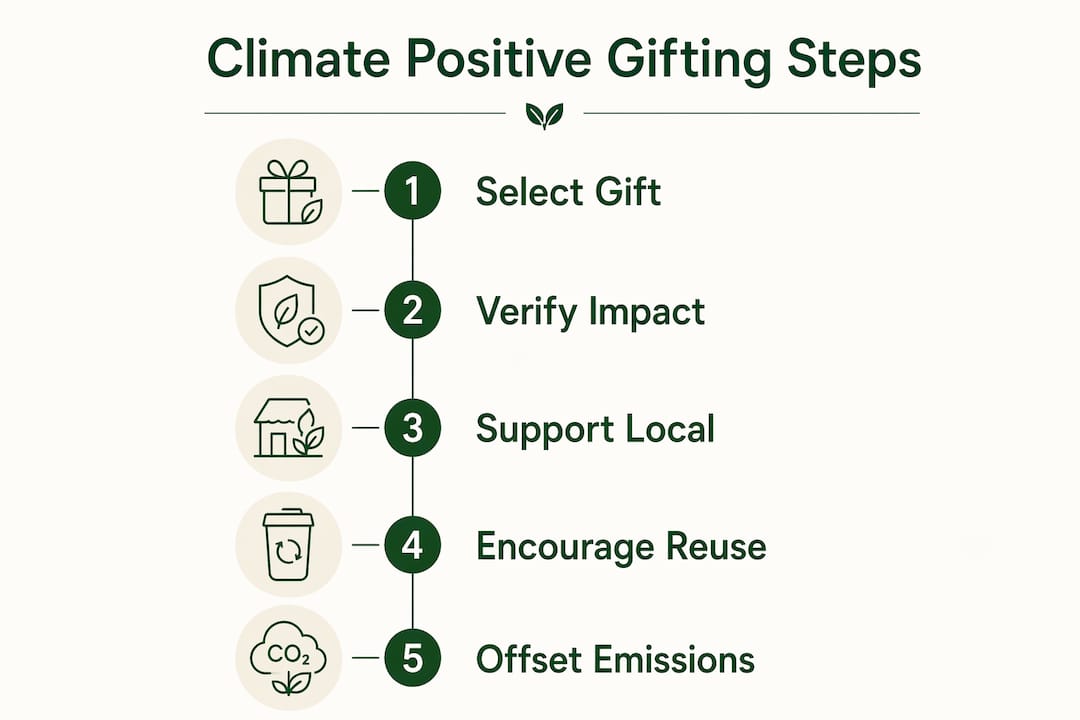
Pro Tip: When evaluating a tree planting gift, ask whether the organization reports survival rates and long-term maintenance. A tree planted but not tended does not sequester carbon for long.
How to choose gifts that are genuinely climate positive
Not every “sustainable” label means what it implies. Choosing truly climate friendly gifts requires a short checklist applied before you buy.
- Verified carbon removal or offset: look for third-party certification from organizations like Gold Standard or Verra’s Verified Carbon Standard.
- Lifecycle transparency: the brand should disclose emissions from sourcing, manufacturing, and shipping, not just the end product.
- Ethical sourcing: fair wages, shade-grown or regenerative agriculture, and traceable supply chains all matter.
- Minimal or plastic-free packaging: sustainable packaging alternatives like cloth wraps, natural decorations, and digital cards eliminate waste that undermines a gift’s green credentials.
- Measurable outcomes: the brand should publish specific numbers, not just aspirational language.
Experiential gifts often clear this checklist effortlessly. A kayak rental, a cooking class, or a local restaurant gift certificate generates far less waste than a physical product, and research shows that recipients feel more strongly bonded to givers who offer experiences over objects. The joy from a memorable event tends to outlast the novelty of any item.
Supporting local and fair-trade businesses adds another layer of climate benefit. Shorter supply chains mean fewer transport emissions, and fair wages support the communities most affected by climate change. You can explore responsible sourcing in beverages as one model for how this works in practice.

Pro Tip: Before buying, search the brand name alongside “impact report” or “carbon disclosure.” A brand serious about climate positivity publishes its numbers publicly, not just in marketing copy.
Why climate positive gifting matters more than you might think
The scale of holiday waste in the United States puts the stakes in sharp focus. Americans generate roughly 1 million tons of extra garbage every week between Thanksgiving and New Year’s, and a significant amount of money may be wasted on unwanted gifts each year, according to a survey by the Center for Biological Diversity. That is not a small problem to nudge around the edges.
a substantial proportion of corporate gifts go unused or discarded. Choosing climate positive gifts, or choice-based gifting platforms that let recipients select or donate, directly cuts that waste.
Beyond waste reduction, climate positive gifting supports communities on the front lines of environmental change. Reforestation programs create employment in regions where deforestation has already damaged livelihoods. Donations to organizations like the Home Planet Fund, which supports Indigenous communities working to stop climate breakdown, deliver both ecological and social benefits in a single gesture.
Mindful gifting also improves wellbeing. Research consistently shows that experiential gifts produce more lasting happiness than material ones, which means the most climate-friendly choice is often also the most personally meaningful one. For companies, sustainable gifting is increasingly a core part of ESG strategy, not a peripheral charity activity.
How to spot greenwashing and protect your gift’s real impact
Greenwashing is common enough that the UN has published guidance urging consumers to scrutinize product claims and support only transparent, impactful climate actions. Knowing the tactics helps you sidestep them.
Watch for these red flags:
- Vague language: “eco-friendly,” “green,” or “sustainable” with no supporting data.
- Selective disclosure: a brand highlights one positive attribute (recycled packaging) while ignoring larger emissions from manufacturing or shipping.
- Unverified offsets: carbon credits purchased from projects with no third-party audit or survival tracking.
- Irrelevant claims: “CFC-free” on a product where CFCs were never used anyway.
- No lifecycle assessment: the brand cannot tell you the total emissions footprint of the product from raw material to your door.
When you find a brand that looks promising, dig one level deeper. Search for their impact reports, check whether their certifications are current, and look at whether their social justice commitments extend to the workers in their supply chain. A brand that publishes specific numbers, like kilograms of CO₂ removed or pounds of plastic recovered, is doing something fundamentally different from one that uses green imagery without data.
Pro Tip: The FTC’s Green Guides set standards for environmental marketing claims in the United States. If a brand’s claims would not hold up under those guidelines, that is a reliable signal to keep looking.
How Ecoviberoast operationalizes climate positive gifting
Ecoviberoast is one of the clearer examples of a brand that has moved from sustainability as aspiration to sustainability as operation. Every coffee and tea purchase is tied to measurable climate actions: mangrove trees planted and ocean-bound plastics removed, with transparent reporting so customers can see the actual outcomes rather than just the promise.
Their approach covers the full supply chain, not just the end product:
- Responsible sourcing: beans and teas are sourced with attention to fair wages, biodiversity, and regenerative farming practices.
- Mangrove planting: mangroves sequester carbon at rates far higher than most terrestrial forests, making them one of the most effective reforestation investments available.
- Ocean plastic removal: removing ocean-bound plastic before it enters the water prevents long-term marine ecosystem damage.
- Transparent impact metrics: Ecoviberoast publishes the environmental outcomes linked to purchases, which is the standard that separates genuine climate positive brands from greenwashed ones.
The lesson from their model is that climate positivity requires intentional design at every stage, from how a crop is grown to how a product is shipped and packaged. You can see how this plays out in their eco-friendly gifting guide for coffee and tea. Gifting a bag of their rich, shade-grown coffee or a box of their aromatic herbal teas is not just a thoughtful gesture. It is a small act of environmental restoration wrapped in something genuinely enjoyable.
Pro Tip: When gifting sustainably sourced beverages, pair them with a reusable brewing accessory like a French press or loose-leaf infuser. It extends the gift’s low-waste impact beyond the first cup.
Ways to offset your own emissions beyond the gift itself
Choosing a climate positive gift is one action. Pairing it with personal emission-reduction habits multiplies the impact considerably.
Support environmental projects directly. Donating to nonprofits like Opportunity Green, which works to cut emissions in air and maritime travel, or the Home Planet Fund, which backs Indigenous-led climate work, puts money toward systemic change rather than individual offsets alone.
Rethink your own transportation. Swapping a single daily car trip for cycling can reduce your personal carbon footprint by roughly half a tonne annually, according to a 2021 study in Global Environmental Change. A bike-share membership gifted to yourself or a friend is both a climate action and a health investment.
Reduce home energy use. Cozy, practical gifts like wool sweaters or thick socks help household members stay warm at lower thermostat settings, cutting fossil fuel use without any sacrifice in comfort. Choosing items made with recycled content or produced locally keeps the supply chain short and the embedded emissions low.
Wrap thoughtfully. Cloth wraps, reused paper bags, and digital gift cards eliminate the unrecyclable wrapping paper that adds to holiday waste. These small choices compound across a season.
Local food and beverage businesses that prioritize community sourcing also deserve a place in your offset strategy. Restaurants and cafes with a community-focused approach to sourcing reduce transport emissions while keeping economic benefits local.
Climate positive gifting for every occasion
The principles of climate positive gifting apply year-round, but the execution looks a little different depending on the occasion.
Holidays
The holiday season is when waste peaks and when climate positive gifting has the greatest potential impact. Prioritize gifts with verified environmental outcomes, wrap in cloth or reused materials, and consider a donation in a loved one’s name to an environmental nonprofit as a zero-waste option. Ecoviberoast’s coffee and tea collections make warm, aromatic gifts that carry real impact metrics, which makes them easy to give with confidence.
Birthdays
Birthdays are perfect for experiential gifts: a cooking class, a botanical garden membership, or a local outdoor adventure. These create lasting memories while generating minimal waste. If you prefer a physical gift, locally sourced, durable goods with minimal packaging are the right direction. A sustainable gift buying guide can help you evaluate options quickly.
Corporate events
Corporate gifting is evolving from a peripheral perk into a core ESG signal. Choice-based gifting platforms that let recipients select their gift or donate to a cause dramatically reduce the waste that comes from unwanted items. When physical gifts are appropriate, sustainable food and beverage options with transparent sourcing and impact reporting align with ESG goals and communicate genuine values to employees and clients. Supporting local restaurants or food producers for corporate events is another way to keep the environmental footprint low while strengthening community ties.
Key Takeaways
Climate positive gifting delivers net environmental benefit by removing more carbon than a gift generates, making it the most meaningful standard in eco-conscious giving.
| Point | Details |
|---|---|
| Climate positive exceeds carbon neutral | These gifts actively restore the environment, not just offset or balance emissions. |
| Verified impact is non-negotiable | Look for third-party certifications and published outcome metrics before buying. |
| Holiday waste is a real problem | Americans produce around 1 million tons of extra garbage weekly during the holiday season. |
| Greenwashing is widespread | The UN advises scrutinizing all product claims and prioritizing transparent, measurable climate actions. |
| Ecoviberoast models the standard | Every purchase funds mangrove planting and ocean plastic removal, with transparent reporting tied to each product. |
The gift that keeps giving back
Most gifting advice stops at “buy less stuff.” That is fine as far as it goes, but it misses the more interesting opportunity: gifts that actively make the world better while still being genuinely enjoyable to receive.
The conventional wisdom treats sustainability as a trade-off, as if a climate-friendly gift must be less fun, less personal, or less impressive than a conventional one. That framing is outdated. A subscription to a carbon removal program, a bag of rich, shade-grown coffee tied to mangrove planting, or a bicycle that replaces a daily car trip can all be deeply personal, beautifully presented, and genuinely exciting to unwrap. The climate benefit is not a consolation prize. It is part of what makes the gift worth giving.
What I find most compelling about climate positive gifting is that it reframes the relationship between the giver and the recipient. You are not just saying “I thought of you.” You are saying “I thought of you, and I thought of the world you live in.” That combination of personal care and broader responsibility is what makes this kind of giving feel different, and why it tends to deepen relationships rather than just mark an occasion.
The brands getting this right, like Ecoviberoast, are the ones that have stopped treating sustainability as a marketing layer and started building it into every step of their operation. That is the model worth supporting, and the standard worth holding other brands to.
Ecoviberoast’s climate positive gifts are worth a closer look
If you have been searching for gifts that feel as good as they taste, Ecoviberoast offers something genuinely different. Their sustainably sourced coffee and tea products are tied to real environmental outcomes: mangrove trees planted, ocean-bound plastics removed, and transparent impact reporting with every purchase. You are not just gifting a warm, aromatic cup of something rich and satisfying. You are gifting a small act of restoration.

Their single-serve coffee pods are a convenient, thoughtful option for anyone who loves a great cup without the waste of conventional packaging. For tea lovers, their Hibiscus Berry Tea delivers a refreshing, organic herbal experience with the same commitment to climate positive sourcing. Every product in their collection is designed to be a gift you feel genuinely proud to give, backed by the kind of transparent impact reporting that separates real sustainability from a label.


