

TL;DR:
- Choosing genuinely sustainable gifts involves clarifying your values and verifying third-party certifications to avoid greenwashing.
- Prioritizing experiences, local options, and minimal packaging can significantly reduce environmental impact.
Picking a gift should feel good, not overwhelming. But when you add sustainability to the mix, it gets complicated fast. Every tag seems to shout “eco-friendly” or “natural,” yet roughly 50% of green labels are not independently verified. That gap between marketing and reality is exactly where well-meaning gift buyers get tripped up. This guide walks you through a genuine sustainable gift buying process, step by step, so every purchase you make reflects your values and actually does what it promises.
Table of Contents
- Key takeaways
- The sustainable gift buying process starts with your values
- Building your checklist and toolkit
- Step-by-step guide to executing your purchase
- Verifying sustainability claims and spotting greenwashing
- Minimizing impact beyond the gift itself
- My honest take on sustainable gifting
- Give the gift of good taste with Ecoviberoast
- FAQ
Key takeaways
| Point | Details |
|---|---|
| Clarify your values first | Define what sustainability means to you before browsing, so your criteria guide your choices. |
| Use a pre-purchase checklist | Evaluate materials, certifications, repairability, and end-of-life plans before you buy. |
| Verify claims, not just labels | Seek third-party certifications and transparent supply chain data to avoid greenwashing. |
| Consider non-physical gifts | Experiences and local options often carry a smaller environmental footprint than shipped goods. |
| Progress beats perfection | Consistent, value-aligned buying matters more than finding the perfectly certified product every time. |
The sustainable gift buying process starts with your values
Before you open a single browser tab, spend five minutes answering some honest questions. What does sustainability mean to you? For some people, it centers on environmental impact: carbon footprint, ocean plastics, deforestation. For others, it means fair wages, safe working conditions, and support for small farmers. Many buyers care about all of these things but forget to rank them, which leads to paralysis in the shopping aisle.
Here are a few questions worth asking yourself before you shop:
- Does this gift need to be a physical object, or would an experience work just as well?
- Who made this product, and do I know anything about their labor conditions?
- What happens to this gift when the recipient is done with it?
- Am I buying this because the person genuinely needs or wants it, or out of obligation?
That last question matters more than most guides acknowledge. Buying less is often a more effective environmental strategy than buying better. The most sustainable gift is frequently the one that isn’t bought at all, whether that means sharing an experience, borrowing something, or giving your time.
Your answers shape your ethical gift selection criteria. Once you know what you care about most, you can filter products with purpose and confidence rather than stress.
Pro Tip: Write down your top two sustainability priorities on a sticky note before you shop. Keeping them visible helps you resist vague green marketing and stay anchored to what genuinely matters to you.
Building your checklist and toolkit
A good mindful gifting process doesn’t start on the product page. It starts with a clear framework so you’re not making decisions based on packaging aesthetics alone. Think of this as your pre-purchase toolkit.
Key criteria to evaluate for every gift:
| Criteria | What to look for | Red flag |
|---|---|---|
| Material sourcing | Organic, recycled, or responsibly harvested materials | Vague terms like “natural” with no specifics |
| Certifications | Third-party verified (Fair Trade, B Corp, USDA Organic) | Company-created badges with no external audit |
| Repairability | Spare parts available, repair guides provided | No replacement parts, disposable design |
| End-of-life plan | Recyclable, compostable, or take-back program offered | Single-use with no disposal guidance |
| Packaging | Minimal, recycled, or reusable materials | Excessive plastic or non-recyclable mixed materials |
Beyond the checklist, your toolkit should include a few go-to research habits. Check whether certifications are listed on official registries, not just printed on the box. Proper certification verification means checking the issuing body’s registry and understanding what scope the certification actually covers, since some certifications apply only to ingredients, not manufacturing.

Ask brands direct questions before buying. A genuinely transparent company will share audit reports, supply chain details, and specific environmental metrics without hesitation.
Pro Tip: Before buying, search the brand name alongside words like “audit,” “supply chain,” or “sustainability report.” What comes up tells you a lot more than the product description ever will.
Step-by-step guide to executing your purchase
Now for the practical part. Here’s how to move through the sustainable shopping tips framework from research to checkout without losing your mind.
-
Start with the material story. What is the product made of, and where did those materials come from? Look for specifics like “shade-grown cacao from Colombia” rather than “sustainably sourced ingredients.” Specificity signals accountability.
-
Check the brand’s transparency. Visit the “About” or “Impact” page. Do they publish a sustainability report? Do they name their suppliers? Genuine brands are eager to share certification details and audit reports. Silence is not a good sign.
-
Evaluate the certifications. Look for third-party names you can verify independently: Fair Trade USA, B Corporation, Rainforest Alliance, USDA Organic. These aren’t perfect, but certifications give you a better-than-default signal without requiring you to conduct exhaustive research on every product.
-
Think about packaging and shipping. A beautifully certified product wrapped in layers of plastic and shipped from across the world has a complicated footprint. Factor in delivery distance and packaging materials as part of your overall assessment.
-
Consider the alternatives. Before finalizing a physical gift, ask yourself whether a local artisan market, a digital gift card, or an experience-based gift would serve the same emotional purpose. Local and experience gifts skip the shipping and packaging footprint entirely, which makes them a strong default for eco-minded gifters.
-
Watch for greenwashing traps. Terms like “eco-friendly,” “natural,” and “green” carry no legal weight and no measurable meaning. If a claim doesn’t come with a number, a certification, or a verifiable source, treat it as marketing rather than fact.
When you’re budgeting, know that premium eco-gifts typically run between $40 and $150 per unit for quality products with verified sourcing. That context helps you recognize when a suspiciously cheap “sustainable” product probably isn’t telling the full story.
Verifying sustainability claims and spotting greenwashing
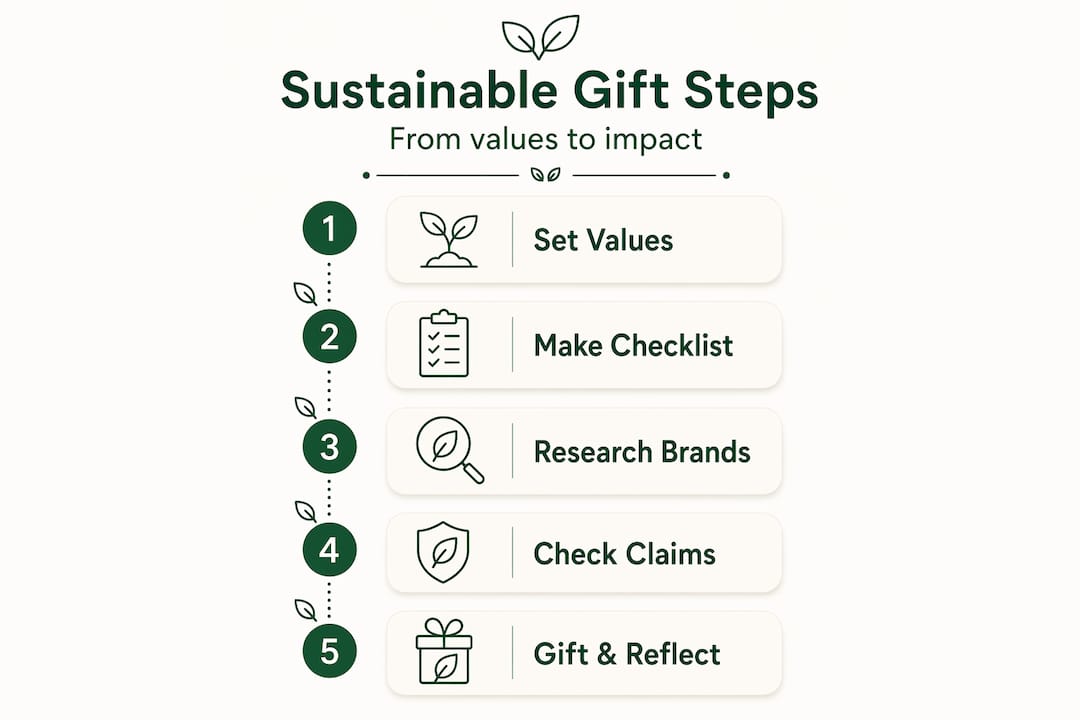
This is where the conscious consumerism gifts process gets real. The market is full of products that look and sound sustainable without any proof to back it up. Vague environmental claims like “natural” or “eco-friendly” rarely indicate authentic sustainability. They’re designed to feel reassuring without committing to anything measurable.
Here’s how to separate credible claims from polished marketing:
| Claim type | Credible signal | Warning sign |
|---|---|---|
| Ingredient sourcing | Named origin, third-party cert | “Responsibly sourced” with no detail |
| Labor practices | Published audit reports, named suppliers | “We care about our workers” with no data |
| Environmental impact | Lifecycle assessment data, specific metrics | “We love the planet” style messaging |
| Certifications | Verifiable through official registry | Brand-created seal with no external issuer |
A few questions worth asking any brand before you buy:
- Can you share your most recent sustainability audit or report?
- Which third-party organizations verify your certifications?
- What happens to your product at end of life?
Sustainability claims backed by lifecycle assessments and verified science offer the most trustworthy evidence for decision-making. If a brand can point you to actual data, that’s a genuinely good sign. If they respond with a feel-good story and no numbers, keep looking.
It also helps to know that company-owned green labels without third-party audits often mimic credibility without rigorous verification. A badge that says “Certified Green by Us” is not the same thing as a B Corporation certification reviewed by an independent body.
Minimizing impact beyond the gift itself
The gift is only one part of the picture. How you wrap it, deliver it, and talk about it with the recipient all shape your total environmental impact. This is where green gifting strategies get holistic, and honestly, this is where small choices add up beautifully.
Some ideas to carry with you:
- Skip the wrapping paper. Most conventional wrapping paper is not recyclable due to foil or glitter coatings. Use recycled kraft paper, cloth wraps, or a reusable fabric bag the recipient will actually keep and use.
- Choose minimal packaging gifts. Gifts with sustainable packaging in recycled or compostable materials send a message before the recipient even opens them.
- Opt for local pickup when possible. Shipping has a real carbon cost. If you can buy from a local maker or pick up in person, you eliminate that footprint entirely.
- Prioritize repairability and longevity. Buying used or local often has a larger sustainability impact than buying new certified green products. A well-made item that lasts ten years is almost always better than a certified but disposable one.
- Share the “why” with your recipient. A short note about where the gift came from and why you chose it turns a product into a conversation. It plants a seed for more conscious choices in their life too.
This kind of holistic thinking is the heart of a truly mindful gifting process. It’s not just about what’s inside the box.
My honest take on sustainable gifting
I’ll be upfront: I used to overthink this. I’d spend an hour researching certifications for a $25 gift and still feel uncertain. What I’ve learned after years of trying to shop consciously is that waiting for the “perfect” sustainable gift often means not giving anything meaningful at all.
The framework I keep coming back to is simple: buy less, buy local when I can, and ask one good question of every brand I’m considering. That one question, usually something like “Can you show me your certification documentation?” tells me almost everything. Brands that are doing the real work love that question. Brands that aren’t tend to get vague.
I’ve also stopped over-relying on certifications as a shortcut. They matter, but they’re not a complete picture. A small-batch tea producer who pays their farmers fairly and composts their waste might not have the budget for a B Corp application, while a large corporation might have every certification available and still engage in practices I wouldn’t support.
The most impactful shift I made was giving experiences more often than products. A cooking class, a membership, a shared outing. These gifts create memories without packaging, and they’re often far more appreciated than anything I could ship in a box.
Your sustainable gift buying process will look different from mine, and that’s exactly how it should be. Start with your values, ask good questions, and keep going. Progress, not perfection, is what actually moves the needle.
— LaSaundra
Give the gift of good taste with Ecoviberoast
If you’re looking for a gift that checks every box in your sustainable gifting framework, Ecoviberoast makes it genuinely easy. Every tea and coffee product is responsibly sourced, with transparent supply chain practices and real environmental commitments baked into every purchase.

With each order, Ecoviberoast plants mangrove trees and helps remove ocean-bound plastics, so your gift does good before the recipient even takes their first sip. The organic tea collection features aromatic blends like Earl Grey with bergamot and blue cornflowers, rich English Breakfast loose leaf teas, and unique options like roasted Hojicha, all packaged with sustainability in mind. These are gifts with a purpose, the kind that feel like a warm hug for both the recipient and the planet. Explore the full range and find a blend that tells a story worth giving.
FAQ
What makes a gift truly sustainable?
A truly sustainable gift is made from responsibly sourced materials, produced under fair labor conditions, and backed by credible third-party certifications. Transparency from the brand about supply chain practices is the clearest signal of genuine commitment.
How do I avoid greenwashing when buying gifts?
Look for specific, measurable claims backed by verified certifications rather than vague terms like “natural” or “eco-friendly.” Ask brands for audit reports or check whether their certifications appear in official registries.
Are experience gifts more sustainable than physical ones?
Yes, in most cases. Experience-based gifts eliminate packaging and shipping footprints entirely, making them one of the most effective green gifting strategies available to conscious buyers.
What certifications should I look for on sustainable gifts?
Trustworthy certifications include Fair Trade USA, B Corporation, USDA Organic, and Rainforest Alliance, all of which are verified by independent third parties and searchable through official registries.
How do I know if a brand’s sustainability claims are credible?
Ask the brand directly for certification documentation or a published sustainability report. Brands doing the real work will share this information readily. Reluctance to provide specifics is a clear red flag.


