

TL;DR:
- People often associate carbon offsets in coffee with planting trees, but protecting existing shade-grown forests offers more immediate climate and biodiversity benefits.
- Insetting within supply chains that ensures additional, verified carbon reductions is increasingly preferred over traditional offsets, emphasizing forest preservation.
Every time you hear “carbon offsets” in coffee marketing, there’s a good chance your mind jumps to tree planting. It’s a comforting image, a seedling pushing through rich soil somewhere in the tropics, and it feels like a clear win. But the role of carbon offsets in coffee is far more layered than that single image suggests. From the integrity of carbon credits to the surprising climate value of protecting existing forests, getting this right matters enormously, both for the planet and for the farmers growing your favorite cup. Here’s what you actually need to know.
Table of Contents
- Understanding carbon offsets and insetting in coffee
- Protecting shade-grown coffee agroforests: key to short-term climate and biodiversity benefits
- How carbon offset programs support coffee producers and rural economies
- Advances and challenges in carbon credit verification and soil carbon storage for coffee
- The limitations of carbon offsets in coffee and what to watch for
- Making eco-conscious coffee choices with carbon offsets
- Why protecting existing coffee forests matters more than planting new ones
- Explore EcoVibe Roast’s sustainably sourced coffee blends
- Frequently asked questions
Key Takeaways
| Point | Details |
|---|---|
| Understand carbon offset terms | Carbon offsetting and insetting differ in where and how carbon reductions occur in coffee supply chains. |
| Protect existing agroforests | Preserving shade-grown coffee forests reduces emissions more effectively short-term than tree planting alone. |
| Support farmer income | Carbon credit sales provide crucial additional revenue to coffee producers adopting sustainable practices. |
| Verify offsets critically | Not all carbon credits are equal; look for transparency and independent verification to avoid inflated claims. |
| Choose wisely as a consumer | Favor coffee linked to credible carbon programs that reward forest protection and share carbon impact openly. |
Understanding carbon offsets and insetting in coffee
When we talk about the role of carbon offsets in coffee, two related but distinct concepts come up: offsetting and insetting. Traditional carbon offsetting means a company funds projects outside its operations to compensate for its own emissions, like paying for a forest project in a different country. Insetting, on the other hand, invests in carbon reductions within the company’s own supply chain. For coffee, that often means working directly with the farms that grow the beans.
Insetting is increasingly the preferred model in specialty coffee because it ties climate action to the people and landscapes you’re already sourcing from. But there’s a catch. Carbon payment programs in coffee increasingly operate as insetting and require “additionality,” meaning the sequestered carbon must go beyond what would have happened anyway without the program. If a farmer was already planting shade trees before the program existed, those trees don’t count as additional carbon removal.
Here’s why additionality matters so much for you as a conscious consumer:
- Without it, companies could claim credit for climate benefits that would have occurred regardless of their investment.
- With it, every credit represents a genuinely new positive impact on the climate.
- It keeps carbon programs honest and meaningful rather than just marketing-friendly.
Common strategies that meet additionality requirements include planting new shade trees on farms that previously used full-sun monoculture systems, converting degraded land to agroforestry, and supporting practices that measurably store more carbon than the farm’s existing baseline. Certification and independent verification from bodies like Gold Standard or Verra add another layer of trust, helping you distinguish real impact from polished packaging. You can read more about how these sustainability trends in coffee 2026 are reshaping what brands are expected to deliver, and why coffee certifications impact the credibility of every carbon claim on a bag.
Protecting shade-grown coffee agroforests: key to short-term climate and biodiversity benefits
Here’s something that might surprise you: protecting a forest that already exists is almost always more powerful for the climate than planting a new one. That’s not a knock on tree planting. It’s just physics and biology working on a timeline that matters right now.
“Protecting existing shade-grown agroforests can yield emissions reductions more than twice as large in the short term than the sequestration achievable by planting new trees.”
Mature shade-grown coffee farms are living carbon vaults. The canopy trees that filter sunlight onto your coffee plants have been storing carbon for decades, and they shelter extraordinary biodiversity along the way, from migratory birds to native pollinators. Losing them is not just a climate setback; it’s an ecological one that takes generations to recover from.
| Climate action | Short-term carbon impact | Biodiversity benefit |
|---|---|---|
| Loss of existing agroforest | High emissions release | Severe biodiversity loss |
| Planting new trees (monoculture) | Slow, modest sequestration | Low to moderate benefit |
| Protecting existing shade-grown agroforest | Significant emissions prevention | High biodiversity preservation |
| Converting monoculture to agroforestry | Moderate sequestration over time | Growing biodiversity benefit |
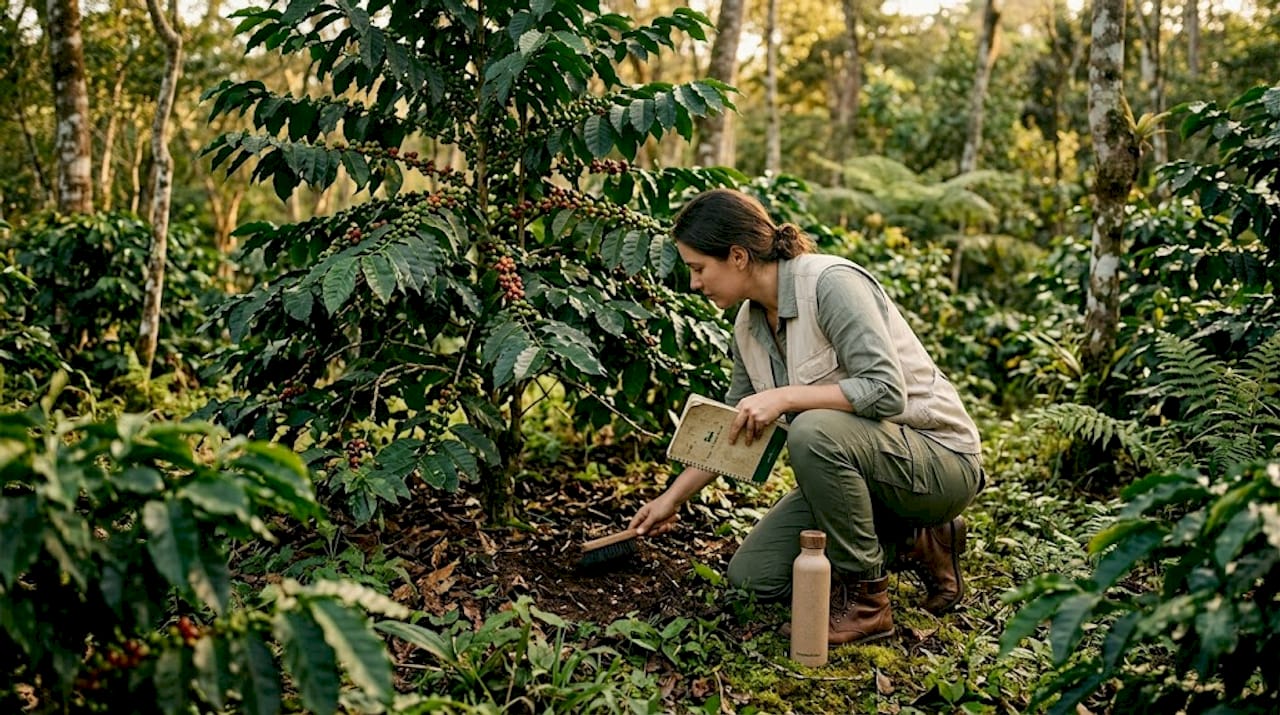
The co-benefits of intact shade-grown systems go well beyond carbon numbers. These farms act as natural cooling systems for the surrounding landscape, reduce soil erosion, protect watershed health, and give farmers built-in climate resilience when droughts or storms hit. Understanding the environmental impact of coffee production makes it clear why preserving these systems is so urgent.
Climate change and coffee production are deeply intertwined. Rising temperatures are already shrinking the zones where quality Arabica can thrive, and the forests that buffer those farms from extreme heat are the same ones at risk when carbon programs prioritize optics over outcomes. The coffee impact on deforestation is real, but so is coffee’s potential to be part of the solution when sourced from protected agroforestry landscapes.
Pro Tip: When a coffee brand touts its carbon program, ask whether it rewards farmers for protecting existing shade trees rather than just planting new ones. Forest protection is the higher-impact choice, and it’s a meaningful signal of a program’s integrity.
How carbon offset programs support coffee producers and rural economies
Carbon offsets in coffee aren’t just about the atmosphere. Done right, they can put real money in the hands of the farmers who need it most. That’s where the impact of carbon offsets on coffee becomes genuinely exciting.
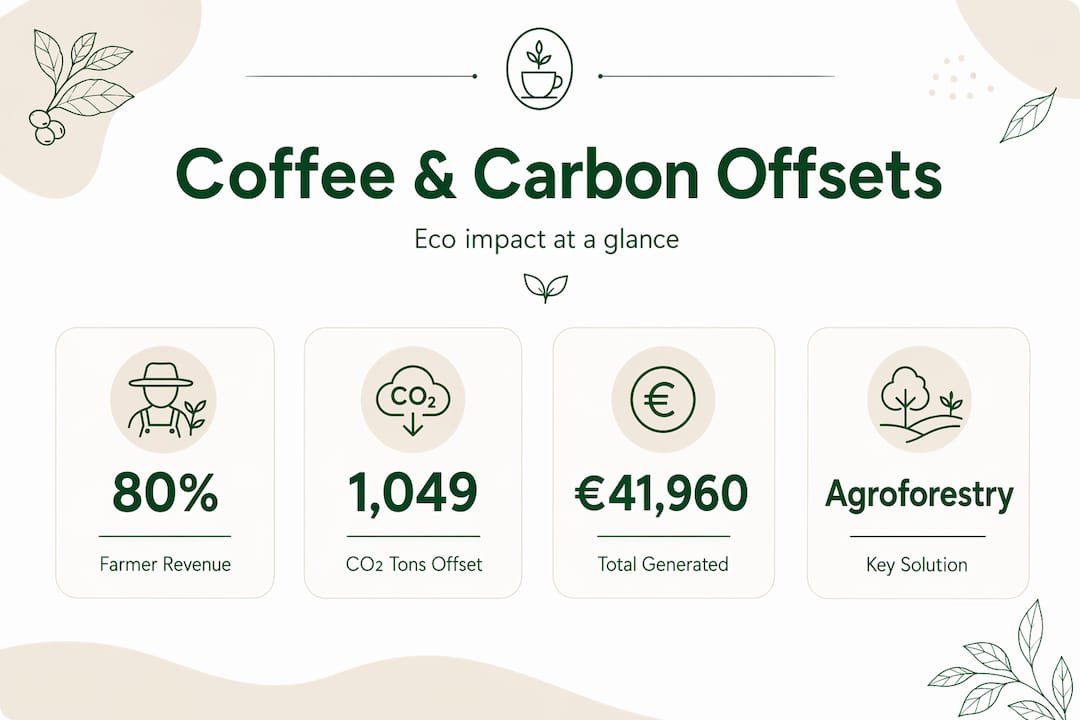
The Solidaridad network offers a compelling example of how this works in practice. Their agroforestry program converted carbon sequestered on farms into verified carbon credits and then sold those credits on voluntary carbon markets. The result? 80% of revenues from 1,049 tons of CO2 sold went directly to small coffee and cocoa producers, providing income they could reinvest in their farms, their families, and their communities.
| Program element | Detail |
|---|---|
| CO2 sold | 1,049 metric tons |
| Total revenue generated | €41,960 |
| Share going to producers | 80% |
| Beneficiaries | Small coffee and cocoa farmers |
This kind of model matters because it creates a virtuous cycle. When farmers earn income from maintaining healthy agroforestry systems, they have every reason to keep those systems thriving. They plant more canopy trees. They avoid clearing land. They pass sustainable practices down to the next generation.
Carbon financing also complements other benefits these farms provide: cleaner water, habitat for wildlife, and natural pest control that reduces the need for chemical inputs. It’s the kind of farm that produces aromatic, rich coffee you can feel good about drinking. Supporting brands linked to transparent carbon programs is one of the most direct ways your purchase can support sustainable coffee farms and keep those income streams flowing.
Pro Tip: Before buying from a brand that claims its coffee supports farmers through carbon programs, look for published data on revenue distribution. A credible program will tell you exactly what percentage reaches producers.
Advances and challenges in carbon credit verification and soil carbon storage for coffee
The good news is that the tools for verifying carbon credits have gotten much better. The not-so-great news is that quantifying exactly how much carbon coffee farms store, especially in the soil, remains genuinely difficult.
On the transparency side, Gold Standard-certified carbon removal units paired with blockchain-secured monitoring, reporting, and verification (MRV) are raising the bar. Developers like GrowGrounds back credits that capture CO2 for 25 or more years by converting monoculture farms into syntropic agroforestry systems, rich, layered growing environments that mimic natural forest succession. Blockchain makes the paper trail tamper-proof, which is a meaningful upgrade from older systems that relied on self-reported data.
Soil organic carbon (SOC) is a different challenge. Soil can store enormous amounts of carbon, and agroforestry systems tend to build healthier soils than monocultures. But current evidence cannot robustly quantify soil organic carbon storage or reliably attribute it to specific coffee management practices, due to high context dependence and significant methodological gaps. In plain terms: we know it’s happening, but we can’t yet measure it precisely enough to issue reliable credits for it.
So, what should a credible carbon project actually look like? Here are the key signals:
- Full traceability from farm to credit registry
- Third-party verification by recognized standards like Gold Standard or Verra
- Conservative baseline assumptions that don’t overclaim impact
- Published monitoring data that is updated regularly
- Clear explanation of how SOC uncertainty is handled
Here’s how you can evaluate carbon claims on a coffee product before you buy:
- Check whether the brand names its carbon program and verification standard.
- Search for the project on a public carbon registry like the Gold Standard Impact Registry.
- Look for a published baseline methodology, not just a “carbon neutral” logo.
- Confirm whether the program addresses forest protection or only new planting.
- Find out what percentage of carbon revenue goes to farmers versus administrative costs.
Learning to recognize truly carbon intelligent coffee takes a little practice, but these steps make it much easier to separate substance from spin.
The limitations of carbon offsets in coffee and what to watch for
Carbon offset benefits for coffee are real, but so are the pitfalls. One of the most important findings to understand as an eco-conscious shopper is that not all credits are created equal.
Many early carbon credit projects overstated how much forest was being saved, selling credits for nearly 11 times more forest than was actually preserved, and only about one-quarter of credits in those studies were considered legitimate. That’s a sobering number.
“Carbon credits are flawed, but they can still help save forests when programs are designed with integrity, transparency, and rigorous verification.”
The key insight here is that carbon offsets are not a replacement for actual emissions reduction. A coffee roaster that ships globally, runs energy-heavy roasting operations, and relies on carbon credits alone to call itself “climate positive” is doing something different from one that genuinely reduces emissions first and uses verified credits to address what remains.
Here’s what to watch for when shopping for sustainable coffee:
- Vague language: phrases like “carbon conscious” or “eco-friendly” without specific program details
- No verification standard named: legitimate programs cite Gold Standard, Verra, or a comparable body
- Tree planting only: programs focused solely on new planting without addressing forest protection
- No farmer revenue data: if you can’t find what percentage goes to growers, that’s a red flag
- Inflated claims: “carbon negative” without published methodology to support it
The good news? Spotting greenwashing in coffee gets easier once you know what genuine programs look like.
Making eco-conscious coffee choices with carbon offsets
Now you have the knowledge. Here’s how to put it to work the next time you’re choosing a bag of beans.
The Specialty Coffee Association makes it clear that eco-conscious consumers should look for programs that reward protection of existing agroforests and demonstrate additionality rather than relying solely on tree planting. That’s your north star.
Use this checklist when evaluating a coffee’s carbon offset claims:
- Does the brand name its carbon program and verification body?
- Is the coffee sourced from shade-grown or agroforestry systems?
- Does the program reward forest protection, not just new tree planting?
- Is additionality clearly explained and independently verified?
- What percentage of carbon revenue goes directly to farmers?
- Is there a public record of the project on a recognized carbon registry?
- Does the brand publish regular impact reports with actual data?
Questions worth asking your coffee brand directly:
- “Which certification standard verifies your carbon program?”
- “What share of carbon credit revenue reaches the farmers you source from?”
- “Does your program prioritize protecting existing shade-grown systems?”
Avoid these common pitfalls:
- Trusting a “carbon neutral” badge without checking the methodology behind it
- Assuming all certifications include carbon and biodiversity criteria (many don’t)
- Overlooking whether a brand reduces actual emissions before offsetting
Choosing a coffee with verified carbon neutral impact and strong coffee certifications is one of the most tangible things you can do to align your daily ritual with your values.
Why protecting existing coffee forests matters more than planting new ones
Here’s an uncomfortable truth about a lot of carbon marketing in the coffee world: tree planting has become the default feel-good story, and it’s crowding out the more important conversation about what we’re losing. Planting trees is visual, optimistic, and easy to photograph. Protecting a mature forest that already exists is harder to package into a campaign, even though the climate science is unambiguous.
Protecting existing shade-grown agroforests yields more climate mitigation and biodiversity value than planting new trees, a nuance often missed in mainstream carbon offset programs. The market, unfortunately, has been slow to catch up. A lot of carbon programs still reward volume of trees planted rather than the quality of ecosystems maintained.
This matters for how you spend your money. When you choose a coffee brand that rewards farmers for maintaining their canopy rather than simply replanting cleared land, you’re sending a market signal that forest protection has value. That signal, multiplied across thousands of purchasing decisions, is what actually shifts how programs are designed.
The longer-term vision in carbon intelligent coffee sourcing is one of shared value: farmers earn stable income for stewarding ecosystems, roasters build supply chains that are resilient to climate volatility, and you get an aromatic, rich cup of coffee that’s done something genuinely good for the planet. That’s not idealism. It’s already happening in programs with real accountability behind them.
Pro Tip: Before supporting any coffee brand’s carbon program, ask one question first: does it pay farmers to protect trees that are already standing? If yes, you’re looking at a program built around real impact.
Explore EcoVibe Roast’s sustainably sourced coffee blends
Now that you understand the role of carbon offsets in coffee, here’s how you can make a difference with your next brew.
At EcoVibe Roast, every bag and pod is sourced with sustainability at the center. From the aromatic 6 Bean Blend to the smooth, single-origin character of our Mexico coffee pods, each option is designed for coffee lovers who want quality and conscience in the same cup.

Our 60-pack single-serve pods make it easy to enjoy your daily ritual without the guilt, and every purchase supports mangrove planting and ocean-bound plastic removal as part of our broader environmental mission.
Here’s what you get when you brew with EcoVibe Roast:
- Rich, premium flavor sourced from responsibly managed farms
- Climate-conscious sourcing aligned with agroforestry and sustainability principles
- Support for sustainable farming communities with every order
- Eco-friendly packaging that reflects our commitment to the planet
Your morning cup can be a warm hug for both you and Mother Earth.
Frequently asked questions
What is the difference between carbon offsetting and insetting in coffee?
Carbon offsetting funds climate projects outside a company’s supply chain to compensate for its own emissions, while insetting invests within the coffee supply chain itself and requires additionality, meaning only genuinely new climate benefits count toward credits.
Why is protecting existing shade-grown coffee agroforests better than planting new trees?
Existing shade-grown agroforests store decades of carbon and rich biodiversity, and their loss causes emissions more than twice as high as what new tree plantings can sequester in the short term, making protection the higher-priority climate strategy.
How do carbon credit sales benefit coffee producers?
Carbon credit sales create additional income for farmers, and in well-designed programs like Solidaridad’s, 80% of revenue from credit sales goes directly to small coffee and cocoa producers, funding sustainable agroforestry practices and strengthening rural livelihoods.
Are all carbon offsets in coffee reliable?
No. Studies show that many early credits were overestimated, with only about one-quarter considered legitimate, so consumers should look for programs backed by transparent methodology, conservative baselines, and independent third-party verification.
How can I as a consumer support truly sustainable coffee with carbon offsets?
Prioritize coffee from brands that protect existing agroforests, demonstrate additionality, and share clear data on carbon impact. Programs rewarding forest protection rather than just tree planting offer the most credible path to genuine climate benefit.


