

Whole bean coffee almost always produces a fresher, more aromatic cup than pre-ground, and that gap is widest when you’re brewing specialty beans with a pour-over or espresso setup. That said, pre-ground is a perfectly smart choice when convenience, budget, or infrequent brewing is your reality. Here’s the quick breakdown:
- Flavor-focused daily brewers: Buy whole beans and grind right before brewing. The difference in aroma and taste is real and noticeable.
- Busy commuters or quick-morning drinkers: A small bag of quality pre-ground coffee is a practical win. Freshness still matters, so buy small and use it within a couple of weeks.
- Occasional or office drinkers: Pre-ground works fine. Just store it in an airtight container and don’t buy more than you’ll use in a week or two.
Your first move? If flavor is your priority, pick up whole beans and grind them as close to brew time as possible. If convenience wins, buy the smallest pre-ground bag you can find from a reputable roaster.
Key Takeaways
Whole bean coffee preserves freshness and flavor longer than pre-ground, but the right choice depends on how often you brew, what equipment you have, and how much the nuance in your cup actually matters to you.
| Point | Details |
|---|---|
| Whole beans stay fresher longer | Opened beans last 1–3 weeks; opened ground coffee lasts 1–2 weeks in an airtight container. |
| Grind size controls extraction | Match your grind to your brewer: coarse for French press, fine for espresso, medium for drip. |
| Storage rules apply to both forms | Use an airtight, opaque container at room temperature; freeze only in vacuum-sealed containers. |
| Pre-ground is a smart choice sometimes | Small bags used within two weeks from a quality roaster are a practical, flavorful option. |
| Ecoviberoast for sustainable whole beans | Ecoviberoast offers sustainably sourced whole-bean options with subscription delivery to keep your coffee fresh and your footprint small. |
Table of Contents
- What “whole bean” and “ground” coffee actually mean
- Why whole bean vs ground coffee flavor is so different
- Shelf life and storage: how long does each form last?
- Convenience, cost, and the real trade-offs
- How grind size matches your brewing method
- How to choose: a quick decision guide
- What to look for in sustainable coffee packaging
- A perspective worth sitting with
- Fresh, sustainable whole beans delivered to your door
- Sources
What “whole bean” and “ground” coffee actually mean
Whole bean coffee is exactly what it sounds like: roasted coffee beans sold intact, requiring you to grind them before brewing. The bean’s outer structure acts as a natural seal, slowing oxidation and keeping volatile aromatics locked in until you crack it open.
Pre-ground coffee (also called ground coffee) has already been milled at the factory or roastery before packaging. It’s ready to scoop and brew, which is the whole appeal. The tradeoff is that grinding dramatically increases the surface area exposed to air, and that exposure starts a clock on freshness the moment it happens.
One quick note: instant coffee and single-serve pods are related but distinct. Instant is spray-dried or freeze-dried brewed coffee, while pods contain pre-ground coffee in a sealed filter. Both trade even more freshness for maximum convenience.
Why whole bean vs ground coffee flavor is so different
Grinding accelerates flavor loss because it multiplies the surface area exposed to oxygen, causing volatile aromatics and CO2 to escape rapidly. Freshly ground beans retain aroma and bloom far better than pre-ground coffee sitting in a bag or canister.
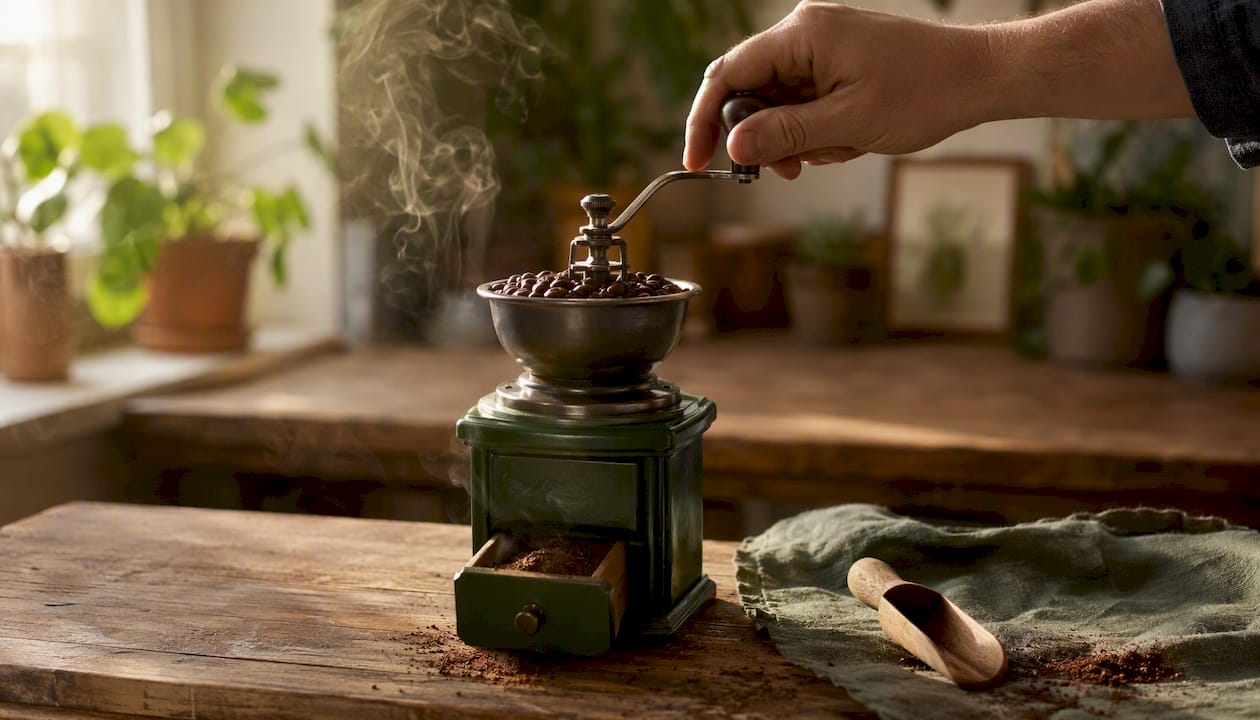
CO2 matters more than most people realize. It’s released during roasting and continues to off-gas slowly from whole beans, which is why fresh grounds “bloom” when hot water hits them. That bloom, a brief bubbling and expansion, signals active CO2 release and helps even extraction. Pre-ground coffee loses much of that CO2 before it ever reaches your cup.
The difference is most dramatic with light and medium roasts, specialty single-origin beans, espresso, and pour-over brewing, where nuance is the whole point. Dark roasts and milk-heavy drinks mask a lot of the subtlety, so the gap between whole-bean and pre-ground shrinks considerably there. If you’re making a dark roast latte every morning, pre-ground from a good roaster is genuinely hard to distinguish from freshly ground. For a delicate Ethiopian pour-over? You’ll notice.
Opened ground coffee typically stays fresh for just 1–2 weeks in an airtight container at room temperature, compared to 1–3 weeks for opened whole beans stored the same way.
Pro Tip: Grind only what you need for each brew session. Even grinding 30 minutes ahead of time lets aromatics escape. A burr grinder, which cuts beans uniformly rather than smashing them, gives you better extraction and a noticeably cleaner cup than a blade grinder.
Shelf life and storage: how long does each form last?
Freshness timelines depend on whether the package is open, how it’s stored, and what form you’re working with. Opened whole beans stay fresh for 1–3 weeks in an airtight container at room temperature, while opened ground coffee holds its best flavor for about 1–2 weeks under the same conditions.
| Storage condition | Whole beans | Ground coffee |
|---|---|---|
| Unopened (room temp) | Until best-by date | Until best-by date |
| Opened, room temp, airtight | 1–3 weeks | 1–2 weeks |
| Refrigerated (airtight) | Up to 1 month | 2–3 weeks |
| Frozen (vacuum-sealed) | Up to 1 year | Up to 2 months |
For day-to-day storage, the rules are straightforward:
- Use an airtight, opaque container. Move coffee out of retail packaging into a container that blocks both air and light.
- Keep it at room temperature, away from heat sources like your stove or a sunny windowsill.
- Avoid the refrigerator unless you live somewhere extremely humid. The fridge introduces moisture and absorbs odors.
- Freeze only for long-term storage, and only in truly airtight or vacuum-sealed containers. When you pull coffee from the freezer, let the sealed container come fully to room temperature before opening. Opening it cold invites condensation that can degrade the remaining beans quickly.
One reassuring note: dry coffee rarely becomes unsafe to drink without visible moisture or mold. What you lose is flavor, not food safety.
Convenience, cost, and the real trade-offs
Pre-ground coffee has one undeniable advantage: zero extra steps. No grinder, no cleanup, no timing. For households with one occasional coffee drinker or anyone with a tight morning routine, that simplicity has genuine value.
Whole beans, on the other hand, usually carry a small price premium, especially at the specialty level. That premium reflects quality, traceability, and the absence of the fillers or blending that sometimes pad commercial pre-ground products. You’re also getting more control over how your coffee tastes, since you choose the grind size to match your brewer.
- Pre-ground wins when: you brew infrequently, you’re on a strict budget, you don’t own a grinder, or you need coffee ready in under two minutes.
- Whole beans win when: you brew daily, you care about flavor nuance, or you use multiple brewing methods that need different grind sizes.
Pro Tip: The cost barrier for whole beans drops significantly when you buy in smaller quantities from a local roaster or subscribe to a small-batch delivery. A 6–8 oz bag used within two weeks beats a 2-pound bag that goes stale in your cabinet.
How grind size matches your brewing method
Grind size controls how fast water extracts flavor from coffee. Too fine and water lingers, pulling bitter compounds; too coarse and it rushes through, leaving the cup thin and sour. Getting this right is one of the highest-leverage moves you can make as a home brewer.
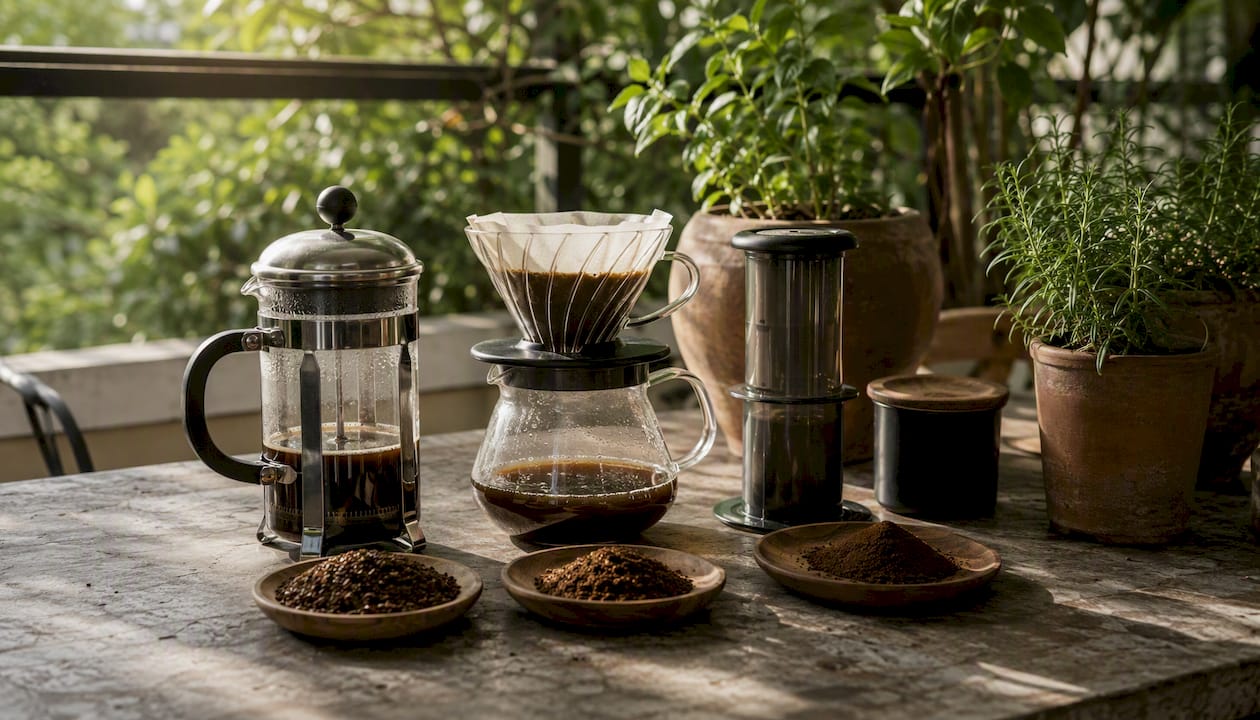
A burr grinder produces more consistent particle sizes than a blade grinder, which is the single biggest equipment upgrade for repeatable results. Here’s how grind size maps to common brewing methods:
| Grind size | Texture reference | Best brewing method |
|---|---|---|
| Extra coarse | Rough sea salt | Cold brew |
| Coarse | Coarse sea salt | French press |
| Medium-coarse | Rough sand | Chemex, percolator |
| Medium | Regular sand | Drip coffee maker |
| Medium-fine | Fine sand | Pour-over |
| Fine | Table salt | Espresso, AeroPress (short) |
| Extra fine | Powdered sugar | Turkish coffee |
If you’re dialing in a new grind setting, start in the middle of the recommended range and taste. Adjust one step coarser if the cup tastes bitter or harsh; one step finer if it tastes weak or sour.
For consistent results every time:
- Use a burr grinder, either manual or electric, over a blade grinder.
- Grind in small batches, only what you’ll brew that session.
- Clean your burrs every 1–2 weeks to prevent stale oil buildup that muddies flavor.
How to choose: a quick decision guide
Start with one question: Do you value peak flavor over convenience? Your answer shapes everything else.
- You brew specialty coffee daily and use a pour-over, AeroPress, or espresso machine. Buy whole beans. Grind fresh each time. A quality burr grinder is worth the investment.
- You need coffee ready in under three minutes with no extra equipment. Buy pre-ground in a small bag (under 12 oz) from a roaster you trust, and use it within two weeks.
- You brew occasionally, maybe a few cups a week. Pre-ground is the smarter choice. Whole beans will go stale before you finish them.
- You travel or brew at the office. Pre-ground or single-serve pods are practical. Look for options with resealable packaging.
Watch for these red flags:
- A multi-pound pre-ground container at a warehouse store. By the time you reach the bottom, it’s been open for months.
- Whole beans with no roast date on the bag. Freshness is the whole point; a roaster who won’t tell you when they roasted has something to hide.
Three quick shopper profiles:
- Flavor-focused: Whole beans, small batch, burr grinder, grind per session.
- Convenience-focused: Small pre-ground bag, airtight container, replace every two weeks.
- Budget or occasional: Pre-ground, buy only what you’ll use in 10 days, store in an opaque airtight container.
What to look for in sustainable coffee packaging
Sustainability and freshness are more connected than most buyers realize. Responsible sourcing signals, like fair-trade or direct-trade certification, single-origin transparency, and roaster traceability, tend to appear on the same bags that also prioritize freshness through better packaging design.
When you’re shopping, look for:
- Resealable pouches with one-way valves. The valve lets CO2 escape without letting oxygen in, which is exactly what freshly roasted coffee needs. Packaging with a valve and resealable closure meaningfully extends shelf life for both whole beans and ground coffee.
- Fair-trade or direct-trade labels that signal fair wages and responsible farming practices.
- Compostable or recyclable packaging from roasters who publish their sourcing practices. You can dig deeper into responsible coffee bean sourcing to know what to look for.
Pro Tip: A subscription that delivers small, sealed bags every two to four weeks is one of the most practical ways to stay in the freshness window while reducing waste from large bags going stale. You get better coffee and less guilt.
A perspective worth sitting with
The whole-bean versus pre-ground debate often gets framed as a purity contest, as if choosing pre-ground is somehow a failure. That framing misses the point entirely.
What actually matters is matching your choice to your real life. A beautifully sourced whole bean that sits in an open bag for three weeks because you only brew on weekends will taste worse than a quality pre-ground you buy in small quantities and use quickly. Freshness is a habit, not just a product category.
Where whole beans genuinely shine is when you’re curious, when you want to taste what a specific origin or roast level can do, and when you’re willing to grind fresh. That’s where the investment in a burr grinder and a bag of specialty-grade beans pays off in a way that’s hard to describe until you’ve tasted it. Ecoviberoast’s sustainably sourced whole-bean options are a good place to start that exploration, especially if you want your purchase to do something good beyond the cup.
Fresh, sustainable whole beans delivered to your door
If you’ve been curious about whole beans but hesitant about waste or cost, Ecoviberoast makes it easy to start small. Their sustainably sourced whole-bean coffees come in sizes that fit real brewing habits, not warehouse-club ambitions, so you’re always working with fresh coffee rather than a stale stockpile.

A subscription or sampler pack solves the two biggest friction points at once: you get smaller, sealed bags arriving on a schedule that matches how often you actually brew, and every order supports mangrove planting and ocean-bound plastic removal. That’s a warm hug for both your morning cup and the planet. Browse Ecoviberoast’s whole-bean collection and find a roast that fits your brewer and your values.
Sources
- Whole bean vs. ground coffee: Important differences
- How Long Does Coffee Last? How to Store Coffee
- Storage and shelf life - NCA - About Coffee


