

Reusable packaging is one of the most effective tools we have for cutting waste, lowering carbon emissions, and protecting the planet we share. Every time you choose a product in reusable packaging, that single container replaces multiple single-use items, which means fewer resources extracted, less plastic leaking into oceans, and a smaller footprint with every sip. The waste management hierarchy recognized by the EPA ranks reuse above recycling precisely because it prevents waste at the source rather than managing it after the fact.
- Each reusable unit displaces several single-use packages, reducing raw material demand and landfill contributions
- Reuse lowers plastic leakage into natural ecosystems, a problem recycling alone cannot solve
- Environmental gains depend on consistent, high return rates and optimized logistics
- Industry standards place reuse above recycling in the waste hierarchy for maximum impact
1. Why reusable packaging matters for the environment
The environmental case for reusable packaging is compelling, and the numbers back it up. Reuse systems can deliver a 32% reduction in CO2 emissions compared to single-use alternatives, even after accounting for the extra transport and washing reuse requires. Single-use plastic leakage into the environment could be reduced by 80% by 2040 using systems already available, including reusable packaging.

Reusable packaging also reduces water pollution, prevents illegal waste practices like open burning, and eases pressure on overloaded waste infrastructure. Unregulated open burning produces black carbon with a global warming potential approximately 5,000 times higher than CO2, so keeping packaging in circulation rather than in a burn pile carries real climate stakes.
| Environmental Benefit | Impact |
|---|---|
| CO2 emissions reduction | 32% lower vs. single-use after accounting for transport and washing |
| Plastic leakage prevention | Up to 80% reduction possible by 2040 |
| Waste diverted from landfill | Reduces overload of waste infrastructure |
| Local economic uplift | Supports job creation and reduces reliance on global supply chains |
- Reusable packaging reduces virgin material demand, keeping resources in the economy longer
- Local job creation and reduced supply chain dependence are real economic co-benefits
- Reusable glass bottles reused at least 5 times cut overall CO2 emissions by over a third compared to single-use glass
Pro Tip: When shopping for coffee or tea, look for brands that disclose their packaging’s reuse cycle count. The more rotations a container completes, the lower its per-use environmental footprint.
2. What experts say about reuse versus recycling
Reuse sits higher in the waste hierarchy than recycling because it avoids the need for resource extraction entirely, rather than just processing waste after it exists. Recycling is an end-of-life solution; reuse is a prevention strategy. That distinction shapes how sustainability experts and circular economy researchers frame the entire packaging conversation.
“Moving away from a linear material economy, towards a more circular economy with less reliance on virgin materials is critical to reducing pollution, biodiversity loss and climate change. Reusing products and packaging is key to the transition to a circular economy.” — Making Reuse a Reality, Global Plastic Policy Centre
Carbon footprint studies consistently show reuse outperforms single-use packaging once a container passes its sustainability breakeven point, though methodological choices in lifecycle analyses can shift the exact numbers. The number of reuse cycles achieved is the single most critical variable. Transport also contributes significantly to total environmental impact, so optimizing reverse logistics through backhauling empty packaging during regular deliveries is a practical way to protect those gains.
- Reuse reshapes consumption toward conscious, circular habits rather than just swapping one disposable for another
- Standardized frameworks like ISO 14026 help communicate environmental claims fairly and accurately
- Reuse systems must be tailored to specific sectors and consumer contexts to deliver their full potential
3. How consumer behavior shapes reuse success
Consumer convenience is the heartbeat of any successful reuse program. If returning packaging feels like a chore, participation drops, and so do the environmental benefits. Return systems integrated into daily routines, like drop-off points at coffee shops or grocery stores, consistently outperform systems that require extra trips.
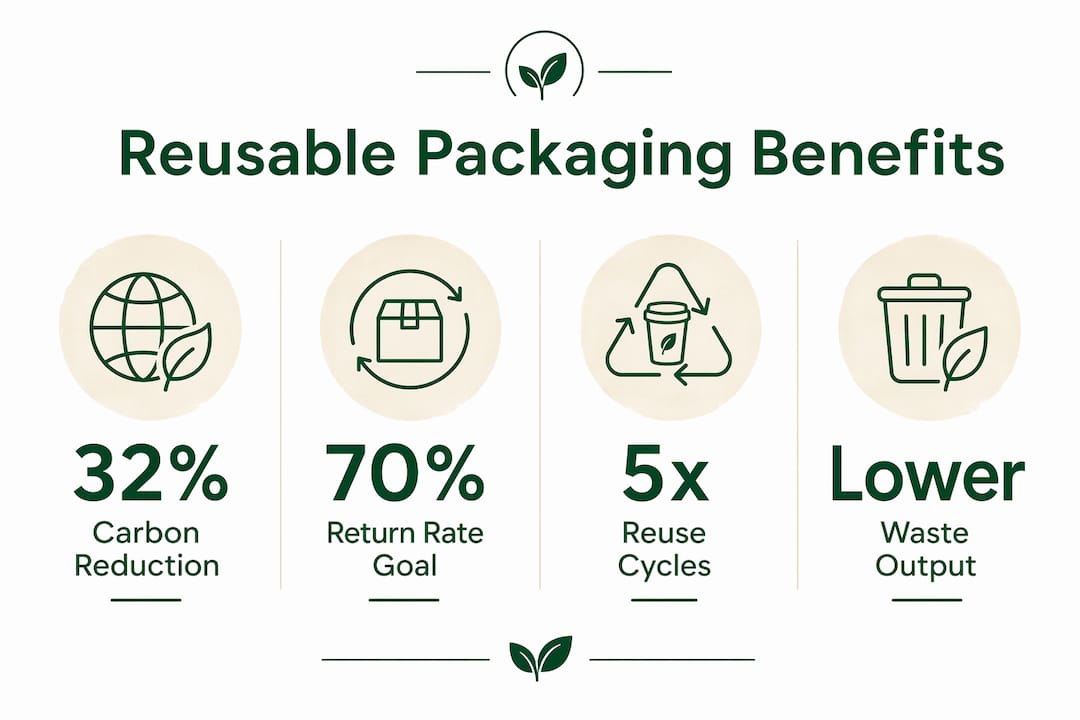
Return rates directly affect whether a reusable item ever reaches its sustainability breakeven point. A container that gets used twice and then discarded may actually carry a higher per-use footprint than a single-use alternative. Deposit return schemes and incentives accelerate the path to breakeven by keeping return rates high.
Cleaning reusable containers adds water and energy use, but sustainable reuse models minimize these impacts by keeping cleaning infrastructure local and transport distances short.
Pro Tip: Choose reusable packaging programs that offer app-based tracking or QR codes. These tools give you visibility into return rates and help brands continuously improve their systems.
- Incentives like rewards and discounts increase participation and speed up breakeven
- User-friendly reuse systems maximize both environmental benefits and cost-effectiveness
- Familiar habits are powerful: the easier the return, the stronger the system
4. How Ecoviberoast puts reusable packaging into practice
Ecoviberoast was built around the belief that your morning cup of tea or coffee should feel good in every sense, including what happens to the packaging afterward. The brand offers sustainably sourced coffee and herbal teas with eco-friendly packaging designed to minimize waste at every step.
Every purchase supports mangrove tree planting and ocean-bound plastic removal, two initiatives that address the downstream pollution single-use packaging creates. Ecoviberoast also educates its community on the importance of reusable and plastic-free packaging, so you can make choices that align with your values.
- Transparent sustainability messaging builds trust and deepens brand loyalty
- Packaging choices at Ecoviberoast reflect the circular economy principles that prioritize reuse before recycling
- Consumers who choose Ecoviberoast become part of a community actively reducing packaging waste
5. Real-world reusable packaging in coffee and tea
The specialty beverage sector has become a proving ground for reusable packaging ideas that actually work. Deposit-based reusable cup programs at independent coffee shops have demonstrated that customers will return containers when the process is simple and the incentive is clear. Refillable loose-leaf tea tins, sold with a discount on future refills, reduce packaging waste while rewarding repeat customers.
Bulk coffee dispensers in grocery stores eliminate individual packaging entirely, a model that has gained traction in natural food retailers across the United States. Some roasters now ship beans in returnable, resealable containers tracked by QR code, giving both the brand and the buyer real data on reuse cycles. For sustainable packaging insights specific to the coffee industry, the conversation around compostable liners and refillable formats is evolving quickly.
6. How policy and regulations are driving reusable packaging forward
Government policy is accelerating the shift toward reusable packaging in ways that voluntary action alone could not achieve. The European Union’s Regulation (EU) 2025/40 introduced binding reuse targets and restrictions on single-use packaging, setting a pathway for all packaging to be recyclable or reusable by 2030. While the United States has not yet passed equivalent federal legislation, several states have introduced extended producer responsibility laws and single-use plastic bans that push brands toward reusable alternatives.
Deposit return schemes are among the most effective policy tools available. They create a financial incentive for consumers to return packaging and fund the infrastructure needed to clean and redistribute it. When policy and consumer behavior align, reuse systems scale far more quickly than market forces alone would allow.
7. What lifecycle analysis tells us about reusable vs. single-use packaging
Lifecycle assessment, or LCA, is the standard method for comparing the total environmental impact of packaging from production through disposal. A review of 32 LCA studies found that 72% showed positive results for reusable packaging compared to single-use. Four variables consistently drive the outcome: transport distances, production impacts, number of reuse cycles, and end-of-life treatment.
For beverage packaging specifically, reusable systems outperform single-use when reuse frequency is high and reverse logistics are efficient. Performance deteriorates for reusable systems beyond 200 km transport distances or below 50 reuse cycles, which is why local supply chains and well-designed return networks matter so much. The good news for coffee and tea lovers is that most reusable solutions become more environmentally friendly than a cardboard box well before they reach anything close to their maximum life cycle.
Key Takeaways
Reusable packaging delivers real environmental benefits when containers are returned consistently, logistics are optimized, and systems are designed around consumer convenience.
| Point | Details |
|---|---|
| Reuse beats recycling | The EPA waste hierarchy ranks reuse above recycling because it prevents waste at the source. |
| Breakeven point matters | Reusable packaging must complete enough cycles to offset its higher production impact versus single-use. |
| Return rates are critical | High consumer return rates are the single biggest factor in whether reuse systems deliver net environmental gains. |
| Glass bottles show clear gains | Reusable glass bottles reused at least 5 times significantly reduce CO2 emissions compared to single-use glass. |
| Policy accelerates adoption | Deposit return schemes and reuse mandates speed up the transition that consumer choice alone cannot achieve. |
Ready to make your daily ritual a little greener? Ecoviberoast’s Hibiscus Berry Tea is organically sourced and packaged with the planet in mind, a warm, aromatic brew that feels as good as the choice behind it. Every purchase plants mangrove trees and removes ocean-bound plastics. See the full story of Ecoviberoast’s environmental impact and find out how your cup of tea is doing more than you might think.


