

TL;DR:
- Chocolate and coffee pairing combines complementary and contrasting flavors to create a layered tasting experience. Matching roast levels and cacao content based on flavor profiles enhances the overall enjoyment and complexity of each cup.
Chocolate coffee pairing is the art of matching coffee and chocolate based on complementary and contrasting flavor profiles to create a richer, more layered tasting experience. When you understand how roast levels, origin notes, and cacao content interact, every cup becomes something worth savoring. This chocolate coffee pairing guide covers the tools you need, the core methodology behind flavor matching, a step-by-step tasting process, and the most common mistakes to avoid. Whether you reach for a fruity Ethiopian light roast or a bold dark espresso, the right chocolate beside it can make the flavors sing.
What do you need to start chocolate coffee pairing?
The right setup makes a real difference before you taste a single thing. Pairing without a clean palate or quality ingredients is like tuning a guitar with broken strings. You get noise instead of music.
Essential tasting tools
Gather these before your first session:
- Water glass: Use still, room-temperature water to cleanse your palate between samples.
- Small tasting cups: Espresso cups or 4-ounce cups work well for controlled sips.
- Tasting spoon: A cupping spoon lets you slurp coffee to aerate it across your palate.
- Notebook or tasting card: Write down aroma, texture, and flavor impressions immediately after each pairing.
- Neutral crackers: Plain, unsalted crackers reset your palate between very different pairings.
Choosing your coffee and chocolate
Coffee selection starts with roast level and origin. Single-origin coffees from specific regions carry distinct flavor signatures. Ethiopian coffees lean floral and citrusy. Colombian and Brazilian coffees tend toward nuts and caramel. Sumatran coffees run earthy and full-bodied. Knowing these profiles before you pour gives you a real head start.
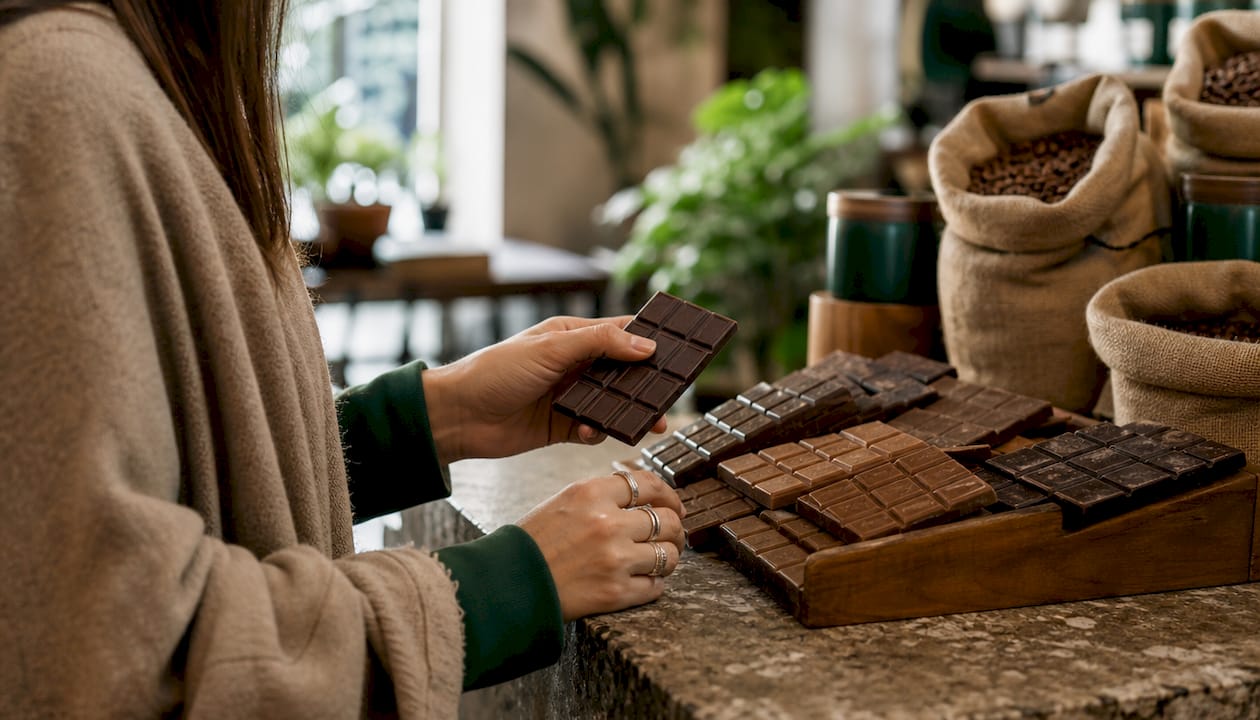
For chocolate, cacao content is the clearest guide. Dark chocolate (70% cacao and above) carries bitterness and deep cocoa notes. Milk chocolate (30–50% cacao) brings sweetness and creaminess. White chocolate contains no cacao solids and reads as pure sweetness with vanilla and dairy notes.
| Chocolate Type | Cacao Content | Primary Flavor Notes |
|---|---|---|
| Dark chocolate | 70%+ | Bitter, earthy, deep cocoa |
| Milk chocolate | 30–50% | Sweet, creamy, caramel |
| White chocolate | 0% cacao solids | Vanilla, buttery, sweet |
Pro Tip: Buy single-origin chocolate bars when possible. They carry terroir notes, just like coffee, and make pairings far more interesting than mass-produced blends.
Set up your tasting space away from strong smells like candles or cooking. Good lighting and a clean table help you focus on what matters: the flavors in front of you.
How do you match chocolate and coffee by flavor profile?
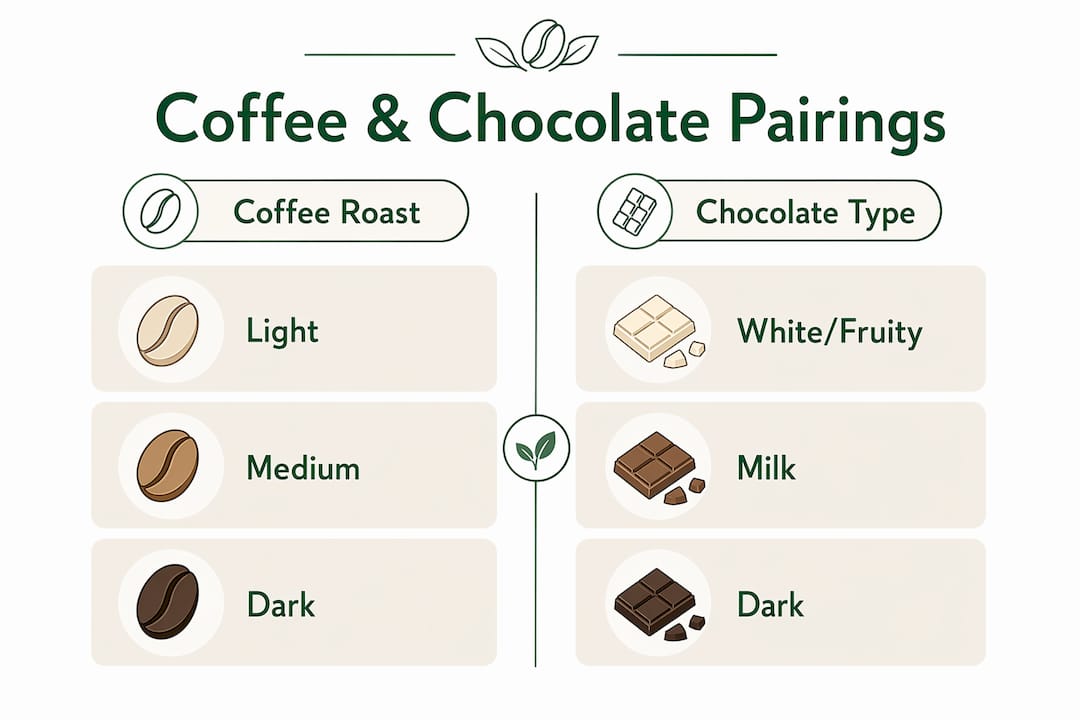
The core methodology behind any good flavor pairing coffee food guide rests on two strategies: complementary pairing and contrasting pairing. Complementary pairings share similar notes, like a chocolatey Brazilian coffee beside a dark chocolate truffle. Contrasting pairings balance opposites, like a bright Kenyan coffee beside a sweet milk chocolate square. Both approaches work. The goal is balance, not sameness.
Light roasts and fruity or white chocolate
Light roasts pair best with bright, fruity flavors that match their natural acidity. A light Ethiopian coffee with citrus notes tastes livelier beside white chocolate or a fruit-forward milk chocolate with berry inclusions. The sweetness of white chocolate softens the coffee’s acidity without burying its floral character. Avoid pairing light roasts with very dark, bitter chocolate. The bitterness fights the coffee’s brightness and flattens both.
Medium roasts and milk chocolate
Medium roasts work beautifully with milk chocolate because their balanced sweetness mirrors the nutty, caramel notes in Colombian or Brazilian beans. The creaminess of milk chocolate rounds out any mild bitterness without overpowering the coffee’s body. This is the most approachable pairing for anyone new to gourmet chocolate and coffee combinations. A chocolate hazelnut coffee blend paired with a hazelnut milk chocolate bar is a textbook example of complementary pairing done right.
Dark roasts and dark chocolate
Dark roasts carry natural cocoa and roasted nut notes, which makes them natural companions to dark chocolate. An espresso beside an 85% cacao bar creates a layered experience where the coffee’s roasted depth and the chocolate’s bitterness amplify each other without tipping into harshness. Milk chocolate highlights caramel notes in medium roasts, while dark chocolate intensifies the cocoa character in espresso and dark roasts. That distinction is worth memorizing.
| Coffee Roast | Best Chocolate Match | Flavor Outcome |
|---|---|---|
| Light roast | White or fruity milk chocolate | Bright, floral, lively |
| Medium roast | Milk chocolate, hazelnut chocolate | Balanced, nutty, creamy |
| Dark roast / espresso | Dark chocolate (70%+) | Bold, deep, cocoa-forward |
Pro Tip: Try a contrasting pairing once you feel comfortable with complementary ones. A bright, acidic Kenyan coffee beside a sweet milk chocolate creates a surprising balance that most people never expect.
Understanding the five fundamental tastes (sweet, salty, sour, bitter, and umami) helps you predict how a pairing will land before you taste it. Sweet chocolate reduces perceived coffee bitterness. Salty chocolate (think sea salt dark chocolate) does the same. That knowledge turns guesswork into craft. The same logic applies across food pairing broadly, whether you are matching coffee with chocolate or exploring aroma-driven pairings in other beverage categories.
How do you run a chocolate and coffee tasting session?
A structured tasting session gives you repeatable results and helps you learn faster than random sipping. Follow this sequence every time.
- Set out your samples. Arrange two or three chocolate types and one or two coffees. Keep portions small: a 1-inch square of chocolate and a 2-ounce pour of coffee per pairing.
- Cleanse your palate with water. Sip still water before tasting to reset your palate. This removes any lingering flavors from your last meal or drink.
- Smell the chocolate first. Hold the chocolate piece under your nose and breathe in slowly. Notice whether you detect fruit, nuts, vanilla, or earthiness.
- Taste the chocolate. Let it melt slowly on your tongue rather than chewing. Pay attention to texture (smooth, grainy, waxy) and the flavor notes that develop as it melts.
- Sip the coffee immediately after. Drink it unsweetened. Eating chocolate before coffee enhances the coffee’s perceived aroma and depth, and often eliminates the need for added sugar entirely.
- Note the interaction. Did the chocolate make the coffee taste brighter? Smoother? More bitter? Write it down before the impression fades.
- Cleanse and repeat. Sip water, wait 30 seconds, then move to your next pairing.
A few additional tips make your session more productive:
- Taste lighter pairings before darker ones. Starting with a bold dark roast and 85% cacao will numb your palate to subtler combinations.
- Keep room temperature consistent. Cold chocolate releases fewer aromatic compounds. Let your chocolate sit at room temperature for at least 15 minutes before tasting.
- Limit each session to three or four pairings. Palate fatigue sets in quickly, and your notes become less reliable after too many samples.
Building your coffee tasting palate takes practice, but structured sessions accelerate the process significantly. Each session teaches you something new about how flavors interact.
What are the most common chocolate coffee pairing mistakes?
Even experienced tasters run into the same pitfalls. Knowing them in advance saves you a lot of frustrating cups.
- Pairing by color instead of flavor. Dark coffee does not automatically pair with dark chocolate. A dark roast Sumatra with earthy, herbal notes can clash with a high-cacao bar that has fruity undertones. Always match by flavor profile, not appearance.
- Using sweetened coffee. Sugar in your cup masks the chocolate’s contribution and distorts the pairing entirely. Taste coffee unsweetened during pairing sessions.
- Choosing overly processed chocolate. Compound chocolate (made with vegetable fat instead of cocoa butter) lacks the complexity needed for meaningful pairings. Use real couverture or single-origin bars.
- Ignoring acidity mismatches. A very acidic light roast beside a bitter dark chocolate creates a sharp, unpleasant combination. Sweet and salty foods reduce perceived coffee bitterness, but highly acidic coffees need sweet, creamy chocolate to find balance.
- Skipping the palate cleanse. Tasting chocolate after chocolate without water in between muddies your perception. The cleanse is not optional.
Pro Tip: If a pairing feels off, add a tiny pinch of sea salt to the chocolate before tasting. Salt suppresses bitterness and can rescue a combination that seemed too harsh.
Refining pairings based on personal feedback is part of the process. Keep notes from every session. Over time, patterns emerge that reflect your specific palate, and those patterns become your personal pairing map. You can also experiment with natural flavoring methods in your coffee to add another layer of complexity to your pairings.
Key Takeaways
The most effective chocolate coffee pairing strategy matches flavor profiles by roast level and cacao content, then refines with the complementary-versus-contrasting method.
| Point | Details |
|---|---|
| Match by flavor, not color | Pair light roasts with fruity or white chocolate, dark roasts with high-cacao dark chocolate. |
| Use the tasting sequence | Cleanse with water, taste chocolate first, then sip unsweetened coffee to maximize aroma. |
| Apply two core strategies | Complementary pairings share notes; contrasting pairings balance opposites for surprising depth. |
| Avoid common errors | Skip sweetened coffee, compound chocolate, and color-based matching during tasting sessions. |
| Keep tasting notes | Written impressions from each session build a personal pairing map over time. |
What I have learned from years of pairing chocolate and coffee
Most guides tell you to follow the rules. My honest experience says the rules are a starting point, not a destination.
The pairing that changed how I think about this was a washed Yirgacheffe light roast beside a 40% milk chocolate with raspberry inclusions. On paper, it looked like a mismatch. In the cup, it was extraordinary. The coffee’s citrus brightness and the chocolate’s berry sweetness created something that tasted like a fresh summer morning. No guide predicted that. My palate did, because I had done enough structured sessions to trust what I was sensing.
The biggest mistake I see enthusiasts make is rushing to dark roast and dark chocolate because it sounds sophisticated. That combination is reliable, but it is also the least surprising. The real discoveries happen in the middle ranges, where medium roasts meet milk chocolate with unexpected inclusions like cardamom, sea salt, or toasted coconut.
My other strong opinion: origin matters more than roast level for advanced pairing. A medium roast Ethiopian and a medium roast Colombian behave very differently beside the same chocolate. Learning to read origin flavor notes, not just roast color, is what separates a casual taster from someone who genuinely understands coffee and chocolate pairings.
Start with the structured sequence. Then break it deliberately and see what you find.
— LaSaundra
Ecoviberoast’s coffee pods make pairing easy and sustainable
Ready to put this guide into practice? Ecoviberoast’s single-serve coffee pods give you consistent, flavorful cups without the variability of a new bag of beans every time. That consistency matters when you are trying to isolate how a specific coffee interacts with a specific chocolate.

Each pod delivers a rich, balanced original roast that works beautifully as a starting point for both complementary and contrasting chocolate pairings. And every purchase supports mangrove tree planting and ocean-bound plastic removal, so your tasting session does something good beyond your cup. Grab the 60-pack single-serve pods for a full season of pairing experiments, or try the 12-pack to start small and find your favorite match.
FAQ
What is the best chocolate to pair with espresso?
Dark chocolate with 70% cacao or higher is the best match for espresso. The shared cocoa and roasted notes in both create a deep, layered flavor that amplifies rather than competes.
Does the order of tasting chocolate and coffee matter?
Yes. Tasting chocolate before coffee enhances the coffee’s aroma and perceived depth, and often reduces the need for added sugar in the cup.
Can white chocolate pair well with coffee?
White chocolate pairs best with light roast coffees that have floral or citrus notes. Its sweetness softens the coffee’s acidity without masking its delicate flavor character.
How do I fix a pairing that tastes too bitter?
Sweet or salty foods reduce perceived coffee bitterness, so try switching to a sweeter milk chocolate or adding a pinch of sea salt to your dark chocolate before tasting.
How many pairings should I try in one session?
Limit each session to three or four pairings. Palate fatigue sets in quickly, and tasting notes become unreliable after too many samples in a single sitting.


