

TL;DR:
- Buying local supports community economies, reduces environmental impact, and creates more resilient supply chains.
- Consumer engagement in local sourcing is widespread, with economic, environmental, and social benefits that reinforce its importance.
Local sourcing is the practice of buying goods and services from nearby producers, and it directly strengthens community economies, cuts environmental impact, and builds more reliable supply chains. 91% of American consumers shop at small or local stores weekly, and 80% do so primarily to support their community. That level of engagement shows local sourcing is not a niche trend. It is a mainstream economic and environmental force worth understanding deeply.
Why local sourcing matters for community economies
The economic case for buying local is more powerful than most people realize. Shoppers retain $68 to $73 of every $100 spent locally, with those dollars recirculating 6 to 15 times within the community. That multiplier effect means a single purchase at a neighborhood shop or local farm generates far more neighborhood wealth than the same purchase at a distant retailer.

Local businesses also contribute more to charitable causes and hire from within their communities. That creates a feedback loop where local spending supports local jobs, which in turn generates more local spending. 70% of Americans in suburban areas cite supporting the local economy as their primary reason for shopping local. The motivation is real, and the economic data backs it up.
Local sourcing also reduces the distance people travel to access goods, which lowers personal transportation costs and time. Shorter supply chains mean fewer middlemen, so more of the purchase price reaches the original producer. For communities built around agriculture, craft production, or specialty goods like shade-grown coffee and herbal teas, that direct connection between producer and buyer is a genuine lifeline.
| Factor | Local sourcing | Non-local sourcing |
|---|---|---|
| Dollar retention per $100 spent | $68–$73 | Significantly lower |
| Community recirculation | 6–15 times | Minimal |
| Job creation proximity | Local neighborhood | Distant or offshore |
| Charitable contribution rate | Higher | Lower |
| Supply chain length | Short | Long |
Pro Tip: When you shop at a local farmers market or community co-op, ask the vendor directly how much of the sale price stays in the region. The answer will surprise you.
How does local sourcing advance environmental sustainability?
Local sourcing cuts environmental impact in measurable ways, though the full picture requires some nuance. Transportation accounts for 28% of total U.S. greenhouse gas emissions. Buying from nearby producers directly reduces the shipping miles that contribute to that figure.
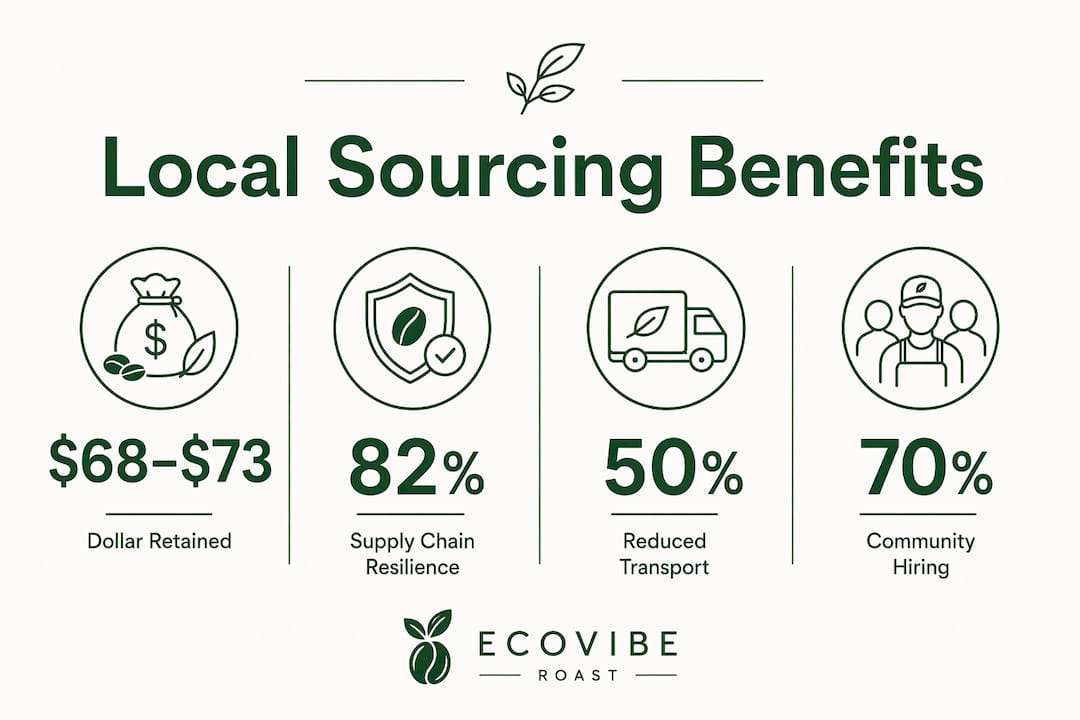
Local sourcing can reduce fossil fuel consumption by about 40% by eliminating long-distance transport. That is not a small number. It means choosing a locally sourced herbal tea over an imported one is a genuinely meaningful environmental act, not just a feel-good gesture.
The sustainability benefits of buying local include:
- Reduced shipping emissions from shorter transport routes
- Less packaging waste because goods travel fewer miles and need less protective material
- Lower refrigeration energy from faster farm-to-shelf timelines
- Stronger biodiversity support when local farms use shade-grown or regenerative practices
- Reduced port congestion and its associated idle-engine pollution
The important nuance is that local production must combine with modern sustainable practices to deliver real environmental benefits. A nearby farm using energy-intensive methods may not be greener than a distant farm with solar-powered operations. Proximity alone does not guarantee a lower carbon footprint. You need to look at the full picture of how a product is grown, processed, and packaged.
Pro Tip: When evaluating a local supplier’s environmental credentials, ask about their energy sources, water use, and packaging materials. A truly green local product scores well on all three.
Does local sourcing make supply chains more resilient?
Local sourcing is one of the most effective tools for reducing supply chain vulnerability. 82% of companies using local sourcing report more resilient supply chains with faster response times and less disruption. That statistic reflects hard lessons learned from global shocks like the COVID-19 pandemic, port congestion crises, and escalating trade tariffs.
Shorter supply chains reduce risks from port congestion, geopolitical tensions, and tariff changes, while also allowing faster product launches. When a global event disrupts shipping lanes, a business relying on local suppliers can pivot in days rather than months. That agility is worth more than any short-term cost savings from offshore sourcing.
Businesses that save on logistics costs through local suppliers also benefit from faster, smaller shipments that reduce inventory holding fees. Smaller, more frequent deliveries mean less capital tied up in warehoused stock. For small businesses and community enterprises, that cash flow advantage is significant.
The operational benefits of local sourcing for supply chain resilience include:
- Faster lead times from supplier to shelf
- Direct communication with producers for quality control
- Reduced exposure to currency fluctuation and import duties
- Ability to respond quickly to sudden demand changes
- Stronger supplier relationships built on shared community interests
What motivates different people to buy local?
Not everyone chooses local products for the same reason, and understanding those differences helps communities build more effective support for local sourcing. Older consumers prioritize local economy and job support but tend to resist paying price premiums. Younger consumers are more motivated by environmental ethics and fair wages, and they show greater willingness to pay more for products that reflect those values.
This demographic split has real implications for how local producers communicate their value. A message about job creation resonates with one audience. A message about biodiversity and fair labor practices resonates with another. Communities that tailor their local sourcing campaigns to these distinct motivations see stronger and more sustained engagement.
Successful local sourcing requires products that compete on quality, reliability, and innovation, not just on the “buy local” appeal alone. Sentiment can spark a first purchase, but quality keeps customers coming back. Local producers who invest in product excellence alongside community storytelling build the most loyal customer bases.
The key motivations across consumer groups include:
- Economic support: Keeping money and jobs in the neighborhood
- Environmental ethics: Reducing emissions and supporting sustainable farming
- Labor fairness: Paying fair wages to local workers and producers
- Quality preference: Trusting that local means fresher and more carefully made
- Community identity: Feeling connected to the people and places behind a product
How can you meaningfully support local sourcing?
Supporting local sourcing starts with knowing where to look and what to look for. Farmers markets, community-supported agriculture programs, and local food co-ops are reliable starting points. For specialty products like coffee and tea, brands that publish their sourcing practices and community support initiatives give you the transparency you need to make an informed choice.
Here are practical steps to make your local sourcing support count:
- Research before you buy. Look for producers who share details about where their ingredients come from and how workers are treated.
- Ask questions directly. Local vendors appreciate engagement, and your questions push them toward greater transparency.
- Build relationships with producers. Regular customers who give feedback help local businesses improve and grow.
- Share what you learn. Word of mouth remains one of the most powerful drivers of local sourcing adoption in any community.
- Support local sourcing policies. Advocate for local purchasing preferences in schools, hospitals, and government procurement.
Educated consumer choices create stable local demand that sustains community economies far beyond what any single policy can achieve. When you understand the impact of responsible sourcing, you make purchases that carry genuine weight. Community support through local sourcing builds networks, drives innovation, and grows jobs in neighborhoods that need it most.
Pro Tip: Start with one product category you buy regularly, like coffee or tea, and commit to sourcing it locally for 30 days. The habit forms faster than you expect, and the quality difference is often immediately noticeable.
Key Takeaways
Local sourcing delivers measurable economic, environmental, and supply chain benefits that compound over time when consumers make it a consistent habit rather than an occasional choice.
| Point | Details |
|---|---|
| Economic multiplier effect | Every $100 spent locally retains $68–$73 and recirculates 6–15 times in the community. |
| Environmental impact | Local sourcing can cut fossil fuel consumption by about 40% by eliminating long-distance transport. |
| Supply chain resilience | 82% of businesses using local sourcing report stronger, faster-responding supply chains. |
| Demographic motivations | Older consumers prioritize jobs and economy; younger consumers prioritize ethics and sustainability. |
| Quality drives loyalty | Local products must compete on quality and reliability, not just community sentiment, to sustain demand. |
Local sourcing: what I’ve learned after years of watching it work
I’ve spent a long time watching the local sourcing conversation shift from a niche talking point to a genuine mainstream priority. What strikes me most is how often people underestimate the economic side of it. The multiplier effect is real. When you spend $100 at a local producer, that money does not disappear into a distant corporate account. It pays a neighbor’s rent, funds a local school fundraiser, and comes back around to you in ways that are hard to trace but impossible to ignore.
The environmental argument is compelling, but I’d caution against treating it as simple. Proximity does not automatically mean green. I’ve seen local operations with wasteful energy practices that undercut any transport savings. The most effective approach is to look for local producers who combine short supply chains with genuine sustainability commitments. Those two things together create real impact.
What I find most encouraging is the younger generation’s willingness to pay a premium for products that align with their values. That is not naivety. It is a rational investment in the kind of economy and environment they want to live in. The challenge for local producers is to meet that expectation with consistent quality and honest storytelling.
Local sourcing is not a silver bullet, and it is not always the cheapest option. But as a conscious, active choice made regularly, it is one of the most direct ways you can shape the community around you. Every aromatic cup of locally sourced tea or rich, shade-grown coffee is a small vote for the world you want to see.
— LaSaundra
Ecoviberoast’s locally sourced teas worth trying
Ecoviberoast puts the principles of local and responsible sourcing into every product it offers. The brand’s Hibiscus Berry Tea is a bright, refreshing herbal blend that reflects a genuine commitment to quality ingredients and ethical sourcing. The Jasmine Tea brings a floral, aromatic experience that comes from carefully selected, responsibly grown leaves.

With every purchase, Ecoviberoast plants mangrove trees and removes ocean-bound plastics, turning your daily tea ritual into a tangible act of environmental care. If you want to experience the benefits of local and responsible sourcing firsthand, Ecoviberoast’s teas are a warm, satisfying place to start.
FAQ
What is local sourcing, exactly?
Local sourcing is the practice of buying goods and services from producers located nearby, typically within the same region or country. It prioritizes shorter supply chains, community economic benefit, and reduced transportation impact.
How much of my spending actually stays local?
Research shows that $68 to $73 of every $100 spent locally is retained in the community, with those dollars recirculating 6 to 15 times. That makes local spending significantly more impactful than purchasing from distant retailers.
Is local sourcing always better for the environment?
Not automatically. Local sourcing reduces transport emissions, but a nearby producer using energy-intensive methods may not be greener than a distant one with sustainable operations. The best choice combines local proximity with verified sustainable practices.
Why do younger and older consumers buy local for different reasons?
Older consumers tend to prioritize economic and job support but are more price-sensitive. Younger consumers are more motivated by environmental ethics and fair labor standards, and they show greater willingness to pay a premium for products that reflect those values.
How do I know if a local product is genuinely responsibly sourced?
Look for producers who publicly share their sourcing practices, energy use, and labor policies. Brands that publish their ethical sourcing commitments and environmental impact data give you the transparency needed to make a confident, informed choice.


