

Cold brew tea is simply tea leaves steeped in cold water in the refrigerator for several hours instead of hot water for a few minutes. Use about 1 tablespoon of loose leaf (or one tea bag) per cup of cold water, refrigerate for 6 to 12 hours, then strain and pour over ice. Brewing this way in the fridge is also the safer path compared to leaving a jar out in the sun.
TL;DR:
- Green and white teas develop a smooth flavor with less bitterness when steeped cold for 6 to 8 hours, with some Japanese greens needing only 15 to 20 minutes.
- Black tea is best brewed cold for 8 to 12 hours but can become tannic if overstepped, so tasting near the end is recommended.
- Herbal and fruit blends are highly forgiving, allowing steeping times of up to 24 hours without risk of bitterness.
- Always refrigerate cold brew tea and avoid leaving it at room temperature or in direct sunlight to prevent bacterial growth and ensure safety.
- Flavorings like herbs, citrus, or fruit should be added after straining or in the final hour to prevent muddiness or excessive bitterness.
Table of Contents
- How Do You Make Cold Brew Tea Step by Step?
- Which Teas Work Best for Cold Brewing?
- How Long Should You Steep Cold Brew Tea?
- Is It Safe to Cold Brew Tea on the Counter?
- What Are the Best Ways to Flavor Cold Brew Tea?
- Why Trust This Cold Brew Guide?
- A Simple Weekly Cold Brew Routine Worth Copying
- Ready to Stock Your Pitcher?
- Sources
How Do You Make Cold Brew Tea Step by Step?
You need almost nothing to pull this off: a pitcher, some tea, and cold water. That’s the whole appeal.
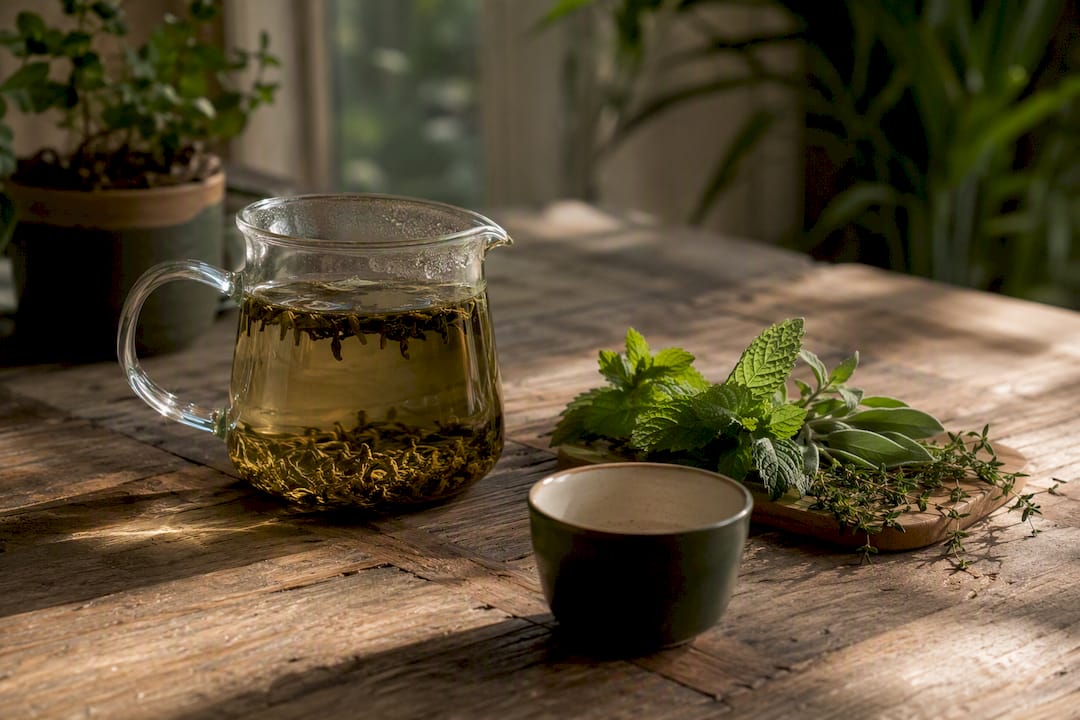
Ratios first. For loose leaf, use 1 to 1.5 tablespoons per cup of water, or roughly 8 to 12 grams per quart if you like to weigh things. Bagged tea converts simply: one bag per cup. Scaling up for a half-gallon pitcher means four to six bags or about 6 tablespoons of loose leaf.
Here’s the process, start to finish:
- Measure your tea into a glass pitcher, jar, or a dedicated cold-brew maker with a built-in filter.
- Pour cold, filtered water over the leaves. No need to boil or even warm it.
- Cover and refrigerate for 6 to 12 hours, depending on the tea (more on timing below).
- Taste around the 6 hour mark if you’re unsure, then let it go longer if you want more body.
- Strain out the leaves completely once it hits the flavor you want.
- Serve over ice, or pour into a clean bottle and refrigerate for later.
Equipment matters more than people expect. A simple glass pitcher works fine, and mason jars are perfect for single servings. Dedicated cold-brew pitchers with a removable filter basket save you a straining step. A French press is also a solid option, but skip it if you just used it for coffee. Coffee oils cling to the mesh and can bleed into a delicate tea, muddying flavors you worked hard to preserve.
Pro Tip: Cold brew is far more forgiving than hot brew. Because extraction happens slowly, you can taste and adjust over hours instead of racing against a timer, which makes it a great method for batch-prepping a week’s worth of iced tea in one go.
Which Teas Work Best for Cold Brewing?
Not every tea behaves the same way in cold water, and matching the tea to the method makes a real difference in the glass.
- Green and white teas often shine brightest cold. The lower temperature holds onto sweet amino acids like L-theanine while pulling far less tannin, so you get a naturally smoother, less bitter cup.
- Oolong, especially roasted styles, brings body and floral depth without the harshness that can come from hot steeping.
- Black tea delivers the fullest, most robust flavor, but it’s also the most prone to tannic bitterness if you let it go too long.
- Herbal and fruit tisanes are the most forgiving of all. No caffeine, no real risk of over-extraction, and they hold flavor well even at 24 hours.
If you’re deciding between formats, loose leaf tends to outperform bagged tea for cold brewing because whole or large-cut leaves release flavor more evenly over a long steep. Save your finest single-origin leaves for hot brewing, where their aromatics get to peak early, and reserve sturdier grades for the cold pitcher.
How Long Should You Steep Cold Brew Tea?
Steep time is really where strength gets decided, and it varies more by tea type than most people assume.
- Green and white tea: 6 to 8 hours is typical, though some Japanese greens like sencha extract in as little as 15 to 20 minutes for a light, delicate cup.
- Oolong: 8 to 10 hours brings out its rounder, more floral character.
- Black tea: 8 to 12 hours, tasting near the end to catch it before tannins take over.
- Herbal and fruit blends: up to 24 hours, since there’s little bitterness to guard against.
Want a concentrate for mixing drinks or diluting later? Double your leaf ratio and steep on the longer end of the window, then cut it with water or ice at a 1:1 ratio when serving. Leaves can sometimes be re-steeped once for a lighter second batch, but plan to strain and refrigerate everything within 2 to 3 days for the best flavor.
Is It Safe to Cold Brew Tea on the Counter?
Skip sun tea entirely. Leaving a jar of tea and water out at room temperature, even in direct sun, creates a window where bacteria can multiply, and food-safety extension experts specifically discourage the practice. The fridge does the same extraction job at a temperature that keeps you safe.
- Steep only in the refrigerator, never on a counter or windowsill.
- Strain out the leaves as soon as your batch hits the flavor you want; leaving them in longer just invites more tannin.
- Store finished tea in a sealed glass container and drink it within 2 to 3 days for the freshest taste.
- Keep the pitcher away from strong-smelling fridge neighbors. Tea absorbs odors easily.
Quick fix: if a batch turns out astringent from an accidental over-steep, a tiny pinch of baking soda can round out the bitterness. Use it sparingly. A little goes a long way, and too much will leave your tea tasting flat.
What Are the Best Ways to Flavor Cold Brew Tea?
Once you’ve got a solid pitcher going, flavoring it is where cold brew tea gets fun. The rule of thumb: add delicate ingredients like fresh herbs, citrus, or fruit in the final hour of steeping, or right after straining, so they don’t turn muddy or bitter over a long soak.
- Make a syrup first. Simmer equal parts sugar (or honey) and water until dissolved, then cool. It blends into cold tea far more evenly than dry sugar ever will.
- Try an Arnold Palmer variant: mix your cooled black or green cold brew with lemonade and a few torn mint leaves for a bright, porch-ready cooler.
- Build a creamy London Fog spritz: combine cold-brewed Earl Grey with a splash of honey syrup and vanilla, top with a little sparkling water, and finish with milk or oat milk poured over ice.
Why Trust This Cold Brew Guide?
Ecoviberoast has spent real time testing cold-brew ratios for coffee, and the same patience-over-heat principles carry straight into tea. Every purchase also supports mangrove tree planting and ocean-bound plastic removal, detailed on the environmental impact page…
A Simple Weekly Cold Brew Routine Worth Copying
I keep one pitcher going at a time, brewed on Sunday and gone by Wednesday, then a second lighter batch from the same leaves if the tea can handle a re-steep. Glass over plastic, always, and spent leaves go straight into the compost bin instead of the trash. If you want more of this kind of low-effort, low-waste rhythm, Ecoviberoast’s eco-friendly tea ritual guide is worth a look. Try adjusting your own ratio by half a tablespoon and see what changes.
— LaSaundra
Ready to Stock Your Pitcher?
A great cold brew starts with tea that was built for a long, slow steep, not just a quick hot cup. Ecoviberoast’s loose-leaf sampler packs and herbal blends give you a low-cost way to test green, oolong, and fruit tisanes side by side before committing to a full bag of any one variety.

Every sampler and full-size bag ships with the same promise behind it: a mangrove tree planted and ocean-bound plastic removed with your order, detailed on the environmental impact page. If a caffeine-free pitcher sounds appealing, the Hibiscus Berry Tea steeps beautifully cold for a full day without turning bitter. Browse the single-serve collection to build your own tea sampler and start your next pitcher this weekend.
Sources
- Iowa State Extension — Sun tea / iced tea safety
- Serious Eats — The Best Iced Tea (Cold-Brewed Iced Tea) Recipe
- Just One Cookbook — How to cold brew green tea
- Better Homes & Gardens — How to cold brew tea the easy way


