

Coffee typically delivers more caffeine per cup than tea, usually landing somewhere around 80 to 100 mg in an 8-ounce serving compared to 40 to 50 mg for most brewed black teas. Green tea generally contains less caffeine than black tea, though matcha and yerba mate can flip that script entirely. Either way, most healthy adults can comfortably stay under the recommended 400 mg daily ceiling without much math.
TL;DR:
- While tea leaves contain more caffeine by dry weight than coffee beans, brewing method and extraction greatly influence the caffeine content in your cup.
- Hotter water, longer steeping, and larger doses increase caffeine extraction, which means brewing technique can override raw ingredient differences.
- Certain drinks like matcha and yerba mate can match or exceed coffee’s caffeine levels depending on preparation, even though they are traditionally considered milder.
- To reduce caffeine intake, shorten steep times, lower water temperatures, or switch to white teas and herbal infusions without sacrificing flavor.
- Your personal caffeine effects depend more on dose and brewing details than on the type of plant, so adjusting your routine allows control over how much caffeine you consume.
Table of Contents
- Caffeine In Tea vs. Coffee: The Numbers By Cup
- Why Caffeine Numbers Aren’t As Simple As They Look
- What Caffeine Actually Does To You, And How Much Is Too Much
- How To Dial Down Your Caffeine Without Losing The Ritual
- An Editor’s Take On Chasing The “Right” Cup
- Where These Numbers Come From
- Find Your Perfect Cup With Ecoviberoast
- Sources
Caffeine In Tea vs. Coffee: The Numbers By Cup
If you love your morning ritual but want to know exactly what’s in your mug, the numbers tell a pretty consistent story. Coffee wins on caffeine per cup most of the time, but “most of the time” hides some fun exceptions worth knowing before you reach for your favorite blend.
Here’s how the common options stack up in roughly 8-ounce servings (with a few exceptions noted where serving size works differently):
A few things explain why these ranges overlap so much instead of landing on one tidy number:
- Espresso packs a punch per ounce, but the shot is small. Ounce for ounce it’s concentrated, but a single shot rarely tops what a full mug of drip coffee delivers.
- Matcha breaks the “tea is gentler” rule. Because you’re drinking the whole ground leaf instead of a steeped infusion, it can rival or beat some brewed coffee servings.
- Cold brew isn’t automatically the light option. Many recipes use a higher coffee-to-water ratio than hot brewing, so an unwatered cold brew can pack more caffeine than a standard hot cup.
- Yerba mate quietly outperforms most teas. It’s technically an herbal infusion, but its natural caffeine content puts it closer to coffee territory.
Why Caffeine Numbers Aren’t As Simple As They Look
Here’s the part that surprises most people: tea leaves actually contain more caffeine by dry weight than coffee beans. Tea runs around 4% caffeine by dry weight, while coffee beans typically fall between 0.9% and 2.6%. So why does your cup of coffee usually pack more punch than your cup of tea?
The answer comes down to dose and extraction, not raw chemistry. Coffee brewing uses more dry mass per cup and hotter water, pulling out more total caffeine even though the beans themselves contain a smaller percentage. Tea, brewed with fewer grams of leaf and often at lower temperatures, simply doesn’t extract as aggressively.
A few extraction factors decide how much caffeine actually ends up in your final cup:
- Water temperature. Hotter water pulls caffeine out faster and more completely, which is part of why black tea (steeped near boiling) tends to run higher than delicate green or white teas.
- Steep or brew time. Longer contact time between water and plant material means more caffeine transfers into the beverage, whether you’re brewing tea or coffee.
- Grind or leaf surface area. Finely ground coffee or broken tea leaves expose more surface to water, speeding up extraction compared to whole beans or whole leaves.
- Dose per liter. More grounds or leaves per cup of water simply means more caffeine available to extract, regardless of brew method.
Roast level, by the way, is mostly a red herring. Darker roasts lose a little mass during roasting, which can slightly concentrate caffeine by weight, but the effect is small. Your actual dose (how many grams you use per cup) matters far more than whether the beans are light or dark.
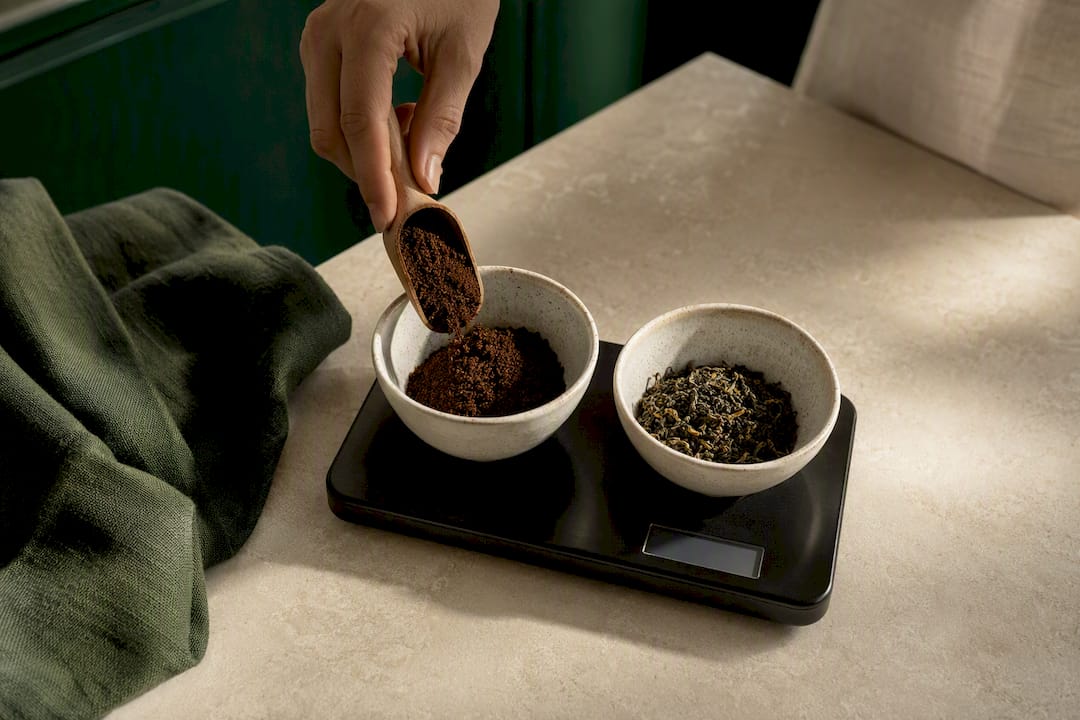
Pro Tip: If you’re chasing a specific caffeine level, weigh your grounds or leaves instead of eyeballing scoops. A kitchen scale gives you far more control than “one spoonful” ever will.
What Caffeine Actually Does To You, And How Much Is Too Much
Caffeine’s effects scale pretty predictably with dose, though your personal chemistry matters too. At low to moderate amounts (roughly 50 to 200 mg), most people notice sharper focus and a mild energy lift. Push past 300 or 400 mg in one sitting and jitteriness, a racing heart, or trouble sleeping become far more common.
By the numbers: Health authorities generally consider up to 400 mg of caffeine per day safe for most healthy adults, roughly four 8-ounce cups of coffee.
A few situations call for tighter limits:
- Pregnancy. Guidance typically caps intake around 200 mg per day, less than half the general adult ceiling.
- Medication interactions. Certain prescriptions, including some for anxiety and blood pressure, can amplify caffeine’s effects, so check with your doctor if you’re on regular medication.
- High sensitivity. Some people metabolize caffeine slowly and feel wired off a single cup, regardless of what the milligram chart says. If ongoing bone health is part of your health picture, caffeine’s relationship with bone density is worth a closer look too.
Tea has one more trick up its sleeve: L-theanine. This amino acid, naturally present in tea leaves, seems to smooth out caffeine’s edge, which is part of why a cup of green tea often feels calmer than a coffee with a similar caffeine count. As for timing, cutting off caffeine six to eight hours before bed is a reasonable rule of thumb, and remember that your body doesn’t reset between cups. Intake adds up across the whole day, not just the last thing you drank.
How To Dial Down Your Caffeine Without Losing The Ritual
Wanting less caffeine doesn’t mean giving up your favorite flavors. A few simple adjustments can shift your intake meaningfully:
- Shorten your steep time. Cutting a tea steep from three minutes to one minute meaningfully reduces caffeine extraction while keeping much of the flavor intact.
- Lower your water temperature. Delicate green and white teas taste better anyway when brewed cooler, and the lower heat pulls out less caffeine along the way.
- Shrink your serving size. A 6-ounce cup instead of a 12-ounce mug is an easy, painless caffeine cut.
- Try a half-caff blend. Mixing equal parts regular and decaf coffee grounds (or regular and decaf tea) halves your caffeine without halving your ritual.
- Switch categories entirely. White teas, herbal infusions, and quality decaf coffee let you keep the warm-mug habit while dropping caffeine close to zero. Our caffeine-free tea guide is a good place to start browsing options.
One thing to avoid if you’re actively cutting back: long, concentrated cold brews. Their extended steep time and heavier grounds-to-water ratio can make them sneakily higher in caffeine than a regular hot cup, not lower.
Pro Tip: Scale your steep time down gradually, thirty seconds at a time, and taste as you go. You’ll find the sweet spot where flavor holds but the caffeine buzz softens.
An Editor’s Take On Chasing The “Right” Cup
People treat the coffee-versus-tea caffeine question like it needs a winner, and I think that’s the wrong frame entirely. The real insight buried in these numbers isn’t “coffee has more caffeine,” it’s that dose and brewing technique matter more than the plant you started with. A weak coffee and a strong matcha can trade places on the caffeine chart depending entirely on how you prepare them.
What gets overlooked constantly is how much control you already have. You don’t need to abandon a drink you love just because a chart says it’s “high caffeine.” You need to adjust your steep time, your grounds, your serving size, and let the same ritual meet you where your body actually needs to be that day.
That’s also where sourcing quietly matters. When you know your tea came from a farm using responsible growing practices, or your coffee beans were traded fairly, the caffeine conversation becomes just one part of a bigger decision about what you’re putting in your cup and who benefited from growing it. Ethically sourced white teas and thoughtfully roasted decaf coffee both exist, and they don’t ask you to sacrifice flavor for a gentler dose.
— LaSaundra
Where These Numbers Come From
The caffeine figures throughout this guide draw from established, checkable sources rather than guesswork:
- Mayo Clinic’s caffeine content chart for standard mg estimates
- Peer-reviewed extraction science from PMC
- Comparative framing from Britannica and Harvard Health
Find Your Perfect Cup With Ecoviberoast
Ecoviberoast makes it simple to match your caffeine goals with beans and leaves you can actually feel good about. Unlike grabbing whatever’s on the grocery shelf, every coffee bean, tea leaf, and single-serve pod here comes with real sourcing transparency, so you know what you’re drinking and where it came from.

If today’s guide has you rethinking your caffeine routine, our eco-friendly tea brewing guide pairs technique with sustainability, and our expanded coffee brew guide helps you dial in exactly how much caffeine ends up in your mug. Every purchase also supports mangrove planting and ocean-bound plastic removal, detailed on our environmental impact page. Whether you’re after a bold morning roast or a calming low-caffeine white tea, browse the collection at Ecoviberoast and build a subscription around the cup that actually fits your day.
This article is general information, not a substitute for advice from a qualified doctor. Consult a qualified healthcare professional about your own circumstances before acting on anything here.
Sources
- Caffeine content for coffee, tea, soda and more - Mayo Clinic
- Caffeine in Tea vs. Coffee: How Do They Compare? - Healthline
- What’s the Difference Between Coffee and Tea? | Britannica
- Peer-reviewed review on beverage extraction and composition (PMC)


