

TL;DR:
- Every sip of coffee and tea reveals a complex journey from soils to your cup, influenced by sustainability practices.
- Choosing certified, regenerative, and transparent products helps mitigate environmental impacts like soil degradation, biodiversity loss, and carbon emissions.
Every sip of your morning brew carries a story that stretches from rich volcanic soils to processing factories, shipping containers, and your kitchen cup. The coffee and tea sustainability facts behind that journey are more complex and more urgent than most labels let on. Biodiversity loss, soil degradation, carbon emissions, and unfair labor practices are woven into conventional production systems in ways that are hard to see but easy to influence through your purchasing choices. This article gives you the real numbers, the credible certifications, and the practical guidance to make every cup count.
Table of Contents
- Key criteria to evaluate coffee and tea sustainability
- Environmental impact facts about tea production
- Sustainability facts about coffee and regenerative agriculture
- Comparing sustainability across coffee and tea production systems
- Practical tips for choosing sustainable coffee and tea products
- Why measurable certification and supply chain transparency are game changers for sustainability
- Explore EcoVibe Roast’s sustainable coffee and tea selections
- Frequently asked questions
Key Takeaways
| Point | Details |
|---|---|
| Sustainability criteria | Soil health, biodiversity, climate resilience, water stewardship, and livelihoods define coffee and tea sustainability. |
| Tea environmental impact | Plantation management affects tea’s environmental footprint more than processing methods. |
| Regenerative coffee benefits | Certified regenerative coffee improves soil, biodiversity, and farmer livelihoods with measurable impact. |
| Carbon footprint hotspots | Energy use during tea processing and consumption are major carbon emission sources. |
| Consumer action tips | Look for credible certifications and support transparent brands to reduce your coffee and tea environmental impact. |
Key criteria to evaluate coffee and tea sustainability
Before you can make a genuinely informed choice, you need a framework. Not every “eco-friendly” label means the same thing, and understanding how certifications drive sustainability helps you cut through the noise fast.
The Rainforest Alliance Regenerative Agriculture Standard measures five core sustainability criteria, and they give us an excellent lens for evaluating any coffee or tea product:
- Soil health and fertility: Healthy soil is the foundation of resilient crops. Degraded soil increases the need for synthetic fertilizers, which in turn raises emissions and runoff risk.
- Biodiversity preservation: Coffee and tea regions overlap with some of the world’s most biodiverse ecosystems. Sustainable farming keeps natural habitats intact instead of clearing them.
- Climate resilience: Farms built on regenerative practices are better equipped to handle drought, flooding, and temperature swings, which are growing threats thanks to coffee and climate change.
- Water stewardship: Tea and coffee production can be water-intensive. Responsible sourcing means protecting local watersheds and minimizing irrigation waste.
- Livelihoods: Fair wages and economic stability for farmers aren’t a bonus feature. They’re a core pillar of any system that can sustain itself over decades.
Understanding why sustainable agriculture matters across each of these five dimensions is the starting point for evaluating any product you buy.
With these sustainability criteria in mind, let’s explore the current environmental impacts of coffee and tea production.
Environmental impact facts about tea production
Tea feels gentle and wholesome in the cup, but tea production sustainability is more complicated than most people realize. Plantation management scale has a greater effect on environmental impact than processing technology, meaning the size and structure of the farm matter more than the factory equipment downstream.
Here’s a side-by-side look at emissions from two common tea production systems:
| Production system | Estimated CO2 eq per tonne |
|---|---|
| Smallholder-orthodox cultivation | ~3,304 kg CO2 eq |
| Estate-CTC (cut-tear-curl) system | ~2,895 kg CO2 eq |
The difference isn’t trivial. Smallholder farms, while often associated with traditional and artisan quality, tend to have higher per-tonne emissions because they lack the economies of scale that reduce energy use per unit of output.
What drives those numbers? A few key facts stand out:
- Fertilizer and pesticide application during cultivation account for 85 to 90% of plantation-related environmental impacts. Reducing fertilizer use by just 20% can cut acidification and eutrophication impacts by approximately 16%.
- The withering stage in factories contributes 44 to 46% of processing energy use. This is the step where freshly harvested tea leaves are dried before rolling, and it’s a major opportunity for energy efficiency improvements.
- Optimizing thermal energy during processing through renewable energy sources or better insulation lowers the overall environmental footprint without sacrificing quality.
Organic tea farming addresses the fertilizer problem directly by eliminating synthetic inputs, which is why that certification is worth looking for when you’re buying tea. Explore the sustainability trends shaping 2026 to see where the industry is heading on this front.
Pro Tip: When shopping for tea, look for estate-grown options with organic certification. You get lower baseline emissions and zero synthetic chemical inputs, making it one of the most effective ways to reduce your personal tea footprint without giving up flavor.
Understanding tea’s production impacts helps us compare them with coffee and examine opportunities for sustainability improvements.
Sustainability facts about coffee and regenerative agriculture
Coffee growing methods have evolved significantly, and the most exciting development in coffee consumption and sustainability right now is the rise of verified regenerative agriculture programs. These go well beyond the basic “organic” label.
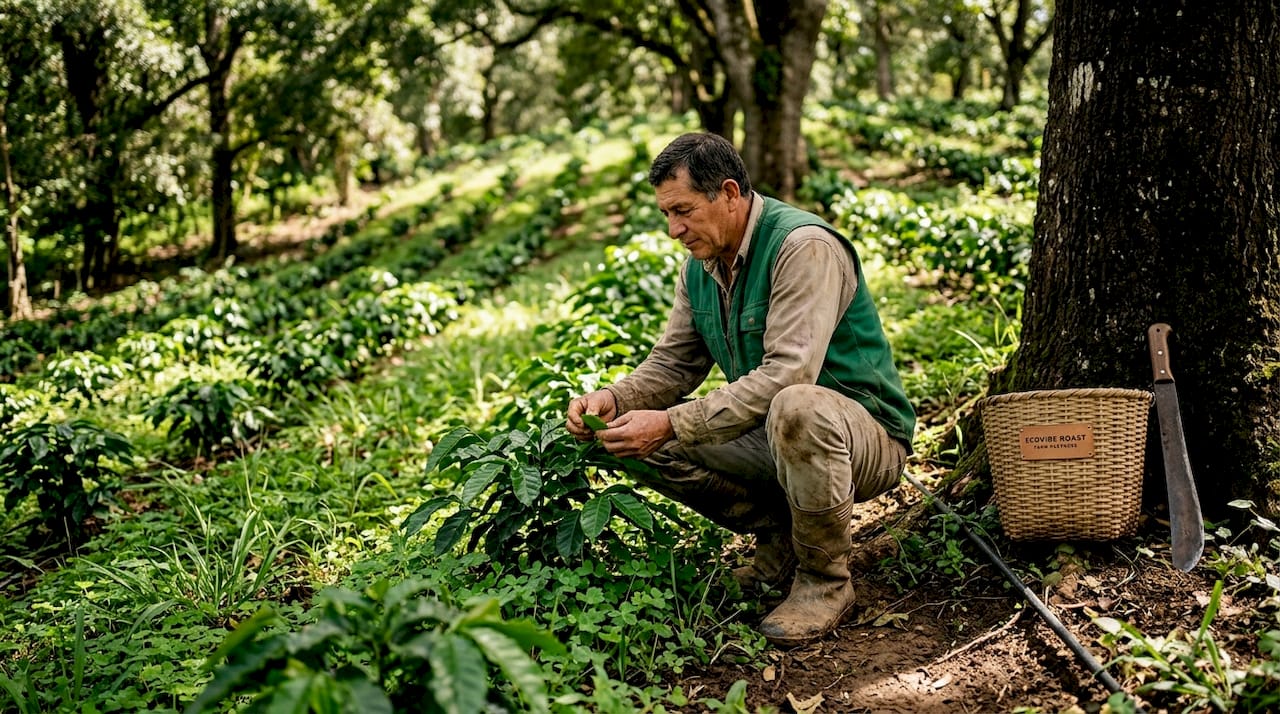
Lavazza’s Rainforest Alliance-certified regenerative coffee ties certification directly to measurable outcomes across soil health, biodiversity, climate resilience, water stewardship, and farmer livelihoods. That’s a meaningful step up from vague “sustainably sourced” language.
Here’s what regenerative agriculture actually does on a coffee farm:
- Rebuilds depleted soil through composting, cover cropping, and reduced tillage, making plants stronger and less dependent on inputs
- Improves water retention across the landscape, which matters enormously in regions facing shifting rainfall patterns
- Restores biodiversity by maintaining shade tree canopies that shelter birds, insects, and soil organisms
- Gives farmers measurable economic stability through supply chain security and verified fair pricing
- Gives you, as the consumer, a credible seal you can trust rather than a marketing phrase
“Regenerative agriculture isn’t just about doing less harm. It’s about actively restoring what decades of conventional farming have depleted.”
Explore what regenerative agriculture in coffee looks like in practice, and why it’s becoming the standard for serious sustainability commitments. If you want to understand the broader philosophy behind these choices, environmental stewardship in coffee and tea breaks it down with warmth and clarity.
Pro Tip: When you see a Rainforest Alliance frog logo on a coffee product, take a moment to check whether it specifies regenerative certification or standard certification. The regenerative tier comes with stronger measurable commitments and is worth seeking out specifically.
While regenerative coffee leads with certified impact metrics, both coffee and tea sustainability require comparing product options for better choices.
Comparing sustainability across coffee and tea production systems
Here’s where the numbers get genuinely interesting. Comparing the full lifecycle footprints of coffee and tea gives you a richer picture of where your impact really lands.
| Product | Carbon footprint estimate | Key hotspot |
|---|---|---|
| Sri Lankan smallholder tea | ~3,304 kg CO2 eq per tonne | Fertilizer use in cultivation |
| Sri Lankan estate tea (CTC) | ~2,895 kg CO2 eq per tonne | Factory energy use |
| Fuding white tea (cradle to grave) | ~16.94 kg CO2 eq per kg | Processing electricity and consumption stage |
| Regenerative certified coffee | Lower than conventional, varies by farm | Soil carbon sequestration offsets |
A few insights worth sitting with:
- Tea’s production stage generally contributes more emissions than differences in processing technology, meaning where and how a tea is grown matters more than how it’s processed.
- Electricity consumption in tea processing and the consumption stage (think electric kettles used hundreds of times a week) adds up more than most people expect.
- Commodity-driven deforestation linked to coffee accounts for about 3% of global deforestation impacts. That’s smaller than cattle or palm oil, but it’s still a real and measurable contribution to carbon emissions and biodiversity loss.
- Integrated regenerative standards can meaningfully offset coffee’s soil and community impacts when applied at scale.
The takeaway for you? Choosing certified, regenerative, and efficiently processed products across both tea and coffee is where your purchasing power does real work. Learn more about the circular economy in beverages and how packaging, waste, and supply chain design all factor into this equation.
After comparing these impacts, let’s consider how these facts translate into eco-conscious purchasing decisions and practical consumer guidance.
Practical tips for choosing sustainable coffee and tea products
Knowing the facts is empowering. Knowing how to act on them is even better. Here’s how to buy sustainable coffee and tea with confidence:
- Look for credible certifications. Rainforest Alliance, Fair Trade, and USDA Organic are independently audited and meaningful. Why green certification matters for your purchasing is covered in depth if you want to dig deeper.
- Prioritize supply chain transparency. Companies that publish origin information, processing details, and farmer partnership data are holding themselves accountable in a way that vague “sustainably sourced” labels do not. Sustainable sourcing of tea involves direct farmer relationships, fair trade, energy efficiency, and sustainable packaging, and the same principles apply to coffee.
- Choose loose leaf or biodegradable packaging. Conventional tea bags often contain plastic microfibers. Loose leaf tea eliminates that problem entirely, and compostable pods or packaging reduce landfill contributions.
- Support brands investing in climate-positive practices. Tree planting, ocean plastic removal, and renewable energy commitments tell you a brand is thinking beyond its own supply chain.
- Read sustainability reports before buying. A brand willing to publish its environmental impact data, even when the numbers aren’t perfect, demonstrates honesty and accountability.
Pro Tip: Don’t let perfect be the enemy of good. If a brand has two certifications and a clear sustainability report but isn’t perfect on packaging, that’s still a far better choice than a brand with no transparency at all. Supporting eco-conscious brands consistently is more impactful than occasional perfect purchases.
These tips empower you to make informed sustainable choices as an eco-conscious coffee and tea consumer.
Why measurable certification and supply chain transparency are game changers for sustainability
Here’s the honest truth: the word “sustainable” has been stretched so thin that it risks meaning nothing at all. You’ve probably seen it plastered on products with zero supporting evidence. That’s greenwashing, and it’s a genuine problem in the coffee and tea space.
What separates meaningful sustainability from marketing noise is measurability. The Rainforest Alliance Regenerative Agriculture Standard allows quantified progress tracking on soil health, biodiversity, climate resilience, water stewardship, and farmer livelihoods. That means an auditor can go to a farm, measure specific outcomes, and confirm that progress is real. Not promised. Not projected. Verified.
Supply chain transparency works the same way. When a brand publishes where its beans come from, who grows them, and what price was paid, it creates accountability that a label alone cannot. Farmers benefit because fair pricing is enforced. Consumers benefit because trust is earned through evidence rather than aesthetics.
The uncomfortable reality is that many consumers, even well-intentioned ones, choose products based on packaging design or a single certification badge without understanding what that certification actually requires. That’s not a criticism, it’s just how marketing works. The brands that invest in certifications that drive real sustainability are actively working against that confusion.
Our take? Push brands to show their numbers. Ask about soil health outcomes. Ask about farmer income data. Ask about energy sources in processing. The brands worth your loyalty will have answers. The ones that don’t will redirect you to a beautiful photo of a mountain farm, and that’s your cue to keep looking.
Explore EcoVibe Roast’s sustainable coffee and tea selections
Ready to put these coffee and tea sustainability facts into action? EcoVibe Roast makes it genuinely easy to align your daily ritual with your values.

Every purchase at EcoVibe Roast supports mangrove tree planting and ocean-bound plastic removal, so your morning cup becomes a warm hug for both you and Mother Earth. The single-serve coffee collection features responsibly sourced options that minimize waste through recyclable materials, and you can choose the pack size that works best for you, whether that’s a 60-pack single-serve coffee pods for your household or a 12-pack single-serve coffee pods to try something new. Curious about the real-world impact behind every order? The EcoVibe Roast environmental impact page lays out exactly what your support makes possible.
Frequently asked questions
What does ‘regenerative agriculture’ mean for coffee and tea sustainability?
Regenerative agriculture promotes farming practices that restore soil health, boost biodiversity, and improve climate resilience, resulting in more sustainable coffee and tea farming. The Rainforest Alliance Regenerative Agriculture Standard supports measurable improvements across all five key sustainability criteria, making it one of the most rigorous certifications available today.
How significant is the carbon footprint of tea compared to coffee?
Tea’s carbon footprint varies by cultivation and processing but Fuding white tea carries approximately 16.94 kg CO2 eq per kilogram on a cradle-to-grave basis, with processing electricity and the consumption stage as the biggest hotspots. Coffee’s full lifecycle footprint is comparable when all stages are considered, though regenerative farming practices can measurably reduce it.
Why should consumers look for certifications in coffee and tea?
Certifications provide independently audited assurance that a product meets specific environmental, social, and economic sustainability standards, giving you a reliable shortcut past greenwashing. Certifications like Rainforest Alliance go beyond vague claims and require farms to demonstrate measurable, verified progress.
Does coffee or tea production contribute to deforestation?
Yes, and it’s worth knowing the scale. Stimulant crops like coffee contribute around 3% of commodity-driven deforestation globally, which is smaller than cattle or palm oil but still a meaningful source of carbon emissions and biodiversity loss. Tea expansion into forested hillsides also displaces native ecosystems, making certified and traceable sourcing important for both beverages.
Recommended
- 8 smart ways to support eco-conscious coffee and tea brands – EcoVibe Roast
- Green initiatives for coffee lovers: make every sip count – EcoVibe Roast
- Sustainability trends 2026: Smarter, greener choices for coffee & tea – EcoVibe Roast
- 7 Actionable Tips for Eco-Conscious Coffee Drinkers – EcoVibe Roast


