

How the slow roasted coffee process shapes your cup
TL;DR:
- Slow roasting yields a balanced, smooth, and complex flavor profile ideal for specialty coffee.
- The process emphasizes patience, control, and sustainability, supporting ethical sourcing and eco-friendly practices.
- Home slow roasting is accessible with common equipment, enhancing flavor and reducing waste.
There’s a common assumption floating around the coffee world: the faster the roast, the fresher and more flavorful the coffee. It sounds logical, but it leaves out the rich story that slow roasting tells. Slow roasted coffee is a patient, intentional craft that coaxes out balance, smoothness, and complexity that faster methods simply can’t replicate. Whether you’re curious about the science behind your morning brew or eager to try roasting beans at home, understanding the slow roast process opens up a whole new world of flavor and purpose.
Table of Contents
- What is slow roasted coffee?
- Step-by-step: How the slow roasting process works
- How slow roasting shapes flavor and aroma
- Slow roasted coffee, sustainability, and ethical sourcing
- Tips for home brewers: Getting started with slow roasting
- The big picture: Why slow roasting is more than just a trend
- Experience slow roasted flavor with EcoVibe Roast
- Frequently asked questions
Key Takeaways
| Point | Details |
|---|---|
| Enhances flavor balance | Slow roasting brings out smoother, more balanced flavors and reduces harsh acidity. |
| Supports sustainability | The process aligns with eco-friendly practices and conscious sourcing. |
| Accessible for home brewers | Anyone can try slow roasting at home with common appliances and simple techniques. |
| Digestibility boost | Many find slow roasted coffee gentler and easier to digest than fast roasted options. |
What is slow roasted coffee?
Let’s clear something up right away. Slow roasting is not a gimmick or a marketing label. It’s a genuine approach where coffee beans are roasted at lower temperatures over a longer period of time compared to standard commercial methods. While a high-speed industrial roaster might push beans through a full roast cycle in as little as 90 seconds to 4 minutes, slow roasting typically spans 12 to 20 minutes, with temperatures kept in a more controlled, moderate range around 350°F to 410°F (175°C to 210°C).
This practice has roots in traditional artisan roasting, where quality was always favored over volume. Before the era of automated drum roasters and high-efficiency machines, roasters worked slowly and carefully, adjusting heat by feel and intuition. That tradition lives on today in specialty roasting culture, where slowing down is a deliberate choice.
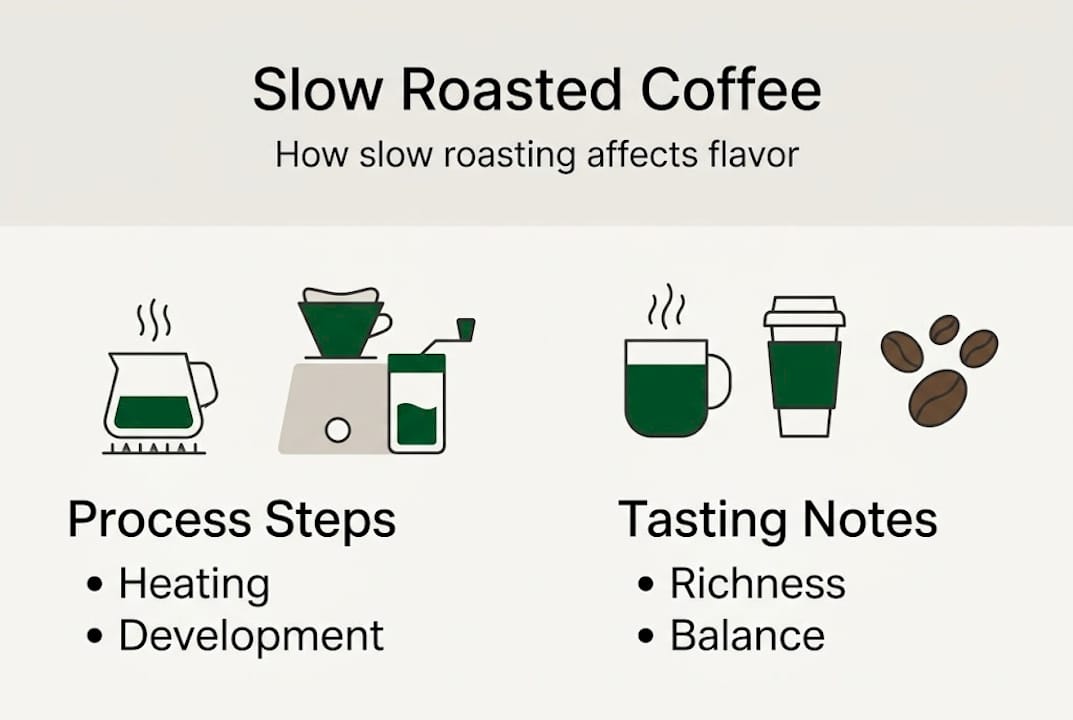
Research confirms that slower roast development alters flavor balance compared to faster roasting, producing a notably different sensory experience in the cup. And when you pair slow roasting with specialty grade beans, you’re giving those beans the time they need to shine.
Why do roasters and home enthusiasts reach for slow roasting? Here are the main reasons:
- Enhanced flavor balance: Lower heat preserves more delicate compounds without scorching them, leading to a smoother, rounder cup.
- Improved digestibility: Slow roasting breaks down certain acids and chlorogenic compounds more gently, which can be easier on sensitive stomachs.
- Better consistency: With more time at each stage, roasters have greater control to replicate results batch after batch.
- Sustainability focus: The slower process pairs beautifully with organic, shade-grown, or direct-trade beans where flavor integrity matters most.
- Artisan quality: Slow roasting honors the origin story of each bean, giving it room to express its unique character.
Step-by-step: How the slow roasting process works
Now that you know what slow roasted coffee is, let’s get hands-on with the step-by-step process. Slow roasting has distinct stages, and each one plays a key role in shaping your final cup. Understanding them helps you stay in control and spot what’s happening in real time.
-
Preheat your equipment. Before any beans go in, bring your oven, drum roaster, or popcorn popper up to around 350°F (175°C). Consistent starting heat prevents uneven roasting and cold spots that cause bitter flavors.
-
Charge the beans. Add your green (unroasted) coffee beans in a single, even layer if using an oven, or the recommended capacity for your roaster. Don’t overfill. Crowded beans roast unevenly and steal your control over the process.
-
Drying phase (0 to 5 minutes). This is where moisture escapes from the green beans. The beans look pale yellow and smell grassy or hay-like. Slow roasting extends this phase intentionally, allowing thorough, even moisture release. In faster methods, this phase is rushed, which can lead to uneven development at the core.
-
Browning phase (5 to 10 minutes). Maillard reactions begin here, and the beans shift from yellow to light tan. This is where complex flavor precursors start forming. The slower you go, the more nuanced these reactions become, building layers of sweetness and depth that fast roasting can miss.
-
First crack (around 10 to 14 minutes). You’ll hear a popping sound, similar to popcorn, as the beans expand and internal pressure releases. This marks the beginning of the “light roast” zone. In slow roasting, this moment arrives more gradually, giving you greater precision.
-
Development phase (post-first crack). This is the critical window for dialing in your roast level. Slow roasting gives you more time here to make adjustments. Research shows that slow roast development prioritizes balance and digestibility compared to high-speed roasting, so extending this phase slightly yields a smoother finish.
-
Cooling. Remove beans immediately and spread them to cool quickly. Rapid cooling locks in the flavors you’ve worked hard to develop. Slow cooling can over-roast the beans from residual heat.
This is also where eco-conscious coffee brewing practices come in. Using energy-efficient equipment and batch-aware portions reduces your environmental footprint during the roast.
Pro Tip: Keep a roast log every single time you roast. Write down your start temperature, the time of each phase, the moment you hear first crack, and your tasting notes afterward. Over just three or four batches, patterns will emerge and you’ll start dialing in your ideal slow roast profile with confidence.
How slow roasting shapes flavor and aroma
Once the process is clear, it’s essential to understand how slow roasting transforms the taste and aroma of your coffee. This is where things get genuinely exciting, because the difference between a slow and fast roasted coffee isn’t subtle. It’s something you can taste, smell, and feel.
Research shows that fast roasting preserves more origin vibrancy, whereas slow roasting prioritizes overall balance and digestibility. Both have their strengths, and knowing which one suits your brewing style is part of the joy of exploring specialty coffee flavor.
Here’s a quick comparison to make it crystal clear:
| Attribute | Fast roast | Slow roast |
|---|---|---|
| Acidity | High, bright, sharp | Lower, softer |
| Sweetness | Pronounced, fruity | Subtle, caramel-like |
| Body | Light to medium | Medium to full |
| Complexity | Origin-forward | Balanced, layered |
| Aroma | Floral, vibrant | Warm, rich, roasty |
| Digestibility | Can be more acidic | Generally smoother |
Slow roasting allows more time for caramelization of natural sugars without tipping into bitterness. That means your cup has a rounder, warmer sweetness, almost like a gentle hug on a cold morning. The aroma tends to be deeper and more comforting too, with rich, toasty notes that linger in the air.
“Longer, slower roast development reduces fruitiness, brightness, and acidity compared to faster roasting methods, while boosting overall balance and making the brew more approachable for a wider range of drinkers.”
From a home brewing perspective, slow roasted beans are wonderfully versatile. They pair beautifully with a French press or drip brewer where longer brew contact times are common, and they also shine in espresso where you want body and smoothness rather than sharp acidity.
Slow roasted coffee, sustainability, and ethical sourcing
Flavors matter, but for many enthusiasts, how their coffee is produced matters just as much. Let’s see how slow roasting can align with your sustainability goals, because the two are more connected than you might think.
Slow roasting, by its very nature, asks for more attention, more care, and more intention. These are the same qualities that define ethical sourcing. When you’re roasting slowly, you want beans that are worth the effort. That means reaching for organic, fair-trade, direct-trade, or shade-grown options where farmers are paid fair wages and the land is treated with respect.
Research links slow roasting closely to specialty and eco-friendly coffee movements, where balanced flavors and digestibility are modern priorities alongside environmental values. Slow roasting naturally invites this kind of mindful approach to sourcing.
Here are some practical sustainability benefits of slow roasting at home:
- Smaller batch sizes: Roasting in small batches means you only roast what you need, reducing waste significantly.
- Better bean utilization: With more control, you’re less likely to burn or ruin a batch, meaning fewer beans go to waste.
- Support for ethical sourcing: Specialty beans sourced from direct-trade or certified organic farms reward slow roasting with richer, cleaner flavors.
- Eco-friendly equipment options: A simple oven, a cast iron skillet, or a repurposed popcorn popper has a much smaller carbon footprint than industrial roasters.
- Long-term flavor preservation: Slow roasted beans tend to have a satisfying shelf life when stored in airtight, compostable bags away from light and heat.
Pro Tip: When sourcing green beans for home slow roasting, look for farms that practice biodiversity preservation and water conservation. Single-origin beans from regions like Ethiopia, Colombia, or Guatemala often display their best character under a slow roast. You can also explore low-waste coffee rituals to round out your eco-friendly home routine.
Fitting slow roasting into a broader eco-conscious workflow means thinking about every step of your coffee ritual, from sourcing and roasting to brewing and cleanup. It’s a rewarding way to make your daily cup a small act of positive impact.
Tips for home brewers: Getting started with slow roasting
You’re ready to act, so let’s look at how you can start your own slow roast adventure at home. The good news is that you don’t need a fancy machine or a professional setup to experience the magic. Here’s a simple, beginner-friendly process that works with equipment you might already own.
-
Choose your equipment. A standard kitchen oven works well for beginners. Set it to 375°F (190°C) and use a perforated baking tray or a cast iron skillet. A popcorn popper or a dedicated home roaster offers more control and is worth the small investment once you’re hooked. Each method has trade-offs in airflow and heat distribution, so experiment to see what suits your style.
-
Source quality green beans. Buy raw, unroasted coffee beans from reputable specialty suppliers. Look for single-origin options with clear traceability. Research confirms that home brewers can differentiate flavor by adjusting roast speed and tracking sensory outcomes, so start with beans you’re curious about and take detailed notes.
-
Track your roast in real time. Use a kitchen timer and stay present. Watch for color changes from green to yellow to light brown. Listen for the first crack around the 10 to 14 minute mark. Smell the shift from grassy to toasty to caramel-like aromas. Your senses are your best tools, and they improve with every batch.
-
Cool and rest your beans. Once you hit your desired roast level, spread beans on a metal colander and fan them vigorously to cool within 3 to 4 minutes. After cooling, let the beans rest in an open container for 12 to 24 hours. This off-gassing period releases CO2 and allows flavors to settle and stabilize beautifully.
-
Taste, log, and adjust. Brew a small test cup and take notes on flavor, body, and aroma. Did you want more smoothness? Extend the development phase by 30 to 60 seconds next time. Did the beans taste flat or underdeveloped? Try increasing the browning phase slightly. Over time you’ll build a personal roast profile that feels uniquely yours.
Check out these conscious coffee tips for pairing your home roasting habit with zero-waste brewing practices that reduce your footprint without sacrificing a great cup.
The big picture: Why slow roasting is more than just a trend
Here’s an opinion you won’t find in most roasting guides: slow roasting is not just a technique, it’s a values statement. The conventional coffee industry prizes speed because speed equals volume and volume equals profit. But speed comes at a cost, and that cost is often paid in nuance, quality, and environmental mindfulness.
Most articles about slow roasting focus on the mechanics. Few talk about what it actually means to slow down. When you slow roast, you’re choosing patience over convenience. You’re saying that the process matters as much as the result. That’s a mindset shift that ripples outward, into how you source beans, how you brew, and how you think about your relationship with food and the planet.
Slow roasting also exposes a blind spot in specialty coffee culture: the obsession with “origin vibrancy” and high acidity can overlook the quiet beauty of a balanced, smooth cup. Not every coffee drinker wants their taste buds tangled up in sharp brightness. Some of us want warmth, depth, and comfort. Slow roasting delivers exactly that.
The learning curve is real. Your first few batches might be uneven, and that’s okay. Embrace it. The process of experimenting and learning mirrors the broader journey of becoming a more conscious consumer. Learning about organic vs conventional beans is a natural next step once you start understanding how roasting decisions affect both flavor and impact. Slow roasting rewards those who stay curious and keep showing up.
Experience slow roasted flavor with EcoVibe Roast
If you’re ready to taste the difference slow roasting makes, here’s an easy way to get started without sourcing green beans or setting up a home roasting station just yet.

At EcoVibe Roast, we’ve done the patient, careful roasting for you. Our 60-pack single serve coffee pods and 12-pack single serve pods bring slow roasted, sustainably sourced coffee directly to your morning ritual with zero fuss. Every pod is crafted from responsibly sourced beans and packaged with eco-friendly materials, so your cup supports both great flavor and the planet. Explore our full single serve collection and find the slow roasted profile that speaks to you.
Frequently asked questions
Does slow roasting make coffee less acidic?
Yes, slow roasting generally reduces acidity and highlights balance over fruitiness. Research shows that longer development reduces fruitiness, sweetness, and acidity compared to faster roasting methods.
Is slow roasted coffee healthier than fast roasted?
Slow roasted coffee is easier to digest for some people, but individual health benefits vary. Studies confirm that slow roasting prioritizes balance and digestibility over the aggressive acidity common in high-speed roasting.
Can I slow roast coffee beans at home without special equipment?
Absolutely. A standard kitchen oven set around 375°F, a perforated baking tray, and your senses are all you need to start experimenting with slow roasting at home.
Does slow roasting use less energy than commercial roasting?
Slow roasting uses moderate, steady heat over a longer period, so energy use depends heavily on your equipment and batch size, but home-scale slow roasting generally has a much smaller footprint than commercial operations.
Will slow roasting work with any coffee bean variety?
Most bean varieties respond well to slow roasting, though the flavor outcome depends on the bean’s origin, processing method, and density, making high-quality single-origin beans an especially rewarding choice.