

Plastic-neutral certification means a company measures its plastic footprint for a defined period and then finances the verified removal or recovery of an equivalent weight of plastic waste through third-party organizations, alongside commitments to reduce future plastic use. That’s the clean definition. The credibility verdict? A plastic-neutral claim is only trustworthy when it’s paired with independent verification, transparent monitoring and reporting protocols, and real reduction targets — not just a purchased offset.
Key Takeaways
Plastic-neutral certification is credible only when it combines independent verification, a public registry ID, and documented reduction commitments — not just a purchased offset.
| Point | Details |
|---|---|
| Definition | A company measures its plastic footprint and finances verified removal of an equivalent weight through a certified program. |
| Credibility signals | Look for a named certifier, a public registry ID, an independent audit, and disclosed MRV protocols before trusting a claim. |
| Reduction comes first | Credible programs require measurable reduction targets alongside credits; offsets alone are not sufficient for a defensible claim. |
| Regulatory gap | No U.S. federal law currently standardizes plastic credit claims, so buyer due diligence is the primary protection. |
| Business action | Start with a single product-line scope, request sample retired-credit records, and publish your registry ID with every claim. |
Table of Contents
- How does plastic-neutral certification actually work?
- Who runs plastic-neutral programs and what standards matter?
- How do real brands present plastic-neutral claims?
- How do verification, registries, and traceability actually work?
- What are the real criticisms and greenwashing risks?
- How does a U.S. business actually get plastic-neutral certified?
- What does plastic-neutral certification cost, and how long does it take?
- How can you evaluate a plastic-neutral claim and spot red flags?
- How Ecoviberoast approaches plastic stewardship
- Sources
How does plastic-neutral certification actually work?
The model follows a clear sequence, and understanding each step helps you spot where a program can cut corners.
- Define the scope. Decide whether the certification covers a single product line, a manufacturing plant, or the entire company. Scope definition is the most consequential step in the whole process, because excluding upstream packaging, production inputs, or shipping losses often undercounts the real footprint and invites audit failure later.
- Measure the plastic footprint. Quantify all plastic used within the defined scope during a set period, typically one year. This includes primary packaging, secondary packaging, and any plastic lost to the environment during logistics.
- Set reduction commitments. Credible certifiers require companies to pair credits with measurable reduction targets. Certification is designed as an interim tool while systemic reduction and circularity are pursued, not a permanent substitute for them.
- Contract credits or projects. The company finances plastic collection or recycling projects through a certified program. One credit typically represents one metric ton of plastic waste collected and verified. This is where “additionality” matters: the project must prove it would not have happened without the funding.
- Verification and issuance. An independent auditor confirms the collection or recovery work was completed. Credits are issued only after verified work is done, and a registry record is created.
- Publish the claim and report annually. The company discloses the scope, the credit registry ID, and the certifying body on product pages or impact reports.
Pro Tip: Define your scope before you contact any certifier. A product-line scope is faster and cheaper to certify than a company-wide one, and it lets you pilot the process before scaling. Bring your packaging data and logistics records to the first conversation.
Who runs plastic-neutral programs and what standards matter?
The market has a handful of major programs, and they differ meaningfully in what they issue, how they verify, and what social protections they require.
rePurpose Global is one of the most visible platforms in North America. It partners with collection projects in plastic-pollution hotspots and issues plastic credits to brands. rePurpose describes the process as measure, reduce, and balance — and requires brands to show reduction efforts alongside credit purchases.
Plastic Bank operates collection networks in coastal communities and issues Social Plastic credits. Collectors are paid a premium for plastic they bring in, creating income in vulnerable communities. The social safeguard angle is central to their model.
Zero Plastic Oceans (OBP Neutrality Subprogram) runs one of the more structurally rigorous programs. Its OBP Neutrality Certification covers two standards: one for neutralization service providers and one for plastic producers and users. It requires defined scope, annual forecasts, contracts with verified service providers, traceability, and explicit social safeguards including fair pay and no child labor. Credits are issued only after collection and treatment are verified.
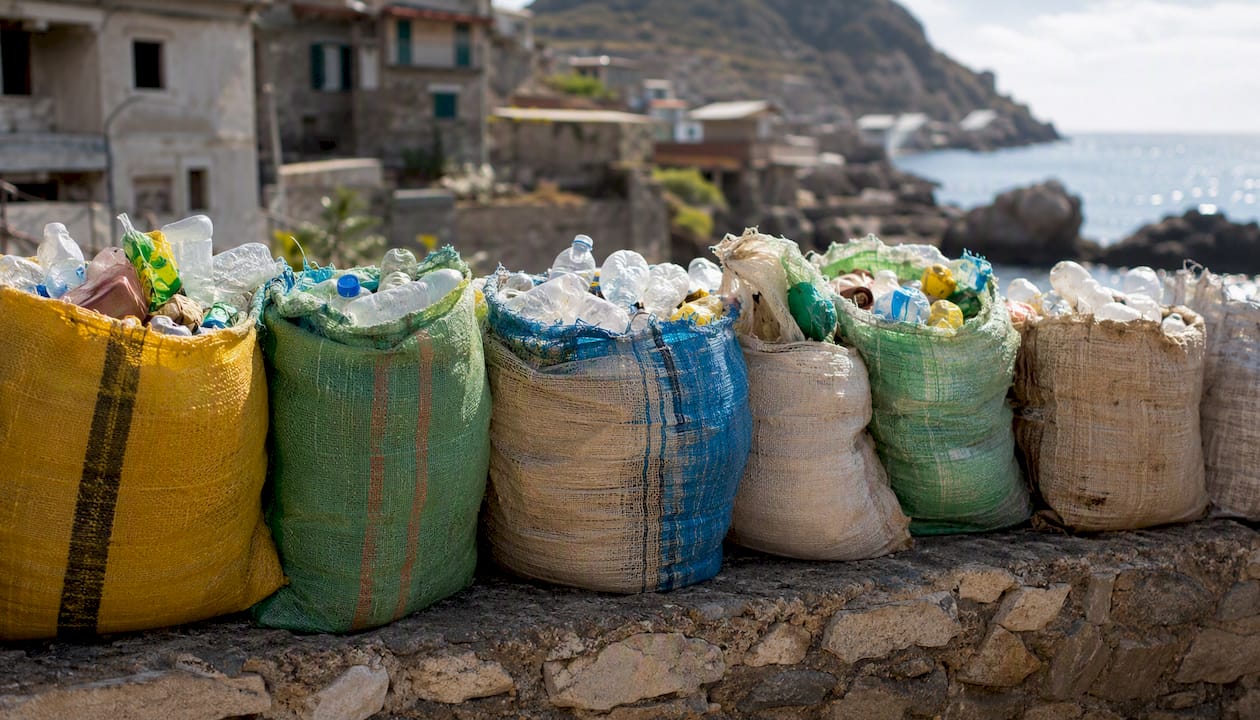
Verra’s Plastic Waste Reduction Standard issues results-based Plastic Credits with full MRV (monitoring, reporting, and verification) requirements. Verra’s credits can support Extended Producer Responsibility systems and results-based financing for collection and recycling infrastructure. Their public registry lets anyone confirm credit issuance and retirement.
Some providers are shifting language from “neutrality” toward “contribution” models to reduce ambiguity about what a company actually funded. That shift is worth noticing: if a provider resists calling their product a “neutrality” certificate, ask why before signing anything.
How do real brands present plastic-neutral claims?
Seeing how established brands phrase these claims, and where their disclosures fall short, gives you a useful benchmark.
- Grove Collaborative has partnered with rePurpose Global and markets itself as plastic-neutral across its product line. Its strongest transparency signal is the named certifying partner; the common gap is that product-level registry IDs are not always surfaced directly on individual product pages.
- Thrive Market has made plastic-neutral commitments tied to its private-label packaging. The brand discloses its certifying partner and references annual impact reports, though the methodology document is not always linked from the consumer-facing claim.
- Burt’s Bees has worked toward plastic-neutral packaging goals and references third-party partnerships in its sustainability reporting. Its clearest signal is the inclusion of reduction targets alongside offset claims; the missing detail is a publicly searchable registry ID for consumers to verify independently.
- SC Johnson has pursued plastic-neutral certification for select product lines and publishes sustainability reports with partner disclosures. The strongest element is the company-level reporting cadence; the gap is that claim-level traceability to specific credit registry records is not consistently available to the public.
Across all four, the pattern is the same: named certifying partners build trust, but the absence of a searchable registry ID leaves a verification gap that savvy buyers will notice. For more on how certifications drive sustainability in the food and beverage sector, the dynamics are similar whether you’re talking about coffee sourcing or plastic packaging.
How do verification, registries, and traceability actually work?
MRV stands for monitoring, reporting, and verification. In a plastic-neutral program, monitoring means tracking the weight of plastic collected or recovered at project sites. Reporting means documenting that data in a format an auditor can review. Verification means an independent third party confirms the numbers before credits are issued.
Registries are the public record of that process. When a credit is issued, it gets a unique ID in the registry. When a company “retires” a credit to back a neutrality claim, that retirement is recorded and the credit can no longer be used again. This prevents double-counting.
Documents you should request from any provider before contracting:
- Scope certificate: Confirms the defined boundary of the certification
- Credit registry ID: The unique identifier in the public registry for each credit issued and retired
- Independent audit report: The third-party verification of collection and treatment data
- Chain-of-custody documentation: Traceability from collection point through treatment or recycling
- Social safeguards attestation: Evidence that fair wages were paid and no child labor was used
| Verification element | What it proves | Where to check |
|---|---|---|
| Registry ID | Credits were issued and retired for your specific claim | Verra registry or OBP registry portal |
| Independent audit report | Collection data was verified by a third party, not self-reported | Request directly from certifier |
| Chain-of-custody docs | Plastic traveled from collection to treatment as claimed | Certifier’s traceability records |
| Social safeguards attestation | Fair pay and no child labor standards were met | Certifier’s compliance documentation |
High-integrity programs require measurable additionality, public registries, independent audits, and full traceability from collection through treatment. Prefer programs that issue credits only after verified work is completed rather than in advance.
What are the real criticisms and greenwashing risks?
Plastic-neutral certification has genuine critics, and their concerns are worth taking seriously before you put a label on your product.
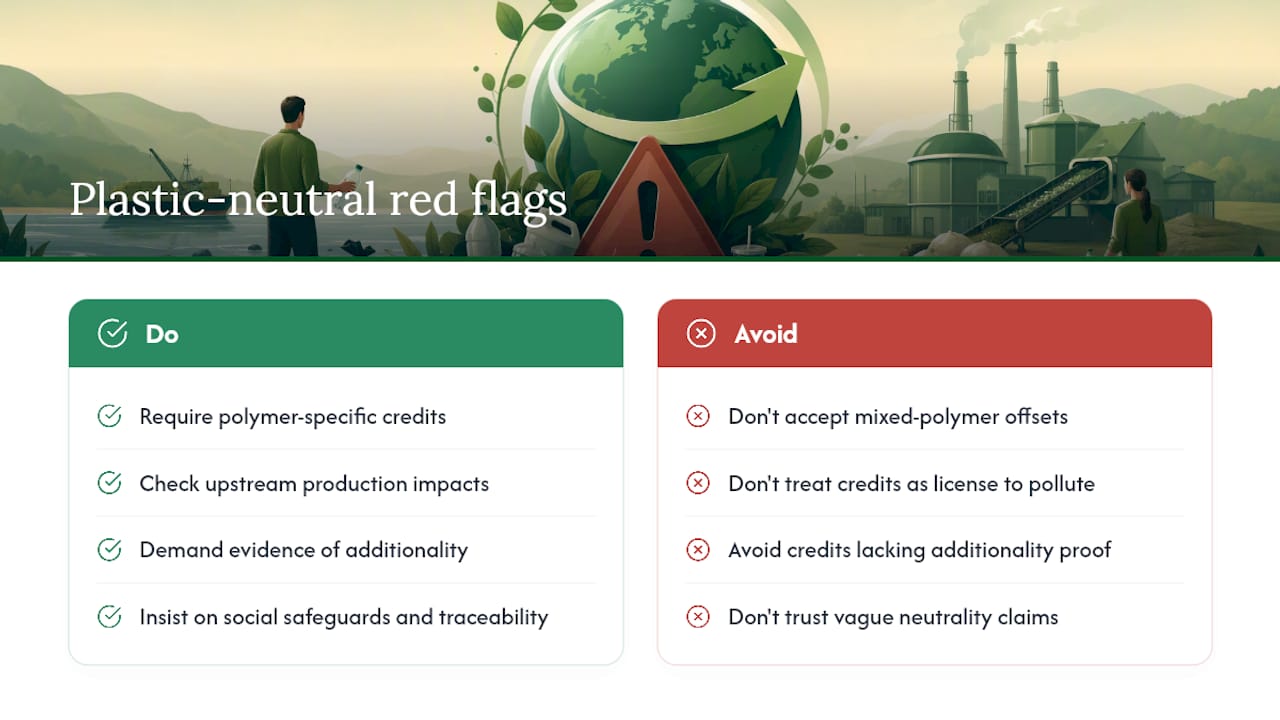
Polymer equivalency is the sharpest technical critique. Credits are typically issued by weight, but a kilogram of flexible film plastic is not environmentally equivalent to a kilogram of PET bottle plastic. Collecting one polymer type to offset a different, more harmful one is a real gap that investigative reporting has documented.
Upstream impacts are ignored. Credits address end-of-life waste but do nothing about the fossil fuels, water, and emissions used to produce plastic in the first place. Critics argue this makes neutrality claims structurally incomplete.
The “license to pollute” risk. Environmental advocates, including voices at the Sierra Club, warn that neutrality claims can give companies cover to keep producing plastic rather than redesigning products. The concern is that a purchased credit becomes a reason not to reduce.
Weak additionality. Some projects would have happened without credit financing. If the collection was already funded by a government program or existing NGO budget, the credit adds no new environmental benefit.
Social safeguards are inconsistent. Not every program enforces fair wages or prohibits child labor in collection communities. Programs that do, like OBP Neutrality, make this a contractual requirement with traceability.
On the regulatory side, there is currently no comprehensive U.S. federal law specifically standardizing plastic credit claims. California and Colorado have enacted labeling laws for compostable and recyclable claims that signal where federal rules may eventually land, but for now, the plastic credit market operates without a unified federal standard. That regulatory gap creates real consumer-protection risk for vague neutrality claims.
For a deeper look at spotting weak environmental claims in your purchasing decisions, this guide on greenwashing in consumer products walks through the same red-flag patterns.
How does a U.S. business actually get plastic-neutral certified?
Here’s the practical sequence for a small or midsize business in the food and beverage sector.
- Choose your scope. Start with a single product line if you’re new to this. Define the boundary clearly: which SKUs, which packaging types, which part of the supply chain.
- Run a footprint calculation. Gather packaging weight data from your suppliers. Include primary packaging (what touches the product), secondary packaging (boxes, wraps), and any plastic used in shipping. Some certifiers provide calculation templates.
- Set reduction targets. Before contracting credits, document what you will do to reduce plastic use over the next 12–24 months. This is not optional in credible programs.
- Select a certifier and project. Compare rePurpose Global, OBP Neutrality, and Verra-registered projects. Ask each one for their methodology document, a sample retired-credit record, and the name of their independent auditor.
- Sign contracts and confirm MRV terms. The contract should specify when credits are issued (after verified work, not in advance), the registry where they’ll appear, and the reporting cadence.
- Request registry IDs and audit reports. Once credits are issued, get the unique registry IDs in writing. These are what you’ll publish alongside your neutrality claim.
- Publish your claim with full disclosure. State the scope, the certifying body, the credit registry ID, and the period covered. Annual reporting keeps the claim current.
Documents to request from any provider before signing:
- Methodology or standard document (e.g., OBP PRO STD V1.2 or Verra’s Plastic Waste Reduction Standard)
- Sample retired-credit record from a previous client project
- Independent audit report for at least one active project
- Chain-of-custody documentation
- Social safeguards evidence (wage records, no-child-labor attestation)
Questions worth asking directly: Who performs your independent verification, and are they affiliated with your organization? How do you test additionality? Can you show me a live registry entry for a current client?
What does plastic-neutral certification cost, and how long does it take?
Cost depends on four main drivers: the size of your plastic footprint, the project type you fund (collection-only versus infrastructure or recycling), MRV and audit fees, and whether the program requires upfront project financing.
Key cost and timeline factors:
- Per-kg credit pricing is the most common model for smaller brands. Prices vary by project type and geography; collection projects in coastal communities tend to be priced differently than infrastructure-heavy recycling programs. Ask providers for a per-kg quote tied to your footprint estimate before committing.
- Audit and MRV fees are separate from credit costs and can range from a few thousand dollars for a simple product-line scope to significantly more for company-wide or multi-site certifications.
- Timeline for a straightforward product-line certification typically runs 3–6 months from scope definition to certificate issuance, assuming your packaging data is clean and the certifier’s project pipeline is active.
- Longer timelines apply when infrastructure projects are involved, when an independent audit requires site visits, or when your footprint calculation needs significant data gathering from suppliers.
Market pricing for plastic credits is not standardized and can shift with demand, project availability, and program updates. Build in a buffer when budgeting, and ask providers whether pricing is locked at contract signing or subject to adjustment. For food and beverage operators thinking through the full sustainability cost picture, this operator guide to sustainability in food services covers related planning considerations.
How can you evaluate a plastic-neutral claim and spot red flags?
Whether you’re a shopper or a procurement manager, these signals tell you whether a claim is worth trusting.
Trust signals to look for:
- A named certifying body (rePurpose Global, OBP Neutrality, Verra-registered program)
- A publicly searchable registry ID for the credits or certificate
- A disclosed MRV protocol or standard document
- A clear scope statement (which products, which period)
- Evidence of social safeguards (fair wages, no child labor)
- Published annual reporting with updated credit retirement records
Red flags to walk away from:
- “Plastic-neutral” with no named certifier or standard
- No registry ID or any way to verify the claim independently
- A “contribution statement” presented as full neutrality without explanation
- Polymer-equivalency claims with no detail on what was collected versus what was offset
- No mention of reduction commitments alongside the offset
Prefer product pages that look like this: *"This product’s 2 kg plastic footprint was neutralized via Verra-registered plastic credits; registry ID: XXXXX. Scope: primary and secondary packaging, 2025 calendar year.
That level of specificity is achievable and is the bar credible programs already meet. For shoppers who want to understand why green certification matters across the products they buy, the same checklist applies whether the label is on a cleaning product or a bag of coffee.
How Ecoviberoast approaches plastic stewardship
At Ecoviberoast, we think about plastic the same way we think about sourcing: the first question is always how to use less, and the second is how to account for what remains. Every purchase on our platform contributes to removing ocean-bound plastics, and we’re committed to pairing that with packaging choices that reduce plastic use at the source, not just offset it after the fact.
Our environmental impact page details our current commitments, including our ocean-bound plastic removal program and our mangrove tree planting initiative. We apply the same verification checklist described in this article to our own partnerships: named programs, disclosed scopes, and a preference for results-based credits over advance-payment models.
If you want to see what responsible stewardship looks like in a product you can actually enjoy, our Hibiscus Berry Tea is a good place to start. It’s sustainably packaged, responsibly sourced, and part of a purchasing decision that directly supports plastic removal and reforestation.

Sources
These primary sources let you verify registries, review standards, and confirm program details directly.
- What Is Plastic Neutrality & How to Achieve It
- OBP Neutrality Certification Subprogram - Ocean Bound Plastic Certification
- Plastic Waste Reduction Standard — Verra
- What Does “Plastic Neutral” Really Mean? | Sierra Club
- Companies are claiming to be plastic-neutral — is it greenwashing? | Grist
- Congress
Verify any registry ID you receive from a certifier directly on the program’s registry portal before publishing a neutrality claim. An ID that doesn’t appear in the public record is not a valid credit.


