

Your spent coffee grounds are good for at least eight more jobs after the last drop hits your mug. The most useful options are soil amendment, compost ingredient, pest deterrent, deodorizer, abrasive scrub, skin exfoliant, natural dye, and wood scratch concealer. A few quick rules keep every use safe:
- Dry grounds before any indoor use to prevent mold on surfaces and in sachets.
- Never pour grounds down the sink — the fine particles clog drains reliably.
- Keep compost additions to no more than ~20% by volume to avoid toxicity and slow breakdown.
Key Takeaways
| Point | Details |
|---|---|
| Dry before indoor use | Spread grounds on a baking sheet and dry fully before making scrubs, sachets, or deodorizers. |
| Never pour down drains | Fine particles clog pipes reliably; compost, trash, or add to yard waste instead. |
| Compost in moderation | Keep grounds to no more than ~20% of pile volume; a good mix is 3 parts leaves to 1 part grass to 1 part grounds. |
| Patch-test skin uses | Apply to the inside of your wrist 24 hours before using on your face or sensitive areas. |
| Test dye and finishes first | Always test coffee dye on a fabric swatch and wood scratch paste on a hidden spot before full application. |
Table of Contents
- How to dry and store spent coffee grounds safely
- Coffee grounds in the garden: what actually helps and what to skip
- Composting with coffee grounds: ratios, layering, and troubleshooting
- Can coffee grounds actually repel pests?
- Cleaning and deodorizing your home with used grounds
- DIY personal care with coffee grounds: recipes and safety
- Fun DIY and craft projects using spent grounds
- Knowing the real limits: shelf life, reuse cycles, and safety
- What the research actually says: correcting common myths
- A note on why this matters, from our perspective at Ecoviberoast
- Sources
How to dry and store spent coffee grounds safely
Wet grounds grow mold within a day or two, so a little prep goes a long way.
- Cool completely. Let grounds sit in the filter basket or French press for 10–15 minutes after brewing.
- Drain excess moisture. Tip them onto a paper towel or fine mesh strainer and press gently.
- Spread thin to dry. Lay grounds in a single layer on a baking sheet. Air-dry at room temperature for 24 hours, or speed things up in an oven at 200°F for about 20 minutes, stirring once halfway through.
- Store in an airtight container. A mason jar or resealable bag works well. Dried grounds keep at room temperature for up to two weeks, or in the freezer for up to three months. Label the container with the date.
- Discard if you see any white or green fuzz. Mold moves fast on coffee grounds that weren’t fully dried.
One firm rule: never pour grounds down the drain. Compost them, toss them in the trash with the filter, or add them to yard waste instead.
Pro Tip: Spread a small batch on a ceramic plate and set it near a sunny window. They dry in a few hours without turning on the oven, and the plate is easy to funnel into a jar.
For a broader look at keeping your coffee routine low-waste, the master workflow to reduce coffee waste at Ecoviberoast walks through the full picture.
Coffee grounds in the garden: what actually helps and what to skip
Used grounds can do real work in your garden, but the application method matters more than most guides admit.
What works well:
- Thin surface mulch. Sprinkle a layer no deeper than ½ inch around established plants. Thicker layers crust over and repel water rather than letting it through.
- Light topsoil mixing. Work a small handful into the top inch or two of soil around mature plants. WSU Extension research shows that much of the benefit comes from improved soil structure as microbes break down the grounds, forming aggregates that improve both drainage and moisture retention.
- Potting mix boost. Blend no more than 10–15% grounds into a potting mix for container plants that tolerate them.
Plants that generally tolerate grounds: blueberries, azaleas, hydrangeas, roses, tomatoes, and most leafy greens.
Skip grounds entirely on: seedbeds, seedlings, and young transplants. Controlled studies confirm that coffee-ground preparations can reduce seed germination and slow seedling growth in several species. Fresh grounds are phytotoxic — compost them first before they go anywhere near young plants.
Pro Tip: Pair a thin layer of grounds with shredded leaves or straw as a carbon source. That balance keeps soil microbes happy and speeds the breakdown that actually improves your soil.
A soil test from your local cooperative extension office (usually $15–$25) tells you whether your beds need any amendment at all before you add anything.
Composting with coffee grounds: ratios, layering, and troubleshooting
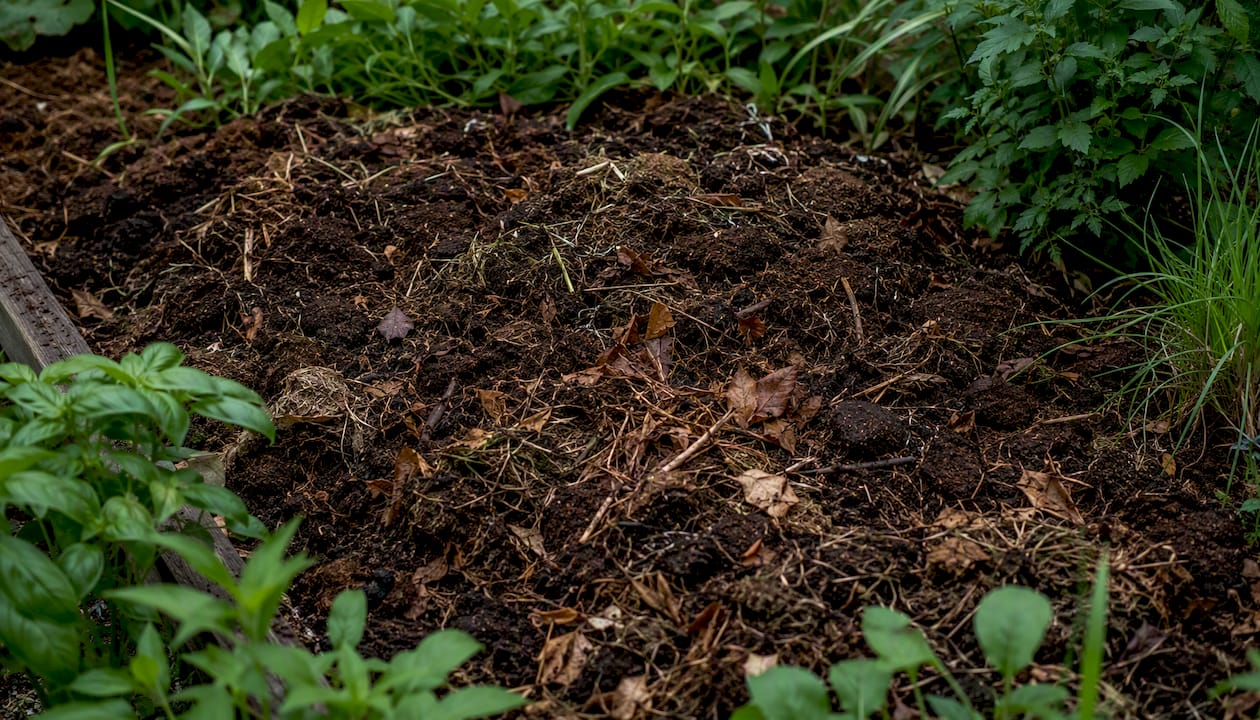
Coffee grounds are a nitrogen-rich “green” material, which makes them a useful compost ingredient — within limits. OSU Extension guidance recommends keeping grounds to no more than about 20% of your pile’s total volume. A practical mix that works well: three parts dry leaves to one part grass clippings to one part coffee grounds.
Layering and turning:
- Alternate thin layers of grounds with bulkier carbon materials (leaves, cardboard, straw) so the fine particles don’t compact.
- Turn the pile every one to two weeks to introduce oxygen and speed decomposition.
- The pile should feel like a wrung-out sponge — moist but not dripping. If it smells like ammonia, add more carbon. If it’s bone dry, mist it lightly.
- A well-managed pile with grounds typically finishes in two to three months in warm weather.
Troubleshooting:
- Mold on the surface: usually means the pile is too wet or not turning enough. Add dry carbon material and turn.
- Sour or rotten smell: too many greens relative to browns. Layer in shredded cardboard or dried leaves.
- Slow breakdown: pile is too dry or too cold. Moisten and move to a sunnier spot, or insulate with straw in winter.
- Matted, dense clumps: grounds compacted without enough aeration. Break them apart and mix with coarser material before adding.
Worth knowing: Grounds carry roughly 1–2% nitrogen by weight, which sounds modest, but in a balanced pile that nitrogen feeds the microbial activity that drives the whole process.
For a step-by-step guide tailored to coffee composting, Ecoviberoast’s composting guide for a greener lifestyle covers the full process.
Can coffee grounds actually repel pests?
The short answer: caffeine solutions can, but dry grounds alone are less reliable.
OSU Extension research found that a 1–2% caffeine soil drench can repel or kill slugs and snails under experimental conditions, and dilute brewed coffee solutions have shown slug-deterrent effects in small trials. Dry grounds scattered as a barrier show weaker results — slugs often cross them once the grounds dry out or get rained on.
How to make a simple caffeine drench:
- Brew a strong pot of coffee (or use leftover cold brew) and dilute it to roughly 1–2% caffeine concentration.
- Apply around the base of vulnerable plants in the evening, when slugs are most active.
- Reapply after rain.
- Test on a small patch first — high concentrations can stress some plants.
Caveats to keep in mind:
- Caffeine affects beneficial insects too, including ground beetles that eat pest eggs. Use targeted applications rather than broadcasting widely.
- Keep caffeine solutions away from pets; dogs and cats are sensitive to caffeine.
- If slug pressure is heavy, physical barriers (copper tape, row covers) or iron phosphate baits are more consistent options.
Cleaning and deodorizing your home with used grounds
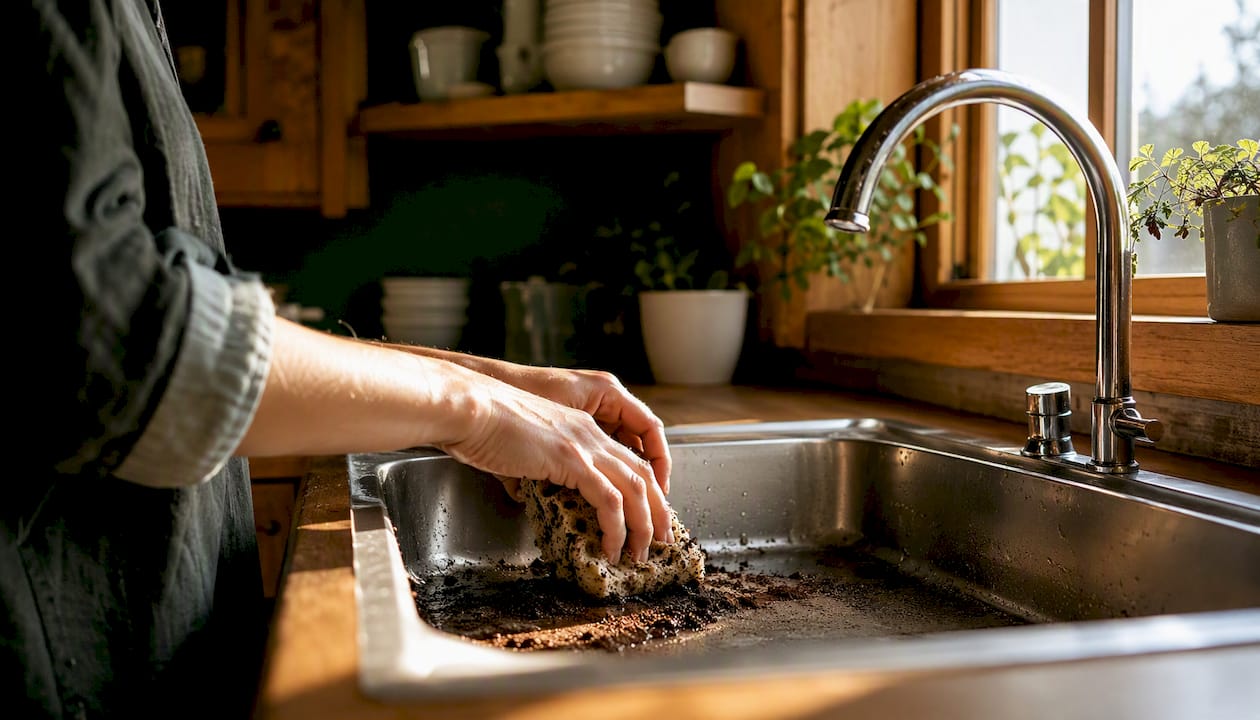
Spent grounds are mildly abrasive and absorb odors well — two properties that translate into genuinely useful household tools. The key rule: dry them first. Wet grounds on porous surfaces leave stains and invite mold.
Scrub paste for pots and pans:
Mix dried grounds with a few drops of dish soap to form a paste. Scrub cast iron, stainless steel, or ceramic cookware with a cloth or sponge, then rinse thoroughly. Skip this on non-stick coatings, polished stone countertops, or light-colored grout — grounds stain porous surfaces.
Deodorizer options:
- Fridge: Fill a small open jar with dried grounds and place it on a shelf. Replace every two to three weeks.
- Shoes: Spoon dried grounds into a coffee filter, tie it closed with a rubber band, and drop one into each shoe overnight.
- Trash cans: Sprinkle a thin layer of dried grounds in the bottom before adding a liner.
Fireplace ash mix: Lightly dampen grounds and sprinkle over cold fireplace ash before scooping. The moisture binds the fine ash dust so it doesn’t billow into the room.
Household-use experts consistently recommend drying grounds on a baking sheet before making any deodorizer sachets or scrubs — wet grounds increase mold risk and can damage porous surfaces.
DIY personal care with coffee grounds: recipes and safety
Spent grounds make a genuinely effective physical exfoliant, and they carry bioactive compounds including flavonoids and tocopherols with antioxidant properties. That said, review literature cautions that lab findings don’t automatically translate into proven home treatments — use these as feel-good DIY recipes, not medical remedies.
- Body scrub. Mix 2 tablespoons of dried grounds with 1 tablespoon of coconut oil and a few drops of vanilla extract. Massage onto damp skin in circular motions, then rinse. Use once or twice a week. The oil makes the shower floor slippery — rinse the floor after.
- Scalp scrub. Combine 1 tablespoon of grounds with your regular shampoo. Work into the scalp for 60 seconds before rinsing. Good for removing product buildup; skip if your scalp is irritated or has open cuts.
- Under-eye paste. Mix ½ teaspoon of chilled, dried grounds with a drop of aloe vera gel. Apply gently under the eyes for 5–10 minutes, then rinse carefully. The caffeine may temporarily reduce puffiness.
Safety checklist:
- Always do a patch test on the inside of your wrist 24 hours before using on your face.
- Avoid on broken, sunburned, or sensitive skin.
- Make fresh batches each time — storing moist scrubs invites mold within 48 hours. If you must store, refrigerate in an airtight jar and use within three days.
- Children and people with caffeine sensitivities should avoid skin applications.
Pro Tip: Add a pinch of fine sea salt to the body scrub for extra exfoliation on rough patches like elbows and heels.
Fun DIY and craft projects using spent grounds
Coffee grounds stain fabric, paper, and wood beautifully — and that’s a feature, not a bug.
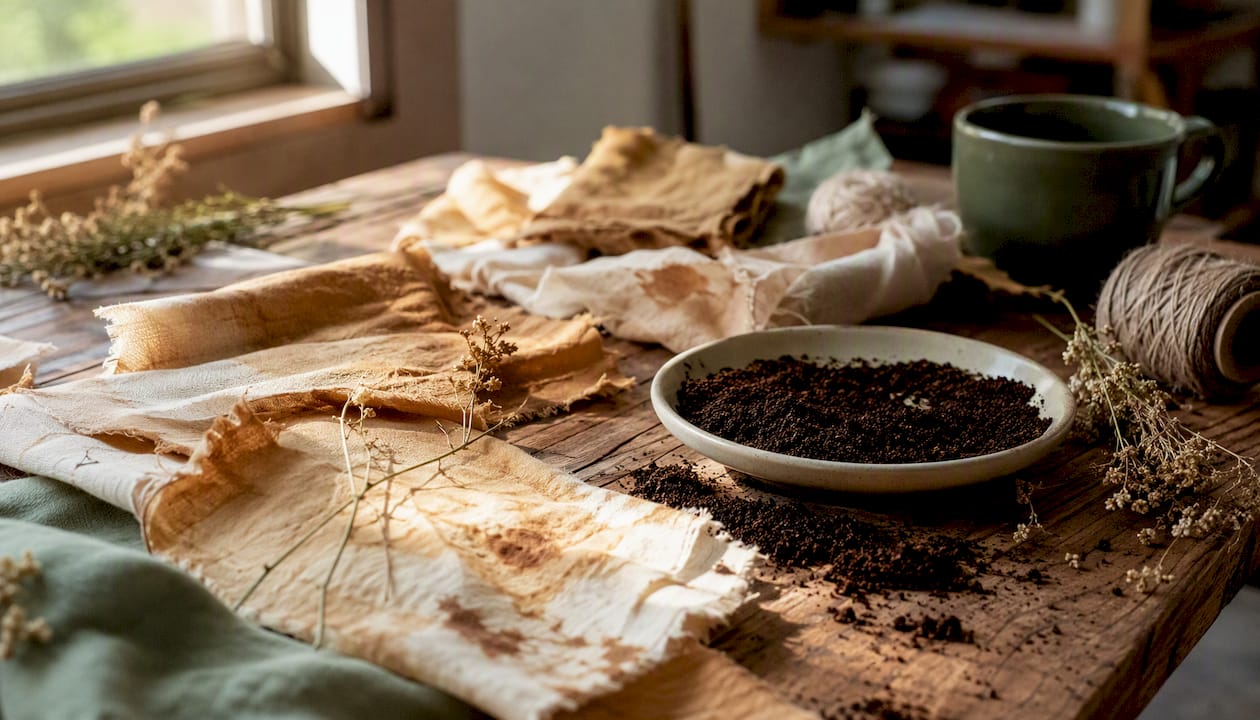
- Natural fabric or paper dye. Simmer 1 cup of grounds in 2 cups of water for 15 minutes, strain, and use the liquid as a dye bath. Natural fibers like cotton, linen, and watercolor paper take the color best. Fix the color by adding a tablespoon of white vinegar to the dye bath. Test a small swatch first — results vary by fiber and roast level.
- Wood scratch concealer. Mix a small amount of grounds with just enough water to form a thick paste. Rub into scratches on dark wood furniture with a cotton swab, let sit for 10 minutes, then buff off with a soft cloth. Works best on medium to dark finishes; test on a hidden spot first.
- Play clay. Combine 2 cups of grounds with ½ cup of salt and enough flour to bind into a pliable dough. Air-dry finished pieces for 24–48 hours. The texture is earthy and aromatic — kids love it.
For craft projects using damp grounds, use them the same day. Stored damp grounds grow mold quickly, and mold-contaminated grounds will ruin a dye bath or clay batch.
Popular Science notes that grounds work best as part of a creative toolkit rather than a standalone material — pairing them with fixatives, binders, or mordants gets you much more consistent results.
Knowing the real limits: shelf life, reuse cycles, and safety
Can you brew with grounds twice? Technically yes, but the second cup will be noticeably weak and bitter, and the grounds are more vulnerable to bacterial growth after the first brew. For flavor and food safety, a single brew is the practical limit.
For non-brewing reuses, dried grounds stay usable for up to two weeks at room temperature and up to three months in the freezer. Refrigerated (but not fully dried) grounds last three to five days before mold risk climbs.
Signs to discard immediately:
- Any visible mold (white, green, or black fuzz)
- A sour or off smell that isn’t the normal coffee aroma
- Clumping that wasn’t there when you stored them
Plumbing: This bears repeating because it’s a common and costly mistake. Coffee grounds do not dissolve in water. They accumulate in pipes and cause clogs, even with a garbage disposal running. Always compost, trash, or add to yard waste.
What the research actually says: correcting common myths
A few pieces of popular advice about coffee grounds turn out to be misleading when you check the science.
Myth: Grounds acidify soil for acid-loving plants. OSU Extension research is clear: used grounds are typically near-neutral in pH after brewing. The acidity largely leaches out during the brewing process. Sprinkling grounds around blueberries won’t meaningfully lower your soil pH — a proper acidifying amendment like sulfur will.
Myth: Grounds are a good fertilizer. WSU Extension puts it plainly: grounds carry roughly 1–2% nitrogen by weight and lack balanced macronutrients. During decomposition, microbes can temporarily tie up available nitrogen rather than releasing it. The real garden benefit is structural — as microbes break down grounds, they form soil aggregates that improve drainage and water retention over time.
Myth: Fresh grounds are safe to dig into seedbeds. Controlled research shows that fresh grounds can inhibit seed germination and slow seedling growth in several species. Compost them first, or apply only as a thin surface mulch around established plants.
Compost ratio reminder: Keep grounds to no more than 20% of your pile’s total volume. Exceeding that threshold risks phytotoxicity and slows the whole pile down, per OSU Extension guidance.
Spent grounds do contain EGCG and other powerhouse antioxidants along with flavonoids and tocopherols, which is why they show up in cosmetic research. But as PMC review literature confirms, lab results need careful translation before they become reliable home remedies.
A note on why this matters, from our perspective at Ecoviberoast
At Ecoviberoast, we think about the full life of a coffee bean — from the shade-grown farms we source from to the grounds left in your filter each morning. Every purchase we make plants mangrove trees and removes ocean-bound plastics, but the story doesn’t have to end at checkout. Reusing your grounds is one of the simplest ways to close the loop on your daily ritual, turning what would be landfill into garden nutrition, a natural scrub, or a deodorizer that actually works.
If you want to go further, our environmental impact page shows exactly where those sustainability programs go. And for readers building a genuinely low-waste coffee habit, the eco-conscious coffee drinker tips guide is a good next stop.

Pair your sustainable coffee habit with something equally thoughtful to sip. Ecoviberoast’s Hibiscus Berry Tea is organically sourced, beautifully aromatic, and every bag supports the same tree-planting and plastic-reduction programs your coffee does.
Sources
- Applied Sciences (MDPI) article on coffee by-products and value-added applications
- Coffee grounds boost soil health — and help control slugs | OSU Extension Service
- PMC review article on coffee by-products and applications
- PubMed indexed study relevant to coffee-ground phytotoxicity


