

Most paper coffee filters are compostable, and you can toss them right into your backyard pile, tumbler, or municipal organics bin with confidence. The one exception: skip any filter with a glossy, waxy, or plastic-coated finish. Those don’t break down the way paper does, and they can leave residue behind that you don’t want in your garden soil.
Here’s a quick cheat sheet before you dig in:
Do compost:
- Unbleached brown paper filters
- Oxygen-bleached white paper filters (look for TCF or ECF on the label)
- Filters with coffee grounds still inside
Don’t compost:
- Waxed or plastic-lined filters
- Nylon mesh or metal filters (reuse them instead)
- Single-serve pod casings
Pro Tip: Tear or crumple your filter before adding it to the pile. Whole filters can slow decomposition significantly if not torn or crumpled first.
Key Takeaways
Most paper coffee filters are safe to compost at home when you tear them first and balance them with dry browns in your pile.
| Point | Details |
|---|---|
| Most filters are compostable | Unbleached and oxygen-bleached paper filters break down safely in home and municipal compost systems. |
| Avoid waxed and plastic types | Glossy, stiff, or synthetic-feel filters don’t decompose and can leave residue in finished compost. |
| Tear before composting | Shredding or tearing filters prevents matting and speeds breakdown in any composting system. |
| Check local rules first | Municipal organics programs vary; confirm your city accepts paper filters before using curbside bins. |
| Ecoviberoast sustainable pods | Ecoviberoast’s single-serve collection offers a low-waste alternative to disposable filter brewing. |
Table of Contents
- Which coffee filters can you actually compost?
- Can you compost coffee grounds with the filter?
- How to compost coffee filters step by step
- What you should never compost
- When is your compost ready to use?
- Ecoviberoast’s take on low-waste brewing choices
- The part most composting guides get wrong
- Sustainable single-serve coffee that’s easier to compost
- Sources
Which coffee filters can you actually compost?
Practical guides confirm that most paper filters break down safely in home compost, but the material matters. Here’s how to read what you’ve got:
- Unbleached brown paper filters are the gold standard. They’re free of chemical brighteners, break down fastest, and are the easiest choice for home composters.
- Oxygen-bleached white filters (TCF or ECF) are also safe. TCF means “totally chlorine-free” and ECF means “elementally chlorine-free.” Both use gentler oxidizing agents instead of chlorine gas, leaving minimal residue.
- Older chlorine-bleached filters are technically organic, but worth a second look. The University of Maine Cooperative Extension notes that PFAS concerns prompted some agencies to caution against adding paper products to compost. The good news: the FDA stated that PFAS are no longer sold for food contact in the U.S. as of February 2024, so newer filters should be PFAS-free. Older stock or non-U.S. imports carry more uncertainty.
- Waxed or plastic-coated filters won’t break down. A quick feel test tells you: if it’s glossy, stiff, or doesn’t tear easily like paper, skip the compost bin.
- Metal and cloth reusable filters are not compostable, but they’re the most sustainable choice overall since you use them hundreds of times. Check out biodegradable coffee accessories for low-waste filter alternatives.
Pro Tip: Check the packaging for a BPI certification seal or the words “home compostable” before buying. That label does the vetting for you.
Can you compost coffee grounds with the filter?
Yes, and you probably should. Coffee grounds are a nitrogen-rich “green” in composting terms, meaning they feed the microbes that do the actual decomposing. Leaving grounds inside the filter is usually the easiest and most effective approach. The moisture from the grounds actually helps the paper break down faster.
The one thing to watch: too many wet grounds piled together can compact into a dense, airless clump. Anaerobic pockets smell bad and slow everything down. A good rule of thumb is to spread the filter and grounds out rather than dumping a week’s worth in one spot.
For a deeper look at getting the most from your morning brew’s leftovers, the guide to composting coffee grounds covers the full process.
- Scrape excess grounds if you’re adding to a worm bin (fresh, acidic grounds in large amounts stress worms).
- Mix with dry browns like shredded cardboard or dried leaves to balance moisture.
- For vermicompost, add small amounts at a time and pre-compost grounds separately if you brew heavily.
How to compost coffee filters step by step
The right approach depends on your composting setup. Here’s what works in each system:
Backyard pile: Tear the filter into pieces, layer it with greens (food scraps, grass clippings) and dry browns (cardboard, leaves), and bury or mix it in. Turn the pile every one to two weeks and keep it as moist as a wrung-out sponge. USDA composting guidance supports adding paper-based kitchen waste when managed in a balanced system.
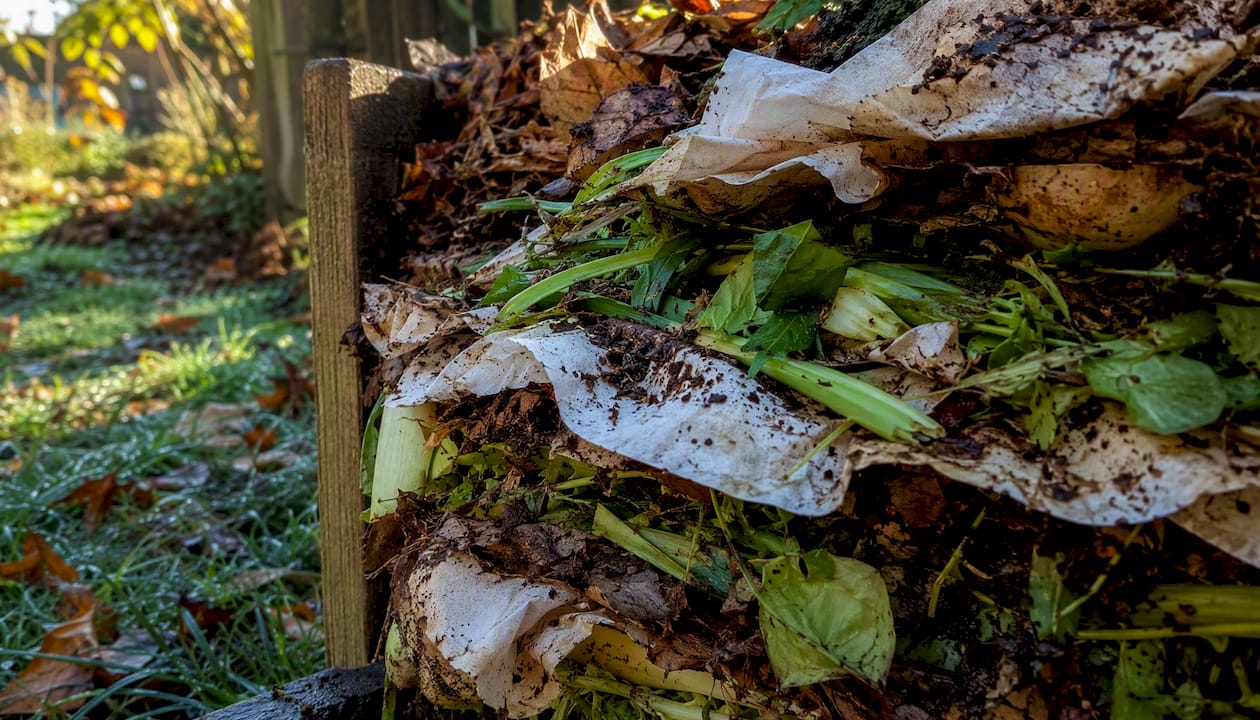
Tumbler or electric composter: Add filters in small batches and shred them first if possible. Monitor moisture closely since tumblers can dry out quickly. Follow your device’s specific guidance on batch size.
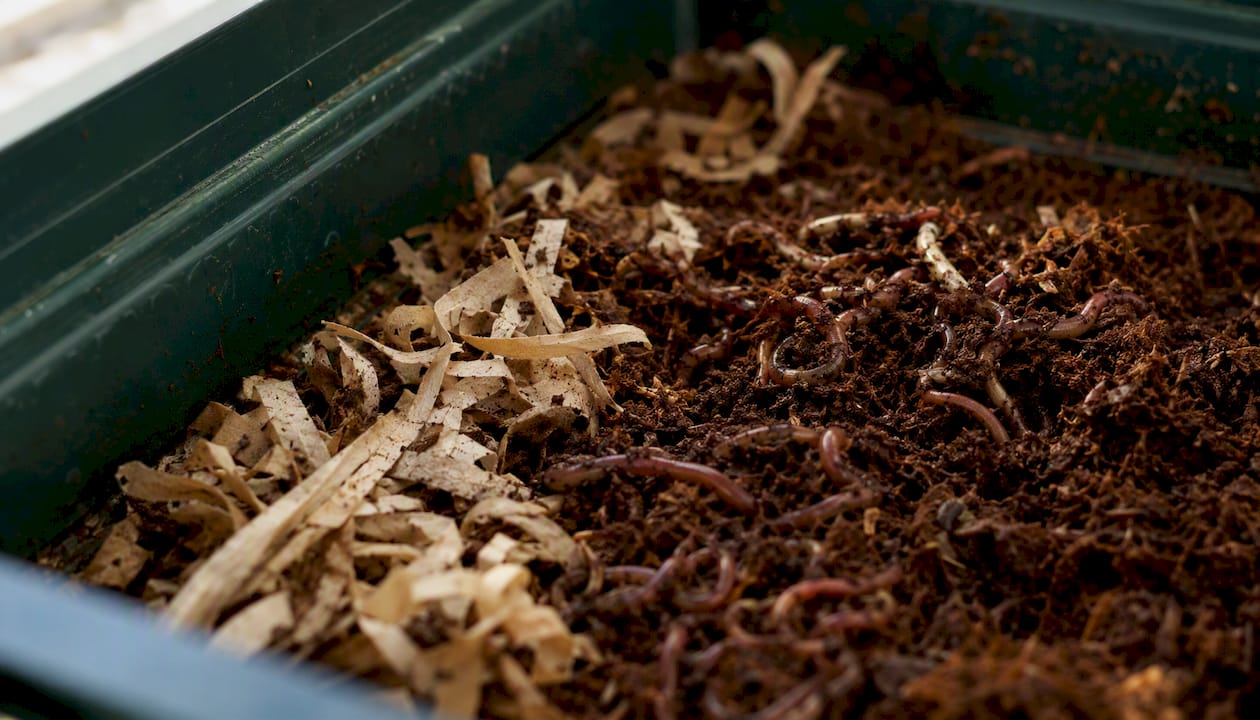
Vermicompost (worm bin): Shred filters into small strips and add them gradually as bedding material. Worms love paper, but go easy on fresh grounds. Mix filters with dry bedding like coconut coir to keep the bin from getting too wet or acidic.
Municipal organics programs: Many U.S. cities accept paper filters and grounds in curbside organics bins, but rules vary. Denver’s composting program is one example of a local program with specific material guidelines. Always check your city’s organics page before tossing filters in the curbside bin. Beverly, MA, for instance, lists coffee filters and grounds as accepted materials.
Troubleshooting:
- Mold on filters: Normal in a moist pile. Turn more frequently and add dry browns.
- Fruit flies: Bury filters deeper in the pile rather than leaving them on top.
- Slow breakdown: Filters aren’t shredded enough. Tear smaller next time.
Pro Tip: Aim for roughly a 3:1 ratio of browns to greens by volume. Filters count as browns, grounds count as greens.
What you should never compost
Some filter types look innocent but don’t belong in your compost pile. Knowing what to skip protects the quality of your finished compost and keeps plastic out of your garden.
- Waxed filters: The wax coating resists microbial breakdown. Toss these in the trash.
- Plastic-lined or nylon mesh filters: These leave microplastic residue behind. Not compostable under any system.
- Single-serve pod casings: The grounds inside are compostable, but the plastic or foil casing is not. Separate the grounds if your pod design allows it. Some brands offer compostable pod options worth exploring.
- Filters with staples, dyes, or glitter: Metal staples contaminate compost and can injure worms. Dyed or decorative filters may contain synthetic colorants.
If you’ve already added a non-compostable filter by mistake, fish it out if you can spot it. If it’s mixed in, the plastic will likely remain visible in finished compost and can be sifted out before use.
For pod-specific guidance, reducing waste with coffee pods walks through what’s actually recyclable or compostable by pod type.
When is your compost ready to use?
Decomposition speed depends on your system. Here’s what to expect:
| System | Typical timeline | Notes |
|---|---|---|
| Hot pile (active) | weeks | Filters largely disappear; turn regularly |
| Cold pile (passive) | months | Slower but hands-off |
| Tumbler | weeks | Shredding filters speeds this up |
| Worm bin | months | Filters become bedding, then castings |
Compost Check reports that filters decompose quickly in well-managed hot piles (weeks) and more slowly in cold piles (months), and classifies them as carbon-rich browns that help balance nitrogen-rich kitchen scraps.
Your compost is ready when it smells earthy (not sour or ammonia-like), feels crumbly and dark, and you can’t identify any original filter pieces. If you still see paper scraps, give it more time or sift them out and return them to the pile.
Best uses for finished compost containing filter and grounds:
- Mix into garden beds as a soil amendment before planting.
- Topdress around established plants or shrubs.
- Blend into potting mix at about 20–30% by volume.
- Avoid using as a seed-starting medium alone since it may be too rich.
Ecoviberoast’s take on low-waste brewing choices
At Ecoviberoast, sustainability isn’t just a label. Every product in the lineup is sourced with environmental impact in mind, and that extends to how coffee is brewed and disposed of. Choosing filters thoughtfully is one of the simplest ways to close the loop on your daily ritual.
Ecoviberoast’s compostable coffee packaging guide explains how to read compostability certifications so you can apply the same logic to filters, pods, and bags.
The part most composting guides get wrong
Most articles on composting coffee filters spend the bulk of their advice on whether to compost. That’s the easy part. The harder, more useful question is how to compost them without creating problems.
Whole, flat filters dropped into a pile without tearing are one of the most common reasons home composters see slow spots and matting. The fix is almost embarrassingly simple: tear the filter before it goes in. Yet most guides bury that tip at the end, if they mention it at all.
The PFAS question is also worth taking seriously without panicking. Filters manufactured and sold in the U.S. after February 2024 should be free of PFAS under the FDA’s updated guidance. If you’re working through older stock or buying imported filters, unbleached or TCF-labeled options are the safest bet. That’s a practical, actionable distinction that most composting articles skip entirely.
Finally, municipal programs deserve more attention than they get. Curbside organics is one of the most convenient composting options available, and many U.S. programs accept paper filters. But “many” isn’t “all,” and assuming your city does without checking is how contamination happens. Spend two minutes on your city’s recycling page. It’s the single most underused step in the whole process.
Sustainable single-serve coffee that’s easier to compost
If disposable filters feel like a daily compromise, Ecoviberoast’s single-serve collection is worth a look. The pods are designed with sustainability in mind, so you get the convenience of single-serve brewing without the guilt of a landfill-bound casing.

Whether you prefer a 12-pack to try first or a 60-pack for your daily routine, each purchase supports mangrove tree planting and ocean-bound plastic removal. Rich, aromatic coffee that’s good for your morning and good for the planet. Head to the single-serve collection and find your roast.
Sources
Before you toss your next filter into the curbside bin, these resources give you the authoritative, location-specific answers that general guides can’t:
- Does paper products like coffee filters in a home compost pile increase the risk of PFAS? - University of Maine Cooperative Extension
- USDA composting guidance
- Denver government composting guidance
- Are Coffee Filters Compostable? (Yes — With One Exception)
- Can You Compost Coffee Filters? (Yes & How-To) | Compost Check


