

TL;DR:
- Eco labeling in beverages verifies that products meet environmental and social standards through independent certification. These labels help consumers make sustainable choices by providing trustworthy, recognizable signals, especially when they are third-party certified. Recognizing reputable labels like USDA Organic, Fair Trade, Rainforest Alliance, and B Corp ensures accountability and reduces greenwashing.
Eco labeling in beverages is the practice of applying verified certification marks to drink products that confirm adherence to specific environmental and social sustainability standards. These labels, issued by bodies like USDA Organic, Fair Trade, Rainforest Alliance, and B Corp, cut through marketing noise and give you a clear signal at the point of purchase. Research shows that eco-labels address information asymmetry by simplifying complex environmental data into a single, recognizable symbol. The industry term for this practice is “environmental labeling,” and understanding it is the first step toward shopping with real confidence.
What is eco labeling in beverages, and how does it work?
Eco labeling in beverages is a certification system where an independent body audits a product against defined environmental or social criteria, then grants the producer the right to display a specific label. The label tells you, at a glance, that the product meets standards you would otherwise need hours of research to verify yourself. Think of it as a warm handshake between the producer and the planet, delivered straight to your grocery shelf.
The process starts with the producer applying to a certifying organization. That organization reviews farming practices, supply chain conditions, ingredient sourcing, and sometimes packaging. If the product passes, the label is granted. If standards slip, the label can be revoked. This ongoing accountability is what separates a genuine eco label from a vague marketing claim printed directly on the package.
Eco-labels serve as a shortcut in busy shopping environments, letting you identify environmentally preferable beverages without needing technical knowledge. That shortcut has real power. When you see a Rainforest Alliance frog or a Fair Trade mark on your morning coffee bag, you know a third party has already done the verification work for you.
What types of eco-labels are commonly used in beverage products?
Environmental labels fall into three internationally recognized categories defined by the Global Ecolabelling Network.
Type I labels are third-party certified and multi-attribute. They cover several environmental criteria at once and require an independent audit. USDA Organic, Rainforest Alliance, and Fair Trade all fall here. These carry the highest credibility because a neutral organization verifies every claim.
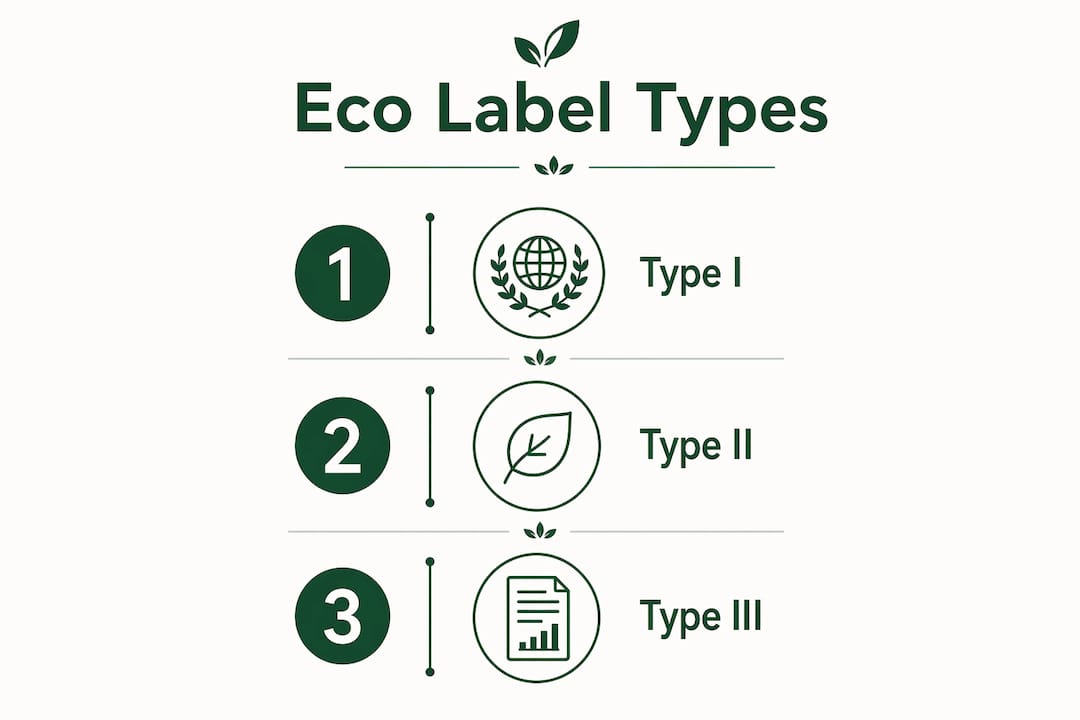
Type II labels are self-declared. The producer makes an environmental claim, such as “made with recycled materials,” without independent verification. These are legal but carry less weight. The Federal Trade Commission’s Green Guides help regulate these claims in the U.S., reducing misleading eco-label claims and holding brands accountable for what they print on packaging.
Type III labels are data-driven disclosures, often showing a product’s carbon footprint calculated using life-cycle assessment methods like ISO 14040/44. They are transparent but complex. Most shoppers find them harder to interpret without context.
| Label type | Verification | Example | Best for |
|---|---|---|---|
| Type I | Independent third party | USDA Organic, Fair Trade | Highest trust, broad criteria |
| Type II | Self-declared by producer | “Eco-friendly packaging” | Specific claims, lower rigor |
| Type III | Life-cycle data disclosure | Carbon footprint label (ISO 14067) | Informed, data-savvy shoppers |
Pro Tip: When you see a label you do not recognize, search for it on the Global Ecolabelling Network database before trusting the claim. If it is not listed, treat it as a Type II self-declaration.
Greenwashing is the biggest pitfall here. A brand can print a green leaf on a label without any certification behind it. The difference between a Type I certified label and a decorative green symbol is the audit trail. Always look for the certifying body’s name alongside the logo.
How do eco-labels influence consumer behavior and purchasing decisions in beverages?
Eco-labels work because they reduce the mental effort required to make a sustainable choice. You do not need to read ingredient lists or research supply chains. The label does that cognitive work for you, and the effect on behavior is measurable.
A 2025 study by the British Standards Institution found that 84% of consumers chose labeled options compared to 69% without labels. That 15-percentage-point difference shows that a simple label on a menu or package meaningfully shifts what people buy. The implication is clear: eco labels are not just feel-good additions. They are active decision tools.
This effect connects to nudge theory, the behavioral science idea that small environmental cues guide choices without restricting options. A well-designed eco label nudges you toward the sustainable option without forcing your hand. Clarity matters enormously here. Labels with a clean logo and a recognizable certifying name outperform cluttered or text-heavy designs.
The challenges are real, though. Eco-labeled beverages often carry a price premium. Some shoppers feel pulled between their values and their budget. Others experience information overload when a single product carries four or five different certification marks. Here is what the research shows about the key factors shaping your response to eco labels:
- Label clarity: Simple, recognizable logos from known certifiers drive faster, more confident decisions.
- Trust in the certifier: Labels from USDA, Fair Trade, or Rainforest Alliance carry more weight than unknown organizations.
- Price sensitivity: Premiums of more than 10–15% reduce uptake even among sustainability-minded shoppers.
- Label placement: Labels at eye level on shelves or prominently placed on menus increase selection rates.
- Information overload: More than two or three labels on one product can reduce trust rather than build it.
Consumers increasingly demand verifiable, third-party-certified eco-labels, and that demand is pushing brands to improve supply chain transparency. Your purchasing choices, multiplied across millions of shoppers, create real pressure on producers to earn and maintain these certifications.
What are the most recognized eco-label certifications for beverages?
Four certifications dominate the sustainable beverage space, and each covers a different dimension of sustainability. Understanding what each one actually requires helps you match the label to what you personally care about most.
USDA Organic requires a minimum of 95% organic ingredients, meaning no synthetic pesticides, herbicides, or genetically modified organisms in the growing process. For coffee and tea, this protects biodiversity and soil health on farms. You can learn more about coffee certification types to see how organic stacks up against other programs.
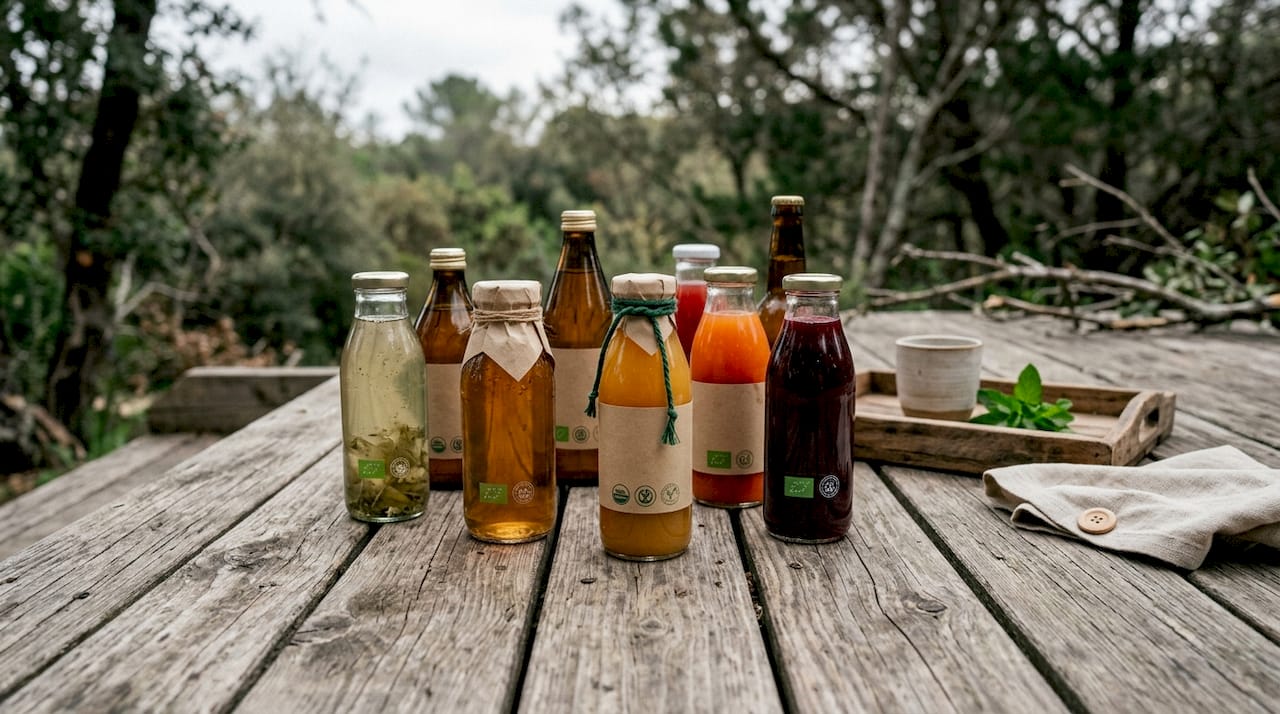
B Corp certification evaluates a company’s overall social and environmental performance, not just one product. A B Corp beverage brand has passed a rigorous assessment of worker treatment, community impact, and environmental practices across the entire business. It is the broadest measure of corporate responsibility available.
Fair Trade focuses on labor standards and fair wages for farmers and workers, particularly in coffee and tea supply chains. It guarantees a minimum price to producers, protecting them from market volatility. For shade-grown coffee from small farms in Colombia or Ethiopia, Fair Trade certification is often the most meaningful signal of ethical sourcing.
Rainforest Alliance addresses deforestation risk, biodiversity, and farm worker welfare. Its 2020 certification update raised the bar significantly, requiring farms to meet stricter environmental benchmarks. As of 2026, certification criteria updates continue to tighten requirements for beverage producers, making the frog logo a stronger signal than it was five years ago.
Carbon footprint labels, governed by ISO 14067, represent a newer category. ISO 14067 is the primary global standard for quantifying and communicating product carbon footprints, and its adoption in the beverage industry is growing. If you want to understand the full climate impact of your morning cup, look for this standard on beverage carbon footprint disclosures.
What nuances and challenges affect eco-label reliability in beverages?
The biggest structural problem in eco labeling is fragmentation. Over 300 eco-labels exist globally, and no single international standard governs them all. That number creates genuine confusion, even for motivated shoppers. A label that is rigorous in one country may have no equivalent recognition in another.
Regional differences compound this problem. Environmental labeling standards vary significantly across markets, which creates headaches for both producers and consumers comparing products across borders. A beverage certified under European Union organic rules, for example, does not automatically qualify for USDA Organic status, even if the farming practices are similar.
Here are the most common pitfalls to watch for:
- Vague claims without certification: Words like “natural,” “green,” or “eco-friendly” printed directly on packaging carry no regulatory weight in most markets.
- Narrow scope labels: Some labels only address one attribute, like water use, while ignoring carbon emissions or labor conditions.
- Expired or lapsed certifications: Certifications require renewal. A label on an older product batch may no longer reflect current standards.
- Label stacking for appearance: Brands sometimes display multiple minor certifications to create an impression of comprehensive sustainability without earning a major Type I certification.
Trademarked certifications with multi-attribute audits carry greater credibility than single-attribute or self-declared labels. When you see USDA Organic, Fair Trade, or Rainforest Alliance, you know a multi-criteria audit happened. When you see a generic green symbol with no certifier name, you are looking at marketing.
Pro Tip: Check whether the certifying body is a member of the Global Ecolabelling Network or ISEAL Alliance. Membership in either organization signals that the certifier follows internationally recognized standards for transparency and rigor.
How can you apply eco-label knowledge to make better beverage choices?
Knowing the theory is one thing. Using it at the store is another. Here is a practical framework you can apply every time you pick up a beverage:
- Look for the certifier’s name, not just a logo. A recognizable mark from USDA, Fair Trade USA, Rainforest Alliance, or B Lab tells you a real audit happened. An unnamed green leaf tells you nothing.
- Match the label to your priority. If fair wages matter most to you, prioritize Fair Trade. If you care about biodiversity and deforestation, look for Rainforest Alliance. If you want the broadest measure of corporate responsibility, choose B Corp brands.
- Check the label type. A Type I certification covers multiple criteria and involves third-party verification. A Type II self-declaration covers only what the brand chooses to disclose. Knowing the difference takes seconds and changes everything.
- Factor in carbon footprint disclosures. Carbon footprint disclosures per ISO 14067 encourage transparency and support meaningful sustainability improvements. If a brand publishes this data, it is a strong signal of genuine commitment.
- Balance sustainability with your budget. Certified products often cost more because ethical sourcing and audits are not free. Buying one certified product regularly beats buying none at all. Start with your highest-frequency purchase, whether that is your daily coffee or your morning tea.
- Pair label awareness with packaging knowledge. Eco-friendly drink labels tell you about what is inside the bottle. Sustainable packaging practices tell you about the container. Both matter for a complete picture of a product’s environmental footprint.
Key takeaways
Eco labeling in beverages is most effective when you focus on Type I, third-party certified labels from recognized bodies like USDA Organic, Fair Trade, Rainforest Alliance, and B Corp, because these require independent audits and cover multiple sustainability criteria.
| Point | Details |
|---|---|
| Eco-label definition | Verified certification marks on beverages confirm environmental and social standards are met. |
| Three label types | Type I is third-party verified; Type II is self-declared; Type III shows life-cycle data. |
| Consumer impact | 84% of consumers chose labeled options vs. 69% without labels, per BSI research. |
| Top certifications | USDA Organic, Fair Trade, Rainforest Alliance, and B Corp each cover different sustainability dimensions. |
| Greenwashing risk | Over 300 global eco-labels exist; unnamed green symbols carry no verified standard behind them. |
Why eco-label literacy is the most underrated shopping skill
I have spent years watching the eco-label space evolve, and the pattern I keep seeing is this: most shoppers either trust every green label they see or dismiss all of them as marketing. Both responses miss the point entirely.
The labels that matter are the ones with an audit trail. USDA Organic, Fair Trade, and Rainforest Alliance are not perfect systems, but they are accountable systems. When a certification lapses or a farm fails an audit, the label gets pulled. That accountability loop is what makes them worth your attention.
What concerns me most is the explosion of self-declared claims. Brands have learned that green imagery sells, and the gap between a genuine Type I certification and a decorative leaf printed in-house is invisible to most shoppers. Digital innovations, including QR codes that link to full audit reports, are starting to close that gap. I expect this to become standard practice within a few years.
My honest advice: pick two or three certifications you trust and learn them well. You do not need to memorize 300 labels. You need to recognize the handful that reflect the values you actually hold. That focused knowledge makes every beverage purchase feel less like a guessing game and more like a conscious choice. And that feeling, of knowing your morning cup is doing right by the people who grew it and the land it came from, is genuinely worth something.
— LaSaundra
Ecoviberoast’s certified sustainable beverages worth trying
Ecoviberoast was built around exactly the kind of transparency this article describes. Every product in the lineup is sourced with environmental and social accountability in mind, and the brand backs that commitment with real actions, including planting mangrove trees and removing ocean-bound plastics with every purchase.

If you want to put your eco-label knowledge to work right away, the Hibiscus Berry Herbal Tea is a great starting point. It is organic, aromatic, and a genuinely satisfying cup that feels like a warm hug for both you and Mother Earth. For coffee lovers, the single-serve coffee pods deliver rich, responsibly sourced flavor with the convenience your mornings deserve. Explore the full range and see how Ecoviberoast’s environmental impact goes beyond the label.
FAQ
What is eco labeling in beverages?
Eco labeling in beverages is the practice of applying verified certification marks to drink products that confirm the product meets specific environmental or social sustainability standards, as defined by recognized bodies like USDA, Fair Trade, or Rainforest Alliance.
How do I know if an eco-label is trustworthy?
Look for a named certifying organization alongside the logo. Type I labels from bodies like Fair Trade USA or USDA Organic require independent third-party audits, making them the most reliable category.
What is the difference between Fair Trade and Rainforest Alliance?
Fair Trade focuses primarily on fair wages and minimum price guarantees for farmers, while Rainforest Alliance addresses deforestation, biodiversity, and broader farm worker welfare across the supply chain.
Why are there so many different eco-labels on beverages?
Industry analysis identifies over 300 eco-labels globally, reflecting the lack of a single international standard. Different certifiers focus on different criteria, regions, and industries, which creates a fragmented but evolving system.
Does an organic label mean the same thing everywhere?
No. USDA Organic requires at least 95% organic ingredients under U.S. rules, but organic standards vary by country. A product certified organic in the European Union does not automatically meet USDA Organic requirements.


