

If you’re steeping a cup of chamomile tonight or reaching for hibiscus in the morning, you deserve to know which of these habits actually do something for your body and which are just cozy rituals. Here’s the honest verdict: hibiscus has the strongest human-trial support for lowering blood pressure and improving cholesterol, chamomile shows real (if modest) benefits for sleep and blood sugar markers, ginger has solid evidence for nausea and inflammation, and peppermint helps digestion in ways your gut will thank you for. Beyond those four, the evidence gets thinner, though several other herbal infusions still carry genuine, if more limited, research behind them.
The safety caveat matters just as much as the benefit list. Herbs are biologically active, and that means they can interact with anticoagulants, blood-pressure medications, and hormone-sensitive conditions, so “natural” never automatically means “risk-free.” If you’re pregnant, nursing, on prescription medication, or managing a chronic condition, a quick chat with your clinician or pharmacist before adding a new tea to your routine is worth five minutes of your time.
Here’s how the most-studied herbal teas stack up by evidence strength:
- Hibiscus — blood pressure and cholesterol support (strong evidence)
- Chamomile — sleep quality and glycemic markers (moderate evidence)
- Ginger — nausea relief and anti-inflammatory effects (moderate to strong evidence)
- Peppermint — digestive comfort and IBS symptom relief (moderate evidence)
- Rooibos — antioxidant support (limited evidence)
- Lemon balm — anxiety and mild cognitive support (limited evidence)
- Sage — cognitive and menopausal symptom support (limited evidence)
- Rose hip — joint comfort and vitamin C content (limited evidence)
- Passionflower — anxiety and sleep support (limited evidence)
- Echinacea — modest reduction in cold duration (limited, mixed evidence)
Evidence anchor: clinical reviews and randomized trials, including work highlighted by Harvard Health, consistently support hibiscus tea for lowering both systolic and diastolic blood pressure, plus reducing LDL cholesterol and triglycerides. That’s a rare thing in the herbal tea world: repeated, independent human trials pointing the same direction.
Key Takeaways
Hibiscus tea has the strongest human-trial support for lowering blood pressure and cholesterol, while chamomile, ginger, and peppermint each carry solid, moderate evidence for sleep, nausea, and digestion, respectively.
| Point | Details |
|---|---|
| Hibiscus leads the evidence | Clinical trials and meta-analyses consistently show blood pressure and cholesterol benefits. |
| Chamomile and ginger are close seconds | Sleep, glycemic markers, and nausea relief have moderate human-trial backing. |
| Match your brew to trial conditions | Steep 10 to 15 minutes for stronger extraction, closer to what studies actually tested. |
| Check interactions before daily use | Ginger, hibiscus, and sage can interact with blood thinners, blood pressure drugs, or hormones. |
| Ecoviberoast offers sourced, tested options | Its hibiscus berry tea reflects the sustainably sourced, single-ingredient approach worth looking for. |
Talk to your clinician or pharmacist before adding a new herbal tea to your routine if you’re pregnant, breastfeeding, or taking prescription medication.
Table of Contents
- Herbal Tea Health Benefits by Type: What Each One Actually Does
- What the Research on Herbal Tea Really Shows (and Where It Falls Short)
- Herbal Tea Safety: Drug Interactions and When to Ask a Clinician
- How to Brew Herbal Tea to Match What the Studies Actually Used
- Why Sourcing and Label Transparency Matter for Herbal Tea Quality
- Whole Herbs vs. Isolated Compounds: Does It Matter Which You Choose?
- How Age, Genetics, and Health Conditions Change Your Response to Herbal Tea
- Balancing Enjoyment, Evidence, and Sustainability in Your Tea Habit
- Try Evidence-Aligned Herbal Teas From Ecoviberoast
- Frequently Asked Questions
- Sources
Herbal Tea Health Benefits by Type: What Each One Actually Does
Not all herbal teas are created equal, and treating them like an undifferentiated wellness category does you a disservice. Some have been through legitimate clinical trials. Others are backed mostly by tradition and a handful of small studies. Knowing the difference helps you set realistic expectations, whether you’re sipping for pleasure or targeting a specific outcome.
Chamomile
Chamomile’s reputation as a bedtime tea isn’t just folklore. Randomized trials using German chamomile have reported improved sleep quality, and some smaller studies even found favorable shifts in glycemic and antioxidant markers over one to eight weeks of regular use. Most trials used roughly one cup daily, steeped for a duration consistent with clinical studies.
- Caution: can interact with blood thinners like warfarin due to mild anticoagulant properties.
- Avoid if you have a known ragweed or daisy family allergy, since cross-reactivity is common.
Peppermint
Peppermint tea is one of the more reliably useful options for digestive discomfort, bloating, and mild IBS symptoms. Enteric-coated peppermint oil capsules have the strongest clinical backing, but the tea form still delivers menthol compounds that relax gut muscle and ease cramping for many people.
- Caution: can worsen acid reflux or GERD symptoms by relaxing the esophageal sphincter.
- Skip it close to bedtime if you’re prone to heartburn.
Ginger
Ginger tea earns its place through gingerol and shogaol, compounds with documented antioxidant and anti-inflammatory effects. Human trials support its use for nausea, including pregnancy-related and chemotherapy-related nausea, plus modest benefits for inflammatory markers and joint discomfort.
- Caution: can slow blood clotting, which raises interaction risk with anticoagulants like warfarin or aspirin.
- Talk to your doctor before regular use if you have a bleeding disorder or upcoming surgery.
Hibiscus
This is the standout of the group. A clinical trial run by the USDA Agricultural Research Service found that hibiscus tea lowered blood pressure in pre-hypertensive adults, and later meta-analyses have reinforced the lipid-lowering effects, largely credited to its anthocyanin antioxidants.
- Caution: can amplify the effect of antihypertensive medications, sometimes dropping blood pressure too low.
- Not recommended in large amounts during pregnancy due to limited safety data.
Echinacea
Echinacea’s evidence is more mixed than its popularity suggests. Some trials show a modest reduction in cold duration and severity when taken at the first sign of symptoms, while others find no meaningful effect. It remains a reasonable low-risk option, just not a guaranteed one.
- Caution: avoid if you have autoimmune conditions, since it stimulates immune activity.
- Not advised for long-term daily use beyond a couple of weeks at a time.
Rooibos
Rooibos is naturally caffeine-free and rich in polyphenols, with early research suggesting antioxidant support and potentially favorable effects on cardiovascular risk markers. The evidence base is thinner than hibiscus or chamomile, but the safety profile is excellent.
- Caution: rare reports of liver enzyme changes with very high intake; moderation is sensible.
Lemon Balm
Lemon balm shows promise for mild anxiety and cognitive focus in small human trials, likely through effects on GABA activity in the brain. Researchers note more long-term, high-quality trials are needed before firm dosing recommendations can be made.
- Caution: may increase sedation when combined with other calming supplements or medications.
Sage
Sage tea has some evidence for supporting memory and easing hot flashes during menopause, tied to compounds that interact with cholinergic activity in the brain. Most supporting studies are small.
- Caution: high doses of certain sage species contain thujone, which can be neurotoxic in large amounts.
Rose Hip
Rose hip tea delivers meaningful vitamin C and has modest evidence for easing osteoarthritis joint stiffness in some trials. It’s a pleasant, tart option with a low risk profile.
- Caution: high doses may cause mild GI upset in sensitive individuals.
Passionflower
Passionflower has small-trial support for reducing anxiety and improving sleep onset, likely through mild GABA-modulating effects similar to lemon balm.
- Caution: can add to sedation when paired with sleep aids or anti-anxiety medications.
| Tea | Main Outcome(s) | Evidence Strength | Typical Serving in Trials |
|---|---|---|---|
| Hibiscus | Blood pressure, cholesterol | Strong | 1–3 cups/day |
| Chamomile | Sleep quality, glycemic markers | Moderate | 1 cup daily |
| Ginger | Nausea, inflammation | Moderate to strong | 1–2 cups for nausea |
| Peppermint | Digestion, IBS symptoms | Moderate | 1–2 cups/day |
| Rooibos | Antioxidant support | Limited | 1–2 cups/day |
| Lemon balm | Anxiety, mild cognition | Limited | 1 cup, 1–2 times/day |
| Sage | Memory, menopause symptoms | Limited | 1 cup/day |
| Rose hip | Joint comfort, vitamin C | Limited | 1–2 cups/day |
| Passionflower | Anxiety, sleep onset | Limited | 1 cup before bed |
| Echinacea | Cold duration | Limited, mixed | At first symptom onset |
What the Research on Herbal Tea Really Shows (and Where It Falls Short)
The overall pattern is this: solid human trials and meta-analyses exist for a small handful of herbs, and most other claims rest on smaller, shorter studies that suggest a direction without confirming it definitively. That distinction shapes how much confidence you should place in any single benefit claim you read online.
Three types of evidence show up repeatedly in herbal tea research, and they don’t all carry the same weight. Randomized controlled trials (RCTs) compare a treatment group against a placebo group under controlled conditions, making them the gold standard for proving cause and effect. Meta-analyses pool data from multiple RCTs to detect patterns that individual studies might miss, and they’re behind the strongest hibiscus findings. Observational studies and mechanistic lab work, by contrast, can show correlations or plausible biological pathways, but they can’t prove that drinking the tea itself caused the outcome.
Systematic reviews of human trials on herbal infusions have found that regular consumption, often one to three cups daily with infusion times up to 15 minutes, is linked to measurable improvements in sleep quality, glycemic control, oxidative stress markers, and even symptoms of primary dysmenorrhea in some populations, according to a review published in the journal Nutrition & Food Science.
That’s a meaningful signal, but the same review is candid about the gaps. Dosing varies wildly between studies, trial durations often run just a few weeks, and plant preparations differ by growing region, harvest time, and processing method, which makes it hard to compare results directly. Researchers studying herbal infusions consistently call for longer, larger, better-standardized trials before dosing guidelines can be considered settled science rather than a reasonable starting point.
Herbal Tea Safety: Drug Interactions and When to Ask a Clinician
Most herbal teas are safe in moderation for healthy adults, but a handful of herbs can meaningfully affect blood pressure, blood clotting, hormone levels, or interact with common prescription drug classes. Treating tea as harmless because it’s “just a plant” is exactly the mistake that catches people off guard.
Here’s how common medications and conditions line up against specific herbs worth watching:
- Anticoagulants (warfarin, aspirin) ↔ ginger and chamomile, both of which have mild blood-thinning properties.
- Antihypertensive medications ↔ hibiscus, which can compound blood-pressure-lowering effects.
- Hormone-sensitive conditions ↔ sage and spearmint, both linked to hormonal activity in small trials.
- Sedatives or anti-anxiety medications ↔ lemon balm and passionflower, which can add to drowsiness.
- Autoimmune conditions ↔ echinacea, due to its immune-stimulating effects.
Before you make any herbal tea a daily habit, run through this quick checklist:
- Pregnancy or breastfeeding: Many herbs lack sufficient safety data for these stages; check with your OB or midwife first.
- Upcoming surgery: Stop anticoagulant-adjacent herbs like ginger at least a week or two out, per your surgeon’s guidance.
- Chronic disease management: If you have kidney, liver, or cardiovascular conditions, confirm dosing with your doctor.
- Prescription medications: Ask your pharmacist about interactions, especially with blood thinners, blood pressure drugs, or sedatives.
Beyond drug interactions, watch for two often-overlooked issues: allergic reactions (ragweed-family sensitivities can trigger reactions to chamomile and echinacea) and product quality. Uncontrolled or excessive consumption of herbal infusions can cause toxicity, and contamination or adulteration in poorly sourced products adds a layer of risk that has nothing to do with the herb itself and everything to do with where it came from.
How to Brew Herbal Tea to Match What the Studies Actually Used
Steeping time, water temperature, and the amount of herb you use all affect how much of the active plant compound ends up in your cup, and this is where a lot of home brewing quietly falls short of what clinical trials tested. Many studies used infusion times up to 15 minutes to fully extract phenolic compounds, considerably longer than the 3 to 5 minutes most packaging suggests.
For a standard infusion, follow these steps:
- Bring fresh water to a near boil, around 200°F for most herbal blends.
- Use one to two teaspoons of loose herb (or one tea bag) per 8-ounce cup.
- Cover the cup or teapot while steeping to trap volatile aromatic compounds.
- Steep for 10 to 15 minutes if you’re trying to match trial-level extraction, rather than the shorter times many labels recommend.
- Strain and drink promptly; reheating diminishes some of the more delicate antioxidants.
For a stronger decoction, useful with tougher plant material like rose hip or ginger root, simmer the herb gently in water for 15 to 20 minutes rather than simply steeping it. Concentrated extracts and standardized supplements are a different category entirely. They deliver a fixed, often much higher dose of active compounds than a cup of tea, which raises both the potential benefit and the interaction risk. That’s exactly why an extract capsule and a cup of tea shouldn’t be treated as interchangeable, even when they’re made from the same plant.
| Preparation | Strength | Trial-Based Example |
|---|---|---|
| Standard cup (steeped 3-5 min) | Mild | Everyday enjoyment, lower phenolic yield |
| Standard cup (steeped 10-15 min) | Moderate | Matches most clinical trial conditions |
| Decoction (simmered) | Stronger | Rose hip, ginger root preparations |
| Concentrate/extract | Strongest | Higher interaction risk; medical guidance advised |
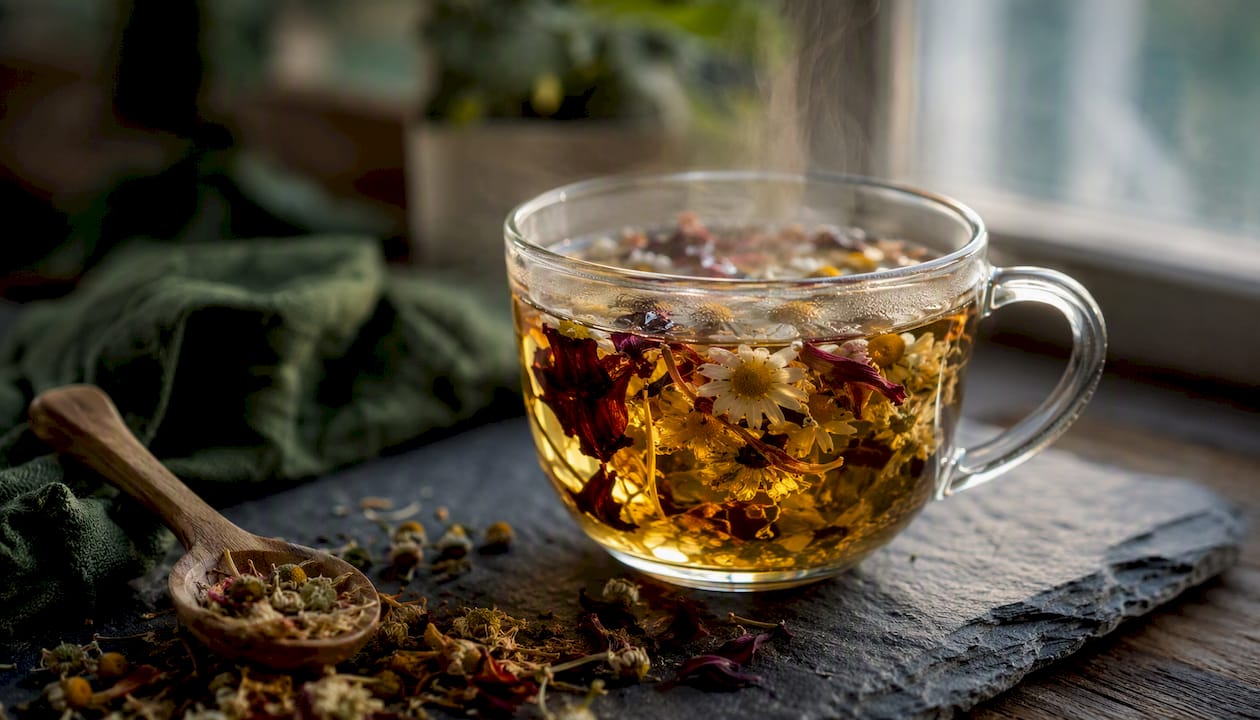
Pro Tip: Reuse your leaves only once, and only for milder herbs like chamomile or rooibos. Stronger botanicals like ginger or hibiscus lose potency fast after the first steep, so a second cup from the same leaves won’t deliver the dose the studies measured.
Store dried herbs in an airtight container away from light and heat, since exposure degrades the same phenolic compounds you’re trying to extract in the first place.
Why Sourcing and Label Transparency Matter for Herbal Tea Quality
Sourcing and third-party testing reduce contamination and variability, which is exactly why choosing a certified or well-tested supplier matters when you’re drinking tea for a specific health reason and not just for the flavor. A hibiscus tea grown in contaminated soil or blended inconsistently batch to batch won’t deliver the anthocyanin content that clinical trials measured, no matter how promising the label sounds.
A few label signals are worth checking every time:
- Organic certification, which limits pesticide residue exposure.
- Third-party contaminant testing for heavy metals and microbial safety.
- Clear botanical names (not just common names, which can be applied loosely to different species).
- Single-ingredient products when you’re trying to isolate a specific effect, rather than a proprietary blend that obscures dosing.
Pro Tip: If a study used whole chamomile flowers steeped for 10 minutes, a finely ground tea bag steeped for 3 won’t give you the same exposure. Match your preparation to the study conditions, not just the ingredient list, if you’re chasing a specific benefit.
Ecoviberoast approaches sourcing with this same logic in mind, favoring sustainably grown, traceable botanicals over anonymous bulk blends. Readers curious about how eco-conscious sourcing intersects with quality control can look into why herbal teas make sense for both health and environmental impact as a starting point.
Whole Herbs vs. Isolated Compounds: Does It Matter Which You Choose?
A cup of ginger tea and a ginger extract capsule are not the same intervention, even though they come from the same root. Whole-herb teas deliver a complex mixture of compounds, including minor phenolics and volatile oils that never make it into a standardized extract, and some researchers believe these secondary compounds contribute to what’s sometimes called an “entourage effect,” where the whole plant performs differently than its isolated active ingredient alone.
Isolated compounds and supplements offer something teas can’t: precision. If a trial found benefit from a specific dose of gingerol, a standardized ginger extract guarantees you get that exact amount every time. Tea brewing introduces variability from steep time, water temperature, and even the age of the dried herb, so your cup today might deliver more or less of the active compound than the cup you had last week.
That variability cuts both ways. It means a cup of tea is gentler and generally lower risk, which is part of why herbal teas are typically considered a reasonable starting point for mild, everyday support rather than treatment for a diagnosed condition. Concentrated extracts, precisely because they deliver a higher and more consistent dose, also carry a higher chance of triggering an interaction with medication or causing side effects at higher intake levels. If you’re using an herb to manage a real health concern, like clinically significant hypertension, talk to a clinician about whether a standardized supplement with documented dosing might serve you better than relying on tea alone.
How Age, Genetics, and Health Conditions Change Your Response to Herbal Tea
The same cup of hibiscus tea can do noticeably different things for two different people, and that’s not a flaw in the research. It’s biology. Age affects how your liver metabolizes plant compounds, so older adults may experience stronger effects from the same dose that barely registers for a younger adult, particularly with herbs like hibiscus and ginger that interact with cardiovascular medications common in later life.
Genetics play a role too, particularly around how your body processes certain plant compounds through liver enzymes. Some people metabolize caffeine-adjacent alkaloids and plant phenolics faster or slower than others based on genetic variation, which partly explains why one person swears chamomile knocks them out while another feels barely anything.
Existing health conditions shift the risk-benefit calculation even more. Someone with well-controlled blood pressure might enjoy hibiscus tea as a pleasant daily habit with a mild bonus effect. Someone already on multiple antihypertensive medications is playing a different game entirely, where that same tea could push their blood pressure lower than intended. The same logic applies to autoimmune conditions and echinacea, hormone-sensitive conditions and sage, or bleeding disorders and ginger.
None of this means herbal tea is unpredictable to the point of being useless. It means the “best” tea for you depends on your starting point, not just what worked in a published trial’s average participant.
Balancing Enjoyment, Evidence, and Sustainability in Your Tea Habit
My honest take is that herbal tea occupies a strange middle ground in wellness culture: it’s neither the miracle cure some blogs suggest nor the placebo-dressed-as-medicine that skeptics dismiss it as. The evidence, read plainly, supports a handful of specific, moderate benefits, and treating those benefits as a reason to enjoy your tea ritual with a little more intention seems like the right move.
What strikes me most, working through this research, is how much daylight exists between what marketing claims and what trials actually measured. Hibiscus really does have meaningful blood pressure data behind it, and that’s genuinely worth knowing. But most of the other teas on this list occupy a “promising, not proven” category, and I think that’s fine. You don’t need airtight proof to justify a cup of lemon balm before bed if it helps you unwind and it isn’t interacting with anything you’re taking. What matters is holding two ideas at once: enjoy the ritual, and stay honest about what the science can and can’t promise you. If you’re managing a real medical condition or taking regular medication, loop in your clinician before you lean on any herb as a fix. That’s not overcaution. It’s just matching your confidence to the actual evidence.
Try Evidence-Aligned Herbal Teas From Ecoviberoast
If the research above has you curious about trying hibiscus, chamomile, or ginger for yourself, Ecoviberoast makes that first step simple: our hibiscus berry tea is grown and sourced with the same sustainability standards we apply across every product, so you’re getting a traceable, responsibly grown blend rather than an anonymous bulk mix of unknown origin.

Every purchase supports mangrove planting and ocean-bound plastic removal, so your daily cup does a little good beyond your own cup. If you want to build a small rotation of evidence-aligned teas to experiment with, consider starting with:
- A hibiscus blend for blood pressure and antioxidant support
- A chamomile option for evening wind-down
- A ginger-forward blend for digestive comfort
Head to the hibiscus berry tea page to see the current blend and place an order, or browse our full herbal tea selection to build a sampler that matches the benefits you’re chasing.
Frequently Asked Questions
Are herbal teas actually healthy, or is it mostly marketing? Some herbal teas have genuine, trial-supported benefits, particularly hibiscus for blood pressure and cholesterol, while others rest on smaller or shorter studies that suggest promise without confirming it definitively. Reading the specific claim behind a specific tea matters more than trusting the category as a whole.
How does herbal tea help with sleep specifically? Chamomile is the best-studied option, with randomized trials showing improved sleep quality after one to eight weeks of regular use, likely tied to compounds that interact with calming neurotransmitter pathways in the brain.
What’s the best herbal tea for immunity? Echinacea has the most research behind it for immune support, though the evidence is mixed. Some trials show modestly shorter colds when it’s taken at the first sign of symptoms, while others find no significant effect.
Can herbal tea interact with my medication? Yes. Ginger and chamomile can affect blood clotting, hibiscus can amplify blood-pressure medications, and sage and spearmint can influence hormone levels. Check with a pharmacist if you take regular prescriptions.
How much herbal tea should I drink for a health benefit? Many studies used a few cups daily, often with steeping times longer than typical consumer packaging suggests, to extract more active compounds.
Is herbal tea safe during pregnancy? Some herbs, including hibiscus in large amounts, lack sufficient safety data for pregnancy. Confirm with your OB or midwife before making any herbal tea a daily habit while pregnant or breastfeeding.
This article is general information, not a substitute for advice from a qualified doctor. Consult a qualified healthcare professional about your own circumstances before acting on anything here.
Sources
Here are the primary reviews and trials referenced throughout this article, for readers who want to dig deeper into the evidence themselves.
- The health benefits of 3 herbal teas - Harvard Health
- The Impact of Herbal Infusion Consumption on Oxidative Stress and Cancer: The Good, the Bad, the Misunderstood - PMC
- Herbal infusions and health: A review of findings from human studies, mechanisms and future research directions
- Don’t Underestimate the Power of Herbal Teas - USDA ARS
- Ncbi


