

Many assume all herbal teas are inherently sustainable, but that’s far from the truth. Environmental impact varies dramatically based on farming methods, sourcing practices, and packaging choices. Some herbal teas support regenerative agriculture and fair benefit sharing, while others contribute to overharvesting and carbon emissions. Understanding these differences empowers you to make choices that genuinely protect ecosystems and support ethical producers. This guide cuts through greenwashing to reveal what truly matters when selecting herbal teas that align with your environmental values and create measurable positive impact.
Table of Contents
- What Really Makes Herbal Teas Eco-Friendly?
- How Carbon Net-Zero Sourcing Shapes The Herbal Tea Industry
- The Challenges Of Wildcrafted Labeling And Ethical Sourcing
- Applying Eco Impact Knowledge To Your Herbal Tea Choices
- Explore Eco-Conscious Tea And Coffee Options
- Frequently Asked Questions About Herbal Teas And Eco Impact
Key takeaways
| Point | Details |
|---|---|
| Farming practices matter most | Regenerative agriculture and carbon net-zero methods significantly reduce greenhouse gas emissions compared to conventional farming |
| Wildcrafted claims need scrutiny | The term lacks regulation, making verification of ethical harvesting practices essential before purchase |
| Supply chain transparency is critical | Clear documentation of sourcing ensures fair compensation for growers and respect for traditional knowledge |
| Certifications guide decisions | Organic, fair trade, and verified carbon offset programs indicate genuine commitment to sustainability |
| Your choices drive industry change | Supporting eco-conscious brands amplifies demand for responsible practices across the herbal tea market |
What really makes herbal teas eco-friendly?
Sustainability in herbal teas isn’t automatic. It depends entirely on how herbs are grown, harvested, and processed before reaching your cup. The journey from soil to package determines whether your tea choice supports or harms the environment.
Quality herbs reflect careful farming and processing methods that preserve beneficial compounds while minimizing ecological damage. Conventional agriculture often relies on synthetic pesticides and fertilizers that degrade soil health and contaminate water systems. These chemicals kill beneficial microorganisms and reduce the land’s ability to sequester carbon naturally.
Regenerative agriculture takes the opposite approach. This farming method actively improves soil health through practices like cover cropping, composting, and minimal tillage. Healthy soil acts as a carbon sink, pulling greenhouse gases from the atmosphere and storing them underground. Over time, regenerative farms become more productive while requiring fewer external inputs.
Supply chains that respect growers make a tangible difference. When tea companies establish direct relationships with farmers, they ensure fair compensation and support traditional cultivation knowledge. This approach contrasts sharply with commodity markets where middlemen capture most profits, leaving producers with barely enough to sustain their operations.
Consider these factors when evaluating herbal tea sustainability:
- Farming method: organic, regenerative, or conventional
- Processing location and energy sources used
- Transportation distance and methods
- Packaging materials and recyclability
- Labor practices and fair compensation
Transparency separates genuinely sustainable brands from those merely using eco-friendly marketing language. Companies committed to ethical tea sourcing provide detailed information about farm locations, cultivation methods, and relationships with growers. They document their environmental impact with specific metrics rather than vague sustainability claims.
“True sustainability in herbal teas requires attention to every step, from seed selection to final packaging. Each decision either supports or undermines ecological health.”
The intersection of quality and sustainability isn’t coincidental. Herbs grown in healthy soil with minimal chemical intervention develop richer flavor profiles and higher concentrations of beneficial compounds. When you choose teas from regenerative farms, you’re selecting products that taste better while supporting environmental restoration.
How carbon net-zero sourcing shapes the herbal tea industry
Carbon net-zero sourcing represents a fundamental shift in how tea companies approach their environmental footprint. This approach balances emissions generated during production with equivalent removals or offsets, aiming for zero net greenhouse gas contribution.

Tea industry emissions come from multiple sources throughout cultivation and processing. Conventional farming equipment burns fossil fuels, fertilizer production releases nitrous oxide, and processing facilities consume significant energy. Transportation adds another layer of emissions as products move from farms to distribution centers to retail locations.
Regenerative agriculture offers a powerful counterbalance. When implemented correctly, these farming methods can offset substantial portions of production emissions through enhanced soil carbon sequestration. Plants pull carbon dioxide from the air during photosynthesis, and healthy soil microbiomes convert this carbon into stable organic matter that remains underground for decades or centuries.
Here’s how leading tea companies achieve carbon net-zero status:
- Measure total emissions across their entire supply chain
- Implement conservation tillage to reduce fuel consumption by 30 to 50 percent
- Switch processing facilities to renewable energy sources
- Support reforestation projects that remove atmospheric carbon
- Purchase verified carbon credits for remaining unavoidable emissions
- Publish annual reports documenting progress toward net-zero goals
Conservation tillage deserves special attention. This farming technique minimizes soil disturbance, leaving crop residue on fields to protect against erosion and retain moisture. Reduced tillage means farmers make fewer tractor passes, directly cutting fuel use and emissions. The practice also preserves soil structure, allowing beneficial organisms to thrive and sequester more carbon.
Reforestation projects amplify carbon removal beyond what farm-level practices achieve alone. When tea companies invest in planting and protecting forests, they create carbon sinks that actively pull greenhouse gases from the atmosphere. These projects often provide additional benefits like watershed protection and wildlife habitat restoration.
Pro Tip: Look for brands that specify their carbon offset methodology and provide third-party verification. Vague net-zero claims without supporting documentation often indicate greenwashing rather than genuine climate action.
You can support eco-friendly tea 2026 initiatives by choosing brands that transparently report their emissions and offset strategies. These companies typically provide detailed breakdowns showing emissions by category and explaining how they achieve balance through reduction and removal projects.
The carbon neutral coffee impact principles apply equally to tea production. Both industries face similar challenges in reducing agricultural emissions while maintaining product quality and farmer livelihoods. Solutions that work for coffee often translate effectively to tea cultivation.
The challenges of wildcrafted labeling and ethical sourcing
The wildcrafted label appears frequently on herbal tea packaging, suggesting herbs harvested from natural habitats rather than cultivated farms. This term carries powerful marketing appeal but often lacks substance behind the claim.
Wildcrafted terminology lacks regulation, creating opportunities for misleading labeling. No federal agency defines or monitors wildcrafted claims, allowing companies to use the term without proving sustainable harvest practices. This regulatory gap puts the burden entirely on consumers to verify authenticity.
Research reveals troubling patterns. Only about 15 percent of products labeled wildcrafted provide verifiable documentation about harvest locations, methods, and stewardship practices. The remaining 85 percent offer no evidence supporting their sustainability claims, making the label essentially meaningless for informed purchasing decisions.
Global demand for adaptogenic herbs has intensified pressure on wild populations. As consumers seek herbs like rhodiola, ashwagandha, and holy basil for their purported health benefits, harvesters increasingly target wild stands. Without careful management, this demand leads to overharvesting that threatens species survival and disrupts ecosystems.
Ethical wildcrafting requires specific practices:
- Harvest only abundant species from stable populations
- Take no more than 10 to 20 percent of available plants
- Rotate harvest sites to allow regeneration
- Respect traditional ecological knowledge from indigenous communities
- Document harvest locations and quantities for transparency
Pro Tip: Request harvest documentation directly from brands claiming wildcrafted sourcing. Legitimate companies maintain detailed records and willingly share information with interested customers.
| Verification Factor | Red Flag | Green Flag | | — | — | | Harvest documentation | No location or method details provided | Specific regions and sustainable practices documented | | Third-party certification | No independent verification | Certified by recognized sustainability organizations | | Supply chain transparency | Vague sourcing claims | Direct relationships with named harvesters | | Indigenous involvement | No mention of traditional knowledge or benefit sharing | Documented agreements with traditional knowledge holders |
Transparent transparency tea sourcing practices empower you to distinguish genuine sustainability from marketing buzzwords. Companies committed to ethical wildcrafting provide detailed information about their sourcing partners, harvest protocols, and ecological monitoring.
When you choose eco tea products, prioritize brands that go beyond simple wildcrafted claims. Look for specific certifications, published sourcing policies, and evidence of long-term relationships with harvest communities. These indicators suggest genuine commitment rather than superficial greenwashing.
Applying eco impact knowledge to your herbal tea choices
Understanding sustainability principles means nothing without translating knowledge into purchasing decisions. You can drive meaningful environmental change by consistently choosing herbal teas that meet rigorous ecological and ethical standards.
Certifications provide the most reliable shortcuts for identifying genuinely sustainable products. Organic certification ensures herbs were grown without synthetic pesticides or fertilizers that harm soil health and water quality. Fair trade certification guarantees minimum prices for farmers and prohibits exploitative labor practices. Carbon neutral certifications verify that companies measure and offset their greenhouse gas emissions.
Regenenerative farming support deserves priority in your selection criteria. Brands investing in regenerative agriculture actively improve environmental conditions rather than simply minimizing harm. These companies often publish detailed information about their farming partners and the specific regenerative practices implemented on supplying farms.
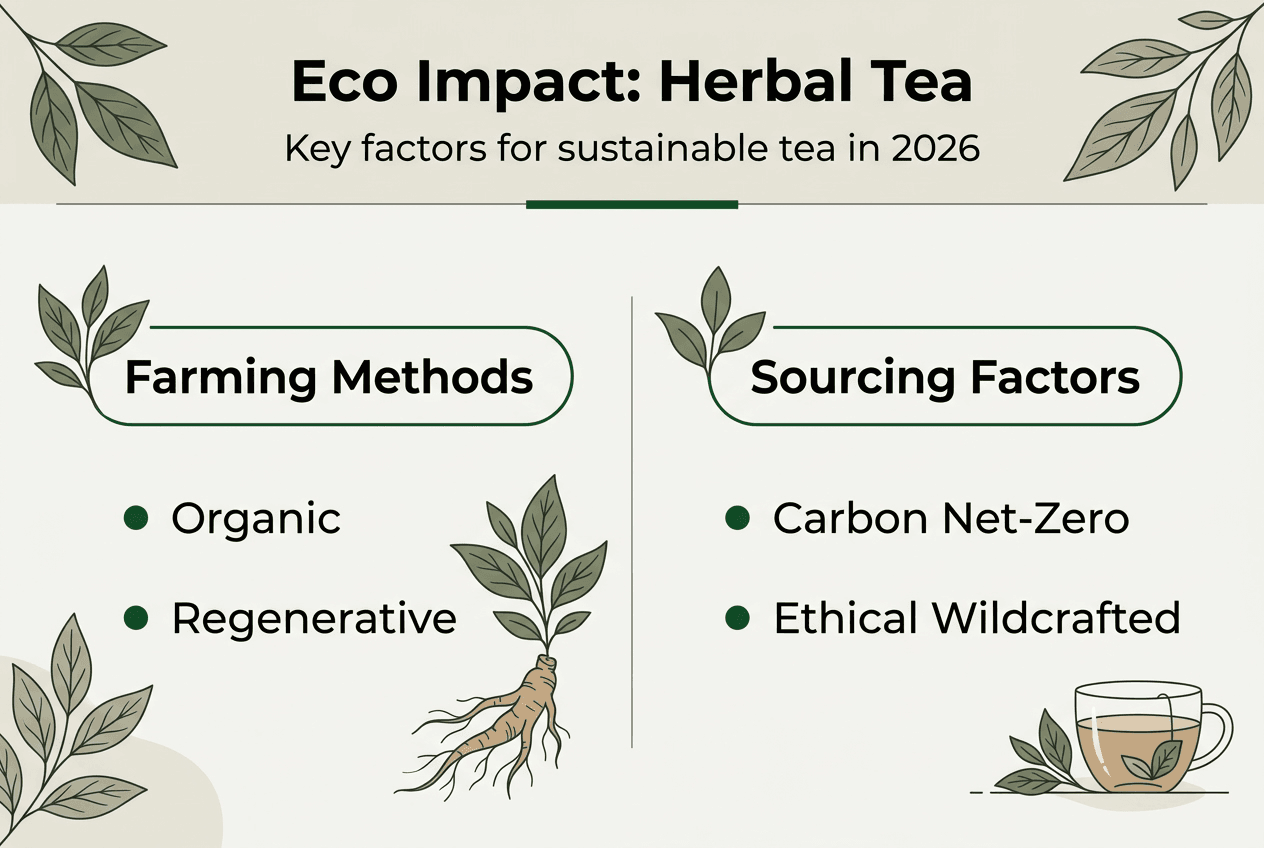
Avoid ambiguous wildcrafted claims unless backed by verifiable documentation. As discussed earlier, most wildcrafted labels lack substance. Instead, seek products with specific harvest protocols, third-party verification, and transparent supply chain information. If a brand can’t or won’t provide these details, assume the wildcrafted claim is marketing language rather than meaningful sustainability.
Benefit-sharing agreements represent another crucial consideration. The 2019 rooibos agreement established a framework ensuring traditional knowledge holders receive fair compensation from commercial rooibos sales. Similar arrangements should exist for other herbs with indigenous origins. Companies respecting these agreements contribute to social sustainability alongside environmental protection.
Pro Tip: Create a shortlist of three to five tea brands meeting your sustainability standards, then rotate purchases among them. This approach supports multiple responsible companies while keeping your tea selection interesting.
Prioritize these factors when selecting herbal teas:
- Certified organic farming methods
- Documented regenerative agriculture practices
- Fair trade or direct trade relationships
- Carbon offset or net-zero programs
- Transparent supply chain information
- Benefit-sharing with indigenous communities
- Minimal packaging using recyclable materials
| Selection Criterion | How to Verify | Why It Matters | | — | — | | Organic certification | Look for USDA Organic or equivalent seal | Protects soil health and water quality | | Carbon offset program | Check brand website for emissions reports | Reduces net greenhouse gas contribution | | Fair compensation | Verify fair trade certification or published sourcing policy | Ensures growers receive living wages | | Supply chain transparency | Review brand documentation of farm partnerships | Indicates genuine commitment vs. greenwashing |
Your purchasing power extends beyond individual environmental impact. Every eco-conscious purchase signals market demand for sustainable practices, encouraging more companies to adopt responsible sourcing. As consumer preference shifts toward verified sustainability, even conventional brands feel pressure to improve their practices or risk losing market share.
When you support responsible sourcing coffee tea, you join a growing movement demanding transparency and accountability from beverage companies. This collective action drives industry-wide change more effectively than any single consumer choice.
The eco friendly tea benefits extend far beyond your personal consumption. Sustainable tea production protects biodiversity, sequesters carbon, preserves traditional knowledge, and supports rural livelihoods. Each cup from a responsible source contributes to these broader positive outcomes.
Explore eco-conscious tea and coffee options
Ready to put your sustainability knowledge into practice? EcoVibe Roast offers carefully curated coffee and tea products that align with the environmental values discussed throughout this guide. Every purchase supports initiatives that plant mangrove trees and remove ocean-bound plastics, directly addressing critical environmental challenges.

Their single serve collection provides convenient options without sacrificing sustainability standards. These pods use materials designed for minimal environmental impact while delivering consistently excellent flavor. You can enjoy quick preparation without the guilt that typically accompanies single-use products.
Explore their environmental impact initiatives to understand exactly how your purchases create positive change. Transparency matters, and EcoVibe Roast documents their tree planting and plastic removal efforts with specific metrics and partner organizations.
The 60 pack single serve coffee pods offer an economical entry point for trying sustainably sourced coffee. This size provides enough variety to discover your preferences while supporting responsible production practices from your first purchase.
Frequently asked questions about herbal teas and eco impact
What certifications guarantee herbal tea sustainability?
USDA Organic, Fair Trade Certified, and Rainforest Alliance certifications provide the most reliable sustainability guarantees. These third-party verifications ensure herbs meet specific environmental and social standards throughout production. Carbon neutral certifications add another layer by verifying greenhouse gas offset programs.
How can I verify if a tea labeled wildcrafted is truly ethical?
Request harvest documentation showing specific locations, sustainable practices, and stewardship protocols. Legitimate wildcrafted products include third-party certification and transparent supply chain information. If brands can’t provide these details, treat wildcrafted claims as unverified marketing language.
Does choosing organic herbal teas reduce environmental impact?
Organic certification eliminates synthetic pesticides and fertilizers that harm soil health and contaminate water systems. Organic farming supports biodiversity and reduces chemical runoff into surrounding ecosystems. However, organic alone doesn’t guarantee carbon neutrality or fair labor practices, so consider additional certifications.
What role do carbon offsets play in herbal tea production?
Carbon offsets balance unavoidable production emissions by funding projects that remove equivalent greenhouse gases from the atmosphere. Tea companies use offsets for emissions they can’t eliminate through improved farming or processing methods. Verified offset programs ensure funds support legitimate reforestation or renewable energy projects.
How does supporting fair benefit-sharing improve eco impact?
Benefit-sharing agreements ensure indigenous communities and traditional knowledge holders receive fair compensation for commercially used herbs. This economic support helps communities maintain sustainable harvest practices and protect ecosystems. Fair compensation also preserves traditional ecological knowledge that guides responsible wildcrafting and cultivation methods.
Recommended
- Why Choose Eco-Friendly Tea for a Greener Planet – EcoVibe Roast
- How to choose eco tea products for sustainable benefits – EcoVibe Roast
- Why Support Eco-Friendly Coffee & Tea in 2026: Cut 50% Carbon – EcoVibe Roast
- What is ethical tea sourcing: a 2026 guide – EcoVibe Roast
- Why We Chose Recyclable Over Compostable Hint: It’s Better for the Bea
- Eco-Friendly Clothing Explained: Beyond Green Labels – Smoked Times


