

TL;DR:
- Sustainability certifications greatly influence coffee consumers’ willingness to pay more, especially for Organic and Fairtrade labels. Clear, verified packaging claims and targeted messaging align with buyer values to build loyalty. Store atmosphere, including music choices like jazz, also enhances emotional engagement and sales.
Coffee’s impact on purchasing decisions is defined by a powerful mix of sustainability certifications, product origin, packaging claims, and the sensory atmosphere where you buy it. When you reach for a bag of beans, you’re not just choosing a flavor. You’re signaling your values, your environmental awareness, and your willingness to pay for what you believe in. Labels like Organic, Fairtrade, and Rainforest Alliance shape your buying habits in measurable ways, and the store environment around you does too. Understanding these forces helps you shop with both your heart and your head.
Which coffee certifications most affect consumer willingness to pay a premium?
Sustainability certifications are the single biggest driver of premium pricing in the coffee market. When you see a label like Organic or Fairtrade on a bag, it signals more than farming practice. It tells you a story about fair wages, shade-grown fields, and biodiversity protection.
The numbers are telling. 26% of consumers will pay more for Organic coffee, 24% for Fairtrade, and 23% for Rainforest Alliance or UTZ certified products. That spread is narrow, which means these three certifications compete closely for your trust and your wallet.
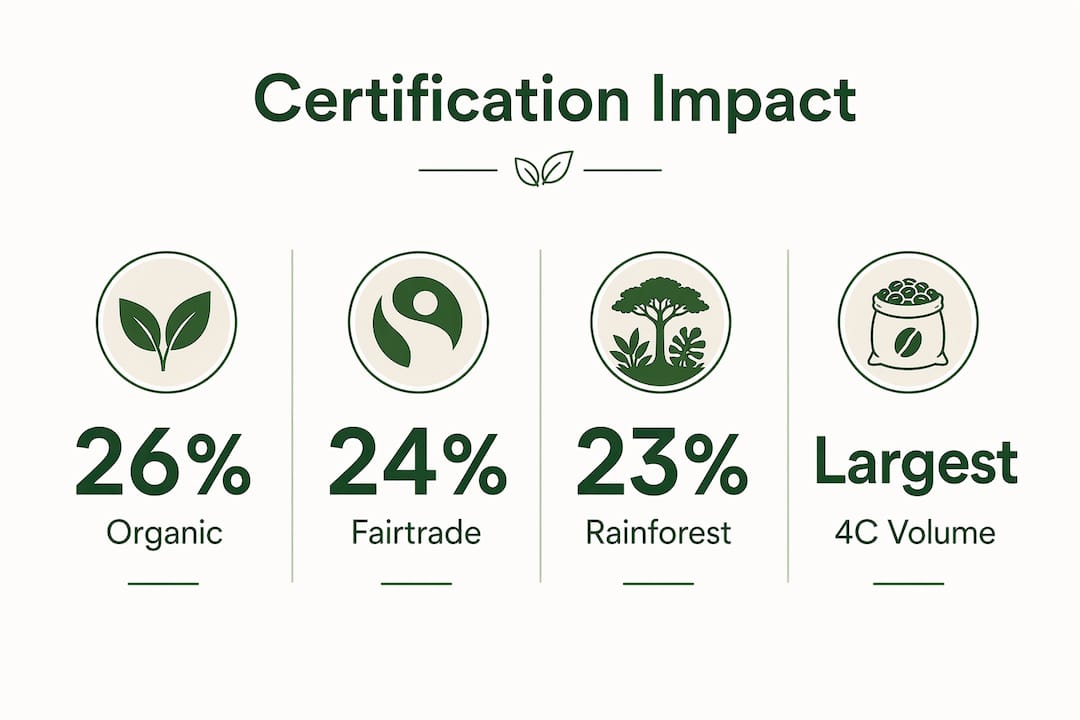
Not every certification earns the same respect, though. The 4C certification covers the largest production volume in the world, yet only 19% of consumers say they’d pay more for it. That gap reveals a critical truth: market scale does not equal consumer connection. The 4C standard lacks the emotional storytelling that Fairtrade and Organic have built over decades.
Awareness is the other challenge. Fewer than half of consumers are fully familiar with the main coffee sustainability certifications. That means millions of shoppers walk past certified products without knowing what those labels actually mean. Brands that close this education gap earn loyalty that goes far beyond a single purchase.
Here’s what the certification landscape looks like in practice:
- Organic leads in consumer willingness to pay, tied to health and chemical-free farming.
- Fairtrade resonates most with buyers who prioritize fair wages and producer equity.
- Rainforest Alliance appeals to biodiversity and ecosystem protection values.
- 4C dominates production but struggles with consumer recognition and emotional pull.
The lesson here is clear. Certifications alone are insufficient; brands that communicate the purpose behind each label build deeper loyalty. If you want to make your coffee buying habits count, look for brands that explain their certifications rather than just display them. Ecoviberoast does exactly this, pairing every certified product with the story of where it came from and why it matters. You can learn more about how certifications work and what each label actually guarantees before your next purchase.
How do eco-labels and packaging claims shape purchase intentions?
Packaging is not just a container. It’s a conversation your coffee has with you before you even open the bag. Environmental promises printed on packaging carry real weight in your decision-making process.
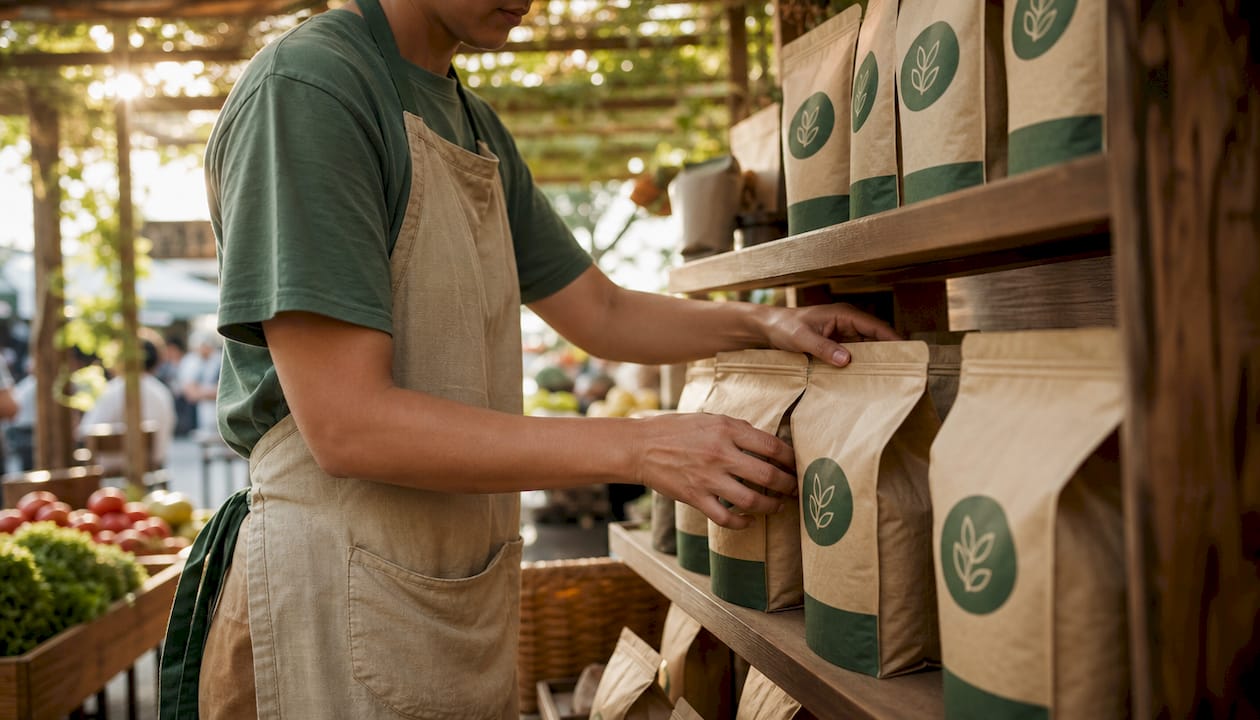
Research shows that environmental promises on packaging contribute to 27.1% of coffee purchase intention. That figure means more than a quarter of your decision to buy is shaped by what the label says about the planet. Clarity and credibility are the two factors that make those claims land.
Vague eco-claims like “eco-friendly” or “green” without specifics tend to backfire. Shoppers who care about sustainability are also skeptical shoppers. They notice when a claim is hollow. Specific, verifiable statements, such as “certified compostable packaging” or “sourced from Rainforest Alliance farms,” build trust far more effectively.
Here’s what makes an eco-label work for you as a conscious buyer:
- Specificity: The claim names a concrete action or standard, not a vague aspiration.
- Verification: A recognized third-party body backs the claim.
- Relevance: The environmental benefit connects directly to the product’s production or packaging.
- Visibility: The label appears prominently, not buried in fine print.
Pro Tip: When evaluating a coffee brand’s packaging claims, search for the certifying body’s name alongside the claim. If a label says “sustainably sourced” but names no certifying organization, treat it as unverified marketing rather than a confirmed standard.
Ecoviberoast takes this seriously. Every product listing explains the environmental commitments behind the coffee, from mangrove tree planting to ocean-bound plastic removal. That kind of transparency is exactly what eco-conscious coffee buyers deserve.
What psychological and social factors shape responses to coffee sustainability labels?
Your response to a sustainability label is not purely rational. It’s shaped by your identity, your political values, and even your social environment. This is where coffee buying habits get genuinely fascinating.
Research on consumer psychology shows that label effectiveness varies by consumer segment, with political identity and environmental concern playing major roles. A buyer who identifies strongly with environmental causes responds differently to the same Rainforest Alliance label than someone who prioritizes price above all else. Neither response is wrong. They’re just different, and brands that ignore this distinction waste their messaging.
Here are four psychological and social factors that shape how you respond to coffee sustainability labels:
- Environmental concern level. Buyers with high environmental awareness actively seek out certifications and read label details. Buyers with lower concern need a simpler, more benefit-focused message to engage.
- Political identity. Targeted messaging aligned with buyer values outperforms generic sustainability claims. A message about community support resonates differently than one about carbon reduction, depending on who’s reading.
- Social conformity. Popularity signals, such as “bestselling ethical coffee,” influence buyers who look to peer behavior for purchasing cues. Combined environmental and social labels show stronger effects than either alone.
- Personal ritual and identity. Coffee consumption is a daily ritual tied to self-image. When a label aligns with how you see yourself, whether as an environmentalist, a community supporter, or a quality-first buyer, the purchase feels like an expression of who you are.
Sustainability information tailored to consumer psychology works far better than blanket labels. Brands that understand this invest in storytelling and origin transparency rather than one-size-fits-all eco-messaging. Ecoviberoast’s approach to value-aligned coffee choices reflects this understanding, connecting each product to a specific environmental or social outcome.
How does the retail atmosphere affect your coffee purchasing decisions?
The store or café where you buy coffee shapes your choices in ways you probably don’t notice. Sensory marketing, particularly background music, has a measurable effect on your mood, your time in the store, and ultimately what you buy.
A field study using EEG data and sales records found that background music aligned with brand atmosphere boosts emotional engagement and increases sales in coffee retail settings. Jazz music, specifically, showed significant positive effects on buyer mood and purchase behavior. That’s not a coincidence. Jazz carries associations of warmth, sophistication, and leisure, all feelings that pair naturally with the coffee experience.
The neurophysiological evidence goes deeper. Music genres with low rhythmic intensity and rich aesthetics induce stronger relaxation and purchasing behavior than intense or complex genres. A calm, melodic soundtrack slows you down just enough to browse, consider, and buy.
For online shoppers, the equivalent of sensory atmosphere is the visual and emotional design of a website. Warm colors, clear product photography, and a calm, inviting layout create the same psychological comfort that good music does in a physical store.
Pro Tip: If you find yourself lingering longer in a coffee shop or spending more than planned, check the music. Retailers use sound deliberately to shape your mood and extend your visit. Knowing this helps you shop with intention rather than impulse.
Sensory interventions in coffee retail are not manipulation. They’re an invitation to slow down and enjoy the experience. The best coffee brands, whether physical or online, create environments that feel like a warm hug for both you and the planet.
Key Takeaways
Coffee purchasing decisions are shaped most powerfully by certification credibility, eco-label clarity, value-aligned messaging, and the sensory environment where buying happens.
| Point | Details |
|---|---|
| Certification premiums vary | Organic leads at 26% willingness to pay, followed closely by Fairtrade at 24% and Rainforest Alliance at 23%. |
| Awareness gap is real | Fewer than half of consumers fully understand major coffee certifications, creating a major opportunity for transparent brands. |
| Eco-label specificity matters | Vague packaging claims reduce trust; specific, third-party-verified statements drive purchase intention most effectively. |
| Messaging must match values | Targeted sustainability messaging outperforms generic labels, especially when aligned with buyer identity and environmental concern. |
| Sensory environment drives sales | Background music with low rhythmic intensity, such as jazz, measurably increases emotional engagement and purchase behavior in coffee retail. |
Why I think most coffee shoppers are reading labels wrong
I’ve spent years watching how people interact with coffee certifications, and the pattern is consistent. Most shoppers glance at a label, recognize a logo, and assume the job is done. It isn’t.
The real question isn’t whether a bag carries a Fairtrade seal. It’s whether the brand behind that seal can tell you what farm it came from, what the farmers were paid, and what happened to the land after harvest. Certifications are a starting point, not a finish line. The brands worth your loyalty are the ones that treat the label as a promise they’re eager to explain, not a badge they slap on for shelf appeal.
I’ve also noticed that shoppers with the strongest values often feel the most confused by the sheer number of labels available. Organic, Fairtrade, Rainforest Alliance, 4C, Bird Friendly. Each one measures something different, and none of them measures everything. My honest advice is to pick two or three values that matter most to you, whether that’s fair wages, biodiversity, or chemical-free farming, and then find brands that specifically address those values with transparency. You don’t need to master every certification. You need to find brands that do the work and show it.
Ecoviberoast earns trust this way. The brand connects each purchase to a concrete outcome, like planting mangrove trees or removing ocean-bound plastics. That’s the kind of accountability that makes a label mean something. For a deeper look at what different certifications actually guarantee, the 7 types of coffee certifications guide is one of the clearest breakdowns I’ve seen for everyday shoppers.
— LaSaundra
Ecoviberoast: certified coffee that shows its work
Choosing coffee that aligns with your values shouldn’t feel like a research project. Ecoviberoast makes it straightforward by offering certified, sustainably sourced coffee and tea products with clear, honest storytelling behind every label.

Every purchase through Ecoviberoast supports real environmental outcomes, from mangrove restoration to ocean plastic removal. The selection includes organic and Fairtrade certified coffees alongside herbal teas like the Hibiscus Berry Tea, a refreshing organic option for shoppers who want their beverage choices to reflect their values. For something floral and delicate, the Jasmine Tea offers premium loose-leaf quality with ethical sourcing built in. When you shop with Ecoviberoast, the label always comes with the story behind it.
FAQ
What certifications most influence coffee purchasing decisions?
Organic, Fairtrade, and Rainforest Alliance certifications drive the highest consumer willingness to pay a premium, at 26%, 24%, and 23% respectively. These labels resonate because they connect to specific values like health, fair wages, and biodiversity.
Does coffee packaging affect how much consumers trust a brand?
Environmental promises on packaging account for 27.1% of coffee purchase intention, making label clarity and credibility major trust factors. Specific, third-party-verified claims outperform vague eco-language every time.
Why do some coffee certifications have more impact than others?
Consumer recognition and emotional storytelling determine a certification’s impact more than its market scale. The 4C certification covers the largest production volume globally, yet only 19% of consumers say they’d pay more for it, because the label lacks the narrative depth that Fairtrade and Organic have built.
How does store atmosphere influence coffee buying habits?
Background music aligned with a coffee brand’s atmosphere measurably increases emotional engagement and sales. Jazz and other low-intensity genres induce relaxation and extend browsing time, which directly raises purchase likelihood.
Does sustainability messaging work the same way for all coffee shoppers?
Label effectiveness varies significantly by consumer segment. Buyers with strong environmental concern respond to detailed certification information, while others need simpler, benefit-focused messaging tied to their personal values.


