

TL;DR:
- Supporting environmental causes effectively involves combining high-impact lifestyle changes with civic participation and strategic donations to vetted organizations. Engaging in actions like reducing car use, flying less, and switching to renewable energy significantly lowers individual emissions, while community involvement amplifies systemic change. Focus on realistic steps, build sustained habits, and advocate for policies to maximize your positive ecological impact over time.
Supporting environmental causes is defined as taking deliberate, evidence-based actions across your lifestyle, community, and advocacy channels to reduce ecological harm and restore natural systems. You do not need to overhaul your entire life overnight. The most effective approach combines a handful of high-impact personal behaviors with civic engagement and strategic financial support. Organizations like the World Resources Institute (WRI), the EPA, and GiveWell have mapped out which actions actually move the needle, and the answers are sometimes surprising. This guide walks you through each layer so you can build a plan that fits your life and genuinely makes a difference.
What are the most effective lifestyle changes to support environmental sustainability?
Prioritizing a few high-impact behaviors maximizes your personal emissions reductions far more efficiently than making dozens of small swaps. WRI ranks living car-free, flying less, and switching to renewable energy at home as the top three individual actions for cutting carbon. That means skipping the reusable straw in favor of selling your second car will do far more good, even if it feels less visible.
Here are the lifestyle shifts worth prioritizing, in order of impact:
- Reduce or eliminate car use. Shifting to public transit, biking, or walking cuts transportation emissions dramatically. If going car-free is not realistic where you live, carpooling and combining errands still make a meaningful dent.
- Fly less. A single round-trip transatlantic flight can generate more carbon than months of driving. When travel is unavoidable, choose direct routes and economy class, since business class seats carry a larger per-passenger footprint.
- Switch to renewable energy at home. Sign up for a green energy plan through your utility, install solar panels if your budget allows, or purchase renewable energy certificates. Systemic support like financial incentives for solar and electric vehicles makes this step far more accessible, which is why advocating for those policies matters too.
- Shift toward a plant-rich diet. Reducing meat consumption, especially beef and lamb, lowers your food-related emissions significantly. Resources like the Granavitalis guide on sustainable nutrition choices explain how dietary shifts connect directly to land use and water conservation.
- Start composting. The EPA recommends a brown-to-green ratio of 2 to 3 parts browns (dried leaves, cardboard) to 1 part greens (food scraps, grass clippings) for effective home composting. Getting that ratio right keeps your pile from smelling and speeds up decomposition. Composting diverts food waste from landfills, where it would otherwise produce methane, a greenhouse gas far more potent than carbon dioxide over a 20-year period.
Pro Tip: If your compost pile smells, it almost always means too many greens or too much moisture. Add a layer of dried leaves or torn cardboard, then turn the pile to aerate it. According to Purdue Agriculture, fixing a smelly pile is usually that simple.
Not every option is equally accessible. Going car-free in a rural area without reliable transit is genuinely difficult, and that is not a personal failing. Focus on the changes that are realistic for your situation, then use your voice to push for the systems that make the harder changes possible for everyone.
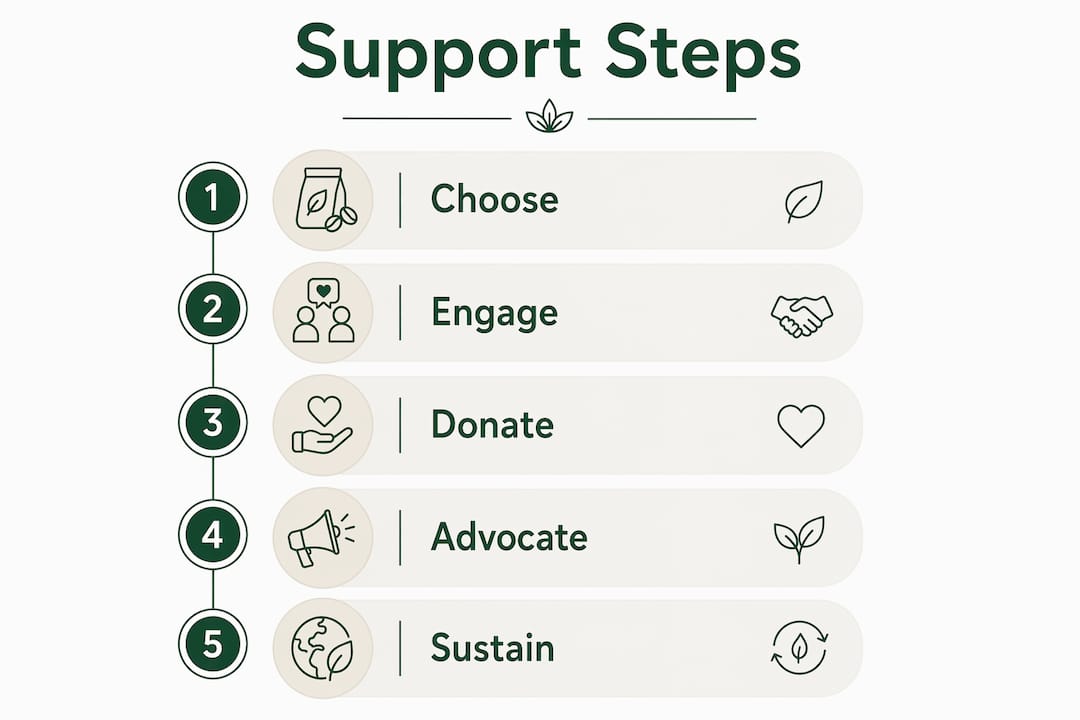
How can community engagement and civic participation amplify your impact?
Individual lifestyle changes matter, but climate action framed as community participation sustains motivation and drives policy change far more effectively than isolated consumer choices. When you plug into a community, your impact multiplies through shared effort and collective influence.
Here are the most powerful ways to get involved locally:
- Vote in every local election. City councils, school boards, and county commissioners make decisions about zoning, public transit funding, and pollution control every day. Local election outcomes directly shape air quality standards, water conservation policies, and renewable energy incentives in your area. Researching candidates’ environmental records before you vote takes less than an hour and pays dividends for years.
- Join tree-planting and cleanup events. Urban tree planting is linked to cardiovascular and mental health improvements alongside measurable ecosystem benefits like carbon sequestration and improved air quality. Organizations like American Forests and local conservation districts regularly host planting days that welcome volunteers of all skill levels.
- Participate in beach and river cleanups. Groups like Ocean Conservancy coordinate thousands of cleanup events annually. Showing up is one of the most tangible ways to support ecological causes and connect with like-minded people in your area.
- Sign petitions and contact elected officials. A personal phone call or letter to a city council member carries more weight than most people realize. Elected officials track constituent contact, and a handful of calls on a specific issue can shift a vote.
“The most powerful thing you can do for the climate is to be a citizen, not just a consumer.” This framing, echoed by climate researchers and policy advocates alike, captures why civic participation belongs at the center of any environmental support strategy.
Spreading awareness within your own network is also a legitimate form of environmental activism. Sharing a well-sourced article, hosting a neighborhood composting workshop, or simply talking about your choices with friends creates a ripple effect that no individual action can replicate on its own.
What should you consider when donating to environmental charities?

Donating to environmental organizations is one of the most scalable ways to support environmental impact, but not all charities use funds equally well. Give.org recommends using the BBB’s 20 Standards for Charity Accountability to evaluate any organization before you give. Those standards cover governance, financial transparency, fundraising practices, and mission clarity.
| Evaluation factor | What to look for |
|---|---|
| Financial transparency | At least 65% of expenses directed toward program activities, not overhead |
| Governance | Independent board members with no conflicts of interest |
| Mission alignment | Clear focus on climate, conservation, or environmental justice |
| Measurable outcomes | Reported metrics like acres protected, tons of carbon offset, or species recovered |
| Third-party vetting | Listed on GiveWell, Charity Navigator, or give.org with current ratings |
Environmental causes fall into three broad categories: climate change mitigation (reducing emissions), conservation (protecting ecosystems and species), and environmental justice (addressing pollution burdens in underserved communities). Aligning your donations with the issues you care most about makes giving feel personal and keeps you engaged over time.
Pro Tip: 80,000 Hours frames high-impact giving as donating up to 10% of income to effective causes while also engaging politically and multiplying influence through your network. Even a smaller, consistent monthly gift to a vetted organization outperforms a one-time large donation in terms of organizational planning and long-term impact.
Resources like GiveWell and give.org do the vetting work for you. If you want to support green initiatives without spending hours researching, start with their recommended lists and narrow down by cause area.
How can individual actions and systemic advocacy be combined for greater impact?
The most honest truth about environmental activism is this: 90% of the emissions impact from behavioral interventions depends on enabling systems, with only 10% coming from direct individual effort. That statistic does not mean personal choices are pointless. It means they work best when paired with advocacy for the systems that make those choices available to everyone.
Here is how to combine both layers effectively:
- Advocate for clean transit and renewable energy policy. Write to your congressional representative about federal transit funding. Support ballot measures for local solar incentives. These actions extend your personal choices into systemic change.
- Use your network as a force multiplier. 80,000 Hours research shows that using skills and networks to amplify effective organizations through advocacy and fundraising can exceed the impact of individual donations. Organizing a fundraiser for a vetted environmental nonprofit or recruiting friends to volunteer doubles your reach without doubling your effort.
- Share verified information. Misinformation slows climate action. Sharing content from WRI, the EPA, or peer-reviewed sources builds public understanding and counters narratives that stall policy progress.
- Sustain your engagement with community. Motivation fades when environmental work feels lonely or overwhelming. Joining a local chapter of groups like the Sierra Club or Sunrise Movement connects you with people who share your values and keep collective momentum alive.
- Integrate your approach. Combining donations, advocacy, and lifestyle changes within a personal plan maximizes impact by influencing systems beyond individual consumption. Think of it as a three-legged stool: remove any one leg and the whole thing tips over.
The goal is not perfection. It is consistent, layered engagement that compounds over time. Every conversation you start, every vote you cast, and every dollar you direct toward a trusted organization adds to a collective effort that no single person could achieve alone.
Key takeaways
Supporting environmental causes most effectively requires combining high-impact lifestyle changes, civic participation, and strategic donations to vetted organizations rather than relying on any single approach.
| Point | Details |
|---|---|
| Prioritize high-impact behaviors | Living car-free, flying less, and using renewable energy cut emissions far more than small swaps. |
| Engage civically | Voting in local elections and joining community conservation events creates systemic environmental benefits. |
| Vet charities before donating | Use BBB standards, GiveWell, and give.org to confirm transparency and measurable outcomes. |
| Combine individual and systemic action | Personal choices paired with policy advocacy multiply your environmental impact significantly. |
| Use your network | Sharing opportunities and fundraising for effective organizations often exceeds the impact of solo donations. |
What I’ve learned from years of watching people try to “go green”
I have spent a long time observing how people approach environmental support, and the pattern I see most often is this: someone gets inspired, makes a dozen small changes at once, burns out within three months, and quietly stops. The problem is not lack of commitment. It is strategy.
The people who sustain their environmental engagement over years are not the ones who do everything. They are the ones who picked two or three high-leverage actions, got comfortable with those, and then added more over time. One person I know went car-free first, then started composting a year later, then began donating monthly to a land trust. Each step built on the last without overwhelming her daily life.
I also think we underestimate how much community matters for motivation. Doing this work alongside other people, whether that is a neighborhood cleanup crew or an online group of conscious consumers, makes the effort feel shared rather than solitary. That sense of shared purpose is what keeps people going when the news cycle gets discouraging.
My honest advice: do not try to optimize every corner of your life at once. Pick the highest-impact change that is realistic for you right now, do it consistently, and then look for ways to advocate for the systems that make the next step easier for everyone. That is not settling. That is how lasting change actually works.
— LaSaundra
Sip sustainably with Ecoviberoast
Every cup of coffee or tea you brew is a small choice, and those choices add up. Ecoviberoast makes it easy to align your daily ritual with your environmental values. Every purchase supports tree planting and plastic reduction efforts, from planting mangrove trees to removing ocean-bound plastics. The sourcing is responsible, the packaging is designed with the planet in mind, and the flavors are genuinely worth waking up for.

If you want to learn more about how your beverage choices connect to broader ecological goals, the Ecoviberoast guide on supporting the environment with coffee is a great next read. And if you are ready to try something new, the Hibiscus Berry Tea is a refreshing, organic option that is as good for you as it is for the planet. A warm mug that does good. That is the kind of daily habit worth building.
FAQ
What are the highest-impact ways to support environmental causes?
Living car-free, flying less, and switching to renewable energy at home are the highest-impact personal actions for reducing carbon emissions, according to WRI. Pairing these with civic engagement and donations to vetted organizations amplifies your overall impact.
How do I know if an environmental charity is trustworthy?
Use BBB’s 20 Standards for Charity Accountability and cross-reference with GiveWell or give.org to verify transparency, governance, and financial accountability before donating. Look for organizations that report measurable outcomes like acres protected or carbon offset.
How does composting help the environment?
Composting diverts food waste from landfills, where it would otherwise produce methane, and returns nutrients to soil. The EPA recommends a brown-to-green ratio of 2 to 3 parts browns to 1 part greens for effective results at home.
Can one person really make a difference in environmental causes?
Yes, especially when individual actions are combined with advocacy and community engagement. Research from 80,000 Hours shows that using your network to amplify effective organizations can exceed the impact of personal donations alone.
How can I advocate for the environment without a large platform?
Contacting local elected officials, voting in every election, and sharing verified environmental information within your personal network are all proven ways to advocate for the environment. Local civic actions often have more direct policy impact than national campaigns.


