

TL;DR:
- Supporting grassroots coffee projects empowers local communities to lead sustainable, environmentally friendly farming initiatives. These programs foster long-lasting social and economic resilience by building governance, promoting ecological practices, and including women in decision-making. Your purchasing choices can drive structural change by favoring brands committed to community-led partnerships and long-term relationships.
Every morning, your cup of coffee connects you to thousands of farmers whose livelihoods depend on choices made thousands of miles away. Most consumers genuinely want their purchases to count, yet the coffee supply chain is dense enough that it’s hard to know where your money actually goes. Understanding why support grassroots coffee projects matters goes far beyond feel-good marketing. It means understanding how community-led farming initiatives create lasting environmental healing, stronger local economies, and real social change that persists long after any single donation or purchase.
Table of Contents
- Key takeaways
- Why grassroots coffee projects matter
- Environmental benefits of grassroots coffee farming
- Economic and social impact on communities
- How grassroots projects build lasting resilience
- Practical ways to support coffee projects
- My take on why this matters more than ever
- Sip with purpose: how Ecoviberoast supports what you care about
- FAQ
Key takeaways
| Point | Details |
|---|---|
| Grassroots beats charity | Community-owned projects outlast short-term aid by building local leadership and governance that sustains itself. |
| Eco-farming delivers results | Ecological practices in coffee farming can reduce crop disease by up to 93% while increasing yields without added costs. |
| Women’s inclusion multiplies impact | Training women in business skills and governance strengthens entire farming communities, not just individual households. |
| Cooperatives shift power | Supporting grassroots cooperatives gives smallholder farmers real bargaining power against price-controlling intermediaries. |
| Your buying choices are votes | Choosing brands with verified grassroots partnerships translates consumer spending into structural community change. |
Why grassroots coffee projects matter
So, what exactly is a grassroots coffee project? The name says it all. These are initiatives built from the ground up, meaning they are designed, led, and governed by the farming communities themselves rather than imposed from the outside.
A grassroots coffee initiative might look like a farmer-owned cooperative in Guatemala pooling resources to access specialty markets. It might be a community-led training program teaching ecological farming techniques in Kenya, or a women’s savings group in Ethiopia that decides how to reinvest profits into local schools and health services. What these programs share is local ownership. The community sets priorities. The community leads.
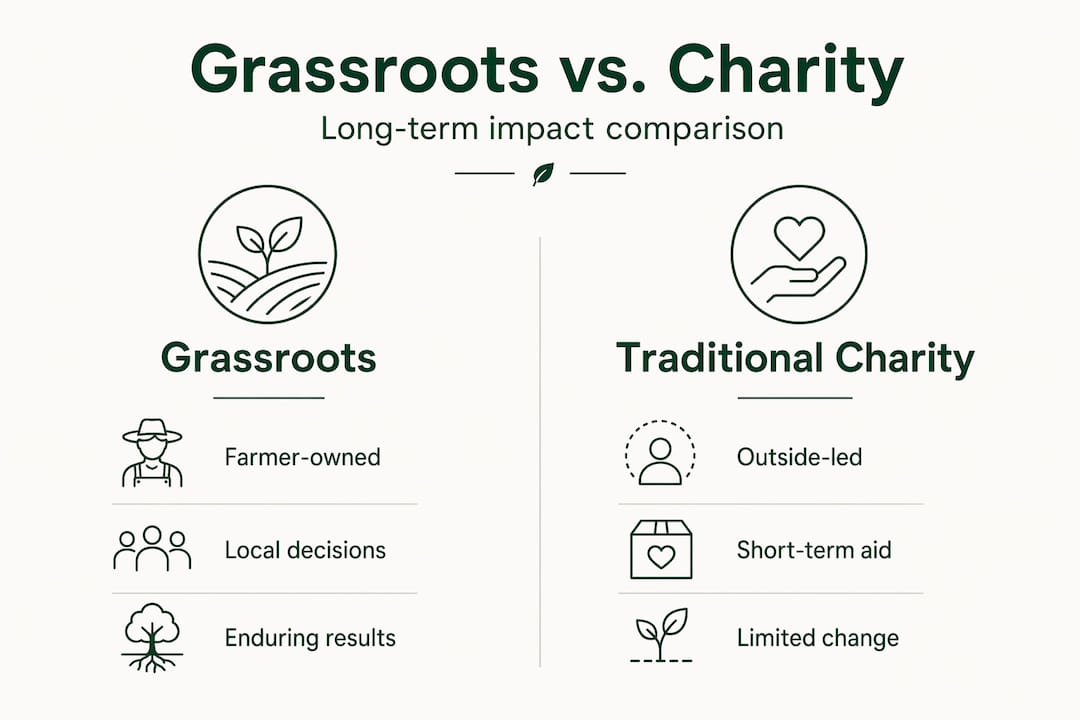
This distinction matters enormously because it changes long-term outcomes. Compare it to traditional charity, where outside organizations bring in inputs, train farmers on prescribed methods, and then leave. When the funding dries up, the gains often disappear too. Grassroots coffee initiatives, by contrast, build institutions. International Coffee Partners has engaged over 125,700 farming families since 2001, investing €25 million while working across 13 coffee-producing countries with a holistic approach covering climate resilience, youth engagement, and gender equity. That kind of multi-decade engagement is only possible when local communities are genuine partners, not passive recipients.
Pro Tip: When evaluating a coffee brand’s sourcing claims, look specifically for language about “farmer-owned cooperatives” or “community-led programs” rather than generic “ethical sourcing.” Those phrases signal a fundamentally different kind of relationship.
Environmental benefits of grassroots coffee farming
Here is something most coffee drinkers never learn: the way a coffee farm is managed has a direct, measurable effect on the health of entire ecosystems surrounding it. And grassroots farming practices consistently outperform conventional methods on every environmental measure.
Take a look at what the data actually shows:
| Environmental benefit | Grassroots/ecological practice | Measured outcome |
|---|---|---|
| Disease reduction | Organic mulching, composting, IMOs | 89–93% disease reduction in first year |
| Yield improvement | No-tillage ecological farming | 1.12 kg more per tree without added costs |
| Carbon storage | Coffee agroforestry systems | 40–190 tons C/ha stored |
| Biodiversity support | Shade-grown, diversified agroforestry | 90+ native species supported per farm system |
| Erosion control | Ground cover and canopy farming | 60–70% reduction in erosion risk |
Coffee agroforestry, which is the practice of growing coffee plants beneath a canopy of diverse native trees, is one of the most effective land-use strategies available. It works as a living carbon sink. It provides habitat for birds, insects, and mammals that would otherwise vanish from cleared agricultural land. It cools the microclimate for coffee plants, improving bean quality naturally. And because biodiversity in coffee farming translates to healthier soil, farmers using these methods need fewer external inputs year after year.
The key insight here is that these environmental benefits are cumulative. Agronomic training alone can underperform when it is applied only once or across a single cropping cycle. The ecological benefits strengthen over time as soil biology rebuilds, disease pressure drops, and farmers refine their techniques across multiple seasons. Grassroots programs that stay embedded in communities are the only model that supports this kind of sustained practice.
Pro Tip: Look for coffee labeled “shade-grown” or “agroforestry certified” as a quick proxy for farms that are likely practicing the ecological methods described above. These labels indicate that the farm is actively supporting biodiversity rather than clearing canopy for monoculture production.
Economic and social impact on communities
Picture this: a smallholder farmer in Kenya harvests her coffee and brings it to the nearest buyer. That buyer sets the price. She has no leverage, no alternatives, and no visibility into what her beans will sell for on international markets. This situation is not hypothetical. Approximately 700,000 Kenyan smallholder farmers face exactly this kind of value chain power asymmetry, where traders control pricing and farmers absorb the losses.
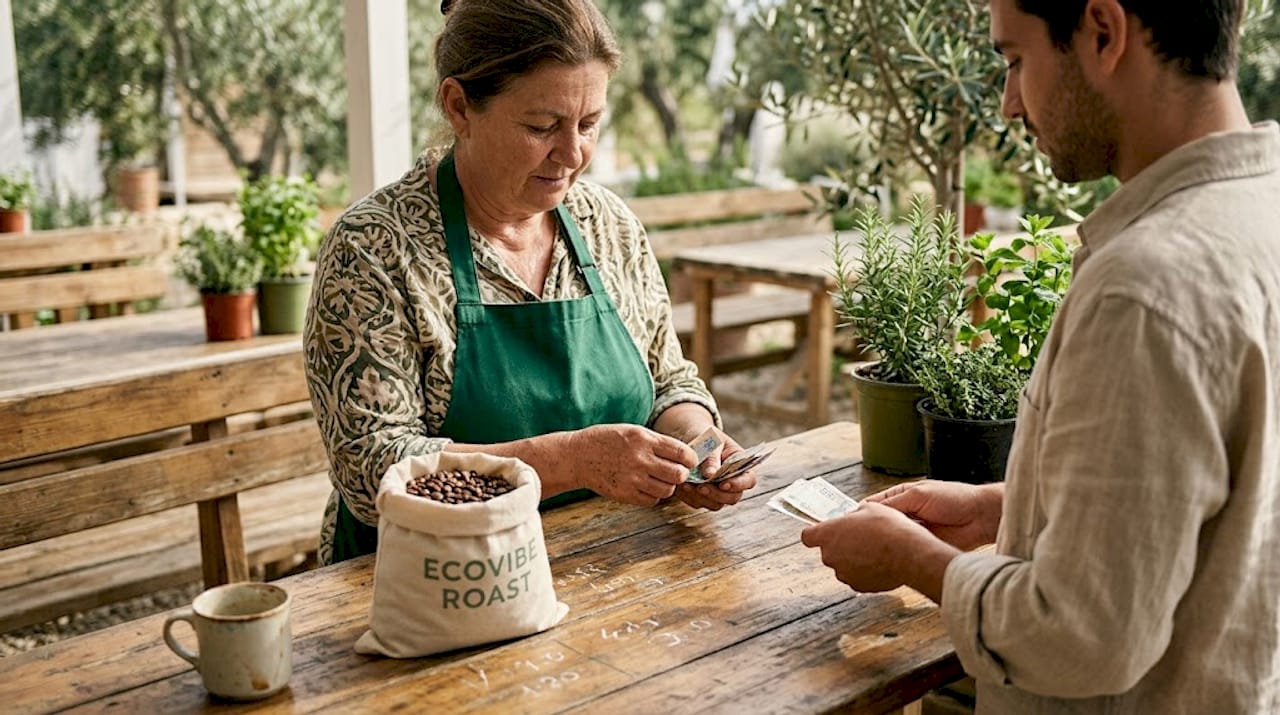
Grassroots cooperatives change this equation. When farmers organize collectively, they gain market access, shared storage facilities, collective bargaining power, and the ability to meet the volume requirements of premium buyers. Coffee agroforestry systems paired with cooperative market access can contribute roughly 66.6% of farmer income through diversification and quality improvements. That is transformative for households that previously survived on narrow margins.
The social impact of grassroots programs goes even deeper when they center women’s participation. Consider what happened in Ethiopia when the International Women’s Coffee Alliance funded a $5,000 grant:
“Thirty-three women gained business and life skills training, leading to their own coffee associations and shaping governance continuity well beyond the funding period.” — Women in Coffee
That ratio of impact to investment is remarkable. When women gain financial decision-making skills, the benefits ripple outward to children’s nutrition, school enrollment, and community health. Grassroots support that includes women’s governance skills multiplies impact far beyond what any single farm input ever could.
The benefits for communities engaged in well-run grassroots programs include:
- Fair wages and profit-sharing through cooperative structures that cut out exploitative middlemen
- Access to specialty markets that reward quality with prices above commodity rates
- Financial literacy and savings programs that buffer households against income shocks
- Leadership development that keeps community knowledge alive when external programs end
How grassroots projects build lasting resilience
The difference between a program that transforms a community and one that merely helps it for a season comes down to what gets built structurally. Grassroots coffee initiatives that create lasting change focus on four key areas:
-
Farmer organization and governance. Strong cooperatives with documented processes, elected leadership, and transparent finances continue functioning when outside partners leave. This institutional muscle is what makes the difference between sustainable change and temporary improvement.
-
Life skills and financial education. Technical farming knowledge is necessary but not sufficient. Communities that receive training in savings habits, record keeping, and financial planning are far better equipped to manage both good harvests and difficult seasons.
-
Leadership continuity planning. The IWCA case study on governance continuity makes a critical point: the impact unit in effective grassroots programs is not just the individual farm. It is the locally governed organization. When leadership succession is planned and trained, the community’s capacity survives beyond any one leader or funding cycle.
-
Income diversification and risk spreading. Coffee prices are volatile. Weather events are unpredictable. Coffee Trust’s community model in Guatemala addresses this directly by supporting diverse enterprises and savings groups alongside coffee farming, giving families multiple income streams to fall back on when coffee markets dip. This is shared investment in resilience, not charity.
Community ownership is also central here. When communities set their own priorities rather than adopting externally imposed solutions, they invest in the outcomes. They protect what they built because they built it.
Practical ways to support coffee projects
Knowing the importance of coffee sustainability is one thing. Acting on it is another. Here is how you can make your coffee purchases and choices genuinely count:
- Choose brands with transparent sourcing. Look for companies that name their farmer partners, share their supply chain stories, and describe the specific cooperatives or community programs they work with. Vague claims of “ethically sourced” without specifics are a red flag.
- Prioritize long-term partnerships over single transactions. Long-term producer-roaster relationships build trust and allow for flexible problem-solving across seasons. Brands that maintain multi-year relationships with the same farming communities are investing in structural change.
- Support women-led cooperatives and programs. Actively seek out coffees sourced from women’s cooperatives or brands that fund women’s leadership programs. Your purchase becomes direct fuel for economic empowerment.
- Learn how coffee cooperatives empower communities. Understanding how cooperatives work makes you a more informed buyer and a stronger advocate in conversations with other consumers.
- Engage and share. Talk about why you choose the brands you do. Ethical consumerism grows when conscious consumers make their reasoning visible to friends, family, and social networks.
My take on why this matters more than ever
By LaSaundra
I have spent years watching the coffee industry use the word “sustainable” as a marketing word rather than a commitment. And I understand why consumers get skeptical. You see certification logos and ethical sourcing claims everywhere, but real information about what is actually changing on the ground is rare.
What I have come to believe, after looking at program after program, is that the single biggest predictor of lasting impact is whether a project treats farming communities as partners or as recipients. When communities lead, when women have seats at decision-making tables, and when organizations develop real governance capacity, the change sticks. A $5,000 grant that strengthens 33 women and creates a self-governing coffee chapter is not an anomaly. It is what community-led investment looks like at its best.
The pitfall I see most often is the rush toward short-term, feel-good purchases with no connection to whether the brand actually sustains relationships over multiple seasons. Ethical consumers are most powerful when they act as long-term allies rather than one-time buyers. That means choosing brands that stay honest about their supply chains, year after year, and rewarding those relationships with your continued loyalty.
You do not have to overhaul your entire lifestyle. You just have to know what to look for and stay curious.
— LaSaundra
Sip with purpose: how Ecoviberoast supports what you care about
At Ecoviberoast, every sip is a small act of care, both for you and for the planet. The brand’s sourcing philosophy is built around the same values explored throughout this article: community support, ecological responsibility, and long-term commitment over quick fixes.

When you shop at Ecoviberoast, your purchase actively contributes to planting mangrove trees and removing ocean-bound plastics. Whether you reach for the aromatic Hibiscus Berry Tea or the delicate Jasmine Tea, you are choosing products sourced with that same spirit of shared investment. Want to see exactly how your purchase makes a difference? Explore Ecoviberoast’s environmental impact efforts and join a community of conscious consumers who believe that great-tasting beverages and a healthier world go hand in hand.
FAQ
What are grassroots coffee projects?
Grassroots coffee projects are community-led initiatives where farmers and local organizations design, govern, and benefit from sustainability programs. Unlike externally imposed aid, these projects build local ownership, cooperative structures, and leadership capacity that persist after outside funding ends.
How do grassroots projects benefit the environment?
Ecological farming practices used in grassroots programs can reduce coffee disease by 89–93% and store up to 190 tons of carbon per hectare through agroforestry. These methods also support over 90 native species and reduce soil erosion risk by 60–70%.
Why is supporting women in coffee important?
Women’s inclusion in grassroots programs multiplies community-wide impact. Research shows that even modest investment in women’s business and governance training creates self-sustaining local leadership and improves household outcomes in nutrition, education, and economic stability.
How can I tell if a coffee brand supports grassroots initiatives?
Look for brands that name specific farmer cooperatives, describe multi-year sourcing relationships, and fund community programs beyond just fair pricing. Certifications are a starting point, but direct transparency about farm partnerships is the strongest signal of genuine grassroots support.
Do small purchases really make a difference?
Yes, especially when made consistently with the same brand over time. Long-term producer-roaster relationships allow brands to make structural investments in farming communities. Choosing to buy from the same ethical brand repeatedly creates the kind of sustained partnership that makes real change possible.


