

Choosing your morning coffee can feel like more than just a flavor decision—it is a chance to support both people and the planet. For eco-conscious coffee lovers, shade-grown coffee stands out by harnessing a rich canopy of native trees that not only preserves biodiversity but also creates higher species diversity compared to traditional sun-grown methods. Discover how making a mindful switch puts better quality in your cup while sustaining wildlife and communities from Latin America to Africa and Asia.
Table of Contents
- What Is Shade Grown Coffee? Key Facts And Myths
- Shade Grown Vs. Sun Grown Coffee Methods
- Environmental Benefits: Biodiversity And Ecosystem Health
- Social Impact: Fair Wages And Community Support
- Taste, Quality, And Consumer Choice
Key Takeaways
| Point | Details |
|---|---|
| Shade-Grown Coffee Supports Biodiversity | This method cultivates coffee under native tree canopies, enhancing ecosystems and benefiting both the environment and farmers. |
| Quality and Flavor Are Enhanced | Beans from shade-grown coffee develop richer flavors due to slower maturation processes compared to sun-grown coffee. |
| Economic Benefits for Farmers | Shade-grown coffee farming provides fair wages, diversified income sources, and supports community development. |
| Consumer Choices Matter | Purchasing shade-grown coffee helps promote sustainable practices and rewards ethical farming over cheaper, sun-grown alternatives. |
What Is Shade Grown Coffee? Key Facts and Myths
Shade-grown coffee is fundamentally different from what most people picture in a typical coffee plantation. Instead of endless rows of coffee plants under direct sunlight, shade-grown coffee thrives beneath a canopy of native trees that create a mini ecosystem.
Think of it as layered forestry where coffee plants grow alongside other vegetation. This method mirrors how coffee actually grows in its native habitats across Central and South America, Africa, and Asia.
How Shade-Grown Coffee Works
The practice relies on strategic tree placement to create natural shade while maintaining productivity. Here’s what happens on a shade-grown farm:
- Coffee plants receive filtered sunlight rather than intense heat
- Native trees prevent soil erosion and improve moisture retention
- Diverse plant life creates a natural pest management system
- Carbon gets stored in both soil and tree biomass
- Multiple crops can grow on the same land, diversifying farmer income
This contrasts sharply with sun-grown coffee, where farmers clear land and plant coffee in open fields. While sun-grown methods produce higher yields per acre, they come with serious environmental costs.
Shade-grown coffee plantations support biodiversity, soil health, and carbon capture by using native tree canopies—creating ecosystems that benefit both farmers and the environment.
The Reality: What Science Shows
Research reveals that shade-grown coffee cultivation incorporates ecological principles promoting natural relationships and biodiversity. The numbers are compelling:
Farmers implementing shade-grown methods see higher species diversity across their land. Birds, insects, and beneficial plants flourish in these environments compared to industrial plantations.
Mexican smallholder farmers participating in shade-grown projects have found ways to balance environmental sustainability with real economic needs. Knowledge exchange and targeted support help optimize both biodiversity and livelihoods simultaneously.
Yield-wise, shade-grown coffee produces less per acre than sun-grown varieties. Many farmers produce 30-40% less coffee per hectare. However, this is offset by lower input costs, healthier soils, and premium pricing that conscious consumers willingly pay.
Common Myths Debunked
Myth 1: Shade-grown coffee is always lower quality.
False. Quality depends on bean origin, processing, and roasting—not sunlight alone. Many award-winning coffees come from shade-grown farms. Shade actually can enhance flavor complexity by slowing fruit ripening.
Myth 2: Shade-grown farming is just traditional, not modern.
Actually, shade-grown is experiencing a revival driven by modern environmental science and consumer demand, not nostalgia. Contemporary shade farms use advanced soil management and biodiversity monitoring.
Myth 3: You can’t make money with shade-grown coffee.
Farmers earning fair wages from shade-grown coffee prove otherwise. Premium pricing, lower chemical costs, and potential carbon credits create viable economics.
Myth 4: All shade-grown coffee has the same environmental impact.
Variation matters tremendously. Farms using native trees create vastly different outcomes than those using monoculture shade trees. Quality certifications help distinguish genuinely beneficial practices.
Understanding how coffee production drives global deforestation reveals why shade-grown methods matter—they preserve forests instead of replacing them with barren fields.
Pro tip: Look for certifications like Shade Grown, Rainforest Alliance, or Bird Friendly when selecting coffee, as these verify actual shade-canopy requirements rather than relying on producer claims alone.
Shade Grown vs. Sun Grown Coffee Methods
The choice between shade-grown and sun-grown coffee comes down to a fundamental trade-off: yield versus sustainability. Understanding the differences helps you make informed decisions about what you’re drinking.
Sun-grown coffee dominates the global market because it delivers higher yields. Farmers clear forest land, plant coffee in full sun, and maximize output per acre. But this efficiency comes at a steep environmental cost.
The Key Differences
These two methods represent opposite approaches to coffee farming:
Shade-Grown Coffee:
- Grows under a canopy of large native trees
- Mimics natural forest conditions and ecosystems
- Lower yield but higher quality potential
- Requires more labor and management skill
- Supports wildlife and biodiversity
- Better soil health long-term
Sun-Grown Coffee:
- Full sun exposure on cleared land
- Maximum productivity per square foot
- Higher yield but quality varies
- Requires heavy chemical inputs
- Destroys natural forest ecosystems
- Soil degrades over time
Shade-grown versus sun-grown coffee methods differ fundamentally in how plants mature, their sugar content, and pesticide requirements.
What Actually Happens in the Fields
On a shade-grown farm, coffee plants mature slowly under filtered light. This longer maturation period allows beans to develop higher sugar content and reduced acidity. The result is more complex, nuanced flavors.
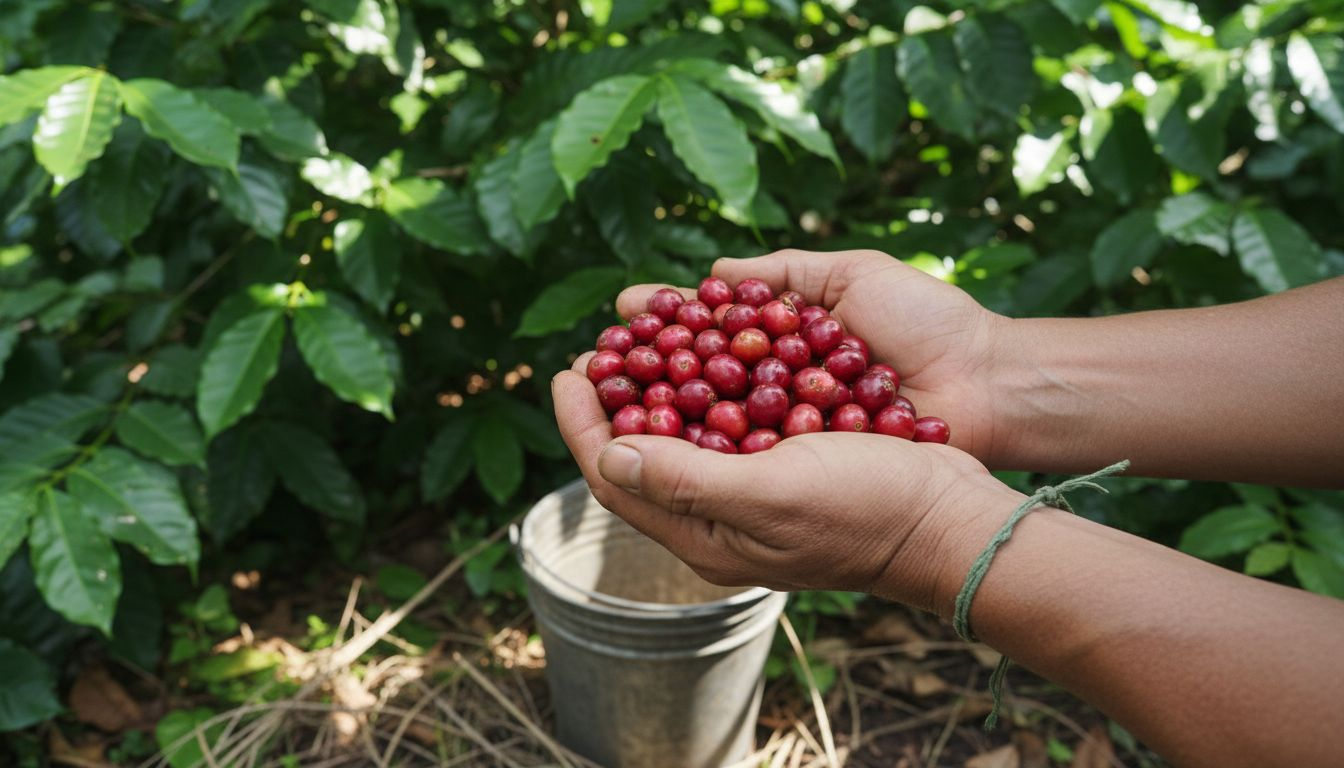
Natural shade also means fewer pests, reducing the need for chemical spraying. Trees provide windbreaks protecting plants from storms and extreme weather. The soil stays alive, enriched by fallen leaves and natural decomposition.
Sun-grown operations work differently. Coffee plants get blasted with intense sunlight, growing faster but producing beans with different chemical profiles. Monoculture planting means pests explode without natural predators, forcing farmers into pesticide cycles.
Sun-grown methods clear forests for full sun exposure, increasing yield but causing soil degradation, increased pesticide use, and shorter coffee plant lifespans.
The Hidden Costs
Sun-grown coffee’s lower price tag masks serious environmental damage. When you trace how coffee is grown, you’ll find sun-grown operations often involve:
- Deforestation of tropical rainforests
- Soil erosion requiring more fertilizer inputs
- Heavy pesticide use poisoning water supplies
- Shorter productive lifespan for coffee plants (15-20 years versus 40+ for shade-grown)
- Inability to generate supplementary income from other crops or timber
Shade-grown farms prove more economically resilient. Farmers grow multiple crops, harvest timber, and maintain soil productivity indefinitely. The initial labor investment pays dividends over decades.
Here’s a side-by-side look at how shade-grown and sun-grown coffee impact farms, environments, and communities:
| Factor | Shade-Grown Coffee | Sun-Grown Coffee |
|---|---|---|
| Farm Longevity | 40+ years per planting | 15-20 years per planting |
| Input Costs | Lower, fewer chemicals | Higher, more agrochemicals |
| Biodiversity Level | High, supports many species | Low, monoculture dominates |
| Income Flexibility | Multiple crop sources | Coffee crop only |
| Water Use Efficiency | Strong water retention | Prone to increased runoff |
| Adaptation to Climate | Resilient with tree cover | Vulnerable without shade |
Pro tip: When comparing prices, remember that cheaper sun-grown coffee often reflects externalized environmental costs rather than true value—shade-grown premium pricing typically reflects better quality and genuine sustainability.
Environmental Benefits: Biodiversity and Ecosystem Health
Shade-grown coffee farms are essentially working forests, not agricultural deserts. They teem with life in ways that sun-grown plantations simply cannot support.
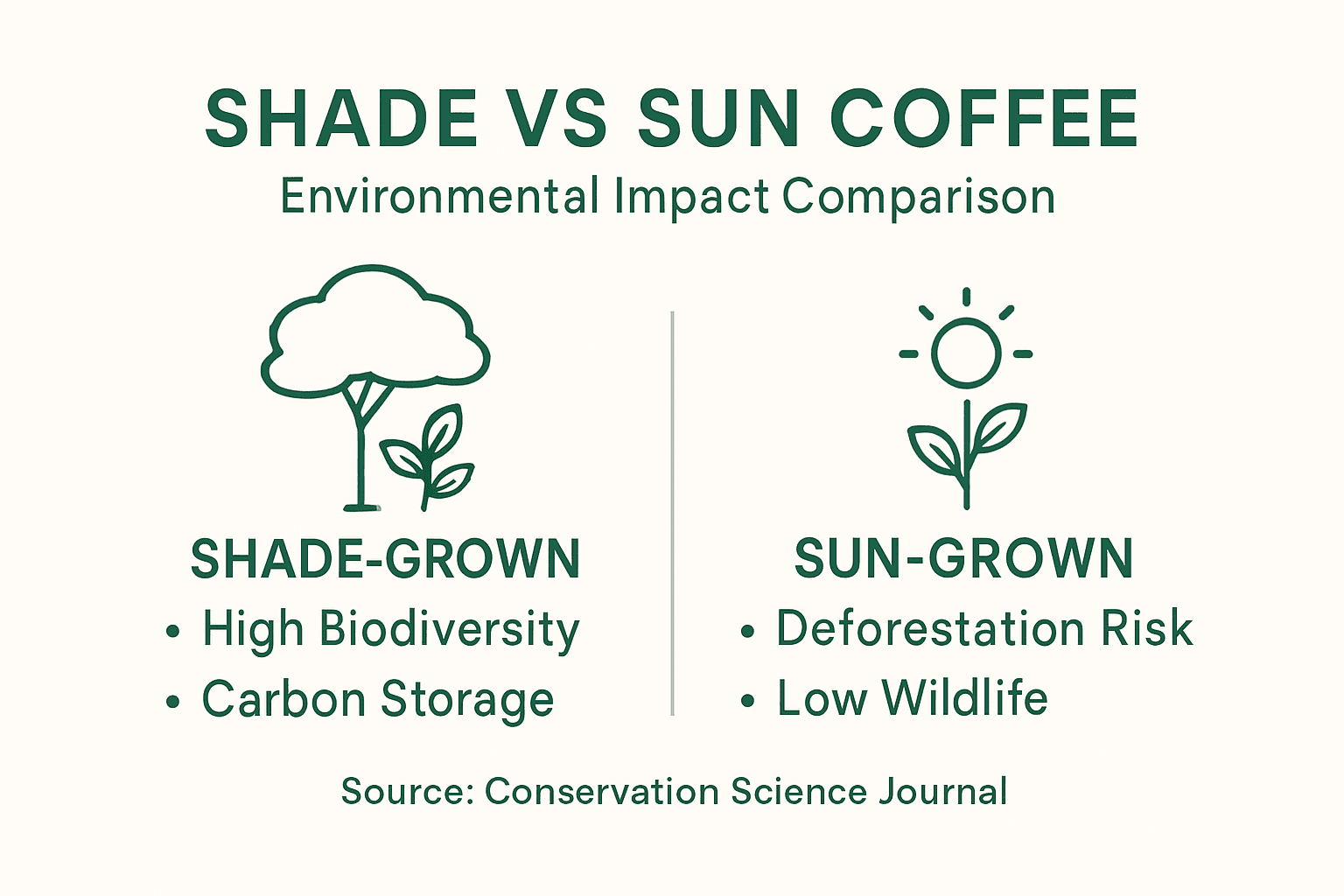
When you choose shade-grown coffee, you’re protecting ecosystems that sustain entire wildlife communities. These aren’t peripheral benefits—they’re central to why this farming method matters so much.
A Living Ecosystem in Your Cup
Shade-grown farms support dramatically higher biodiversity than their sun-grown counterparts. The difference is striking and measurable:
- Migratory birds: Find critical habitat during long journeys between continents
- Native insects: Thrive naturally, controlling pests without chemical intervention
- Soil organisms: Bacteria, fungi, and invertebrates maintain soil fertility
- Understory plants: Create food sources and shelter for wildlife
- Canopy trees: Support entire food webs from roots to branches
This living ecosystem creates what scientists call ecosystem services—natural processes that benefit both wildlife and humans.
The Ecosystem Services That Matter
Shade-grown coffee farms support higher biodiversity while providing crucial habitats for migratory birds, insects, and plants. But the benefits extend far beyond pretty wildlife viewing.
Natural pest control happens automatically. Beneficial insects and birds keep coffee plant pests in check without spraying toxic chemicals. This protects water supplies and human health downstream.
Pollinators thrive in shade-grown systems. Bees and other insects ensure successful flowering and fruit set, boosting yields naturally. Sun-grown monocultures lack these pollinators, forcing farmers toward artificial solutions.
Nutrient cycling works perfectly. Fallen leaves decompose, returning nitrogen and organic matter to soil. Sun-grown farms require constant fertilizer inputs to compensate for poor soil health.
The tree canopy protects soil from erosion, conserves water, and aids carbon sequestration—actions that directly mitigate climate change effects while enhancing overall ecosystem health.
Climate and Water Benefits
Shade trees act as carbon sinks, pulling carbon dioxide from the atmosphere and storing it in wood and soil. A mature shade-grown coffee farm sequesters significant carbon compared to degraded sun-grown land.
Water conservation matters tremendously in tropical regions. Tree canopies reduce evaporation, keeping moisture in soil longer. This builds climate resilience when droughts strike—increasingly common with global warming.
Soil protection prevents erosion that degrades watersheds. When heavy rains fall, shade-grown farms absorb water naturally instead of creating runoff that carries topsoil downstream.
Why This Matters for Your Coffee Choice
When you buy shade-grown coffee that supports biodiversity, you’re voting with your wallet for farms that strengthen ecosystems. Every purchase funds farmers who invest in sustainable land management.
You’re also receiving higher quality coffee. Biodiversity-rich farms produce beans with superior flavor complexity because healthy soils create nutrient-rich plants.
Pro tip: Look for certifications like Bird Friendly or Rainforest Alliance that verify actual biodiversity on farms, not just shade-tree presence—some farms plant monoculture shade trees that offer minimal ecosystem benefits.
To help you identify truly sustainable coffees, here’s a reference on certification meanings:
| Certification | What It Ensures | Example Label Symbol |
|---|---|---|
| Rainforest Alliance | Meets biodiversity + labor standards | Green frog stamp |
| Bird Friendly | Genuine shade + bird habitat | Smithsonian bird logo |
| Fair Trade | Minimum price + fair wages | Black-and-white handshake |
| Organic | No synthetic pesticides used | USDA Organic seal |
Social Impact: Fair Wages and Community Support
Coffee is grown by millions of farming families across the tropics. Most earn painfully little for their labor, trapped in cycles of poverty despite producing a beverage that generates billions globally.
Shade-grown coffee offers a different path. By supporting these farming communities through fair compensation and sustainable practices, you help break those poverty cycles.
The Challenge Farmers Face
Coffee farmers—particularly smallholders—battle persistent economic challenges that make survival difficult:
- Commodity price swings: Global markets fluctuate wildly, sometimes dropping below production costs
- Limited market access: Middlemen capture most profits, leaving farmers with pennies
- Debt traps: Poor farmers borrow at high rates to buy fertilizer and inputs
- Climate vulnerability: Unpredictable weather destroys harvests without safety nets
- Monoculture dependence: Growing only coffee leaves farmers exposed to price crashes
These pressures force farmers toward exploitative practices. Many resort to clear-cutting forests for sun-grown coffee because it promises quick cash, even though it destroys their land long-term.
How Shade-Grown Coffee Changes the Equation
Shade-grown coffee supports farming communities by addressing these economic challenges through collaborative approaches that empower farmers. Fair-trade shade-grown systems work differently:
- Premium pricing that guarantees living wages
- Diversified income from timber, fruit, and other crops
- Reduced input costs through natural pest control
- Long-term farm viability without constant chemical inputs
- Community education and technical support
Farmers earning stable income from shade-grown systems make fundamentally different choices. They invest in their land rather than exploiting it.
Supporting shade-grown coffee secures fair wages and community development by aligning environmental stewardship with market incentives and genuine social equity.
Community Benefits Beyond Wages
When farmers thrive, entire communities benefit. Fair shade-grown coffee systems create multiplier effects:
Children attend school instead of working fields. Communities invest in healthcare and water systems. Local economies strengthen as farmers spend wages locally.
Women gain economic independence through shade-growing roles in farming and processing. Intergenerational knowledge transfer happens naturally when families see coffee farming as a viable future.
Farmers participate in decision-making about their farms and communities. Community support in coffee ensures traditional knowledge combines with modern sustainability practices, creating systems that work culturally and environmentally.
Your Role as a Consumer
Every shade-grown coffee purchase you make directly funds these community improvements. You’re not just buying a beverage—you’re investing in farmer stability.
Choosing shade-grown coffee over cheaper alternatives recognizes the true value of the work involved. It acknowledges that ethical farming costs more because it pays people fairly.
You’re also voting for agricultural systems that build community resilience instead of extracting it. That’s real impact you can feel in your cup.
Pro tip: Seek out small-batch shade-grown coffees with direct trade or fair-trade certification that name specific farms or cooperatives—you’ll know exactly which communities benefit from your purchase.
Taste, Quality, and Consumer Choice
Here’s what most people don’t realize: shade-grown coffee tastes better. This isn’t just marketing—it’s backed by how the beans actually develop.
When you choose shade-grown, you’re getting superior flavor complexity alongside environmental and social benefits. That’s the real win.
How Shade Changes the Bean
The science is straightforward. Shade-grown conditions slow plant growth through cooler temperatures and filtered light. This slower development creates denser beans with more concentrated flavors.
Think of it like ripening fruit. A tomato that grows slowly in ideal conditions tastes vastly better than one rushed to maturity under harsh sun. Same principle applies to coffee cherries.
Shade-grown coffee impacts flavor by developing enhanced aromas and more complex acidity profiles. The biochemical properties shift favorably, creating taste characteristics that sun-grown beans simply cannot match.
The Flavor Advantage
Shade-grown beans develop these distinctive quality markers:
- Richer body: Denser beans extract more solids during brewing
- Complex acidity: Bright, nuanced instead of harsh or thin
- Enhanced aromatics: More aromatic compounds develop during slow maturation
- Subtle sweetness: Natural sugars concentrate without burning off
- Smooth finish: Less astringency from slower ripening
But here’s the balance: too much shade actually hurts quality. Excessive shade (over 30%) reduces sunlight so dramatically that bean development suffers. The best shade-grown farms use moderate shade—enough to slow growth without compromising ripening.
Variation matters tremendously. Different coffee species, altitudes, and shade tree combinations all influence the final flavor profile. This complexity is what coffee enthusiasts seek.
Moderate shade balances optimal growth and quality, while excessive shade reduces beverage quality—the sweet spot creates superior, nuanced flavor profiles.
What Consumers Actually Want
Research shows something important: consumers demonstrate willingness to pay premium prices for shade-grown coffee due to environmental concerns and quality perceptions combined.
Your environmental values and taste preferences aren’t in conflict—they align perfectly. You get better-tasting coffee while supporting sustainable farming. That’s not compromise; that’s optimization.
At moderate price premiums, shade-grown coffee attracts consistent market demand. This tells us consumers genuinely value ethical and quality-oriented choices. Your purchasing power directly influences what farmers grow.
Making Your Choice
When shopping for single-origin shade-grown coffee, look for descriptors like “complex,” “balanced,” or “nuanced.” These typically indicate slower-grown beans with developed flavor profiles.
Taste notes mentioning specific fruits, florals, or subtle spice usually come from shade-grown coffees. Sun-grown beans tend toward flat, one-dimensional profiles regardless of origin.
You’re not paying extra just for ethics—you’re investing in genuinely superior coffee. That premium price reflects real quality differences alongside real social impact.
Pro tip: Brew shade-grown coffee at slightly lower temperatures (195-200°F instead of 200-205°F) to highlight delicate aromatics and acidity without over-extracting the denser beans.
Choose Shade-Grown Coffee for a Lasting Environmental and Social Difference
The article highlights the critical challenge of balancing high-quality coffee production with environmental sustainability and fair community support. Shade-grown coffee addresses major pain points such as deforestation, biodiversity loss, and unfair wages by promoting natural ecosystems and empowering farmers. By choosing coffee that grows under native tree canopies, you support healthier soils, richer wildlife habitats, and stronger farming communities—all while enjoying superior flavor and quality.
Discover how your daily cup can fight deforestation and poverty by exploring our carefully curated Best Sellers – EcoVibe Roast collection.

Make an immediate impact by selecting sustainably sourced shade-grown coffees and teas at EcoVibe Roast. Every purchase helps us plant mangrove trees and remove ocean-bound plastics, extending your positive influence beyond the farm. Take the next step toward conscious coffee drinking and experience the true benefits of ethical sourcing with our wide variety available in Coffee and Tea example products – EcoVibe Roast. Your choice matters now more than ever—join us in brewing a better world.
Frequently Asked Questions
What is shade grown coffee?
Shade grown coffee is cultivated under a canopy of native trees, which supports a mini-ecosystem and mimics the natural growing conditions of coffee in its native habitats.
What are the environmental benefits of shade grown coffee?
Shade grown coffee promotes biodiversity, helps prevent soil erosion, improves moisture retention, and aids in carbon capture by storing carbon in both soil and tree biomass.
How does shade grown coffee affect quality and flavor compared to sun grown coffee?
Shade grown coffee typically develops denser beans with more complex flavors due to slower maturation under filtered light, whereas sun grown coffee can produce beans with different chemical profiles and less flavor complexity.
Can farmers earn a sustainable income from shade grown coffee?
Yes, farmers can earn fair wages from shade grown coffee due to premium pricing, lower chemical costs, and diversified income from other crops, making it economically viable in the long term.


