

TL;DR:
- Sustainable beverage preparation involves using eco-friendly ingredients, zero-waste techniques, and responsible packaging and disposal. Making recipes like pine-needle soda and citrus oleo saccharum in batches reduces waste and promotes environmental responsibility. Proper composting of organic scraps and choosing recyclable or compostable packaging further minimizes your ecological footprint at home.
Sustainable beverage preparation is defined as the practice of making drinks at home using eco-friendly methods, minimal waste, and responsible ingredient and packaging choices from start to finish. This tutorial covers the full picture: what ingredients and tools to gather, how to ferment and brew with zero-waste techniques, how to compost your organic scraps, and how to dispose of packaging correctly. You will find step-by-step methods for recipes like pine-needle soda and oleo saccharum syrup, plus practical guidance on composting and packaging that most eco-friendly drink making guides skip entirely. Whether you are new to environmentally conscious drink preparation or ready to sharpen your skills, this guide gives you everything you need to make your home beverage routine genuinely greener.
What ingredients and tools are essential for sustainable beverage preparation at home?
The most effective starting point for any sustainable beverage preparation tutorial is your ingredient list and your toolkit. Choosing the right materials from the beginning removes waste before it even starts.
Sustainable ingredients to stock:
- Organic produce: citrus fruits, berries, herbs, and cucumbers sourced from local farmers markets or certified organic suppliers
- Wild-foraged items: pine needles (from non-toxic species like Eastern White Pine), elderflowers, and wild mint
- Natural sweeteners: raw honey, maple syrup, or unrefined cane sugar instead of processed white sugar
- Loose-leaf teas and dried botanicals: these generate far less packaging waste than individually wrapped tea bags
The real power move in eco-friendly drink making is treating every ingredient as multi-use. Citrus peels that flavor your morning water can become a syrup base by afternoon. Spent vanilla pods can infuse a simple syrup. Cucumber peels that you would normally discard make flavorful garnishes and infusions, a core principle of zero-waste bartending. This mindset shift alone cuts your kitchen waste significantly.
Reusable tools that pay for themselves:
| Tool | Single-Use Alternative | Environmental Benefit |
|---|---|---|
| Glass fermentation bottles | Plastic bottles | Reusable, no leaching, fully recyclable |
| Stainless steel or cloth strainer | Paper coffee filters | Eliminates paper waste per batch |
| Compost bin (countertop) | Trash bag disposal | Diverts organic waste from landfill |
| Beeswax wraps or glass containers | Plastic wrap or zip bags | Reduces single-use plastic consumption |
| Reusable silicone ice molds | Plastic ice cube trays | Durable, non-toxic, long-lasting |
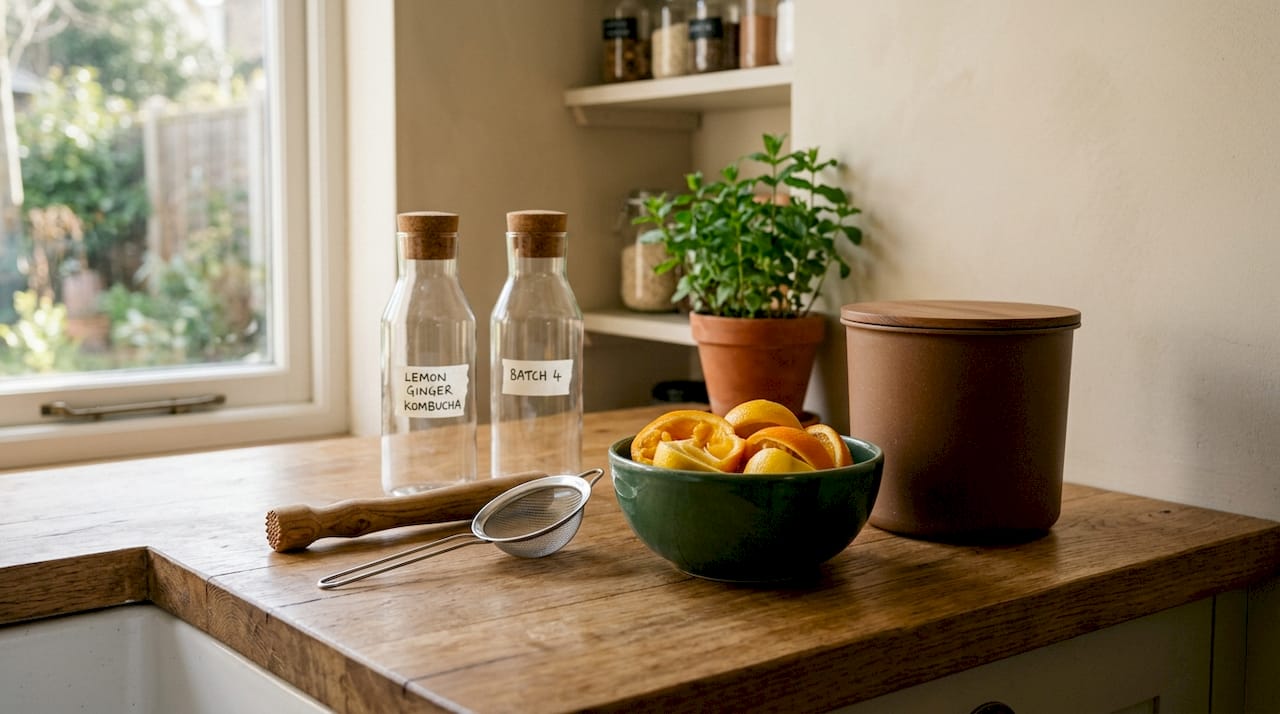
Investing in glass fermentation bottles and a simple countertop compost bin sets you up for virtually every recipe in this guide. These tools are not specialty items. You can find them at stores like Williams Sonoma, Target, or online through retailers like Amazon.
How do you make zero-waste sustainable beverages step by step?
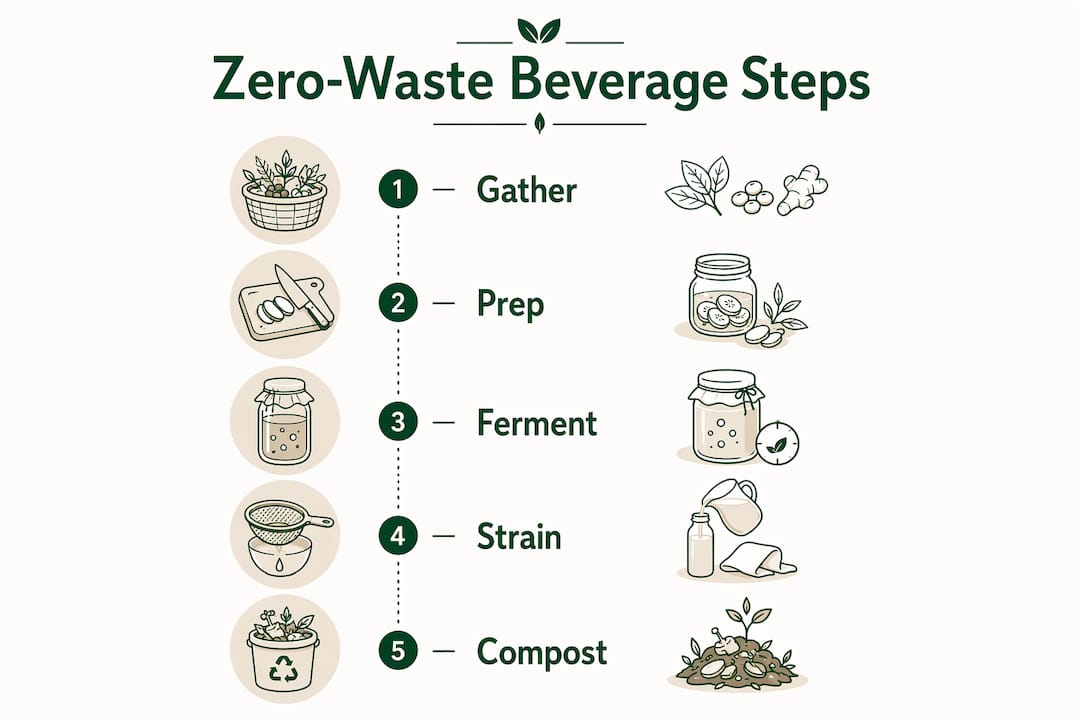
Zero-waste beverage preparation means using every part of every ingredient, and peels, rinds, and stems are your most concentrated flavor sources. The professional mixology world calls this zero-waste bartending, and it translates beautifully to home kitchens.
Pine-needle soda: a wild-fermented zero-waste recipe
Pine-needle soda is made from just three ingredients: fresh pine needles, raw honey, and filtered water, fermenting naturally over two to three days at 68 to 80°F for best carbonation. This means you are creating a naturally sparkling, aromatic drink from a foraged ingredient that costs nothing and leaves almost no waste behind.
- Collect a loose handful of fresh pine needles from a non-toxic species. Eastern White Pine is the most commonly used and widely available in North America.
- Rinse the needles thoroughly under cold filtered water to remove debris.
- Combine the needles with two tablespoons of raw honey and two cups of filtered water in a clean glass jar or fermentation bottle.
- Seal loosely (not airtight) and leave at room temperature, between 68 and 80°F, for two to three days.
- Gently “burp” the bottle once daily by briefly opening the lid over a sink to release built-up carbonation pressure.
- Taste on day two. When it reaches your preferred level of fizz and sweetness, strain out the needles and refrigerate immediately.
Over-fermentation beyond five to seven days at room temperature shifts the flavor toward vinegar and raises the alcohol content. Refrigerating promptly stops the fermentation and locks in the flavor you want.
Oleo saccharum: zero-waste citrus syrup
Oleo saccharum is a cold-process syrup made by combining citrus peels with sugar and letting them macerate for 12 to 24 hours, drawing out the essential oils without any heat. This means those lemon and orange peels you would normally toss become a rich, aromatic syrup that replaces commercial flavorings in cocktails, mocktails, lemonades, and teas.
Simply peel your citrus, toss the peels with an equal weight of granulated sugar in a bowl, cover, and leave at room temperature overnight. The sugar pulls the fragrant oils right out of the peel. Strain and bottle in a glass jar. It keeps refrigerated for up to two weeks.
Pro Tip: Make oleo saccharum in batches after any citrus-heavy cooking session. You get a week’s worth of syrup from peels you were going to discard anyway, and batch prepping like this cuts per-drink waste dramatically.
| Method | Prep Time | Waste Generated | Best For |
|---|---|---|---|
| Oleo saccharum (batch) | 12 to 24 hours passive | Near zero | Syrups, cocktails, lemonades |
| Pine-needle soda (batch) | 2 to 3 days | Near zero | Sparkling drinks, mocktails |
| Single-serve fresh juice | 5 minutes | Pulp and peel waste | Immediate consumption |
Batch prepping two or three recipes at once is the single most effective way to reduce waste and save time in your home beverage routine. You can build a sustainable beverage workflow around these batch methods with minimal effort.
How to manage and compost beverage preparation waste at home
Composting is the natural next step after zero-waste preparation, and it turns your remaining organic scraps into something genuinely useful. The UC Master Gardener Program of Contra Costa County confirms that home composting creates a closed-loop nutrient system that diverts organic waste from landfills and reduces transportation emissions. That means the lemon peels and tea leaves from your morning routine can feed your garden by next season.
Getting your compost pile right:
- Browns (carbon-rich): dry leaves, cardboard, straw, paper bags
- Greens (nitrogen-rich): fruit scraps, citrus peels, coffee grounds, tea leaves, herb stems
- Moisture: your pile should feel like a wrung-out sponge, damp but not dripping
- Size: your pile needs to be at least 3x3x3 feet for effective decomposition to occur
- Temperature: an active pile runs between 100°F and 150°F, which is the range where microbial activity breaks down material fastest
Wet scraps like citrus peels and berry pulp should be buried 6 to 12 inches deep in the pile to deter pests and flies. Layering wet greens between dry browns keeps the pile balanced and odor-free. Turning the pile every week or two speeds up decomposition noticeably. You can also compost coffee grounds directly, and Ecoviberoast has a detailed guide on composting coffee grounds if you want to go deeper on that topic.
Pro Tip: If you do not have outdoor space, a countertop compost tumbler from brands like OXO or Full Circle works well for apartment living and speeds up decomposition compared to a static pile.
Quick disposal decision guide:
| Waste Type | Compost | Recycle | Trash |
|---|---|---|---|
| Citrus peels, herb stems | Yes | No | No |
| Glass bottles and jars | No | Yes (rinse first) | No |
| Compostable packaging | Check local program | No | If no program available |
| Plastic bottle caps | No | Check locally | Often trash |
| Tea leaves and coffee grounds | Yes | No | No |
What packaging and disposal choices maximize sustainability?
Packaging choices are where many well-intentioned home beverage makers unknowingly undermine their own efforts. Reusable glass containers are the gold standard for storing homemade syrups, fermented drinks, and infusions. Glass is infinitely recyclable, does not absorb flavors or odors, and keeps your beverages tasting clean. For purchased ingredients, look for products with compostable or minimal packaging certified by organizations like the Biodegradable Products Institute (BPI).
The most common mistake is mixing compostable packaging into your recycling bin. Compostable packaging contaminates recycling streams and can damage processing equipment at recycling facilities. Most compostable packaging also requires industrial composting conditions to break down properly, so tossing it in your home compost pile may not work either. Always check whether your local composting program accepts it before assuming it will break down at home.
For plastics that cannot be recycled mechanically, advanced technologies like pyrolysis and depolymerization convert contaminated or complex plastics into purified polymers or fuel. Pyrolysis runs at 400 to 800°C in the absence of oxygen, producing outputs that can be used to manufacture new plastics. This matters because it means some beverage packaging that seems destined for landfill actually has a recycling pathway, but only through specialized facilities. Check your city’s waste management website or resources like Earth911 to find drop-off locations near you.
| Packaging Type | Best Disposal Method | Notes |
|---|---|---|
| Glass bottles and jars | Recycle or reuse | Rinse before recycling |
| BPI-certified compostable bags | Industrial compost | Confirm local program accepts it |
| Standard plastic bottles (PET) | Recycle | Check local guidelines |
| Complex multilayer plastics | Advanced recycling or trash | Find a drop-off facility |
| Cardboard and paper | Recycle or compost | Remove any plastic liners |
For a deeper look at how to navigate sustainable packaging choices in your beverage routine, Ecoviberoast has a full guide covering the latest 2026 standards.
Key takeaways
Sustainable beverage preparation at home requires combining zero-waste ingredient use, natural fermentation, active composting, and correct packaging disposal to genuinely reduce your environmental footprint.
| Point | Details |
|---|---|
| Use every ingredient part | Citrus peels, herb stems, and rinds become syrups and infusions instead of waste. |
| Batch prep reduces waste | Making oleo saccharum or pine-needle soda in batches cuts per-drink waste and saves time. |
| Compost scraps correctly | Bury wet scraps 6 to 12 inches deep and maintain pile temperature between 100°F and 150°F. |
| Separate compostable packaging | Never mix compostable packaging with recycling; confirm local industrial composting availability first. |
| Choose glass for storage | Glass containers are reusable, recyclable, and preserve flavor better than plastic alternatives. |
Why small changes in your kitchen matter more than you think
By LaSaundra
When I first started experimenting with zero-waste drink making at home, I expected it to feel like a chore. It did not. Making pine-needle soda for the first time felt more like a science experiment than a sustainability exercise, and the result was genuinely delicious. That surprise is what keeps me going.
What I have noticed after practicing these methods consistently is that the environmental impact of small kitchen habits compounds quickly. Composting your citrus peels and tea leaves, choosing glass over plastic, and making one batch of oleo saccharum per week sounds modest. But those habits, repeated across a household for a year, divert a meaningful amount of organic waste from landfill and reduce your reliance on commercially packaged flavorings.
The piece of advice I give most often is this: do not try to overhaul everything at once. Start with one recipe, like the pine-needle soda or a simple citrus syrup, and build your composting habit alongside it. The recipes teach you the zero-waste mindset naturally. Once you see how much flavor lives in a lemon peel you were about to throw away, you start looking at every ingredient differently. That shift in perspective is, honestly, the most powerful thing this practice gives you.
— LaSaundra
Bring organic teas into your sustainable beverage routine
Your home beverage practice deserves ingredients that match your values, and that is exactly what Ecoviberoast is built around.

Ecoviberoast’s Hibiscus Berry Tea is a vibrant, organic herbal blend that pairs beautifully with the zero-waste syrups and fermented drinks you are already making at home. The Jasmine Tea is a fine loose-leaf green tea with floral jasmine blossoms, packaged with sustainability in mind and perfect for cold brewing or hot steeping with minimal waste. Every purchase from Ecoviberoast supports mangrove tree planting and ocean-bound plastic removal, so your cup does good far beyond your kitchen. Explore both teas and the full range of sustainably sourced products at Ecoviberoast.
FAQ
What is sustainable beverage preparation?
Sustainable beverage preparation is the practice of making drinks using eco-friendly ingredients, zero-waste techniques, and responsible packaging and disposal choices. It covers everything from ingredient selection and fermentation to composting organic scraps and recycling or reusing containers.
How long does pine-needle soda take to ferment?
Pine-needle soda ferments in two to three days at room temperature between 68 and 80°F. Refrigerate immediately once it reaches your preferred carbonation level to stop fermentation and prevent off-flavors.
Can I compost all my beverage scraps at home?
Most organic beverage scraps, including citrus peels, herb stems, tea leaves, and coffee grounds, compost well at home. Maintain a pile of at least 3x3x3 feet and bury wet scraps 6 to 12 inches deep to avoid pests.
Is compostable packaging safe to put in my home compost bin?
Most compostable packaging requires industrial composting conditions and will not break down reliably in a home compost pile. Check whether your local composting program accepts it before disposal.
What is oleo saccharum and how do I use it?
Oleo saccharum is a cold-process citrus peel syrup made by macerating peels with sugar for 12 to 24 hours, extracting the essential oils without heat. Use it as a natural flavoring in lemonades, cocktails, mocktails, and teas in place of commercial syrups.


