

TL;DR:
- Ethical consumption involves selecting products that uphold fair labor, environmental, and animal welfare standards. It drives market change through consumer spending and promotes responsible choices that benefit society and the planet. Practicing it starts with small, deliberate shifts in everyday purchases, emphasizing transparency and long-term impact.
Ethical consumption is defined as the practice of choosing products and services based on moral values, supporting fair labor, environmental stewardship, and animal welfare. Ethical consumerism goes beyond personal preference. It treats every purchase as a vote for the kind of world you want to live in. When you buy shade-grown coffee, repair a jacket instead of replacing it, or choose Fair Trade certified goods, you are practicing what is ethical consumption in its most direct form. This guide covers the motivations, benefits, and real steps you can take to make your spending reflect your values.
What is ethical consumption and why does it matter?
Ethical consumption is the deliberate act of buying from companies that treat workers fairly, minimize environmental harm, and operate transparently. The standard industry term for this practice is ethical consumerism, and it covers three core areas: labor rights, environmental impact, and animal welfare. Understanding all three helps you make purchasing decisions that go beyond the label on the front of the package.
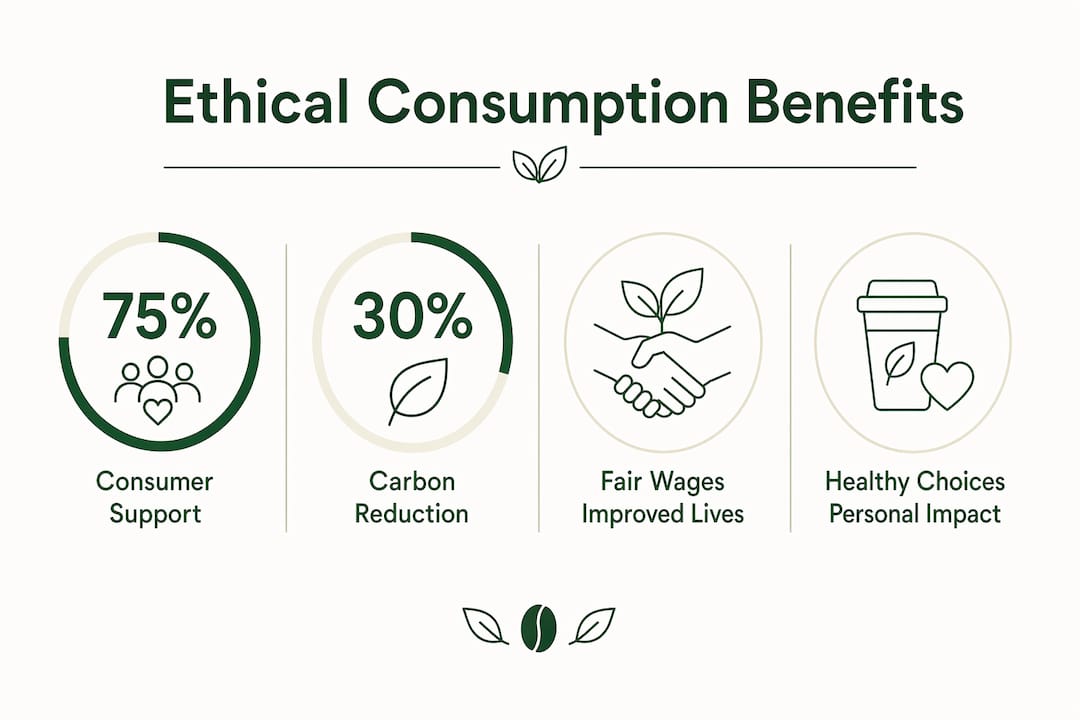
The importance of ethical consumption is backed by real consumer behavior. 75% of shoppers consider a company’s ethical practices an important buying factor. That figure tells you this is no longer a niche concern. It is a mainstream expectation that shapes how brands source, produce, and market their products.
Ethical consumerism also connects to a broader concept called dollar voting. Every dollar you spend signals your values and influences market behavior. When enough consumers shift spending toward responsible brands, companies respond by changing their supply chains. That is the economic engine behind ethical purchasing decisions.
What motivates consumers to practice ethical consumption?
Motivation for ethical purchasing decisions comes from three places: personal identity, social awareness, and economic logic. Most conscious consumers start with identity. Ethical purchasing habits act as a public expression of personal virtues. Choosing a Fair Trade coffee or an organic herbal tea says something about who you are and what you stand for.
Social norms also play a powerful role. When your community, social feed, or workplace normalizes ethical shopping, the behavior spreads. Awareness of issues like fast fashion waste, exploitative labor, and plastic pollution pushes people to reconsider their defaults. The shift from passive consumer to active participant does not require a dramatic lifestyle overhaul. It starts with one or two deliberate choices.
A common misconception is that ethical products are always expensive or hard to find. That is not accurate. Buying secondhand, choosing local producers, and reducing overall consumption are all forms of ethical consumerism that cost less, not more. The premium paid for ethical goods is better understood as a systemic support transfer, benefiting workers, ecosystems, and communities rather than just your immediate gratification.
- Dollar voting: Redirecting spending toward responsible brands signals demand for fair supply chains.
- Self-identity: Your purchases reflect your values publicly, reinforcing personal commitment.
- Social influence: Community norms and awareness accelerate ethical shopping behavior.
- Cost reframing: Buying less, buying better, and buying secondhand often reduces total spending.
Pro Tip: Start with one product category you buy frequently, like coffee or tea, and research the ethical sourcing standards behind your usual brand. Small, consistent shifts build lasting habits faster than sweeping changes.
What are the key benefits of ethical consumption?
The benefits of ethical consumption span personal health, finances, the environment, and society. They are concrete and measurable, not abstract ideals.
Personal health
Organic and ethically sourced food reduces pesticide exposure by 60–90%. That reduction directly lowers the risk of chronic diseases linked to long-term chemical exposure. When you choose certified organic coffee beans or herbal teas sourced without synthetic pesticides, you are making a health decision as much as an ethical one.
Financial savings
- Buy durable goods. Ethical products often cost more upfront but last significantly longer. One quality item frequently costs less than replacing several cheap ones over time.
- Repair instead of replace. Choosing brands that support repairability keeps money in your pocket and waste out of landfills.
- Reduce overall consumption. Buying less is the most underrated financial strategy in ethical shopping. Fewer purchases mean lower spending, full stop.
- Choose local. Local producers often cut out middlemen, which can mean better prices and fresher products.
Environmental impact
Ethical consumption mitigates the global climate crisis by reducing carbon emissions, water use, and waste tied to low-quality mass-produced goods. Choosing quality over quantity shrinks your environmental footprint in ways that recycling alone cannot. A single well-made product that lasts a decade replaces ten disposable ones, and that math matters at scale.

Social benefits
Ethical consumption supports fair wages, safe working conditions, and animal welfare across global supply chains. Choosing ethically sourced beverages, for example, strengthens local farming communities and preserves traditional growing practices like shade-grown cultivation, which also protects biodiversity. Your morning cup of aromatic coffee can carry a genuinely positive ripple effect when it is sourced responsibly.
How does ethical consumption differ from conscious consumption?
Ethical consumption and conscious consumption overlap, but they are not identical. Understanding the distinction sharpens your purchasing decisions.
| Term | Primary focus | Key concerns |
|---|---|---|
| Ethical consumption | Moral values in purchasing | Labor rights, animal welfare, supply chain transparency |
| Conscious consumption | Mindful, intentional buying | Reducing waste, personal well-being, environmental awareness |
| Sustainable shopping | Long-term resource preservation | Carbon footprint, recyclability, renewable materials |
Ethical consumption places the strongest emphasis on moral issues: who made the product, under what conditions, and whether animals or ecosystems were harmed in the process. Conscious consumption is broader and more personal. It includes mindful eating, reducing impulse purchases, and being aware of how your choices affect your own well-being. Sustainable shopping focuses on environmental outcomes, often without addressing labor rights directly.
Knowing these nuances helps you ask better questions at the point of purchase. A product can be sustainably packaged but made in a factory with unsafe labor conditions. A product can be locally made but still use harmful chemicals. Transparency in sourcing is the thread that connects all three concepts and the clearest signal of genuine ethical practice.
How can you practice ethical consumption in daily life?
Practicing ethical consumption does not require perfection. It requires direction. Start with one or two core values that matter most to you, then build from there. Incremental changes on frequent purchases create cumulative impact over time.
Here is a practical ethical shopping guide to get you started:
- Look for third-party certifications. Fair Trade, USDA Organic, Rainforest Alliance, and B Corp labels are independently verified. They are more reliable than vague marketing claims like “natural” or “eco-friendly.”
- Buy secondhand first. Thrift stores, resale platforms, and clothing swaps extend the life of existing goods and reduce demand for new production.
- Support transparent brands. Brands that publish their supply chain information, sourcing standards, and environmental impact reports are worth your attention. Responsible sourcing in beverages is a good place to practice this habit daily.
- Repair and maintain. Before replacing an item, ask whether it can be fixed. Many ethical brands offer repair programs or spare parts.
- Reduce overall consumption. The most ethical purchase is often no purchase at all. Ask whether you genuinely need something before adding it to your cart.
- Choose local and seasonal food. Local producers typically have shorter supply chains, which means more transparency and lower transport emissions.
For food and beverage products specifically, look for ethical sourcing in coffee and tea as a starting point. These are products most people buy weekly, which makes them high-leverage categories for building consistent ethical habits.
Pro Tip: Watch out for the “ethical trap.” Consumers sometimes justify unnecessary spending simply because an item carries an ethical label, which leads to more waste, not less. Buying something you do not need is not ethical consumption, regardless of the certification on the box.
You can also explore mindful eating practices as a complementary habit. Being intentional about what you eat and where it comes from reinforces the same values that drive ethical purchasing decisions.
Key Takeaways
Ethical consumption is most effective when it combines systemic supply chain awareness, third-party certification, and a commitment to buying less rather than simply buying differently.
| Point | Details |
|---|---|
| Definition is specific | Ethical consumption means choosing products that support fair labor, environmental health, and animal welfare. |
| Dollar voting drives change | Every purchase signals market demand and shapes how companies source and produce goods. |
| Benefits are personal and collective | Ethical buying reduces pesticide exposure, saves money long-term, and supports fair wages globally. |
| Certifications matter | Fair Trade, USDA Organic, and Rainforest Alliance labels provide verified proof of ethical standards. |
| Start small and stay consistent | Focusing on one or two frequently bought products builds lasting habits without overwhelm. |
Why I think ethical consumption is more powerful than most people realize
By LaSaundra
Most conversations about ethical consumption focus on what to buy. I think the more interesting question is what not to buy, and why that distinction matters so much.
After years of paying attention to how purchasing decisions ripple through supply chains, I have come to believe that the single most underrated ethical act is simply buying less. Not buying better, not buying certified, though both of those matter. Just buying less. The fashion industry, the food industry, and the beverage industry all benefit when conscious consumers reduce their total volume of consumption, even before they start reading labels.
That said, I have also seen real, measurable change come from consistent certification-based purchasing. When communities of consumers consistently choose Fair Trade certified coffee or ethically sourced tea, growers receive better prices, and farming communities become more stable. That is not abstract. That is documented.
My honest advice: do not let the complexity of ethical consumerism paralyze you. Pick the two or three categories where you spend the most money and the most frequently, and start there. Durability and transparency are your two best filters. If a brand cannot tell you where its product comes from, that silence is an answer.
— LaSaundra
Ecoviberoast makes ethical consumption easy to taste
Choosing ethical products should feel good, and with Ecoviberoast, it genuinely does. Every product in the Ecoviberoast lineup is sourced with transparency, environmental responsibility, and community impact in mind.

The Hibiscus Berry Tea is a refreshing, organically sourced herbal blend that delivers rich, tangy flavor while supporting Ecoviberoast’s commitment to planting mangrove trees and removing ocean-bound plastics with every purchase. For something floral and aromatic, the Jasmine Tea offers a fine loose-leaf experience rooted in responsible growing practices. Both products let you put your values into action with every sip. Explore the full range and see how Ecoviberoast turns ethical purchasing decisions into something you can enjoy every single morning.
FAQ
What is the ethical consumerism meaning in simple terms?
Ethical consumerism means choosing products from companies that treat workers fairly, protect the environment, and operate transparently. It is the practice of using your spending power to support responsible business behavior.
What are sustainable products, and how do they relate to ethical consumption?
Sustainable products are goods designed to minimize long-term environmental harm through responsible sourcing, production, and disposal. They overlap with ethical consumption but do not always address labor rights or animal welfare, which ethical consumption specifically includes.
How do I start practicing ethical consumption without spending more money?
Focus on buying less, buying secondhand, and repairing items you already own. These habits reduce consumption and cost while aligning with core ethical values.
Are Fair Trade certifications reliable for ethical purchasing decisions?
Yes. Fair Trade certification is independently verified and requires producers to meet specific standards for wages, working conditions, and environmental practices. It is one of the most trustworthy labels for ethical shopping.
Does ethical consumption actually make a difference?
Research confirms that consumer spending signals shape market behavior. When enough buyers consistently choose ethical products, companies adjust their supply chains to meet that demand.


