

TL;DR:
- Many beverage labels claiming sustainability lack independent verification, creating a significant gap between promise and reality. Credible third-party certifications, like Rainforest Alliance and Fairtrade, verify responsible practices through regular independent audits covering environmental and social criteria. Consumers can prevent greenwashing by checking certification seals, verifying licensing, and asking brands for transparent sourcing and audit information.
You reach for what looks like an eco-friendly coffee or tea, drawn in by words like “sustainable,” “ethical,” and “natural” splashed across the packaging. But here’s the thing: many of those claims are never independently verified, and the gap between a label’s promise and the actual reality on the ground can be surprisingly wide. Navigating certifications, supply chain language, and greenwashing tactics is genuinely confusing, even for savvy shoppers. This guide hands you a clear, practical framework so you can spot the real deal, skip the marketing fluff, and buy beverages you can truly feel good about.
Table of Contents
- What makes a beverage responsibly sourced?
- Key certifications and what they guarantee
- Traceability and supply chain transparency
- How to verify labels, claims, and avoid greenwashing
- Understanding the limitations of certifications
- A fresh perspective: Why true responsibility goes beyond the label
- Discover responsibly sourced teas at EcoVibe Roast
- Frequently asked questions
Key Takeaways
| Point | Details |
|---|---|
| Prioritize credible certifications | Choose drinks with third-party certifications like Rainforest Alliance or Fairtrade over self-declared eco claims. |
| Understand label meanings | Each label has different guarantees—check what the certification covers and how it’s enforced. |
| Seek traceability | Responsible beverages should enable you to trace their journey from crop to cup. |
| Verify and question | Verify that certification seals are current and brands follow labeling rules to avoid greenwashing. |
| Look beyond the label | True accountability comes from transparency and ongoing consumer curiosity—not just trusting a seal. |
What makes a beverage responsibly sourced?
Now that we see why guidance is needed, let’s define what sets truly responsible beverages apart. “Responsibly sourced” is not just a feel-good phrase. It refers to a measurable set of practices covering how a crop is grown, how the people farming it are treated, and how the product travels from field to your cup.
The cornerstone of responsible sourcing is independent verification. Rather than trusting a brand’s self-declaration, you want to look for credible third-party certification rather than vague “eco-friendly” claims that exist only on the packaging. Labels from recognized bodies like Rainforest Alliance and Fairtrade carry real weight because they require farms and supply chains to pass external audits on a recurring basis.
It’s equally important to verify that the standard covers both environmental and social criteria. Some certifications zoom in on habitat protection but say nothing about worker wages. Others prioritize fair pay but give environmental practices a pass. Genuinely responsible sourcing weaves both together. You can explore responsible sourcing explained in greater depth if you want a solid foundation before shopping.
Common pitfalls to watch out for include:
- Vague language like “sustainably inspired” or “eco-conscious blend” with no certification to back it up
- Certification logos that are outdated or displayed without the proper licensing from the certifying body
- Claims about carbon neutrality or “direct trade” that have no public documentation or audit trail
- Packaging that uses green color schemes and leaf imagery to imply sustainability without any real standard being met
“True responsibility is not about marketing language. It is about supply chains you can trace and standards that are independently enforced.”
Understanding why certification matters gives you the mental framework to cut through packaging noise every time you shop.
Key certifications and what they guarantee
With the criteria in mind, let’s examine how to decode certification labels on your favorite beverages. The good news is that a handful of well-established schemes cover most of the coffee and tea you will encounter.
For coffee and tea specifically, you’ll want to check for sustainability schemes applicable to those specific crops. Here is a quick comparison of the three you will see most often:
| Certification | Environmental focus | Social/labor focus | Third-party audits |
|---|---|---|---|
| Rainforest Alliance | Strong (biodiversity, water, soil) | Moderate to strong (worker rights, safety) | Yes, annual |
| Fairtrade | Moderate (some environmental standards) | Very strong (fair wages, community funds) | Yes, independent |
| UTZ (now merged with Rainforest Alliance) | Strong (agrochemical reduction, shade-grown) | Strong (child labor prevention, safe conditions) | Yes, regular |
Each seal tells a different story. Rainforest Alliance excels at protecting biodiversity and shade-grown farming practices, which is a win for birds, insects, and soil health alike. Fairtrade shines when it comes to ensuring farmers and workers receive a minimum price floor and a community development premium on top. UTZ, which has merged into Rainforest Alliance, brought rigorous supply chain certification standards to the table, particularly around chemical use and worker protections.
Important limits to keep in mind:
- A single certification does not mean a product is perfect on every dimension
- Certification coverage may apply only to a percentage of the product’s content, not necessarily 100%
- Some certifications have faced criticism for inconsistent enforcement in specific growing regions
- Brands must follow strict graphic guidelines, so a poorly displayed or unlicensed logo is a red flag
Pro Tip: Visit the Rainforest Alliance’s certification explanation page directly and cross-reference the seal you see on a product. The page explains exactly how authorized logos should appear, which makes it easy to spot misuse.
You can get a richer picture of how these labels shape the coffee industry by reading about the impact of coffee certifications, and if you want to compare even more schemes side by side, the breakdown of types of certifications is a great next stop.
Traceability and supply chain transparency
Certifications matter, but how products are tracked along the journey is just as important. A seal on a bag tells you a standard was met somewhere in the supply chain. Traceability tells you where and how that standard was maintained from the farm all the way to your kitchen shelf.
There are two main traceability models you need to know about:
| Model | How it works | Level of integrity |
|---|---|---|
| Segregation | Certified and non-certified products are kept physically separate throughout | Highest: product is traceable to certified source |
| Mass balance | Certified and conventional stocks may mix, but certified volume is tracked | Moderate: volume is verified, but physical product may blend |
Physical traceability through segregation is the gold standard. When you buy a single-origin coffee with full traceability, you can often trace the beans back to a specific farm or cooperative. The Fairtrade Trader Standard describes how supply chain traceability models work in detail, including the documentation requirements for both segregation and mass balance approaches.
Here is a simple numbered process for checking a brand’s traceability:
- Look for origin information on the packaging. Single-origin products are easier to trace than blends.
- Search for the brand’s sourcing page on their website. Responsible brands publish farm or cooperative partnerships openly.
- Check for audit documentation. Rainforest Alliance explains that independent auditors verify compliance and support end-to-end traceability across supply chains.
- Email the brand directly. Ask which traceability model they use. A transparent company will answer clearly and promptly.
- Look for lot numbers or QR codes that link to sourcing data. Some forward-thinking brands now let you scan a package and see exactly where your beans came from.
Pro Tip: If a brand’s “Our Story” page is vague about sourcing geography or avoids naming specific farms or cooperatives, treat it as a yellow flag. Genuinely traceable products have nothing to hide. Browse real examples of supply chain tracing to see what good transparency actually looks like.
How to verify labels, claims, and avoid greenwashing
Once you know what certifications and traceability to look for, the next step is verifying claims made by brands and labels. Greenwashing is unfortunately common, and it thrives in the space between what a brand says and what it can actually prove.
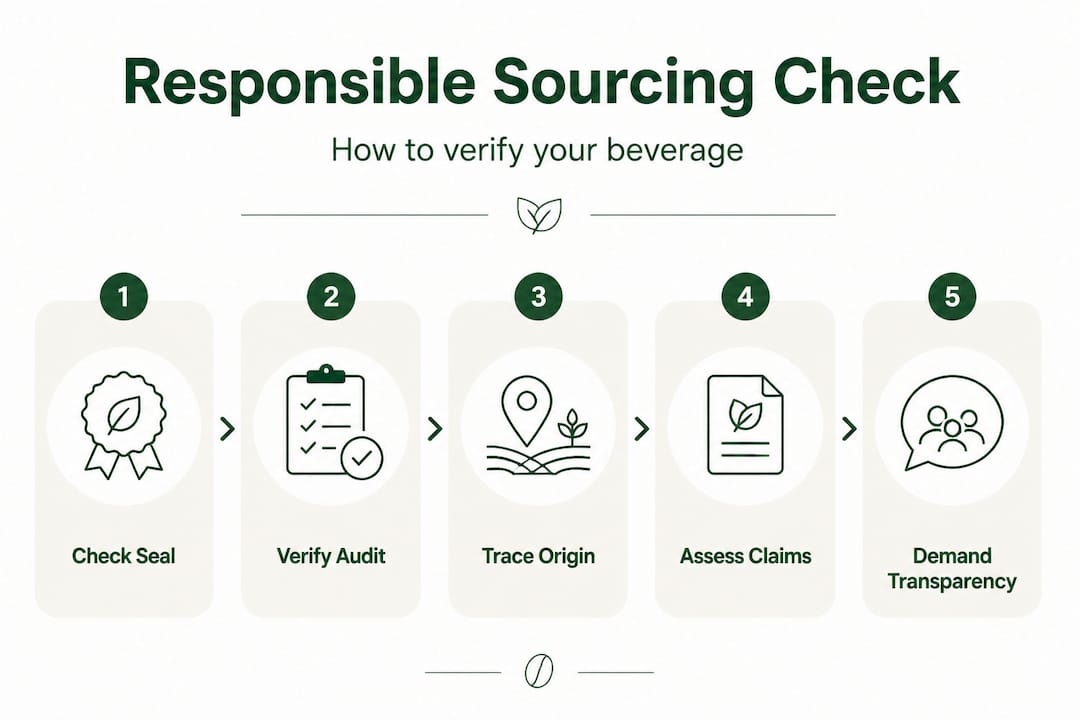
Here is a step-by-step verification process you can use every time you shop:
- Identify all seals on the packaging. Write them down or photograph them before buying.
- Check the seal rules. Review the Rainforest Alliance Seal Graphic Guidelines to confirm the logo is displayed correctly and is current.
- Visit the certifying body’s website and use their public search tool to confirm the brand or product is actively licensed.
- Review the brand’s impact report if one exists. Responsible brands publish annual or biannual reports with measurable data, not just promises.
- Look for audit transparency. Can the brand tell you when their last independent audit was? A brand committed to certifications for sustainability will have this information readily available.
- Google the brand + “greenwashing” or “audit.” Independent journalists and NGOs sometimes publish findings that brands do not advertise.
Red flags that deserve extra scrutiny:
- Certification logos that are blurry, incomplete, or missing the certification body’s name
- Claims of being “inspired by” or “aligned with” a certification instead of actually holding one
- Sustainability pages that use flowery language but contain no numbers, targets, or third-party verification
- Products that claim to be “100% ethical” without specifying who verified that claim
“A genuine commitment to sustainability is not performative. It shows up in specifics: farm names, audit dates, certification numbers, and honest acknowledgment of where improvement is still needed.”
When you support brands that pass these checks, you send a powerful market signal. You can learn more about supporting eco brands that genuinely walk the talk.
Understanding the limitations of certifications
Having a checklist is valuable, but it’s important to be aware of the limitations involved. Certifications are a fantastic filter, but they are not a perfect one, and knowing their shortcomings makes you a smarter shopper.
One important and sometimes uncomfortable reality is that even certified products can face labor violations or sustainability lapses. A well-documented report on certified Brazilian coffee properties found instances of worker rights abuses on farms that held active certifications, highlighting gaps in on-the-ground enforcement. This does not mean certifications are worthless. It means you should layer your confidence with ongoing brand research.
Here are the most common limitations to keep in mind:
- Audit frequency: Annual or biannual audits cannot capture everything that happens on a farm year-round.
- Scale challenges: Large certification programs managing thousands of farms may struggle with consistent enforcement across all locations.
- Self-reported data: Some elements of certification compliance rely partly on farmer self-reporting, which can introduce inaccuracies.
- Scope gaps: A label may certify a product’s main ingredient but say nothing about packaging, shipping emissions, or processing facilities.
“Certification is the beginning of trust, not the end of it. Stay curious, ask questions, and hold the brands you love to a high but fair standard.”
You can learn about the benefits of ethical sourcing while keeping a realistic eye on what those benefits require to actually materialize. For added perspective, it’s also worth seeing how other industries tackle sustainability gaps, like the approach taken by sustainable vineyards in the wine sector, where traceability and land stewardship face similar complexities.
A fresh perspective: Why true responsibility goes beyond the label
With the practical steps covered, it’s worth stepping back and thinking about the bigger picture. Here at EcoVibe Roast, we believe certifications are an essential starting point, but the most responsible relationship between a brand and its customers is built on something deeper than any seal can capture.
The brands we trust most are the ones that publish their audit results openly, name the cooperatives they work with, and communicate honestly when something in their supply chain falls short and here is what they did to fix it. That kind of radical transparency is rare, but it is the gold standard. It is the difference between a brand that performs sustainability and one that actually practices it.
We also believe that you, as a consumer, are a genuinely powerful force. When you ask a brand where their coffee comes from, when you request traceability documentation, when you choose a certified product over a cheaper uncertified one, you shift market incentives in a real and lasting way. That is not just purchasing. That is advocacy.
So yes, look for the seals. Use the verification checklist above. But also get comfortable asking brands hard questions. Support the ones that welcome your scrutiny and reward them with your loyalty. Explore brands that are supporting trustworthy brands built around accountability, and you will find that your morning cup tastes richer for it.
Discover responsibly sourced teas at EcoVibe Roast
Ready to put these principles into practice? At EcoVibe Roast, we have done the sourcing homework so you do not have to start from scratch. Every product on our platform reflects the same standards this guide describes: credible certifications, transparent sourcing details on product pages, and a genuine commitment to environmental and social impact with every order.

Start with something aromatic and vibrant like our Hibiscus Berry Tea, a rich, fruity blend that is as kind to the planet as it is tantalizing to your taste buds. Or explore the delicate floral notes of our Jasmine Tea, sourced with the same care and transparency standards you have just read about. Every purchase also contributes to planting mangrove trees and removing ocean-bound plastics, because responsible sourcing and environmental action belong together. Shop confidently, sip joyfully, and know your cup is doing real good.
Frequently asked questions
What is the easiest way to check if a coffee or tea is responsibly sourced?
Look for credible third-party certification like Rainforest Alliance or Fairtrade, and verify the seal is correctly displayed and currently licensed by checking the certifier’s official website.
Does Fairtrade certification guarantee ethical labor conditions?
Fairtrade sets strong social and environmental standards including fair wages, but eco-labels can be misunderstood and no certification can offer an absolute guarantee of perfect labor conditions in every corner of a supply chain.
What does ‘mass balance’ mean for responsible beverages?
Mass balance models allow certified and non-certified stocks to be mixed physically, but the certifier tracks the total certified volume to ensure the claimed amount was genuinely sourced responsibly.
Can a product be certified but still have sustainability problems?
Yes. Reports document labor violations on some certified coffee properties, illustrating that oversight gaps and complex supply chains can allow issues to persist even within certified programs.
How can I avoid falling for greenwashed claims?
Check whether the brand clearly explains which certifications it holds, provides audit dates and certification numbers, and links to standards documentation. Independent auditors verify compliance in legitimate programs, so a brand with nothing to hide will make this information easy to find.
Recommended
- Ethical sourcing in coffee and tea: real examples & how to choose – EcoVibe Roast
- Why support responsible sourcing for coffee and tea – EcoVibe Roast
- Sustainable packaging in beverages: eco-conscious guide 2026 – EcoVibe Roast
- Why buy responsibly sourced gifts: 99% support farmers – EcoVibe Roast
- Vineyards & Sustainability - Res Fortes


