

TL;DR:
- Switching to renewable energy sources like solar, wind, and green hydrogen significantly reduces the coffee roasting industry’s carbon footprint. Electric, ventless roasters eliminate on-site fossil fuel combustion, cutting CO2 emissions by up to 87% and improving local air quality. The environmental benefits of clean energy roasting increase over time as the electricity grid decarbonizes, supporting public health and sustainable development goals.
Clean energy in roasting refers to using renewable or fossil-free energy sources, such as electricity from solar or wind grids and green hydrogen, to power the coffee roasting process instead of traditional liquefied petroleum gas or natural gas. This shift is one of the most direct ways the coffee industry can cut its carbon footprint, because roasting is one of the most energy-intensive steps in the entire production chain. Technologies like Bellwether’s ventless electric roasters and Julius Meinl’s hydrogen-powered roaster are proving that you do not have to sacrifice aromatic, rich roast quality to go green. For eco-conscious coffee lovers, understanding why clean energy in roasting matters is the first step toward choosing cups that are genuinely good for the planet.
How does clean energy roasting reduce environmental impact?
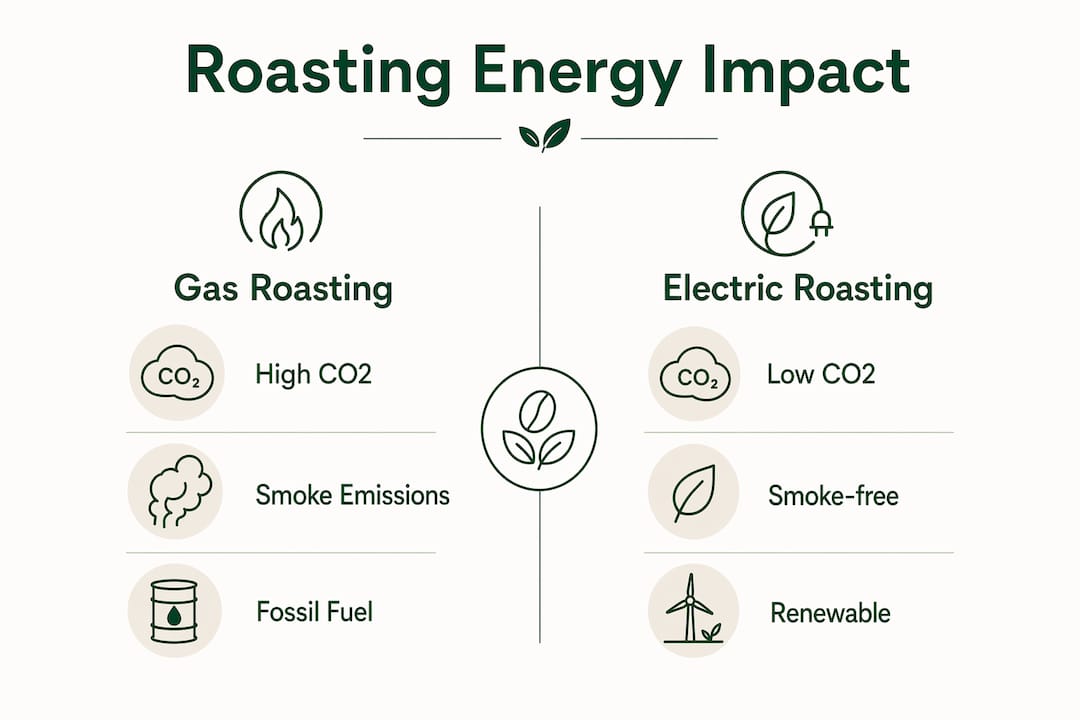
The most direct clean energy advantage in roasting is the elimination of direct fossil fuel combustion. Traditional gas roasters burn LPG or natural gas on-site, releasing CO2, volatile organic compounds (VOCs), and fine particulate matter into the air with every batch. Electric roasters powered by renewable energy remove that combustion entirely, and the numbers are striking: switching to ventless all-electric roasting cuts CO2 emissions by 87% compared to gas roasting. That is not a marginal improvement. It is a near-total elimination of direct roasting emissions.
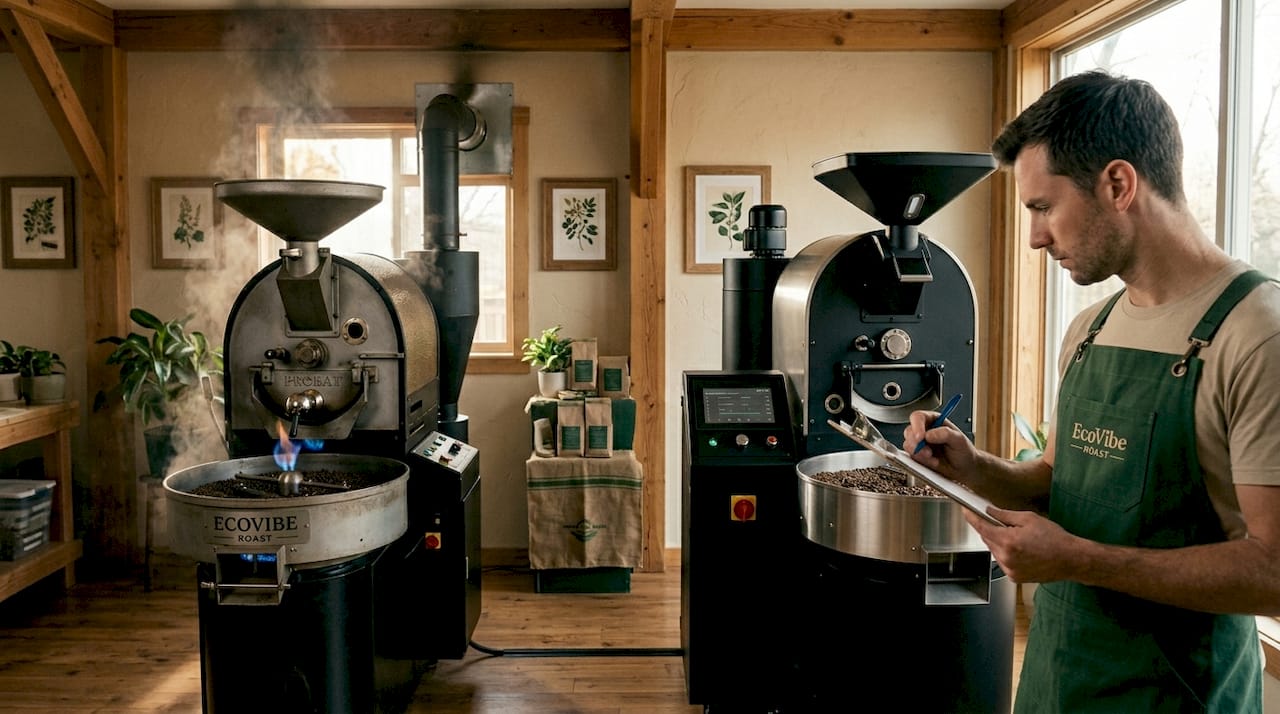
Ventless electric roasters like those made by Bellwether go one step further by handling smoke and VOCs internally. Instead of venting exhaust outdoors, internal afterburner and catalytic filtration treat emissions inside the machine before any air is released. This means cleaner air in the roastery, cleaner air in the neighborhood, and no need for expensive external ductwork.
Here is a quick comparison of how the two approaches stack up:
| Factor | Gas roasting | Electric/clean energy roasting |
|---|---|---|
| CO2 emissions | High (direct combustion) | Up to 87% lower |
| VOC and particulate output | Released externally | Filtered internally |
| Infrastructure needed | External exhaust and ventilation | Minimal, no external ductwork |
| Energy source flexibility | Fixed to fossil fuels | Improves as grid decarbonizes |
| Air quality impact | Negative, local and regional | Significantly reduced |
The table above makes the case clearly. Gas roasting locks you into fossil fuel emissions, while electric roasting gives you a platform that gets cleaner over time as renewable energy expands on the grid.
Pro Tip: When evaluating an electric roaster’s environmental credentials, ask the manufacturer for its emissions profile under your local grid’s current energy mix. A roaster running on a coal-heavy grid still outperforms gas, but the gap narrows considerably.
What are the operational and quality benefits of clean energy roasting?
One of the most common concerns you might have is whether going electric means compromising on roast quality. The answer is no, and the evidence is growing fast. Electric roasters offer precise, software-controlled heat application, which means tighter batch consistency and less guesswork for the roaster operator. Rapid heat-up times also reduce idle energy waste between batches, making the process more efficient overall.
Julius Meinl’s hydrogen-powered roaster, installed in 2026 in partnership with Wien Energie, is a standout example. The roaster heats to 200°C using green hydrogen for fossil-free roasting and saves approximately 2 kilograms of CO2 per roast, projecting 300 tonnes of annual savings. Julius Meinl reports no compromise in the flavor profile of their coffee, which is a powerful signal for specialty roasters worried about switching fuels.
The operational advantages of clean energy roasting extend well beyond emissions:
- No external exhaust infrastructure. Ventless electric roasters can be installed in cafés, urban kitchens, or small-batch facilities without major HVAC modifications.
- Software-controlled energy use. Automated roast profiles reduce human error and energy waste simultaneously.
- Scalable for small roasters. Compact electric roasters make clean energy roasting accessible to independent cafés, not just large industrial operations.
- Lower long-term operating costs. As electricity grids shift toward renewables, the cost per roast can decrease alongside the carbon footprint.
For small roasters and café owners, the ventless installation benefit alone can be a deciding factor. You can explore more about low-impact roasting methods to see how these technologies translate into real-world operations.
Why does the energy source matter as much as the roasting method?
Choosing an electric roaster is a great start, but the full sustainability picture depends on where your electricity comes from. The EPA is clear that evaluating renewable energy origin is critical to understanding the true environmental impact of any electric-powered process. An electric roaster plugged into a grid dominated by coal still produces upstream emissions, even if the roaster itself burns nothing on-site.
This is where grid decarbonization becomes your long-term ally. Electric roasting sustainability improves automatically as the carbon intensity of the electricity grid declines over time. That means an electric roaster you buy today will have a smaller carbon footprint in five years without any hardware changes, simply because more wind and solar will be on the grid powering it.
Here are the practical steps for evaluating and securing clean energy for your roasting operation:
- Check your utility’s energy mix. Most electricity providers publish their generation sources. Look for providers with high percentages of wind, solar, or hydropower.
- Ask about green power contracts. Many utilities offer renewable energy certificates (RECs) or green tariff programs that let you pay a small premium to match your consumption with renewable generation.
- Consider on-site renewable generation. Rooftop solar panels paired with an electric roaster create a nearly closed-loop clean energy system for small operations.
- Evaluate hydrogen suppliers carefully. Green hydrogen, like the Wien Energie supply used by Julius Meinl, must come from electrolysis powered by renewables. Gray or blue hydrogen still carries significant upstream emissions.
- Track and report your energy source. Transparent communication about your energy procurement builds trust with eco-conscious customers and supports third-party sustainability certifications.
Pro Tip: Look into renewable energy for coffee production as a resource for understanding how sourcing decisions at every stage, including roasting energy, shape your product’s total carbon story.
How does clean energy roasting support public health and ecosystems?
The benefits of sustainable roasting methods reach well beyond carbon accounting. A scientific study published in Frontiers in Sustainable Energy Policy found that renewable energy deployment reduces air pollutants linked to respiratory and cardiovascular disease. When roasters stop burning fossil fuels, the local air quality around roasting facilities improves, which matters most in urban neighborhoods where cafés and small roasteries operate close to homes and schools.
The same research confirms that renewable energy delivers socio-economic benefits including job creation, energy security, and meaningful progress toward global climate targets. For the coffee industry, this means that choosing clean energy roasting is not just a branding decision. It is a contribution to a healthier, more resilient economy.
That said, renewable energy planning requires care. Large-scale solar and wind installations can affect local ecosystems if sited poorly, and the Frontiers study emphasizes the need for balanced ecological planning alongside rapid deployment. The goal is not to swap one environmental problem for another.
“Decarbonizing roasting is one of the most direct contributions a coffee business can make to global climate goals, but the full benefit depends on sourcing energy that is genuinely renewable, not just labeled as clean.”
Clean energy roasting also connects directly to broader sustainable development goals. When you support roasters who use renewable energy, you are participating in a supply chain that prioritizes air quality, community health, and climate resilience alongside a great cup of coffee.
What practical steps can you take to support clean energy roasting?
Whether you are a small roaster looking to upgrade your equipment or a consumer who wants your morning cup to carry less environmental weight, there are concrete moves you can make right now.
- Choose ventless electric roasters if you are a small roaster or café owner. Brands like Bellwether offer compact, installation-friendly models that work without external exhaust systems.
- Switch to a green electricity supplier or enroll in a renewable energy program through your current utility.
- Measure your energy consumption per roast batch and set reduction targets. Even small efficiency gains compound over hundreds of roast cycles.
- Pursue sustainability certifications such as B Corp or Rainforest Alliance, which require transparent energy sourcing documentation.
- Communicate your energy choices to customers. Eco-conscious buyers actively look for this information, and transparency builds loyalty.
- Support brands that already use clean energy. Your purchasing decisions send a direct market signal that sustainable roasting methods are worth investing in.
You can also check out eco-friendly café tips for 2026 for a broader look at how roasting energy fits into a whole-operation sustainability strategy.
Pro Tip: Ask your coffee supplier directly: “What energy source powers your roasting?” If they cannot answer, that is useful information too. Transparency is a hallmark of genuinely sustainable operations.
Key takeaways
Clean energy in roasting is the single most impactful operational change a coffee business can make to reduce its direct carbon emissions and improve local air quality.
| Point | Details |
|---|---|
| 87% CO2 reduction possible | Switching from gas to ventless electric roasting cuts direct CO2 emissions by 87%, per Bellwether data. |
| Energy source determines true impact | An electric roaster’s sustainability depends on whether the electricity comes from renewable sources, not just the equipment type. |
| Hydrogen roasting is emerging | Julius Meinl’s green hydrogen roaster projects 300 tonnes of annual CO2 savings with no roast quality compromise. |
| Grid decarbonization is a long-term ally | Electric roasters automatically become cleaner as renewable energy expands on the grid, improving emissions over time. |
| Public health benefits are real | Renewable energy deployment is linked to measurable reductions in respiratory and cardiovascular disease rates. |
My honest take on clean energy roasting’s promise and limits
I have followed the evolution of electric roasting technology for years, and what strikes me most is how quickly the conversation has shifted from “is it possible?” to “why haven’t more roasters done it yet?” The 87% CO2 reduction figure from Bellwether is not a theoretical projection. It is a documented outcome from real roasting operations. That kind of result should be impossible to ignore.
What I find genuinely exciting is the compounding benefit of grid decarbonization. You buy an electric roaster today, and it gets cleaner every year as solar and wind capacity grows, without you spending another dollar. That is a rare case where doing the right thing now pays increasing dividends over time.
Hydrogen roasting is more complicated. Julius Meinl’s deployment is impressive, but green hydrogen supply chains are still fragile and expensive. Most small roasters will not have access to a Wien Energie partnership. For now, electric roasting powered by renewable electricity is the practical path for the vast majority of operations.
What I want eco-conscious consumers to understand is that your purchasing choices are not passive. When you buy from roasters who invest in clean energy, you are funding the next generation of sustainable roasting infrastructure. Small businesses move when their customers demand it. That is not idealism. That is how markets work.
— LaSaundra
Taste the difference that clean energy makes with Ecoviberoast
At Ecoviberoast, every product reflects a commitment to sourcing and roasting with the planet in mind. From shade-grown single-origin beans to eco-friendly packaging, the brand’s entire supply chain is built around reducing environmental harm and supporting the communities behind your coffee.

Ecoviberoast’s environmental impact commitments include planting mangrove trees and removing ocean-bound plastics with every purchase, making each cup a small act of environmental stewardship. If you want to experience clean energy roasting in your own mug, the Mexico single-origin coffee pods are a rich, aromatic place to start. Every sip supports a supply chain that takes clean energy seriously, from the farm to your cup.
FAQ
What is clean energy roasting?
Clean energy roasting uses renewable or fossil-free energy sources, such as solar-powered electricity or green hydrogen, to roast coffee instead of burning LPG or natural gas. This approach eliminates direct combustion emissions and significantly reduces a roastery’s carbon footprint.
How much does switching to electric roasting reduce CO2 emissions?
Switching from gas to ventless all-electric roasting reduces CO2 emissions by 87%, according to Bellwether Coffee’s documented data. This reduction comes from eliminating on-site fossil fuel combustion entirely.
Does clean energy roasting affect coffee flavor or quality?
Julius Meinl’s hydrogen-powered roaster, deployed in 2026, demonstrates that fossil-free roasting produces no compromise in coffee flavor or quality. Electric roasters also offer precise temperature control that can improve batch consistency compared to gas roasting.
Why does the source of electricity matter for electric roasters?
The EPA confirms that the origin of your electricity determines the true upstream emissions of any electric-powered process. An electric roaster running on renewable energy delivers far greater sustainability benefits than one powered by a coal-heavy grid.
How can consumers support clean energy roasting?
Consumers can support clean energy roasting by purchasing from brands that transparently disclose their energy sourcing, choosing certified sustainable products, and asking roasters directly about the energy powering their operations. Purchasing decisions send a direct market signal that rewards sustainable investment.


