

Supporting reforestation initiatives delivers measurable climate mitigation, biodiversity recovery, water and soil protection, and community benefits — but only when projects are science-based and built in partnership with local people. That’s the short answer, and the evidence behind it is genuinely exciting.
Here’s what you gain when you back well-designed tree restoration work:
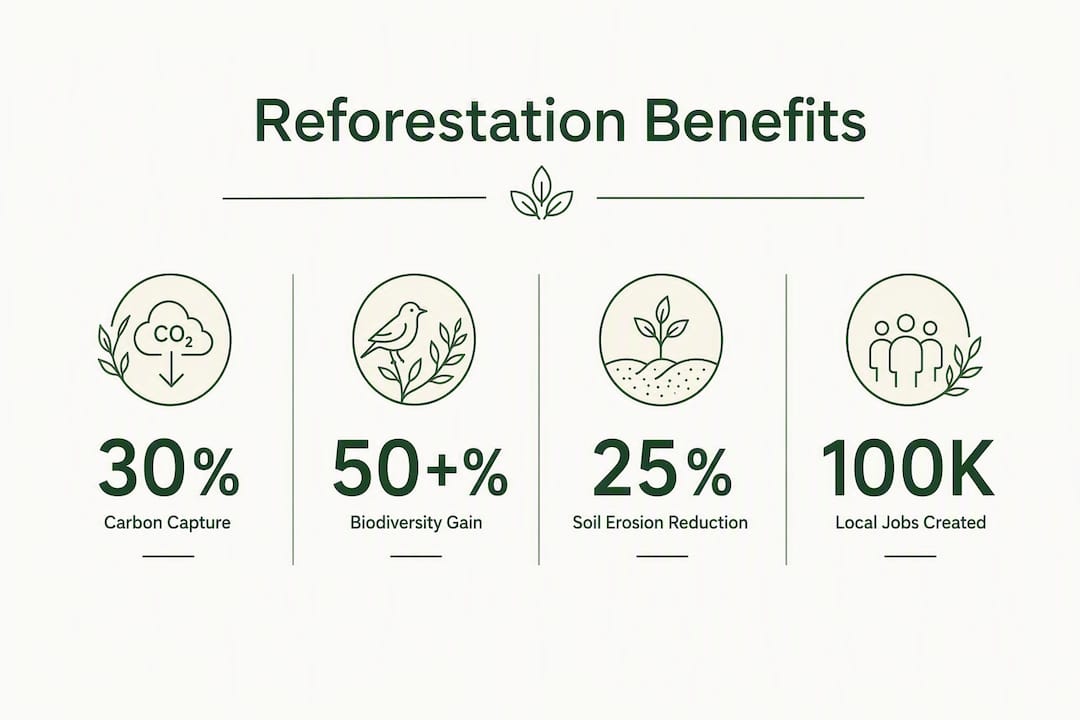
- Climate action: Trees remove and store carbon dioxide over decades, buying time alongside emissions reductions.
- Biodiversity recovery: Native forest restoration rebuilds wildlife habitat and ecological complexity that monoculture plantations simply cannot replicate.
- Water and soil resilience: Restored forests reduce runoff, filter water, and anchor soil against erosion.
- Community and economic benefits: Reforestation creates local jobs, opens revenue options for private landowners, and even improves public health in urban areas.
Organizations like The Nature Conservancy, the National Forest Foundation, and One Tree Planted run programs with transparent impact metrics you can actually verify. Ecoviberoast, as a brand rooted in sustainable sourcing, links every purchase to verified environmental impact — including tree planting. The sections below walk through each benefit category, explain how credible projects work, and show exactly how you can get involved.
Table of Contents
- 1. Why reforestation initiatives matter for the climate
- 2. Native forests beat plantations for biodiversity — here’s why
- 3. How reforestation protects water, soil, and fire-damaged landscapes
- 4. Reforestation creates real jobs and community opportunities
- 5. How responsible reforestation projects are actually planned
- 6. How you can support credible reforestation initiatives right now
- 7. Three research findings that should shape your giving decisions
- Key Takeaways
- Reforestation and the choices that actually move the needle
- Your daily cup can fund real reforestation work
- Authoritative sources and further reading
1. Why reforestation initiatives matter for the climate
Reforestation removes and stores carbon, but the timeline and the limits matter as much as the headline number. Trees begin absorbing CO₂ almost immediately after planting, yet meaningful sequestration accumulates over decades — a young stand of saplings stores a fraction of what a mature forest holds. Think of it as a slow, steady savings account rather than an instant deposit.
The science is clear: reforestation is a powerful climate tool, but it works on a decadal timeline and cannot substitute for cutting fossil fuel emissions. Research published in MDPI’s Forests confirms that tree planting must be part of broader mitigation strategies, not a replacement for them.
Permanence is the other honest caveat. Wildfires, drought, and pests — all intensifying with climate change — can flip a forest from a carbon sink to a carbon source. That’s why credible projects build in long-term monitoring and choose species suited to future climate conditions, not just today’s.
Policy frameworks increasingly recognize this. International nature-based solutions targets and U.S. federal programs treat reforestation as one essential layer of climate strategy, always alongside emissions cuts. Restored native forests, the MDPI review notes, achieve greater long-term carbon storage than fast-growing monoculture plantations focused on short-term wood production. That distinction shapes which projects are worth your support.
2. Native forests beat plantations for biodiversity — here’s why
When it comes to wildlife habitat and ecosystem health, not all tree planting is equal. A global synthesis of 25,950 matched data pairs published in Science found that native forests consistently outperform plantations for carbon storage, water provisioning, soil erosion control, and biodiversity — especially in warmer, drier regions.
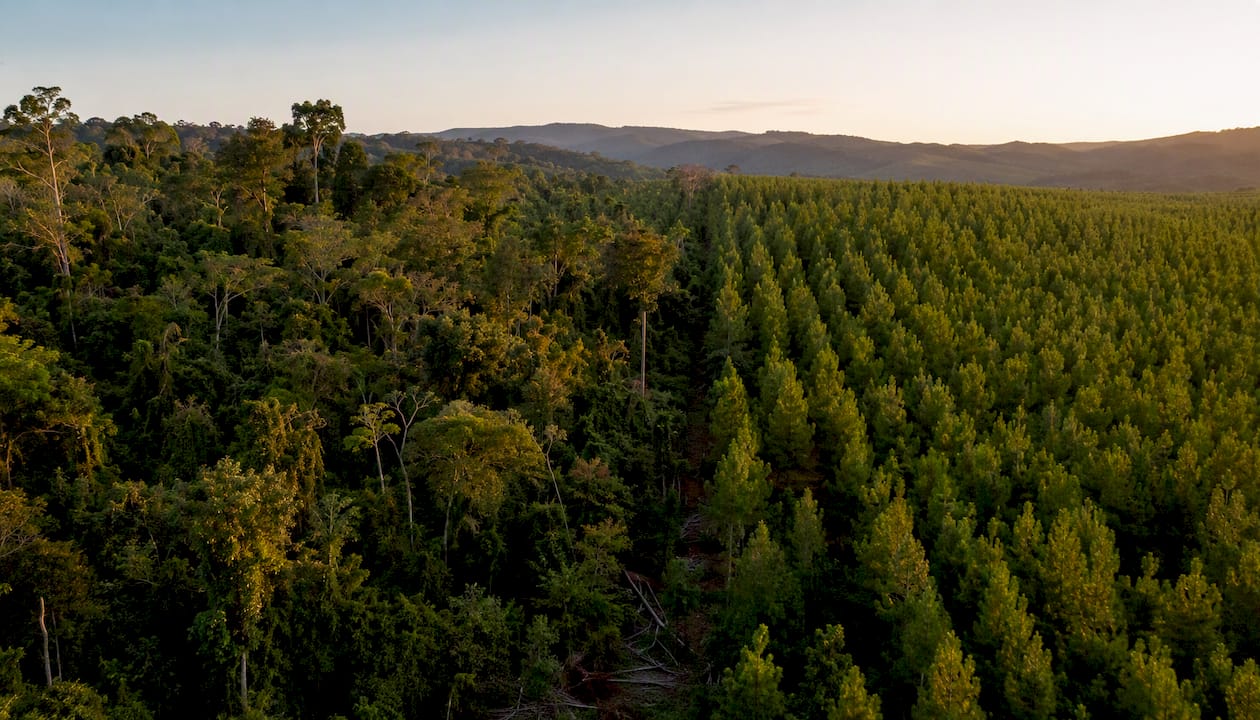
Monoculture plantations of a single fast-growing species can look impressive on a “trees planted” scoreboard while delivering almost none of the structural complexity that wildlife needs. A forest with layered canopy, native understory plants, and diverse species supports pollinators, birds, amphibians, and soil organisms in ways a pine row simply cannot.
What to look for in a biodiversity-positive project:
- Multiple native tree and shrub species, not a single commercial variety
- Structural complexity: canopy, midstory, and ground-layer plants
- Seeds and seedlings sourced from local native provenance
- Habitat connectivity to existing forest patches
- Monitoring for wildlife indicators, not just tree survival rates
The “tree counting” metric that dominates headlines can be misleading. Species composition and ecological design matter as much as raw numbers. When you’re evaluating where to donate or volunteer, ask whether the project is restoring a native forest ecosystem or simply establishing a plantation with a green label.
3. How reforestation protects water, soil, and fire-damaged landscapes
Restored forests act like living sponges. Tree roots and leaf litter slow rainfall, reduce surface runoff, and improve soil infiltration — which means less erosion, cleaner waterways, and more reliable water supplies for communities downstream. These aren’t abstract benefits; they show up in measurable reductions in sediment loads and improved water quality in watersheds where native forest cover returns.
Key water and soil services that reforestation delivers:
- Reduced surface runoff and peak flood flows
- Improved groundwater recharge through increased infiltration
- Soil stabilization on slopes prone to erosion and landslides
- Filtration of agricultural and urban pollutants before they reach streams
Post-wildfire recovery is a particularly urgent application. The U.S. Forest Service defines reforestation as planning for natural regeneration or active tree planting to speed ecosystem recovery after disturbances like wildfire. That’s an important framing: planting is one tool, and natural regeneration is often preferred where seed sources remain. What planting cannot do immediately is restore the full soil microbial community, the understory, or the decades of accumulated organic matter that a mature forest holds. Recovery is measured in years for canopy closure and decades for full ecological function.
The National Forest Foundation’s post-fire work exemplifies the planning-and-monitoring approach: site assessment first, species selection matched to local conditions, and ongoing survival checks rather than a one-time planting event.
4. Reforestation creates real jobs and community opportunities
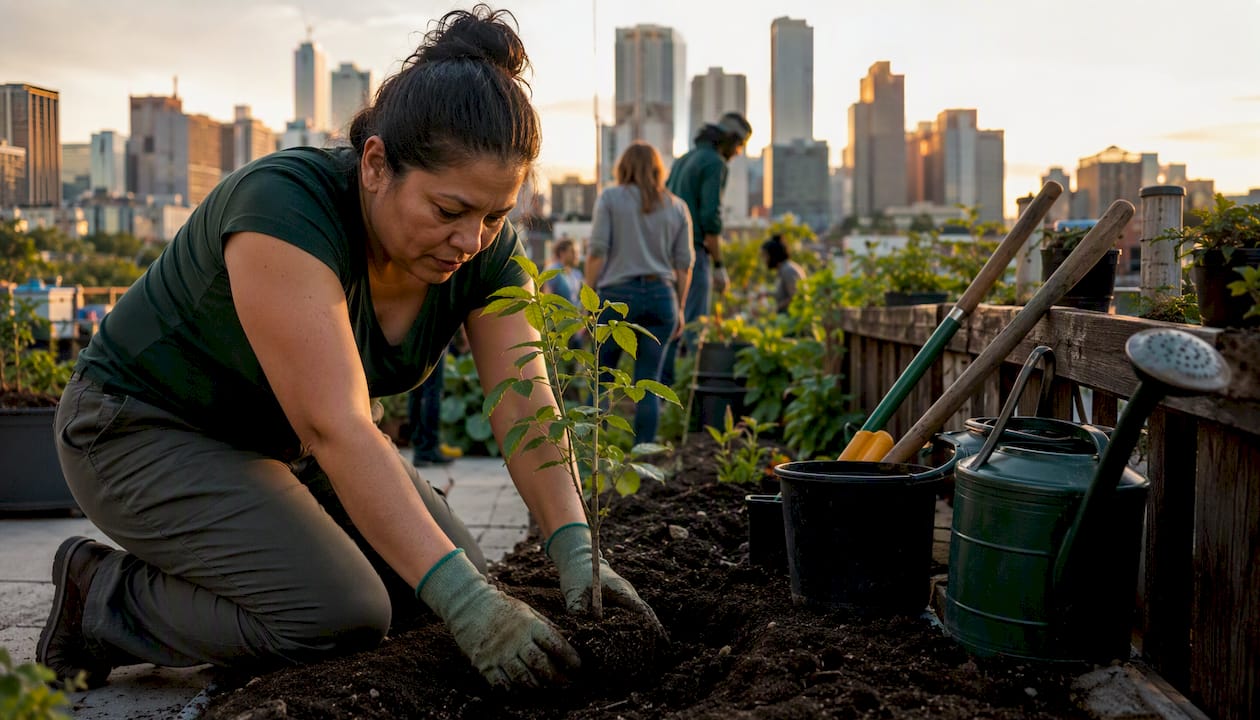
The social case for tree restoration is just as compelling as the ecological one. Reforestation creates employment in nursery operations, planting crews, monitoring teams, and long-term forest management — jobs that tend to be local, hands-on, and tied to the land.
In the U.S., The Nature Conservancy reports that most reforestation opportunity areas are on privately owned land. That single figure reframes the whole conversation. Scaling forest restoration in America depends on engaging private landowners with the right incentives, technical assistance, and revenue models — not just expanding public lands programs.
Urban tree planting adds a public-health dimension that often surprises people. A Louisville study linked the strategic planting of 9,000 trees to measurable improvements in conditions associated with heart disease and stroke among nearby residents. Shade, air filtration, and reduced urban heat island effects translate directly into health outcomes for communities that have historically had less green space.
Checklist for assessing a project’s community benefits:
- Local hiring and fair wages for planting and monitoring crews
- Revenue-sharing or cost-share programs for private landowners
- Transparent reporting on jobs created and community partnerships
- Engagement with Indigenous communities and traditional land stewards
- Long-term maintenance commitments that sustain local employment
5. How responsible reforestation projects are actually planned
Credible reforestation follows a cycle, not a single event. The sequence matters: protect existing forest first, then assess the site, select species, implement planting or natural regeneration, maintain, and monitor. Skipping any step is where well-intentioned projects go wrong.
A quick glossary worth knowing:
- Reforestation: restoring tree cover on land that was recently forested (post-fire, post-harvest)
- Afforestation: establishing trees on land not recently forested — carries higher ecological risk if done without care
- Ecological restoration: the broader goal of recovering full ecosystem function, not just tree cover
The ten golden rules for reforestation synthesized from restoration science include protecting existing forest first, involving local stakeholders, maximizing biodiversity recovery, and using natural regeneration where possible. These aren’t aspirational — they’re the practical framework that separates lasting restoration from PR-driven tree planting.
| Trust signal | What it looks like in practice |
|---|---|
| Ecologist/forestry partnerships | Project design reviewed by credentialed scientists |
| Native species and local provenance | Seeds sourced from the same region, not generic nursery stock |
| Long-term maintenance plan | Survival monitoring for 3–5+ years post-planting |
| Transparent impact metrics | Public reports: trees planted, acres restored, carbon estimates |
| Community and landowner partnerships | Local hiring, revenue-sharing, stakeholder input |
Pro Tip: Ask any organization you’re considering supporting: “What percentage of your planted trees survive to year three?” A credible program tracks and publishes this number.
6. How you can support credible reforestation initiatives right now
Multiple high-impact paths exist: donations, volunteering, advocacy, and choosing purchases tied to verified projects. The key is vetting before you commit.
Steps to vet an organization before donating:
- Confirm they plant native species matched to the local ecosystem.
- Ask whether they use natural regeneration where seed sources allow.
- Check for published survival and monitoring data, not just “trees planted” counts.
- Look for community partnerships and local hiring commitments.
- Review their carbon accounting methodology if they sell offsets.
- Verify nonprofit status and financial transparency (Charity Navigator or GuideStar are useful starting points).
One Tree Planted, the National Forest Foundation, and The Nature Conservancy all publish impact metrics and offer multiple giving options. Costs and timelines vary by project type and geography.
| Giving level | Typical impact range | Timeline to visible results |
|---|---|---|
| $1–$5 per tree | 1–5 trees planted (varies by org and region) | Canopy closure: 5–10 years |
| $25 | Small plot or urban tree sponsorship | Measurable carbon uptake: 10 years |
| $100 | Acre-scale restoration support | Mature forest function: decades |
Note: per-tree and per-acre costs are illustrative ranges based on publicly reported program figures and vary significantly by species, region, and project type.
Volunteering is another direct path. Many state forestry agencies and local land trusts run planting days that need hands, not just dollars. Policy advocacy — supporting programs like the USDA’s reforestation funding or urban forestry grants — multiplies impact at scale.
Pro Tip: Buying from brands that fund verified reforestation projects with each purchase is one of the lowest-friction ways to contribute consistently. Look for brands that name their NGO partners and report impact publicly, not just ones that use “eco-friendly” as a tagline.
For a deeper look at how coffee supply chains connect to forest loss and restoration, the coffee and deforestation explainer on Ecoviberoast’s blog is worth your time.
7. Three research findings that should shape your giving decisions
Three evidence-backed points stand out from the science and should directly influence which projects you support.
Native forest restoration outperforms plantations. The Science synthesis of 25,950 matched data pairs found native forests deliver better biodiversity, water provisioning, and soil erosion control than plantations — particularly in warm, dry climates. Donor takeaway: favor projects that specify native species and ecosystem restoration over those that report only tree counts.
Most U.S. opportunity is on private land. With 88% of U.S. reforestation opportunity areas privately owned, programs that engage landowners through incentives and technical support are essential to national-scale impact. Donor takeaway: support organizations that work with private landowners, not just those focused on public lands.
Urban trees improve public health. The Louisville study linking 9,000 strategically planted trees to measurable cardiovascular health improvements shows that reforestation benefits aren’t limited to remote wilderness. Donor takeaway: urban forestry programs deserve a place in your giving portfolio alongside rural restoration.
| Approach | Implementation cost vs. active planting | Typical biodiversity outcome |
|---|---|---|
| Natural regeneration | 38%–76% lower | Often higher species richness |
| Active native planting | Baseline | High when species-diverse |
| Monoculture plantation | Varies | Significantly lower |
The cost differential for natural regeneration is striking. Where seed sources and conditions allow, letting forests recover naturally is both cheaper and often richer in species than conventional planting. The ten golden rules framework recommends natural regeneration as the first option to consider, with active planting reserved for sites where it won’t occur on its own.
For readers curious about how shade-grown agroforestry connects to these biodiversity principles, the parallels are direct: diverse canopy layers support wildlife and farmer livelihoods at the same time.
Key Takeaways
Science-based reforestation that partners with local communities delivers climate, biodiversity, water, and health benefits that simple tree-count metrics cannot capture.
| Point | Details |
|---|---|
| Native forests outperform plantations | A global synthesis of 25,950 data pairs shows native restoration beats plantations for biodiversity, water, and soil services. |
| Private land is the U.S. frontier | 88% of U.S. reforestation opportunities are on privately owned land, making landowner engagement central to scaling impact. |
| Natural regeneration saves money | Studies show natural regeneration costs less than active planting and often delivers higher species richness. |
| Urban trees improve health | Planting 9,000 trees in Louisville linked to measurable improvements in heart disease and stroke risk for nearby residents. |
| Ecoviberoast links purchases to impact | Every Ecoviberoast purchase funds verified environmental initiatives including tree planting, letting you support restoration through your daily coffee or tea ritual. |
Reforestation and the choices that actually move the needle
Here’s the perspective that most reforestation content skips: the “trees planted” number is almost meaningless on its own. A billion monoculture saplings planted in the wrong place, with no maintenance and no community buy-in, can do more harm than good — displacing native grasslands, consuming water in arid regions, or collapsing within a few years when no one tends them.
The research is unambiguous on this. The Science synthesis, the ten golden rules, the MDPI review — they all point to the same conclusion: ecological design and long-term commitment matter far more than headline planting numbers. Yet most donor-facing communications still lead with tree counts because they’re easy to visualize and emotionally satisfying.
What actually moves the needle is supporting organizations that prioritize protecting existing forests first (because an old-growth acre stores far more carbon than a newly planted one), use native species with local provenance, hire locally, and publish survival data. Those criteria are harder to communicate in a social media post, but they’re the difference between restoration that lasts and restoration that looks good in a press release.
The good news? You don’t need a forestry degree to ask the right questions. The checklist in this article gives you everything you need to vet a project in ten minutes. And when you choose brands, products, or giving programs that meet those standards, you’re not just feeling good — you’re funding work that the science actually supports.
Your daily cup can fund real reforestation work
If you’re already thinking about where to direct your support, your morning coffee or afternoon tea is a surprisingly direct path. Ecoviberoast ties every purchase to verified environmental impact, including tree planting and ocean-bound plastic removal — so the ritual you already love does something meaningful beyond your mug.

The model is straightforward: a portion of every order funds impact programs through vetted partners, and the brand publishes what that impact looks like. No vague “eco-friendly” claims, no greenwashing. If you want to see the specifics, the impact reporting is there to read.
Ready to make your next cup count? The 60-pack single-serve coffee pods are a great starting point for everyday drinkers, or grab the 12-pack sampler if you’d like to try before committing. Either way, you’re supporting restoration work that meets the science-based standards this article describes.
Authoritative sources and further reading
- The biodiversity and ecosystem service contributions and trade-offs of forest restoration approaches | Science — The landmark global synthesis comparing native forest restoration to plantations across 25,950 data pairs; essential reading for anyone evaluating reforestation project quality.
- Ten golden rules for reforestation | Public Gardens PDF — A practical science-based framework covering species selection, natural regeneration, stakeholder involvement, and monitoring; the best single checklist for donors and practitioners.
- Planting Trees as a Nature-Based Solution | MDPI Forests — Balanced review of reforestation’s climate potential, ecological limits, and the risks of over-relying on tree-planting metrics; useful for understanding what reforestation can and cannot do.
- Reforesting the U.S. for People and Nature | The Nature Conservancy — TNC’s U.S.-focused reforestation page, including the private-land opportunity data and program descriptions.
- 6 Ways Trees Benefit People | The Nature Conservancy — Covers urban health co-benefits including the Louisville study; accessible entry point for readers new to the public-health case for tree planting.
- Reforestation | U.S. Forest Service, USDA — The federal agency’s guidance on post-disturbance reforestation planning, natural regeneration, and monitoring standards.
- Coffee and Sustainability | Coffee Bags Direct — Industry resource connecting coffee-sector sourcing practices to reforestation and sustainability commitments; useful for readers interested in supply-chain impacts.


