

TL;DR:
- Ethical flavoring involves sourcing ingredients through sustainable and fair practices that benefit both people and the planet. It considers the entire supply chain, with certifications like USDA Organic and Fair Trade verifying responsible practices. Consumers should prioritize certified botanical extracts and look for stacked certifications to support truly ethical beverage production.
Ethical flavoring is defined as the practice of sourcing and producing flavor ingredients through sustainable, fair, and transparent means that benefit people and the planet while enhancing product quality. Unlike conventional flavoring, which prioritizes cost and consistency, ethical flavoring considers the full supply chain, from the soil where ingredients grow to the workers who harvest them. Certifications like USDA Organic and Fair Trade serve as the primary verification tools consumers can trust. At Ecoviberoast, this philosophy shapes every tea and coffee blend, because great flavor and responsible sourcing are not competing goals. They are the same goal.
What practices and principles define ethical flavoring?
Ethical flavoring protects ecosystems and improves labor fairness while simultaneously enhancing the sensory complexity of your beverage. That dual benefit is what separates it from simple “natural” or “organic” marketing language. The principles behind ethical flavoring fall into three interconnected areas.

Environmental sustainability means farming practices that protect soil health, avoid deforestation, and conserve water. Shade-grown cultivation, for example, preserves biodiversity by maintaining forest canopy above crops. Healthy, nutrient-rich soils produce aromatic compounds that give teas and coffees their layered, complex flavor profiles. Sustainable sourcing enhances flavor quality precisely because the plant grows in a balanced ecosystem rather than a depleted one.
Fair labor and community support are equally central. Ethical flavoring requires that farmers and harvesters receive fair wages, safe working conditions, and long-term contracts that let them invest in their land. Short-term extraction contracts push farmers to deplete soil quickly, which degrades both the ecosystem and the flavor of the crop. Supporting producer communities creates a feedback loop where better conditions produce better ingredients.
Responsible processing closes the loop. The method used to extract flavor from a botanical ingredient matters as much as how it was grown. Cold pressing and gentle distillation preserve aromatic compounds while using less energy than high-heat industrial extraction. Energy-efficient extraction techniques like cold pressing reduce environmental impact and retain flavor complexity that harsh processing destroys.
- Shade-grown and regenerative farming methods protect biodiversity and soil health
- Fair wages and stable contracts support farming communities and long-term land stewardship
- Cold pressing and gentle distillation preserve flavor while reducing energy use
- Third-party certifications like USDA Organic and Fair Trade verify these practices independently
Pro Tip: When you read a tea or coffee label, look past the word “natural” and check for a specific certification seal. A USDA Organic or Fair Trade mark tells you a third party has verified the farming and labor claims.
How do natural, artificial, and botanical flavorings compare in ethical terms?
The natural vs. ethical flavoring debate is more nuanced than most consumers realize. “Natural” is a regulatory category, not an ethical one. Understanding the difference protects you from misleading labels and helps you make genuinely responsible choices.
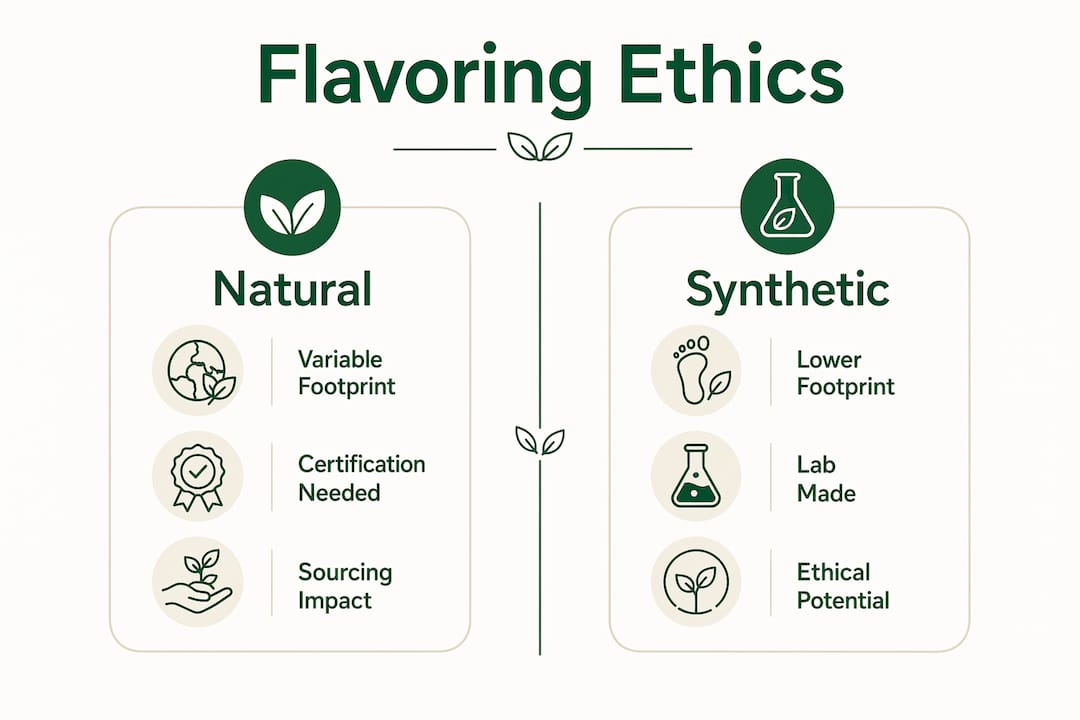
Natural flavors are derived from plant or animal sources using physical, microbiological, or fermentation processes. The FDA defines them broadly, which means a “natural flavor” can include substances that were heavily processed or extracted using environmentally damaging methods. Natural flavor labels can be misleading, and “natural” does not guarantee sustainability or health benefits. The supply chain behind natural flavors is often opaque, making independent verification nearly impossible without a certification.
Nature-identical and artificial flavors are synthesized in a lab to replicate naturally occurring compounds. Counterintuitively, some synthetic flavors have a smaller environmental footprint than their natural counterparts. Extracting a small amount of a rare botanical compound can require large quantities of raw plant material, significant water, and energy-intensive processing. A lab-synthesized equivalent may require far fewer resources. Ethical evaluation requires nuance, not a blanket preference for “natural.”
Botanical extracts represent the most promising category for ethical flavoring in beverages. These are whole-plant or minimally processed extracts that retain the full aromatic profile of the source ingredient. Botanical flavor extracts are preferred by Gen Z consumers and clean-label advocates for their nuanced taste and alignment with sustainability values. When sourced from certified farms using gentle extraction, botanical extracts deliver on both flavor and ethics.
| Flavor type | Environmental footprint | Ethical verification |
|---|---|---|
| Natural flavors | Variable, often opaque | Requires third-party certification |
| Nature-identical synthetics | Often lower than natural extraction | Lab-controlled, but no social responsibility signal |
| Botanical extracts (certified) | Low when cold-pressed or distilled | Verifiable via USDA Organic, Fair Trade |
Pro Tip: Botanical extracts from certified farms, processed with cold pressing or gentle distillation, give you the best combination of flavor quality and ethical assurance. Look for both the ingredient type and the certification on the label.
What certifications should you look for to verify ethical flavoring?
No single unified ethical flavoring label exists. Third-party certifications serve as the primary verification tool because no government standard currently covers the full scope of ethical sourcing claims. Knowing which seals to trust saves you from vague marketing language.
Here are the certifications that carry real weight:
- USDA Organic: Verifies that ingredients were grown without synthetic pesticides or fertilizers, with soil health standards that align closely with ethical farming. It does not cover labor practices directly.
- Fair Trade Certified: Addresses labor fairness, fair wages, and community investment. This is the certification that closes the gap USDA Organic leaves open on social responsibility.
- The Vegan Society Sunflower Symbol: Confirms no animal-derived ingredients are present. Natural flavors sometimes include dairy, egg, or seafood extracts, so this seal matters for consumers with dietary or ethical concerns about animal use.
- Rainforest Alliance: Covers both environmental and social criteria, including biodiversity protection and worker welfare, making it a strong all-around ethical signal.
The FDA regulates flavor safety, not ethical sourcing. FDA approval tells you a flavor is safe to consume. It says nothing about how the ingredient was grown, who harvested it, or whether the land was protected. Only specific certifications can assure sustainable farming with fair labor practices. Relying on FDA status alone leaves a wide gap in ethical verification.
Transparency in sourcing goes beyond label seals. Brands that publish their supply chain documentation, name their farm partners, and disclose processing methods give you the clearest picture. Transparency in tea sourcing empowers you to make decisions based on real information rather than marketing copy.
How can you practically choose and support ethical flavoring?
Choosing ethical flavors in your beverages does not require a chemistry degree. It requires asking the right questions and knowing where to look. Here is a practical framework for both consumers and the brands they support.
-
Ask about origin. Where was the flavoring ingredient grown? A brand that cannot name a region or farm partner likely lacks supply chain visibility. Specific origin disclosure is a strong signal of ethical sourcing.
-
Check for stacked certifications. One certification covers one dimension. USDA Organic plus Fair Trade together cover environmental and social responsibility. Brands that hold multiple certifications have invested in verification across the supply chain.
-
Prioritize botanical and whole-ingredient options. Teas and coffees flavored with real botanical ingredients, such as bergamot peel, dried flowers, or spice blends, are easier to trace than products listing “natural flavor” as a catch-all ingredient.
-
Look for processing transparency. Brands that disclose extraction methods, such as cold pressing or steam distillation, demonstrate awareness of the full production process. This level of detail is rare and worth rewarding with your purchase.
-
Support brands with documented producer relationships. Long-term relationships between brands and farming communities create accountability. Responsibly sourced beverages come from brands that treat their supply chain as a partnership, not a transaction.
-
Read the ingredient list critically. “Natural flavor” is a catch-all term that can hide a wide range of sourcing practices. Specific ingredient names, such as “bergamot oil” or “chamomile extract,” give you something concrete to research and verify.
The clean-label movement is pushing brands toward greater specificity. Eco-friendly flavoring in beverages is no longer a niche preference. Consumer demand for transparency is reshaping how brands source, label, and communicate their flavor ingredients.
Key Takeaways
Ethical flavoring is the most reliable path to beverages that taste better, support farming communities, and protect the ecosystems that make great flavor possible.
| Point | Details |
|---|---|
| Definition matters | Ethical flavoring covers environmental sustainability, fair labor, and transparent processing, not just ingredient origin. |
| “Natural” is not enough | Natural flavor labels do not guarantee ethical sourcing; third-party certifications like USDA Organic and Fair Trade do. |
| Synthetics can be ethical | Some nature-identical synthetic flavors have a smaller environmental footprint than natural extractions. |
| Botanical extracts lead | Cold-pressed or gently distilled botanical extracts deliver the best combination of flavor quality and ethical verification. |
| Transparency is the signal | Brands that name farm partners, disclose processing methods, and hold stacked certifications are the most trustworthy choices. |
Why ethical flavoring is reshaping what I expect from every sip
I have spent years tasting teas and coffees from dozens of origins, and the single clearest pattern I have found is this: the most complex, aromatic, and satisfying beverages almost always come from farms with documented ethical sourcing practices. That is not a coincidence. Healthy soil produces richer flavor compounds. Farmers who are paid fairly and given long-term contracts invest in their land rather than depleting it. The ethics and the quality are the same thing expressed differently.
What frustrates me is how much confusion still surrounds the word “natural.” Consumers are doing the right thing by reaching for natural-labeled products, but the regulatory gap means that label can cover a wide range of practices. The brands that deserve your loyalty are the ones making that gap visible, not hiding behind it. When a brand names its farm partners, publishes its certifications, and explains its extraction methods, that is the real signal.
The trend I am most excited about is regenerative sourcing. Brands are beginning to move beyond “do no harm” toward actively restoring soil health and biodiversity through their ingredient sourcing. Regenerative agriculture in coffee is already showing what this looks like in practice, and tea is following. The beverages that come from regenerative supply chains will taste better and tell a better story. That combination is going to define the next decade of ethical flavoring.
— LaSaundra
Ecoviberoast’s teas are a warm hug for you and the planet
Ecoviberoast builds every tea blend around the principles covered here: certified organic ingredients, transparent farm sourcing, and processing methods that preserve the full aromatic character of each botanical.

Every purchase from the Ecoviberoast tea collection supports mangrove tree planting and ocean-bound plastic removal, so your cup does more than taste good. The Earl Grey blend features real bergamot and blue cornflowers, both traceable and certified, giving you the kind of flavor transparency this article is all about. If you want beverages that back up their ethical claims with real certifications and named ingredients, Ecoviberoast is the place to start.
FAQ
What is ethical flavoring in simple terms?
Ethical flavoring is the practice of sourcing flavor ingredients through methods that protect ecosystems, ensure fair labor, and maintain supply chain transparency. It goes beyond regulatory safety standards to consider the social and environmental impact of every ingredient.
Is natural flavoring the same as ethical flavoring?
No. Natural flavoring is a regulatory category defined by ingredient origin, not by farming practices or labor conditions. Ethical flavoring requires third-party certifications like USDA Organic or Fair Trade to verify responsible sourcing.
Can synthetic flavors be considered ethical?
Yes. Some nature-identical synthetic flavors have a smaller environmental footprint than natural extractions, particularly when the natural source requires large quantities of raw plant material to produce a small yield. Ethical evaluation requires looking at the full production process, not just the label.
What certifications should I look for on ethical beverage labels?
Look for USDA Organic, Fair Trade Certified, Rainforest Alliance, and The Vegan Society Sunflower Symbol. Stacking two or more of these certifications gives you the strongest ethical assurance across both environmental and social dimensions.
Why does ethical sourcing improve flavor quality?
Ingredients grown in healthy, nutrient-rich soils under responsible farming practices develop more complex aromatic compounds. Ethical sourcing and superior flavor are directly connected because the same conditions that protect ecosystems also produce richer, more nuanced taste profiles.


