

TL;DR:
- Restoration coffee is grown through regenerative practices that actively repair ecosystems and support biodiversity. It offers significant ecological benefits, including high carbon storage, native species support, and soil health improvement, while increasing farmer income and resilience. Buying this coffee promotes long-term environmental restoration and sustainable livelihoods for farmers worldwide.
Habitat restoration coffee is defined as coffee grown through regenerative farming practices that actively repair and enhance natural ecosystems, not simply avoid harming them. This is the industry’s preferred term: regenerative coffee or restoration coffee, and it goes well beyond what most people mean by sustainable coffee farming. Where sustainability asks farmers to “do no harm,” restoration coffee actively improves ecosystems and farmer livelihoods. Organizations like the Rainforest Alliance, TechnoServe, and the Nature Conservation Foundation are leading the research and field programs that prove this approach works at scale. If you love your morning cup and care about the planet, this is the coffee story worth knowing.
What is habitat restoration coffee and why does it matter?
Habitat restoration coffee is coffee produced using agroforestry and regenerative land management methods that rebuild biodiversity, restore soil health, and increase carbon storage on working farms. The key distinction from conventional sustainable coffee is the direction of impact. Conventional farming, even when certified, often focuses on reducing damage. Restoration farming is designed to leave the land measurably better than it was found.
The difference shows up in the data. Coffee agroforestry stores 40–190 tons of carbon per hectare, supports over 90 native tree species, and reduces soil erosion risk by 60–70%. Those numbers represent real ecological recovery, not just a slower rate of decline. Farms practicing restoration methods become functioning habitats for birds, insects, and native plants, not just fields that happen to have a few trees.
This matters to you as a coffee drinker because the quality of your cup is directly tied to the health of the soil and ecosystem where it grows. Rich, biodiverse farms produce more complex, aromatic beans. Choosing restoration coffee is a warm hug for both your taste buds and Mother Earth.
What ecological benefits does restoration coffee provide?
The environmental case for habitat restoration coffee is grounded in peer-reviewed science and field evidence from farms across Latin America, India, and Africa. The benefits span carbon storage, biodiversity, soil health, and landscape-level forest recovery.
| Ecological Metric | Restoration Coffee Farm | Conventional Coffee Farm |
|---|---|---|
| Carbon storage (tons/hectare) | 40–190 | 5–15 |
| Native tree species supported | 90+ | Fewer than 10 |
| Soil erosion risk reduction | 60–70% | Minimal |
| Pest control method | Natural predators | Chemical pesticides |
| Native plant nursery function | Active | None |
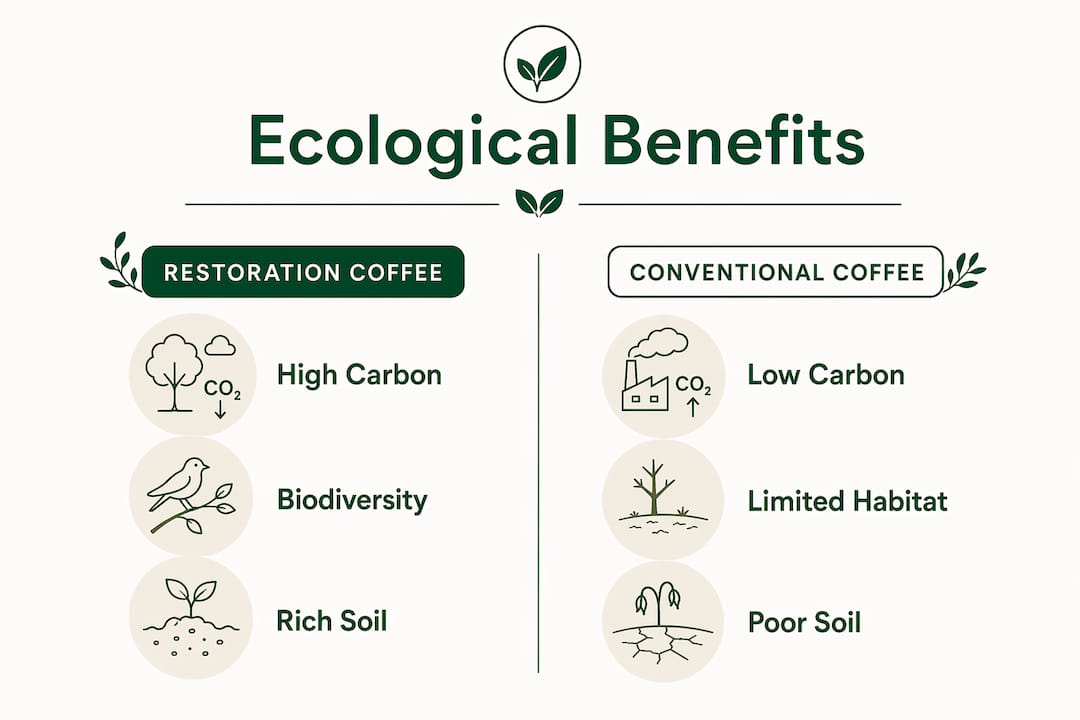
The carbon storage numbers alone are striking. A single well-managed restoration coffee farm can sequester as much carbon as a young secondary forest. That means your morning brew, when sourced from these farms, contributes to real climate mitigation.
Biodiversity gains are equally significant. Shade tree canopies on restoration farms create habitat corridors that connect fragmented forest patches. Migratory bird species use these corridors to travel safely across agricultural landscapes. The Nature Conservation Foundation documented one pilot program in India’s Western Ghats where coffee agroforests yielded over 18,000 seeds from 56 native species, all rescued from farms and used to restore surrounding forests without touching primary forest reserves. That is a remarkable example of a farm functioning as a native plant nursery.
Soil health is the third pillar. Restoration farms use mulch, cover crops, and beneficial soil microbes to build organic matter. Healthier soils resist drought, absorb rainfall more effectively, and produce better yields over time.
Pro Tip: Look for coffees grown under a diverse shade canopy of native trees. The greater the tree diversity on a farm, the stronger its habitat corridor function for wildlife.
How does restoration coffee impact farmers economically?
The economic story of habitat restoration coffee is one of the most compelling and least told parts of this conversation. Farmers who adopt regenerative practices do not just help the environment. They build more resilient, profitable businesses.
Here is what the evidence shows:
- Income growth. Farmer income increases by 62–66.6% through product diversification and quality improvements on restoration farms. Shade trees produce fruit, timber, and medicinal plants alongside coffee, creating multiple income streams from the same land.
- Lower input costs. Transitioning to regenerative farming reduces chemical pesticide reliance by 60%. Farmers spend less on inputs while attracting natural pest predators like birds that consume coffee berry borers, one of the crop’s most damaging pests.
- Premium market access. Restoration and regenerative certifications open doors to specialty coffee buyers and eco-conscious brands willing to pay above-market prices. Certifications from the Rainforest Alliance and similar bodies signal quality and responsibility to global buyers.
- Community resilience. Farms with diverse ecosystems are more resistant to climate shocks like drought and flooding. That stability protects farmer livelihoods across generations, not just a single harvest season.
The transition is not without challenges. Restoration requires a generational mindset, with 10 or more years of research and development needed to establish climate-resilient varietals and viable forest corridors. Initial investment costs are real, and consumer expectations often underestimate this timeline. TechnoServe research covering nine key coffee-producing countries found an average investment of $560 million annually yields $2.1 billion in income returns. The return is strong, but the patience required is significant.
Pro Tip: Cooperative farming models accelerate the transition. When farmers pool resources and share local ecological knowledge, the cost and learning curve of restoration drop considerably.
What farming practices define restoration coffee?
Restoration coffee farming is not a single technique. It is a collection of practices that work together to rebuild ecosystem function on working farms. Understanding these methods helps you recognize genuine restoration coffee when you see it.
| Practice | Conventional Farming | Restoration Farming |
|---|---|---|
| Shade trees | Few or none (sun-grown) | Diverse native canopy |
| Pest management | Synthetic pesticides | Natural predators, vegetation |
| Soil management | Synthetic fertilizers | Mulch, cover crops, microbes |
| Seedling use | Discarded as weeds | Rescued for nursery programs |
| Farm planning horizon | Single season | Multi-decade |
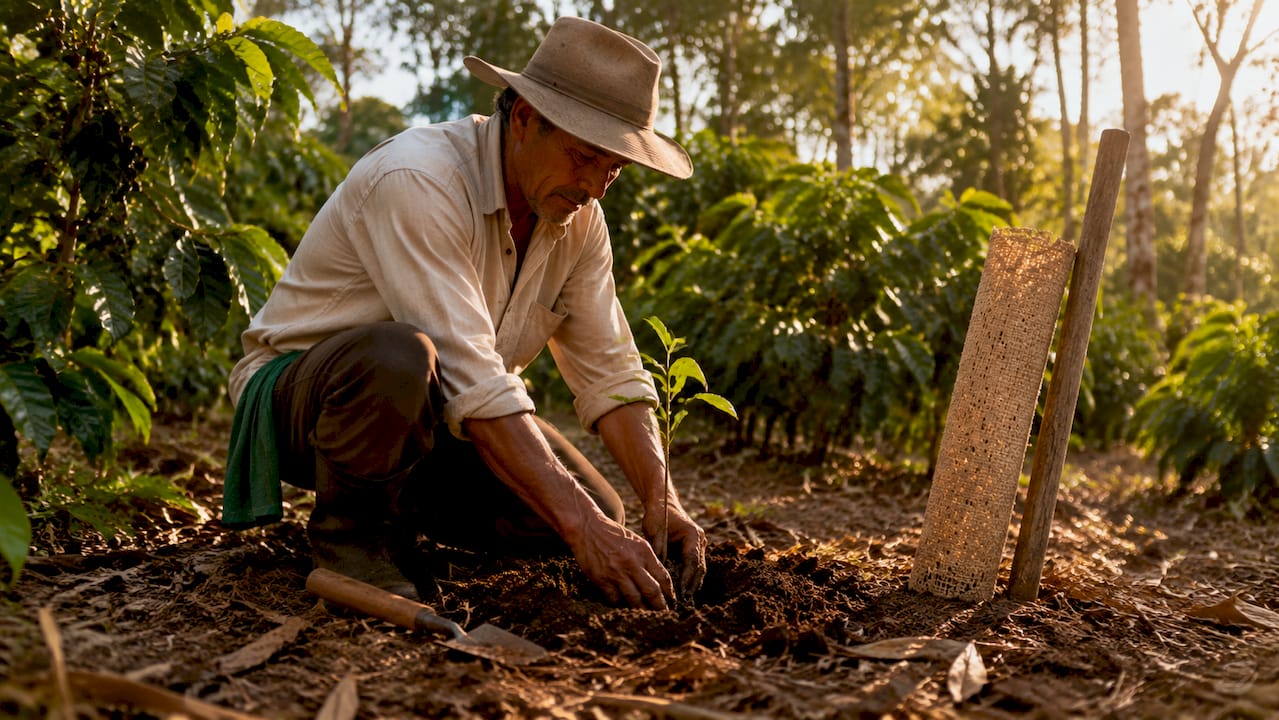
Native shade tree canopies are the foundation of restoration farming. Farmers plant and maintain diverse mixes of trees native to their region, creating layered canopies that mimic natural forest structure. This is not just about aesthetics. Native trees support specific insects, birds, and fungi that conventional monoculture farms cannot sustain.
Seedling rescue programs are one of the most cost-effective and underappreciated restoration tools. Most coffee agroforests contain native seedlings that farmers traditionally remove as competing weeds. Rescuing these seedlings and transferring them to nurseries allows large-scale forest restoration without harvesting seeds from primary forests. This approach requires coordination between farmers and nursery operators, but the ecological payoff is enormous.
Soil cover and microbial health come from layering mulch, planting cover crops between coffee rows, and introducing beneficial soil organisms. Healthy soils enhance drought resistance and reduce erosion, which directly protects long-term farm productivity.
Long-term varietal development rounds out the picture. Restoration farms invest in multi-year field trials to identify coffee varieties that thrive under shade and changing climate conditions. This is slow, careful science that pays off in resilient, high-quality harvests over decades.
How does restoration coffee support global climate goals?
Restoration coffee connects your daily brew to some of the most pressing environmental goals of our time. The impact scales from individual farms to entire landscapes and global carbon budgets.
- Carbon sequestration at scale. Regenerative coffee farming cuts greenhouse gas emissions by 3.5 million tons of CO2 equivalent annually across nine major producing countries. That is the equivalent of taking hundreds of thousands of cars off the road each year.
- Pollinator protection. Restoration farms provide year-round habitat for bees, butterflies, and other pollinators. Pollinators are critical not just for coffee yields but for the food systems surrounding farming communities.
- Migratory bird refuges. Shade canopies on restoration farms serve as rest stops and feeding grounds for migratory bird species traveling across the Americas and other regions. Birds, in turn, control pests naturally, reducing the need for chemical intervention.
- Microclimate regulation. Dense tree canopies moderate temperature and humidity on farms, protecting coffee plants from heat stress as global temperatures rise. This is a direct adaptation benefit for farmers facing climate change.
- Indigenous and local knowledge. Successful restoration respects indigenous knowledge and cooperative land management traditions. Top-down policy approaches that ignore local expertise consistently underperform. The farms that thrive combine modern science with generations of place-based understanding.
Your consumer choices feed directly into these outcomes. When you buy restoration-focused coffee, you create market demand that makes it financially viable for more farmers to adopt these practices. Demand signals matter as much as policy in scaling this movement.
Key takeaways
Habitat restoration coffee delivers measurable ecological and economic gains that conventional sustainable coffee cannot match.
| Point | Details |
|---|---|
| Restoration vs. sustainability | Restoration coffee actively improves ecosystems; sustainable coffee only minimizes harm. |
| Carbon and biodiversity gains | Agroforestry stores 40–190 tons of carbon per hectare and supports 90+ native tree species. |
| Farmer income impact | Regenerative practices increase smallholder income by 62–66.6% through diversification and quality. |
| Seedling rescue programs | Rescuing native seedlings from coffee farms enables large-scale forest restoration without harming primary forests. |
| Consumer role | Buying restoration coffee creates the market demand that makes regenerative farming financially viable for more farmers. |
Why restoration coffee is the most honest cup you can buy
I have spent years reading the research on sustainable coffee, and I will be direct: most “eco-friendly” coffee certifications are doing the bare minimum. They ask farmers to stop doing the worst things. Restoration coffee asks something harder and more honest. It asks farmers to actively give back.
What strikes me most about the evidence from TechnoServe, the Rainforest Alliance, and the Nature Conservation Foundation is how consistently the data shows that restoration is not a sacrifice. Farmers who commit to it earn more, spend less on inputs, and build farms that survive climate shocks better than their conventional neighbors. The challenge is time. Ten or more years of investment before the full ecological and financial payoff arrives is a hard sell in an industry driven by quarterly harvests.
That is where consumers come in, and I think this is the part most coffee lovers underestimate. When you choose a restoration coffee brand, you are not just buying a product. You are funding a multi-decade land restoration project. That is a genuinely different kind of purchase. The biodiversity benefits are real, the carbon numbers are verified, and the farmer income gains are documented. What restoration coffee needs now is patient, informed consumers who understand the timeline and stay committed to it.
The future of this category depends on whether enough of us decide that our morning ritual is worth more than convenience. I believe it is.
— LaSaundra
Taste the difference with ecoviberoast’s restoration coffees
Ecoviberoast sources coffee with the same values this article describes: farms that give back more than they take, beans grown under shade canopies that shelter wildlife, and supply chains that pay farmers fairly. Every purchase supports Ecoviberoast’s commitment to planting mangrove trees and removing ocean-bound plastics, so your cup does double duty for the planet.

Whether you prefer the convenience of single-serve coffee pods or want to explore the full sustainable coffee collection, Ecoviberoast makes it easy to drink well and do good. Rich, aromatic flavor and genuine environmental impact do not have to be a trade-off. With Ecoviberoast, they come in the same bag.
FAQ
What is the difference between sustainable and restoration coffee?
Sustainable coffee minimizes harm to ecosystems, while restoration coffee actively rebuilds biodiversity, soil health, and carbon storage. The Rainforest Alliance describes restoration as a proactive shift from “do no harm” to “do good.”
How does habitat restoration coffee help farmers?
Regenerative coffee farming increases smallholder income by 62–66.6% through diversification and reduces pesticide costs by up to 60%, according to TechnoServe research covering nine major producing countries.
Does restoration coffee taste different from regular coffee?
Shade-grown restoration coffee often produces more complex, aromatic flavor profiles because diverse soil ecosystems and slower bean development under tree canopies concentrate sugars and acids in the fruit.
How can i tell if a coffee brand practices restoration farming?
Look for certifications from the Rainforest Alliance or references to agroforestry, shade-grown practices, and native tree canopy programs. Brands that publish farm-level impact data are the most credible signals of genuine restoration commitment.
Is habitat restoration coffee more expensive?
Restoration coffee often carries a modest price premium because of the investment in agroforestry systems and longer development timelines. That premium directly funds farmer income improvements and ecosystem recovery, making it one of the most impactful ways to spend a few extra dollars on your daily habit.


